
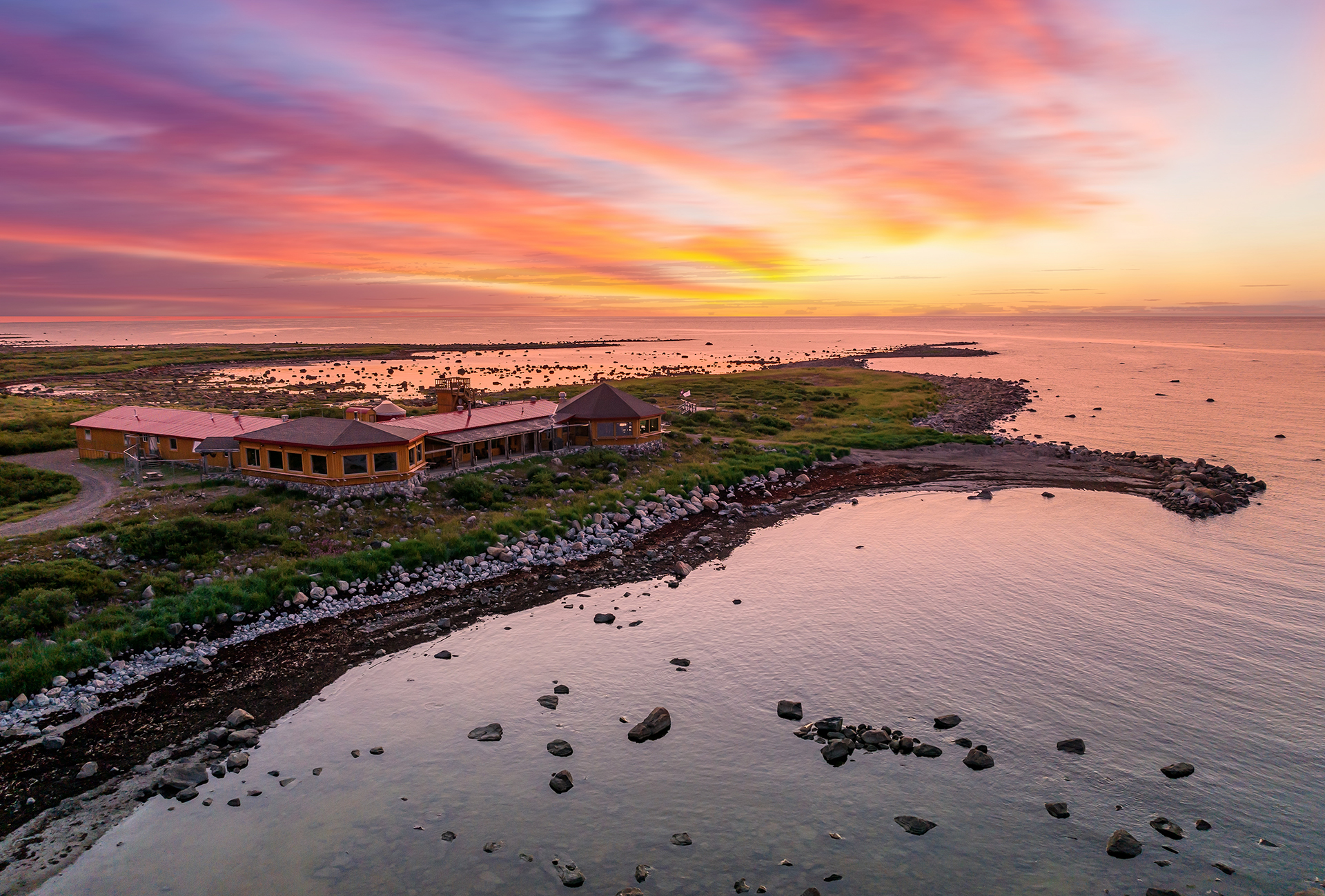
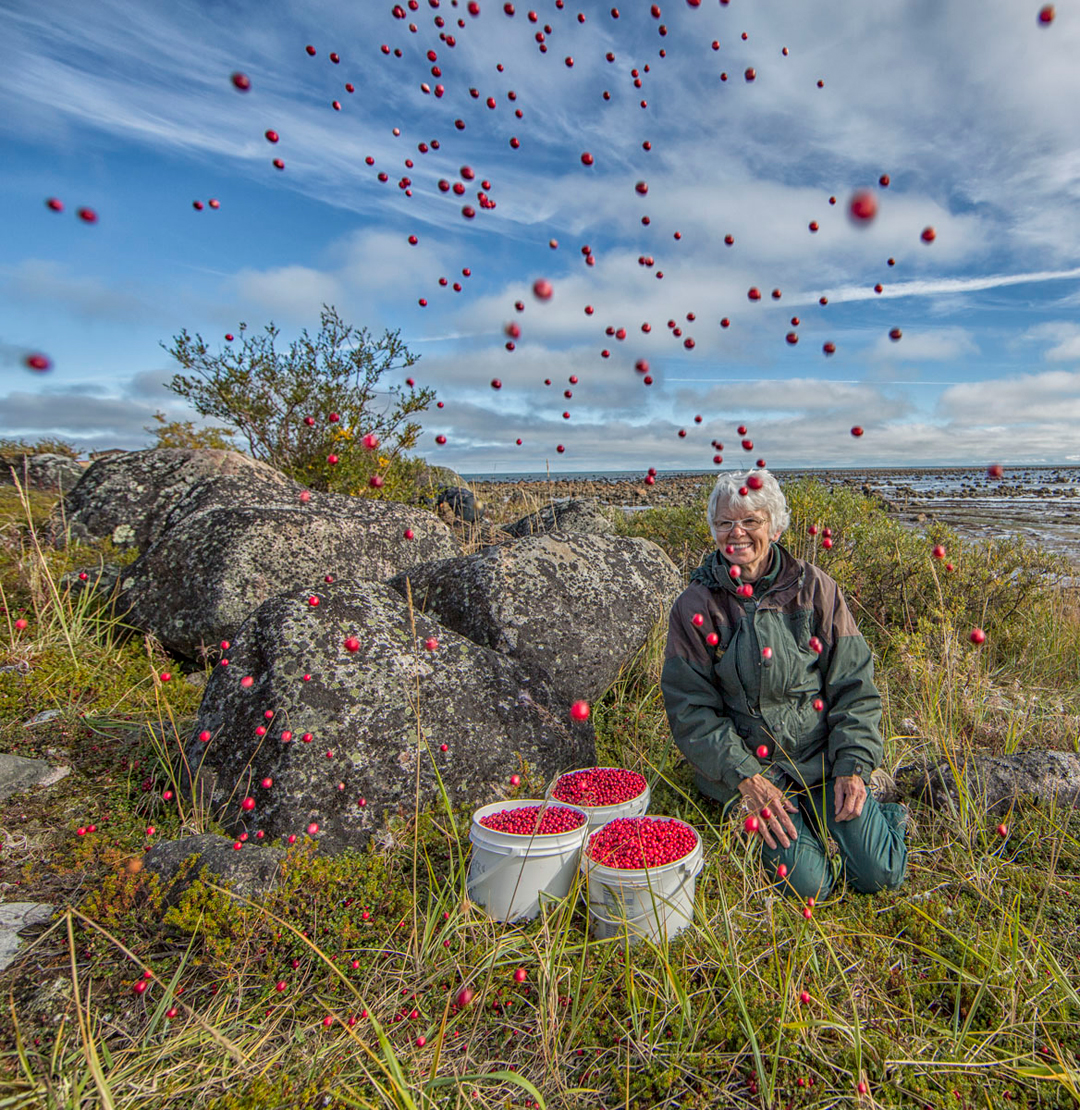
Doug Webber had his nose down in a berry patch at Seal River Heritage Lodge last fall when he heard the hiss.
He was out along the road toward Landing Lake with a shotgun and scare cartridges beside him and a gallon bucket already full of cranberries. He looked up and he was eye-to-eye with a polar bear standing that would have gone a thousand pounds.
“I just about crapped,” said Doug.
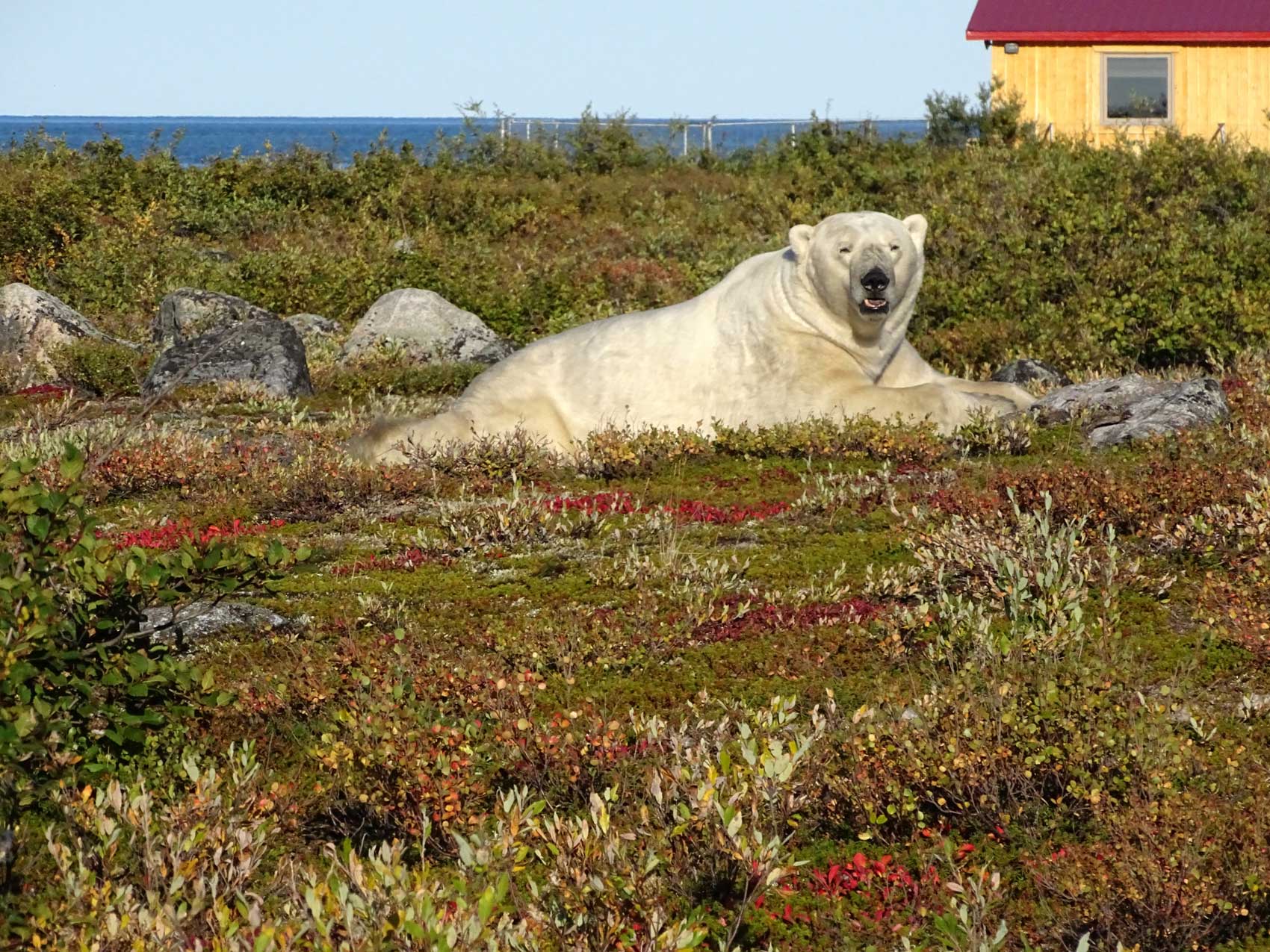
Polar bear berry picker.
He stood up slowly and grabbed the shotgun.
“I said, take her easy there, fella,” said Doug. “He didn’t. He just hissed at me.”
The bear looked at him and did not move. So Doug tried again, and this time he negotiated.
“Okay, buddy, I can get out of your berry patch here right now, no problem,” he told the bear. “Just let me take my berries.”
He picked up the bucket and walked slowly up to the road, mostly backwards, keeping an eye on the bear. The bear started following along at an easy pace, looking side to side, in no hurry about anything.
“It was obvious he was not interested in me at all from the standpoint of food or anything,” said Doug. “It was more like my favourite dog was with me.”
Doug reached the gate at the lodge and went inside. The bear sniffed around it for a moment and carried on along the fence line.
“It was a non-event,” said Doug. “But I’ll tell you, it sure scared the heck out of me.”
He had also broken the rule he has been handing out to other people for half a century.
“Never pick berries alone,” he said. “But sometimes you just gotta.”
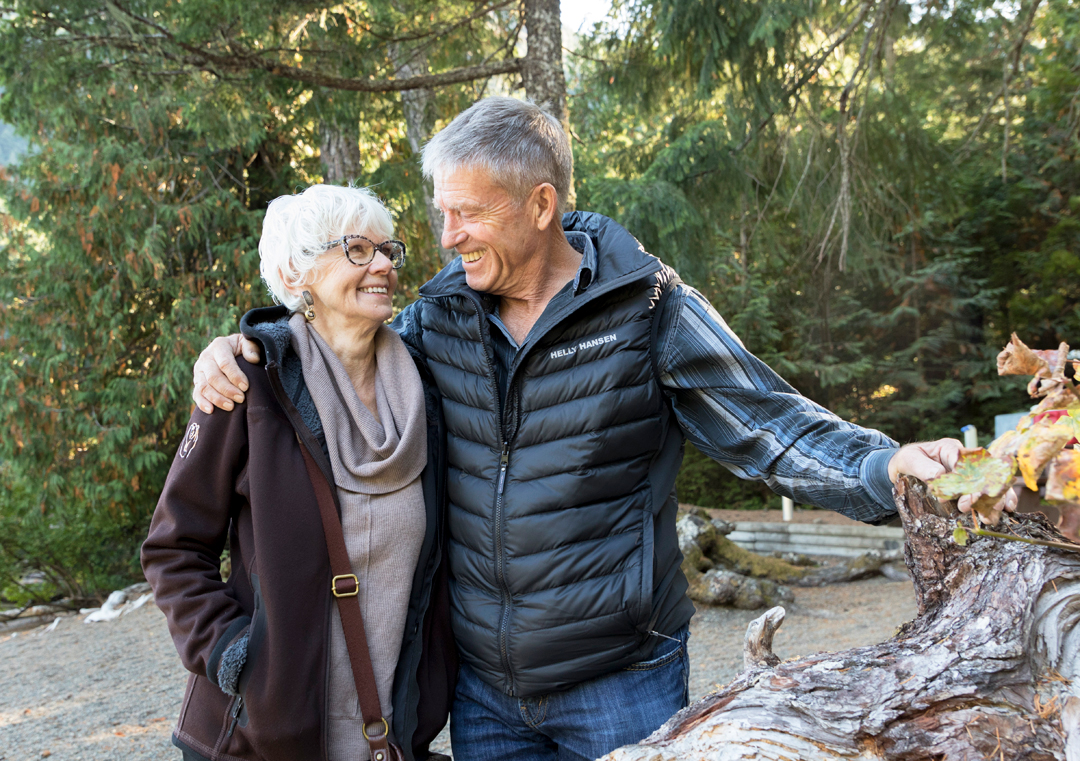
Doug and Helen Webber, parents of Churchill Wild co-founder and owner Jeanne Reimer.
It should be said that this is not how anyone at Churchill Wild goes looking for a bear, and it is not how a guest will ever see one. Regulations require people to keep 100 metres between themselves and a polar bear, and the guides hold that line. Doug was alone, off duty and picking on his own time when a bear walked by a man whose head was down. He did the only thing the protocol allows, which is to give ground and leave.
Doug Webber has been walking with polar bears since 1967, when he purchased the Dymond Lake Lodge property that later became Dymond Lake Ecolodge. He turned 82 this summer. His wife Helen, the author of the bestselling Blueberries and Polar Bears cookbook series along with friend Marie Woolsey, turned 79 in July. In the mid ‘70s, Doug and Helen started building North Knife Lake Lodge, finishing Manitoba’s first five-star fly-in fishing lodge in 1985. It was also one of the first lodges in Canada to implement barbless fishing and solar power.
Doug and Helen have been picking wild berries off the Hudson Bay coast for much longer than Churchill Wild has existed, but the tradition has been passed down through the generations.
Ask Doug what the berry patch has taught him about nature and he doesn’t have to think about the answer.
“What it’s taught me is slowing down and relaxing the mind,” he said. “Once you’ve been in a berry patch for three or four days, you just chill out. It is probably one of the best things that you can do for your mind. If you need some real good honest to God rest, hit the berry patch.”
It started with a mother and a bunch of ladies
Helen learned to pick berries as a child growing up in Churchill.
“My mother plus a bunch of other ladies had a thing going where they went out and picked the berries as part of their Ladies Club,” said Helen. “We little kids got dragged along, so we were picking berries from an early time.”
Nobody taught her technique. “We just winged it,” she said.
When Doug and Helen bought the Dymond Lake in property in 1967 in partnership with Doug’s best friend Bob Fortin, it consisted of only a Quonset hut. They had one customer the first year. By the early 1970s they were picking berries around the camp in earnest, and Helen was feeding everyone who walked through the door.
In 1976, Marie Woolsey arrived in Churchill when her husband Gary became the rector at St. Paul’s Anglican Church. Helen and Marie found each other quickly and turned the afternoon lull at the lodge into a harvest.
“Marie and Helen can’t stand doing nothing, so the blueberry picking was their rest time,” said Doug. “They’d be working all day in the kitchen, and they’d have a couple hours off in the afternoon, and what did they do? They went and picked berries.”
They did not go alone. They went with dogs.
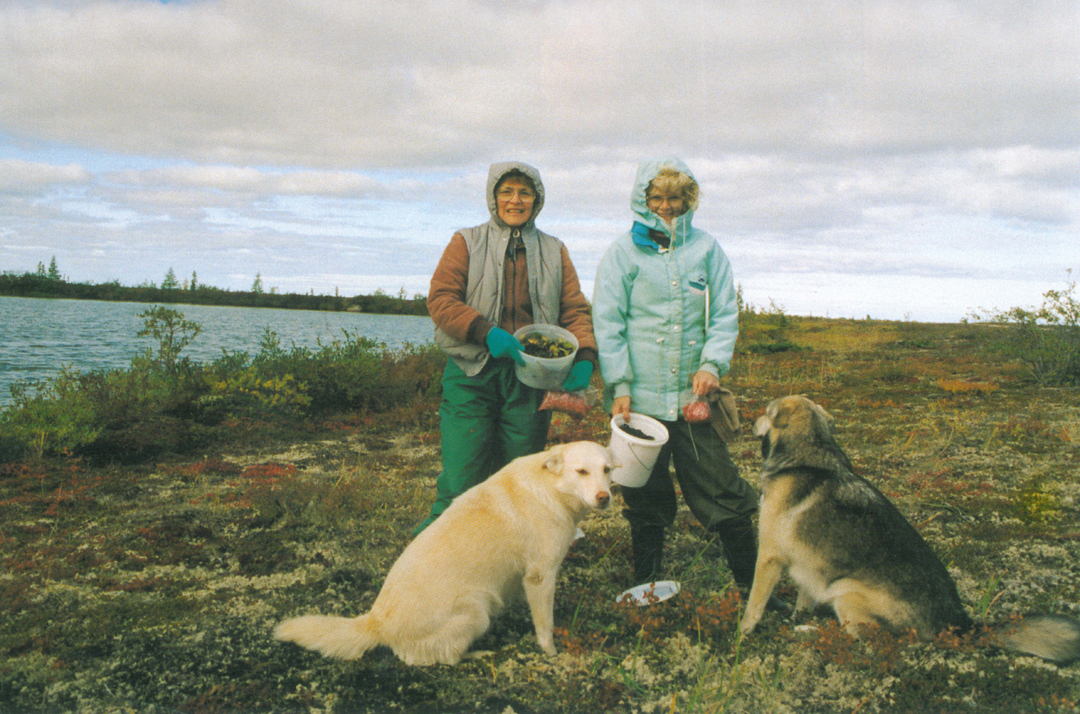
Marie (left) and Helen in he early days at Dymond Lake with Daisy and Sheba.
“Our first guard dogs were half husky and half lab, and their names were Daisy and Sheba,” said Doug. “They went with the girls and made sure the bears didn’t even get close.”
One afternoon the dogs spotted a bear at a distance while the two women were working a patch.
“The two dogs looked at each other and it was like they were saying, let’s get this guy,” said Doug. “And they took off after that bear and just ran him right out of the country.”
Daisy and Sheba are in the first cookbook, in a photograph with Helen, Marie and their buckets.
The cookbooks
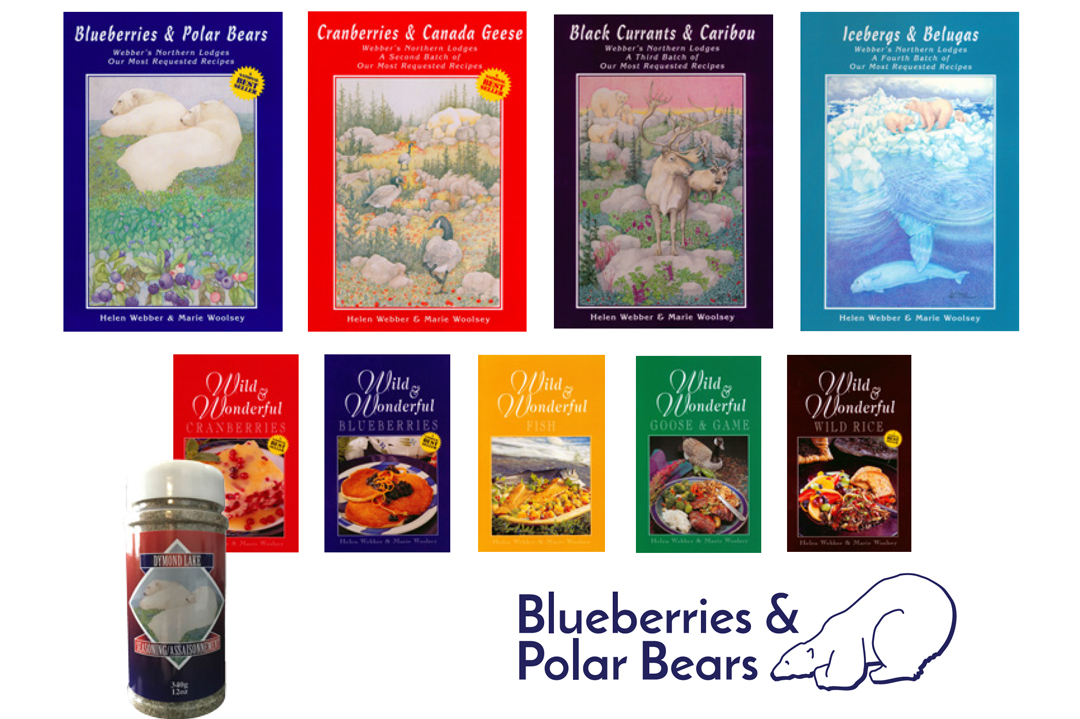
The Blueberries & Polar Bears cookbook series has sold over 100,000 copies.
Guests kept asking Helen for her recipes, and Helen kept not writing them down.
“The guests were constantly bugging Helen to make a cookbook and she wouldn’t do it,” said Doug. “Finally, one day Marie said, well Helen, I’ll go and enter it all if you want to do this. I’ll do all that for you.”
That was the hinge. Marie approached Centax Books, was told the minimum print run was 5,000 copies, and the two of them took a leap of faith at the ages of 47 and 52. Then came the hard part, turning years of kitchen instinct into something a stranger could follow.
“So much of the recipes, it was about a tablespoon of this, about a teaspoon of that, and you had to get all this stuff down exactly right,” said Doug. “So they had to go and make every single recipe and get the exact measurements for it. It wouldn’t have happened without Marie.” Helen wanted that on the record. Marie, she said, was every bit as important to the cookbooks, the berries and the cooking at the camps as Helen was herself.
Blueberries & Polar Bears was printed in 1994. Three more full-length books followed, along with five smaller Wild & Wonderful titles, two of them devoted entirely to cranberries and blueberries. Only the best guest-tested recipes made it into the cookbooks. More than 100,000 copies have sold, which is amazing considering they originally started selling them out of the trunk of their car. Every menu at every Churchill Wild lodge still runs based on those recipes, and the cookbooks can be found in thousands of lodges, resorts and guest homes around the world.
Ask Helen which recipe she wants future generations to keep making and there is no hesitation.
“Cranberry cake with warm butter sauce,” said Helen.
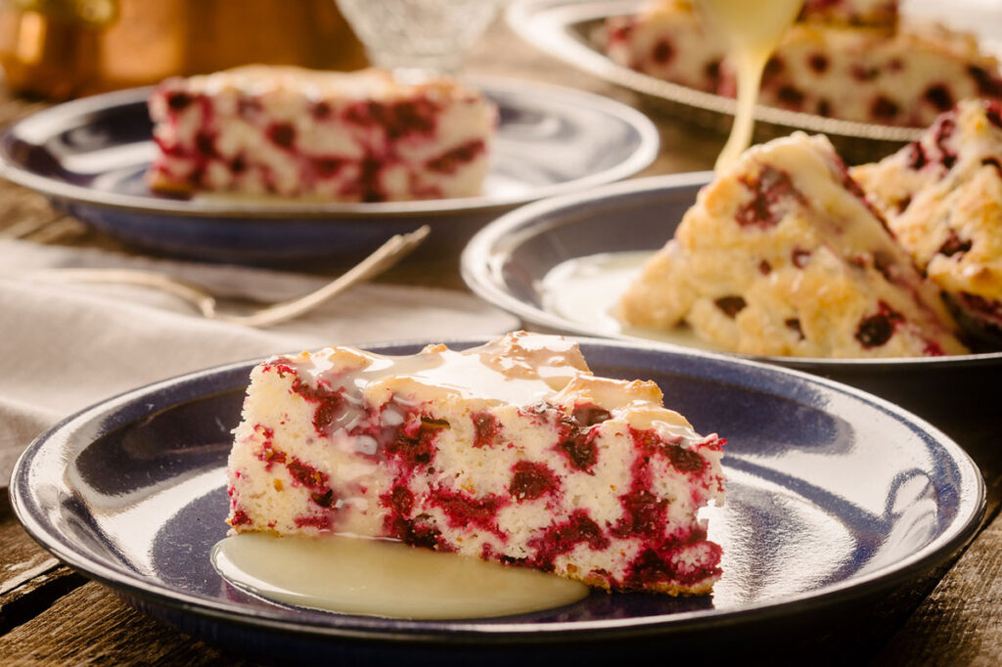
Wild Arctic Cranberry Cake with Warm Butter Sauce. a guest favourite from the Blueberries & Polar Bears cookbook series. Ian McCausland / Shel Zolkewich photo.
Why they don’t taste like the store
Guests notice the difference before anyone explains it. Doug does not find the question difficult.
“It’s like the difference between a greenhouse tomato and one that you grow out in your garden,” he said. “The soil carries all the minerals and nutrients that it’s ever had in the wild. The wild berries, they’re smaller, they don’t grow as quick, everything is natural with them, and that’s your best bet nutritionally and flavourfully of anything.”
Take a handful of wild blueberries and they are tart, not sweet.
“There’s ten times more flavour and nutrition in a wild cranberry than there is in a domesticated cranberry,” said Doug.
The growing season on this coast runs 50 to 60 days. Seal River Heritage Lodge sits five kms north of the tree line, and almost everything edible there grows within a few inches of the ground.
“They’re grown in the finest, finest natural soil the world probably has to offer,” said Karli Friesen, the daughter of Churchill Wild co-founders and owners Mike and Jeanne Reimer. A former Churchill Wild executive chef who grew up at the lodges and did every job there was to do, Karli has been in the lodge berry patches since she was small enough to be parked in the willows while the adults worked. “There’s no pests or disease that we worry about up there. The berries are always in good shape, always beautiful.”
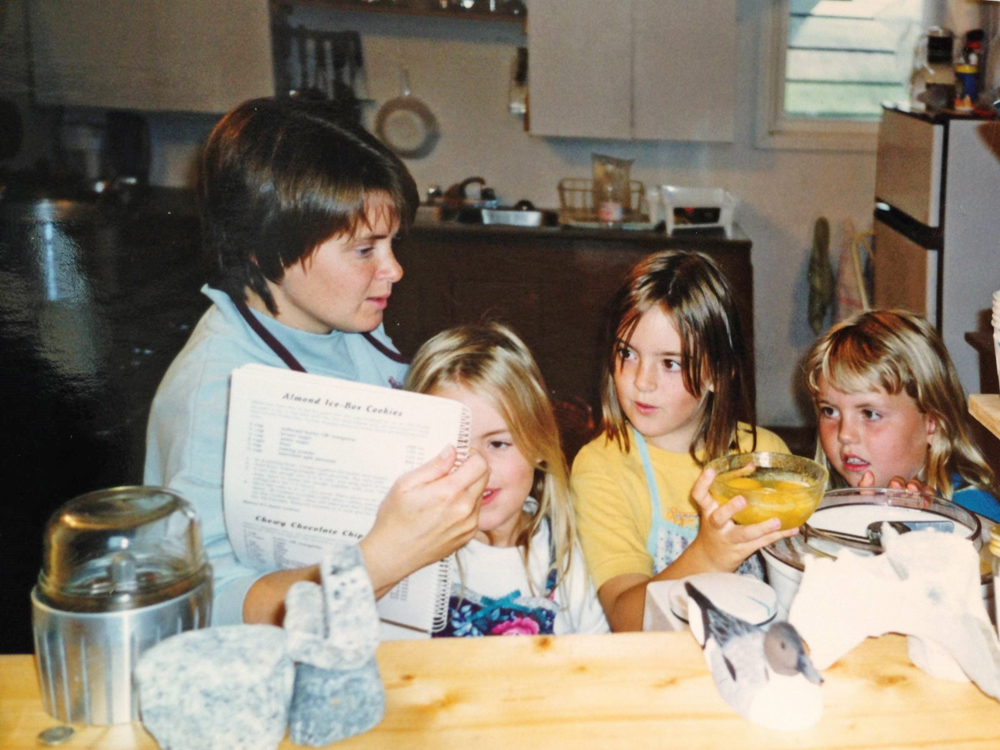
Jeanne Reimer and daughters making cookies from the Blueberries & Polar Bears cookbooks during the early days at Seal River Heritage Lodge.
Some years the tundra gives everything it has.
“That’s always exciting when you walk into a blueberry patch and you see more blue than any other colour,” said Karli. “It always kind of feels like we’ve just stumbled across buried treasure.”
What the guests take home
For years the lodges served a fully wild menu. Goose, caribou, moose and fish came off the land and went onto the table, and those recipes remain among the most requested in the cookbooks. Wild game is no longer served at the lodges, as government regulations do not permit uninspected wild meat to be served to paying guests, and that side of the menu closed.
The berries did not.
“Now the berries are kind of like the last stand, so to speak, of actually getting local product right off the land,” said Riley Friesen, Karli’s husband and a former Churchill Wild chef and lodge manager who along with Karli, now runs the Prairie Wild sustainable farm that supplies fresh produce for the lodges.
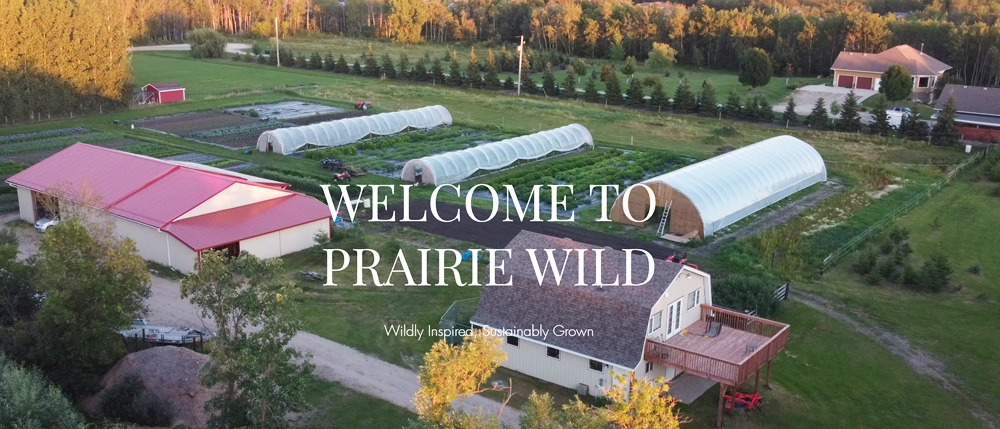
Prairie Wild. Wildly Inspired. Sustainably Grown.
That is why the cranberry cake with warm butter sauce carries the weight it does. The main ingredient came off the ground outside the window.
“It has an authentic northern feel,” said Riley. “It’s very, very local.”
Guests have been voting on this for fifty years. At Dymond Lake, goose hunters would eat cranberry cake at supper, then go out and fill a shotgun shell box with cranberries to carry home so their wives could make it themselves. Guests who ask can still head out to pick with the kitchen staff and an armed guide.
Everybody who has ever worked a patch on the Hudson Bay coast has learned the same drill, and most of them learned it young.
“We’d be out in the berry patch near the lodge and then all of a sudden it was like, okay, it’s time to go back inside,” said Karli. “We always knew that that meant there was a bear somewhere around. If the guy with the gun said it’s time to go back to the lodge, you all just went back to the lodge.”
“They really get a kick out of the fact that we’re making a lot of stuff that we procure right around the lodges,” said Doug. “They show their appreciation by buying the jams and jellies that the girls make for the guests to take home.”
The harvest
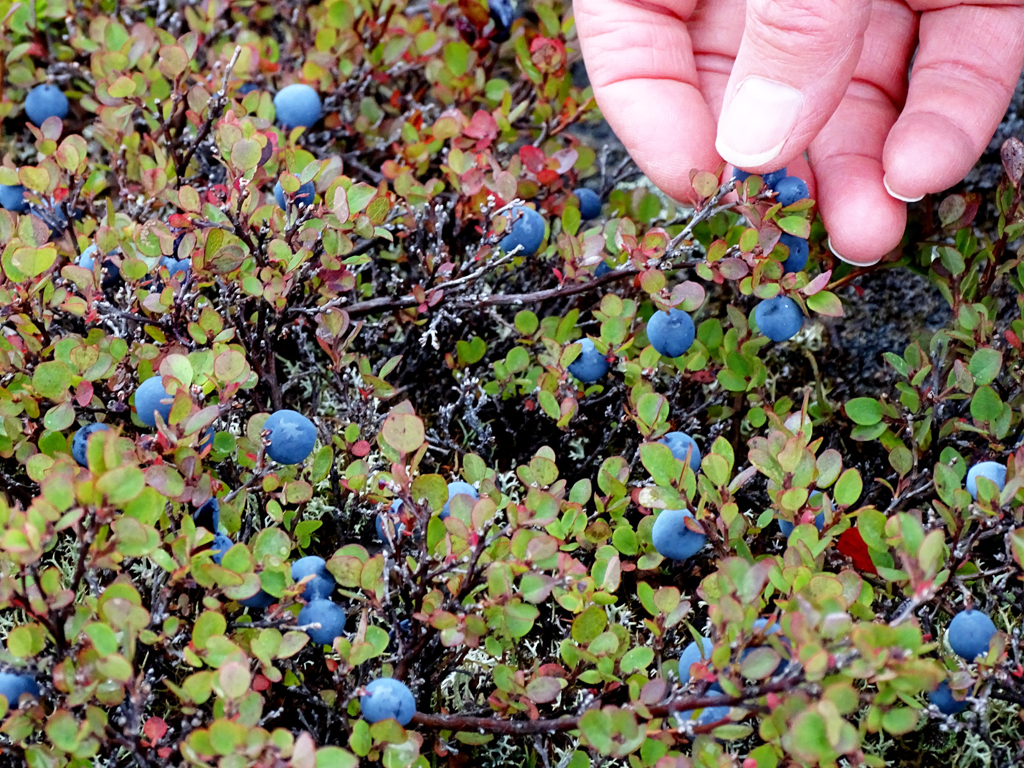
Blueberries at Seal River Heritage Lodge.
Every lodge has its own fruit, and the season for each of them is short. The volumes are not casual. Doug picked 75 pounds of blueberries last season and set himself a target of 30 pounds of cranberries to give away to the people who help him get his airplane off floats each fall. He once pulled two five-gallon pails of black currants out of a patch at Dymond Lake known as Hamburger Hill, named for the goose shooting rather than the fruit. Last season a lodge crew brought in 150 pounds of cloudberries, the largest such harvest in company history by a wide margin.
“It’s a labour of love, and they did it,” said Jeanne Reimer.
Most of it is done on hands and knees. One person found a way around that.
“I was the inventor of the vacuum harvesting on the cranberries,” said Riley.
Nobody believed him. He asked Mike Reimer for a generator, an extension cord and a vacuum, got turned down, and took a shop vac out to prove the point himself.
“And then on the next flight, they had a brand-new vacuum come in, and now it’s just the berry vacuum,” he said. “That’s the only way they pick cranberries.”
Cranberries are the only berry on the coast tough enough to survive the vacuum. The method also lifts everything else off the ground, which means branches, tundra and a quantity of rabbit droppings. The crew winnows the load in the wind, then dumps the rest in water. The cranberries sink. The rabbit droppings float and get skimmed off the top. What is left is washed, packed into 12-cup bags and frozen for the season ahead.
Riley has never accepted that a job has to be done the way it has always been done. That habit turned up again, 1,000 km south.
The standard goes south
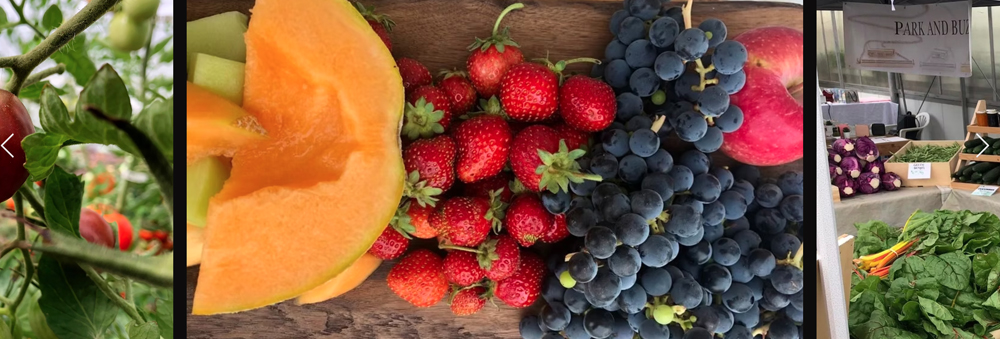
Sustainably grown Prairie Wild produce supplies the Churchill Wild lodges.
Growing up eating fresh, wild and healthy leaves a person with a problem.
“We’re used to such a high-quality diet where we’ve harvested the meat, we’ve harvested the berries,” said Karli. “It’s really hard to switch over to supermarket food. So rather than doing that, we’ve just done our own thing here where we’re growing our own vegetables and growing our own fruits at Prairie Wild, and we can keep that high-quality diet that we’re used to.”
Doug traces the Prairie Wild line straight back to the tundra.
“The approach to using wild food has kind of morphed into a pursuit of organic cuisine,” he said. “And to that point, Prairie Wild was formed.”
Karli and Riley ran a trial year of vegetables in 2018. In 2019, Mike Reimer and Riley shook hands across the first apple tree planted on 12 acres of Kleefeld farmland in southern Manitoba. The plan was to supply the lodges with produce that had not travelled thousands of km and had been picked ripe rather than green. Then COVID closed the north and the farm had to find customers at home in a hurry.
It found them. Prairie Wild now serves about 250 families a week, runs 107 vegetable subscriptions and 20 fruit shares, sells wholesale to three other businesses, and works five or six farmers markets a week. Last year the orchard produced between 6,000 and 8,000 pounds of apples, with currants, sour cherries, honeyberries, plums and pears coming off in sequence. The lodges still order essentially all their fresh produce through the farm.
The growing philosophy is the tundra’s, translated into southern soil. No commercial fertilizer. Flame weeding instead of herbicide. Insect netting over the brassicas instead of a spray. Permaculture planting instead of monoculture rows, so disease in one tree has nowhere to travel.
“You’re looking at the soil,” said Riley. “It’s no different than your health. Instead of taking the Tylenol, you actually address the issue in your body. You take care of the soil.”
Riley does not use the word organic, but rather sustainably grown.
A family affair at Prarie Wild
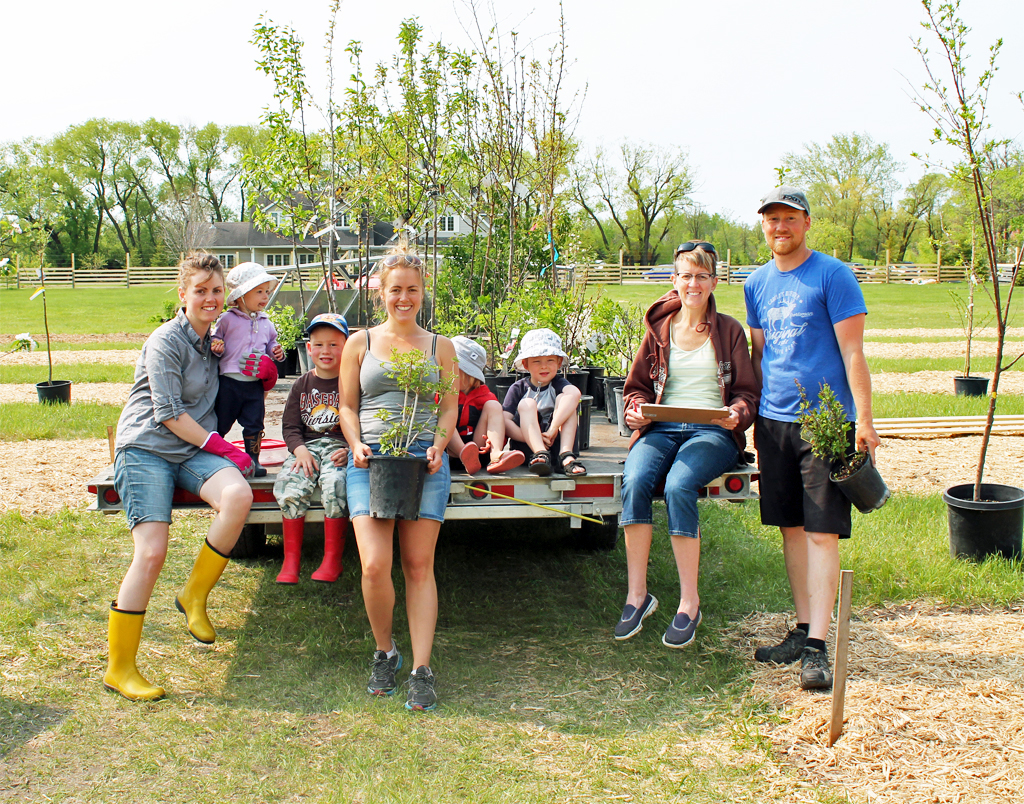
Prairie Wild is a family affair.
The berry patch does something to people that has nothing to do with what ends up in the bucket. Karli, who now has four children working alongside her on the farm, has thought about it more than most.
“There’s not a lot of places in the world where you go out to harvest your fruit with a shotgun over your shoulder,” she said.
She remembers the rule from childhood. Nobody ate berries out of the pails. If you wanted some, you picked your own.
The work itself is not gentle. Most tundra fruit sits within a few inches of the ground, so a good day means hours on your hands and knees in the wind, hauling full buckets back to the lodge. Nobody who does it needs a gym membership or a vitamin D supplement.
“There are people around the world who have to work so hard to get enough sunshine and get enough fresh air and get enough exercise,” said Karli. “We just receive those things on a daily basis, because that’s just part of our lifestyle.”
The rest of the benefit is harder to measure and, in this family, better documented. Doug prescribes the berry patch for the mind. Karli, who watches other people’s teenagers turn up at the farm because their parents cannot get them off a screen, prescribes it for the same reason.
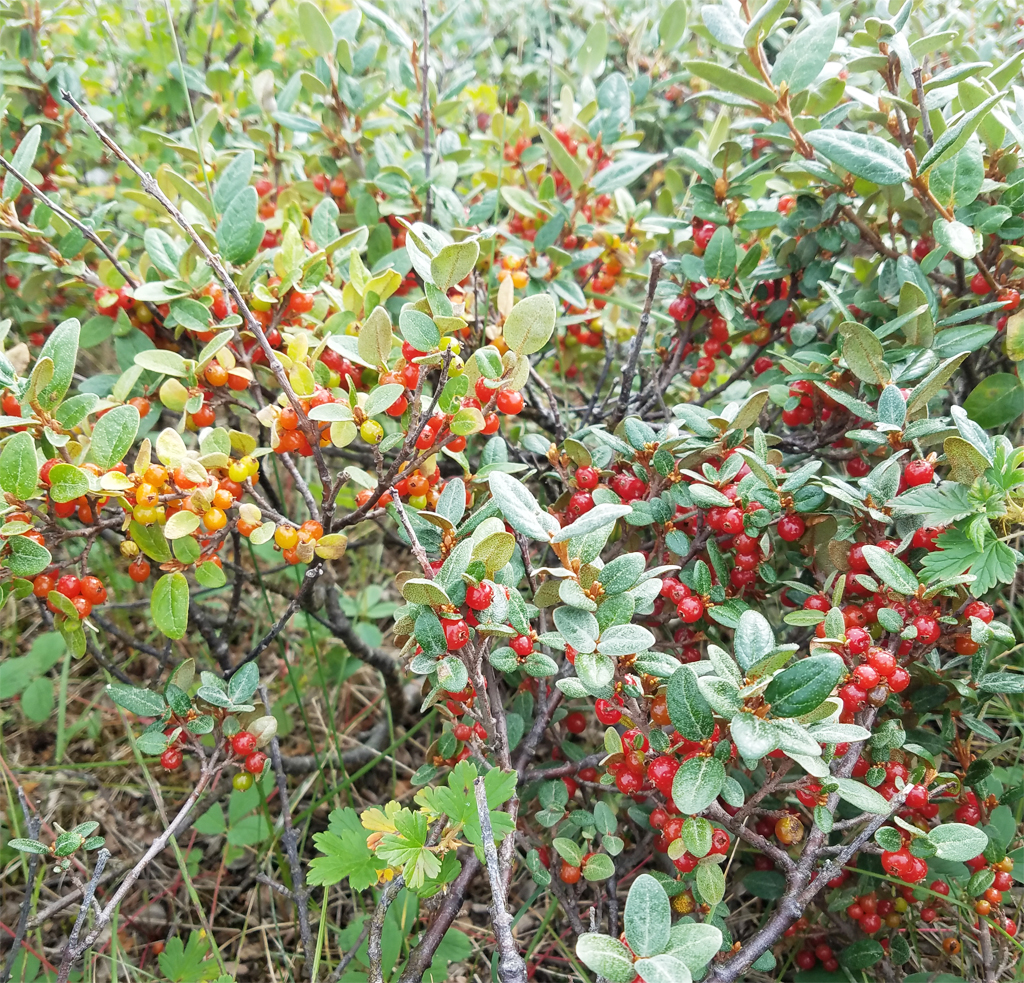
Cloudberries at Seal River Heritage Lodge.
“It’s actually a miracle, and nobody talks about it that way,” she said. “The food is just there waiting for you, and you did nothing to earn it or plant it. I don’t know if there is a better way to just relax and appreciate nature, and just be grateful, than to actually be out there picking food off the land.”
Her grandfather has a theory about how his own rule came to be broken. Tell him a person could get so far down into a berry patch that he might forget there are polar bears in it, and he does not argue.
“That’s exactly what happened to me, George, at Seal River last year,” said Doug.
That is what the patch has been doing to this family since before there were any lodges. It took Helen as a child, trailing her mother and a bunch of other ladies. It took Helen and Marie out the kitchen door every afternoon in the hours they were supposed to be resting. It took Karli up onto the hillsides at Schmok Lake, where two or three people back at camp were the only ones on earth who knew where she was. And last fall it took a man in his eighties so far down into the cranberries on a slope above Hudson Bay that a thousand pound of polar bear paid him a rather close visit before he looked up.
He still walked out with the bucket.
Marie Woolsey is coming back to Churchill in September for a family wedding. She is going to pick berries while she is there, which means that for this fall, at least…
Doug will not be out there alone.
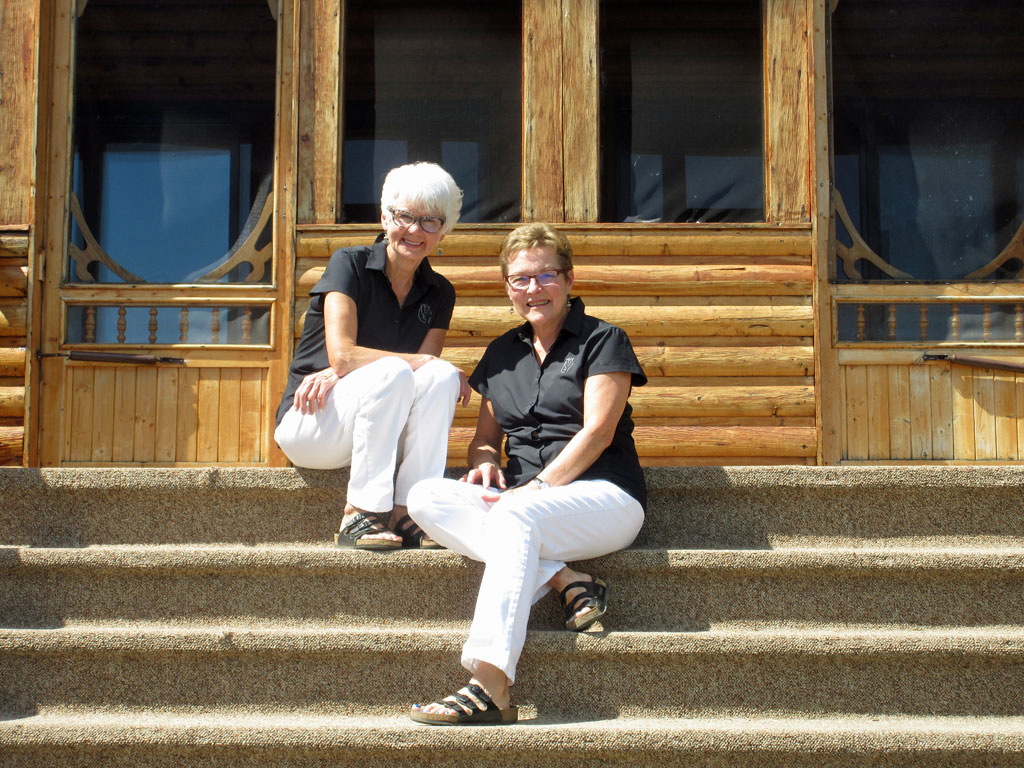
Blueberries & Polar Bears cookbook authors Helen Webber and Marie Woolsey in the early days at North Knife Lake Lodge. Still picking berries.
Where the Berries Are
Dymond Lake Ecolodge: Blueberries, black currants, gooseberries and cranberries.
Seal River Heritage Lodge: Cloudberries, cranberries and blueberries.
Nanuk Polar Bear Lodge: The widest variety of the four, and the best gooseberries in the operation. Also, wild strawberries, which almost nobody picks.
North Knife Lake Lodge: Blueberries, raspberries and cranberries.
When to pick: Cloudberries any time after mid-August. Blueberries in late August. Black currants into September. Gooseberries can hang on until the end of the month. Cranberries do not start until mid-September.