
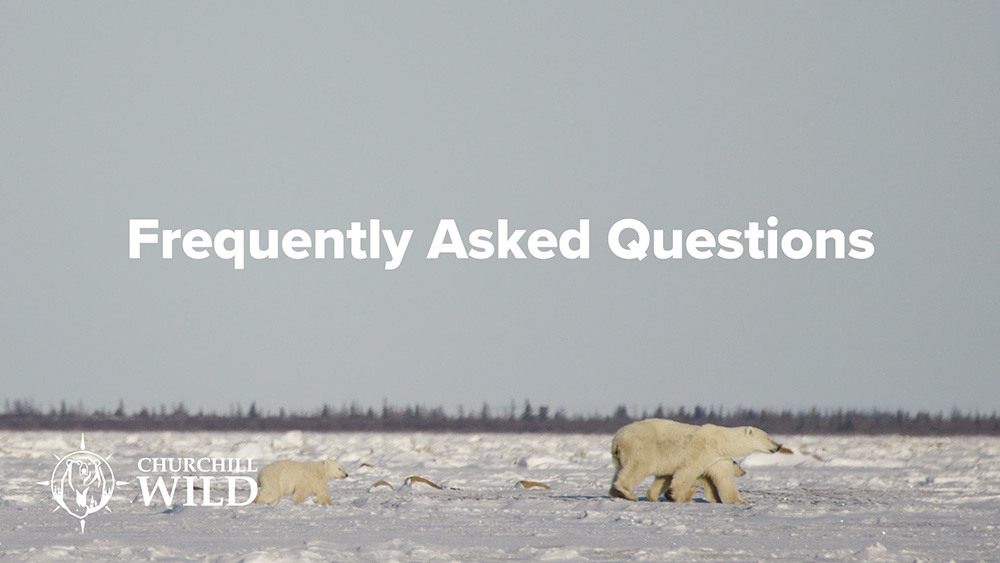
This is our most frequently asked question.
Many people hear that October and November are the best months to see polar bears. While that can be true for operators based in the town of Churchill, the answer is different for Churchill Wild.
Polar bears come off the sea ice in early July and remain along the Hudson Bay coastline until late November or early December. What truly determines viewing opportunities is where you are experiencing them.
Churchill Wild operates three remote ecolodges along the Hudson Bay coast, located approximately 30 km, 60 km, and 250 km from the town of Churchill. These remote locations provide exclusive access to polar bear habitat that is not accessible to others, allowing us to experience exceptional polar bear activity from July through November.
October and November are often highlighted because polar bears naturally move closer to the town of Churchill as freeze-up approaches. Since this area is typically the first to freeze, operators limited to that region experience their peak viewing during this period.
For Churchill Wild, there is no single “best” week to see polar bears. The ideal time to visit depends on what else is on your bucket list:
-
July through late August is ideal for combining polar bears and beluga whales.
-
September through November is best for experiencing polar bears and the northern lights.
Weather preferences are also an important consideration. Do you enjoy crisp Arctic conditions, or would you prefer milder temperatures? Summer departures offer longer daylight hours and generally warmer weather, while fall brings colder temperatures, changing light, and the return of winter conditions as freeze-up approaches.
In October and November, polar bears tend to be more active as they anticipate returning to the sea ice. During the summer months, bears are often more relaxed; conserving energy and spending more time in and around the water. Both seasons offer exceptional, yet distinctly different, polar bear viewing experiences.