
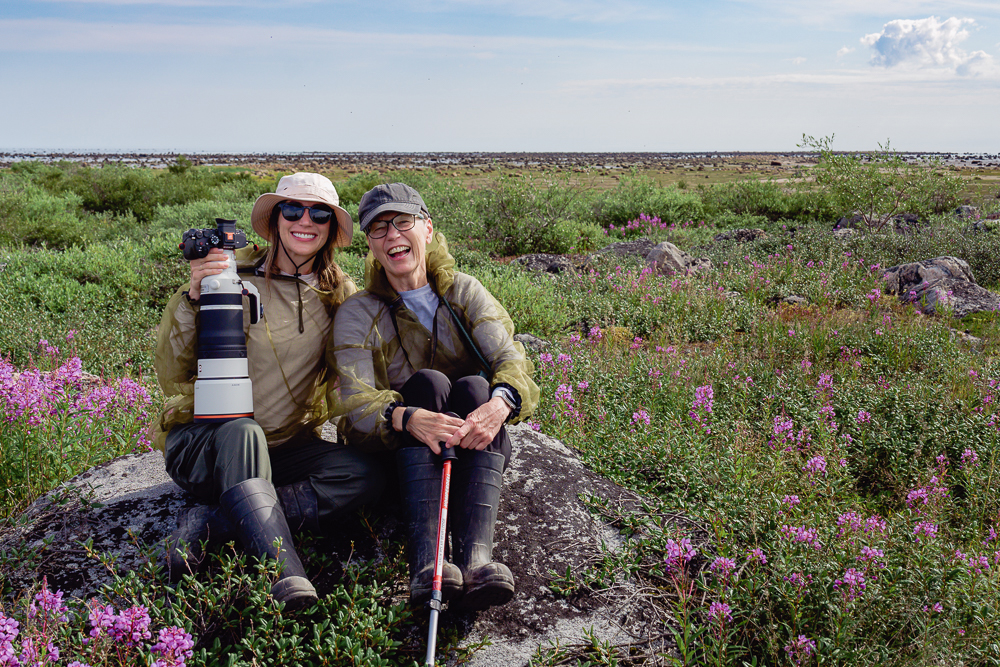
Erin Sobon (left) with mom Pauline at Seal River Heritage Lodge. Erin Sobon photo.
Last summer, in the middle of an ordinary conversation, Erin Sobon mentioned Churchill to her mother.
She expected to have to explain it. Instead, her mother said she already knew the place.
“I was so surprised by that, because it feels like such a remote place,” said Erin. “I wouldn’t think my mom would have heard about it. She said she follows Churchill Wild on Instagram.”
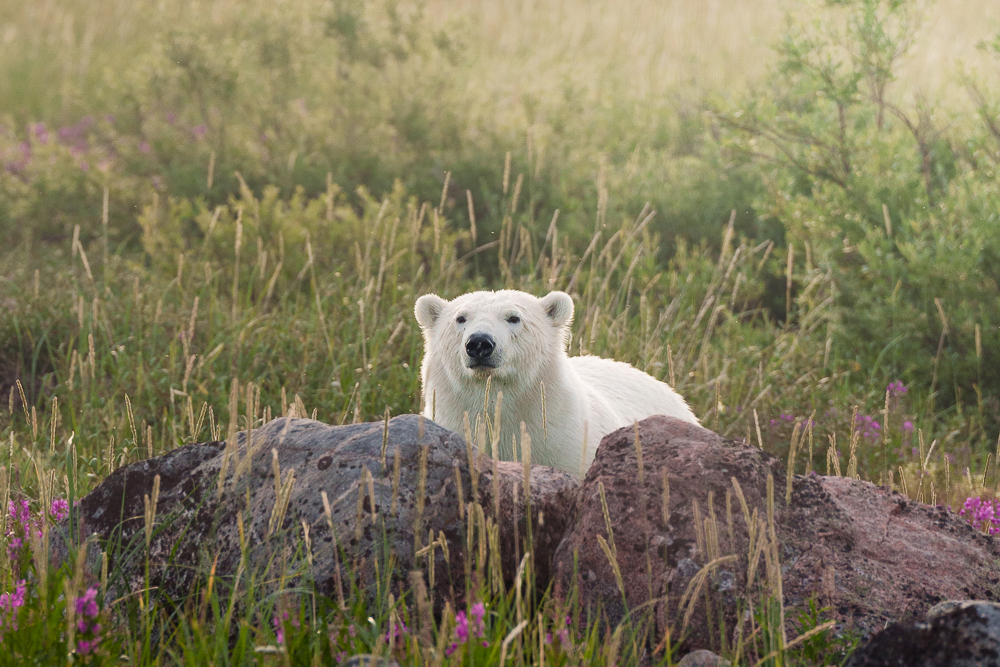
Polar bear observing guests at Seal River. Erin Sobon photo.
Then her mother told her the rest of it. That she had wanted to see a polar bear since she was a little girl. That it had been sitting there her whole life, filed under someday.
“And I had never known that,” said Erin.
Erin is 40. Her mother, Pauline, turns 75 next year. That’s a long time to keep a thing like that to yourself, and a long time for a daughter to miss it.
The One with the Cameras
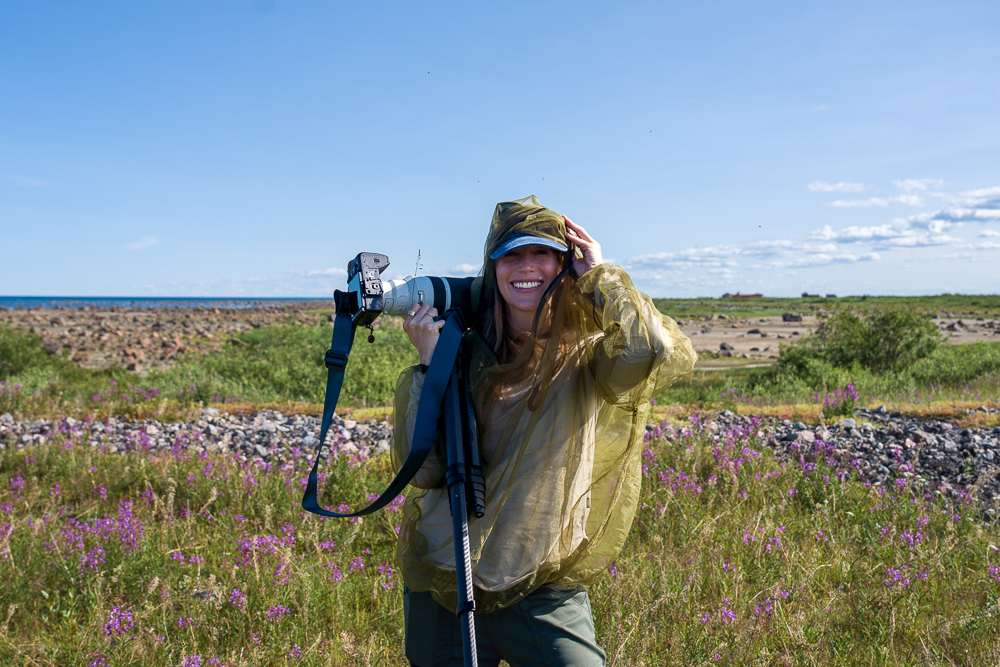
The one with the cameras. Erin Sobon. (Erin Sobon)
Of the two of them, Erin was supposed to be the one who knew about Churchill. She photographs wildlife as a hobby, and it’s the hobby that decides where her vacations happen. She has gone looking for animals on several continents. Polar bears had been on her list for years.
“It’s maybe a population that’s dwindling, or it’s in an area of the world that’s not close to where I am,” said Erin. “There’s not polar bears outside my door anywhere.”
Erin, who works in the tech sector, had done the reading. She knew Churchill was the polar bear capital of the world. What she didn’t know was that people could walk with polar bears.
“I’d seen the tundra buggies,” said Erin. “I assumed that was like the only way to do it.”
Her mother, who is not a technology person, knew better. She had somehow acquired an Instagram account nobody in the family was aware of, and she’d been quietly watching people walk with polar bears on the tundra for some time. She had already decided that was the trip she wanted. “It was my mom who actually spurred the trip,” said Erin.
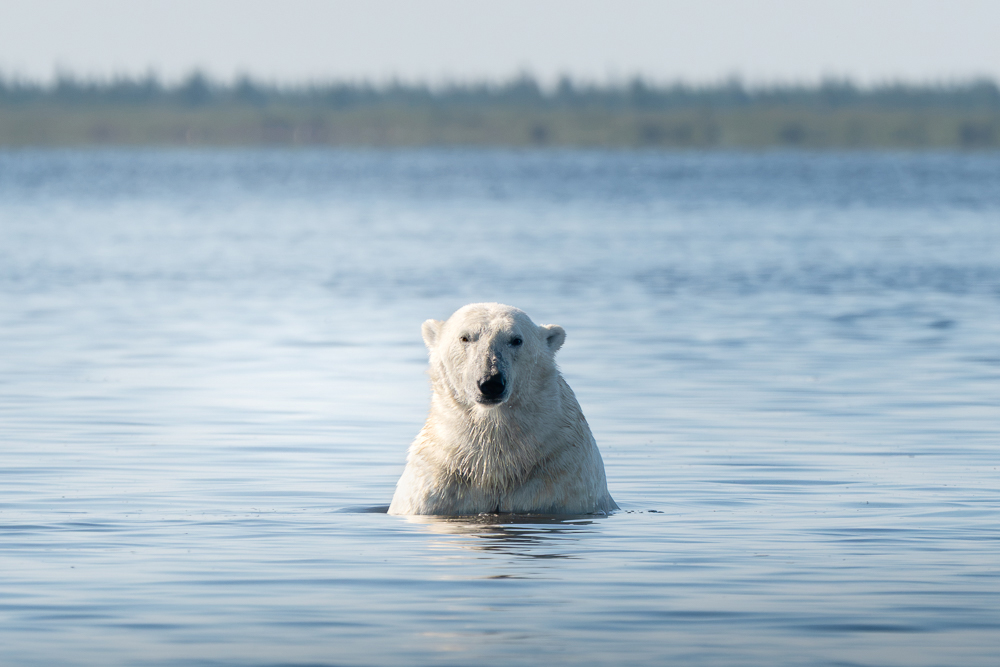
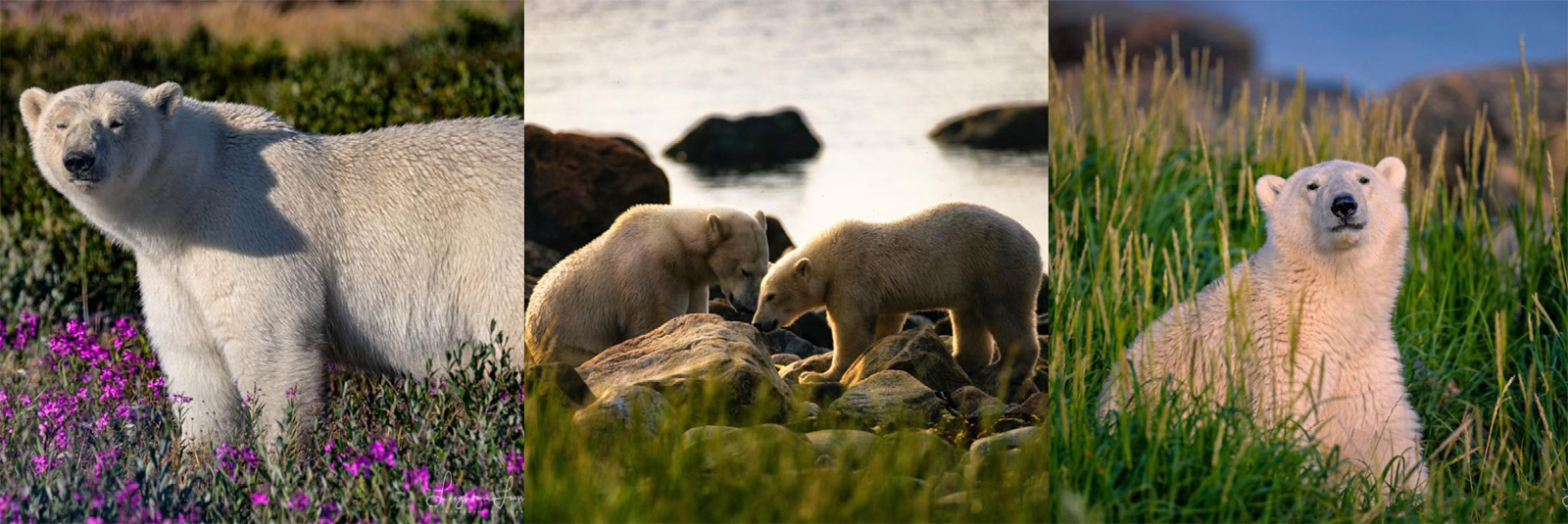
Summer polar bear cooling off in Hudson Bay at Seal River Heritage Lodge. Erin Sobon photo.
There were practical reasons it worked, and they matter, because a dream that is not practical stays a dream. The family lives in Colorado now, but they are Canadian originally. Pauline grew up in London, Ontario, and long flights are behind her. “She doesn’t want to travel across the world, so going up to Canada was really convenient for us,” said Erin.
Norway was the alternative. Erin had looked at it. “It seems like maybe you go out for like a week on a boat and maybe you see one bear really far away,” said Erin.
So they booked Birds, Bears and Belugas at Seal River Heritage Lodge. Mother and daughter, on their own for the first time.
“Because normally we do family trips with my dad and my sister and her family,” said Erin. “My dad’s more interested in beach trips at this stage of life.”
Erin packed two camera bodies and four lenses, one of them rented specially for bears. Her mother packed no camera at all.
Breakfast with a Polar Bear
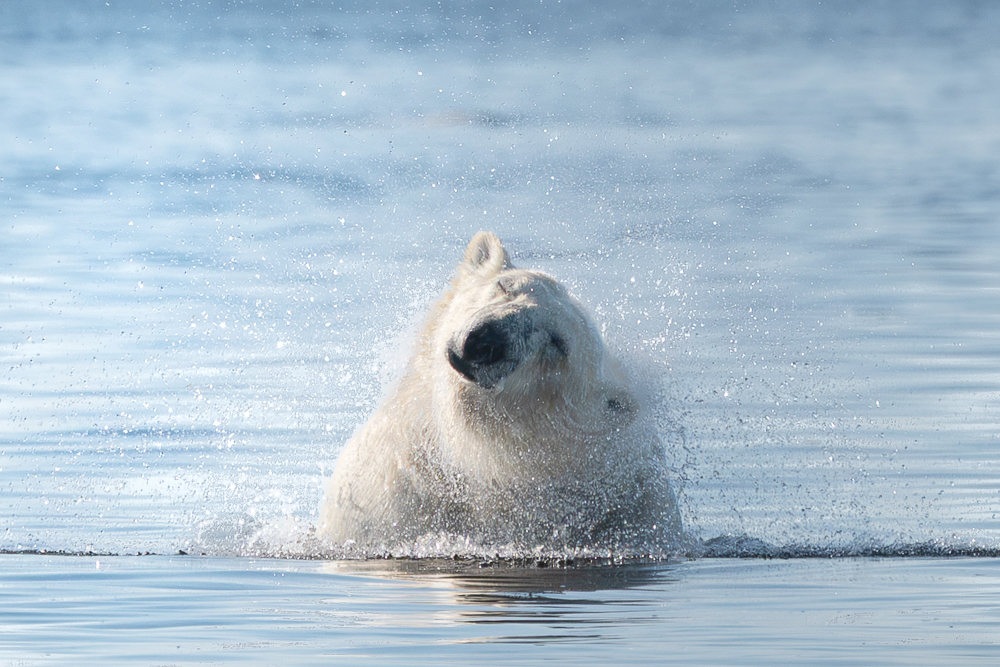
Polar bear shake. Erin Sobon photo.
A mother and cub had been around the lodge, but the aircraft that brought Erin and Pauline in moved them off. Everybody went to bed with the sun still up, because at that latitude it barely sets. The next morning a bear came for breakfast.
“We got to see it from the window,” said Erin. “And it was just so incredible to watch it swim up to the lodge, come out of the water, shake its head, shake off all the water, and kind of meander through the flowers.”
The bear settled. That’s the word the guides use and the thing they wait for. When it had settled, they took the guests out onto the viewing platform, and Erin got her first frames of a wild polar bear before she had finished her coffee.
“It was such a special treat to wake up and have him there,” said Erin.
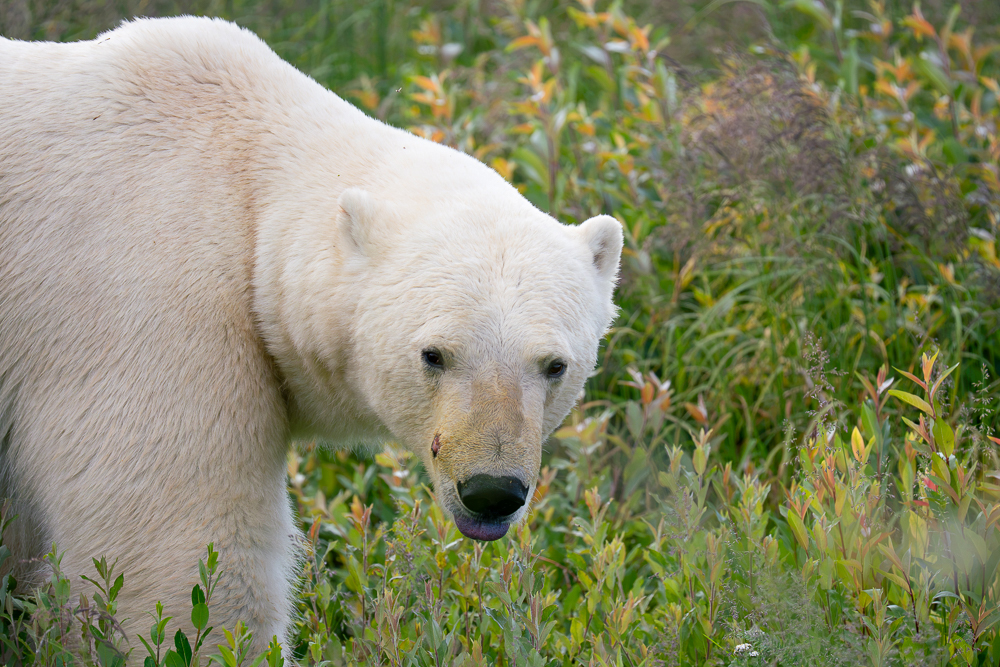
Meandering through the flowers at Seal River. Erin Sobon photo.
Inside, at the buffet table, something else was happening that Erin had not seen coming.
Red River Cereal
Among the yogurt and the hot dishes, the kitchen had put out Red River cereal. Pauline grew up on it. Sixty-odd years ago, in Ontario, that was breakfast, and she had not laid eyes on it in a very long time.
“My mom was so excited, she told everybody, this is the best cereal ever,” said Erin. “And she convinced everybody to try it.”
There were four people from Singapore in the group, two older women travelling together, and a woman who had come on her own. A room full of people who had flown to the edge of Hudson Bay to see polar bears now found themselves holding small bowls of hot cracked grain handed to them by a stranger’s mother. “My mom loved it,” said Erin.
Erin, for the record, is vegetarian, and she had expected a week of side dishes. That was not how it turned out.
“I’ve never eaten so well in my life,” she said.
10 Bears on the Water
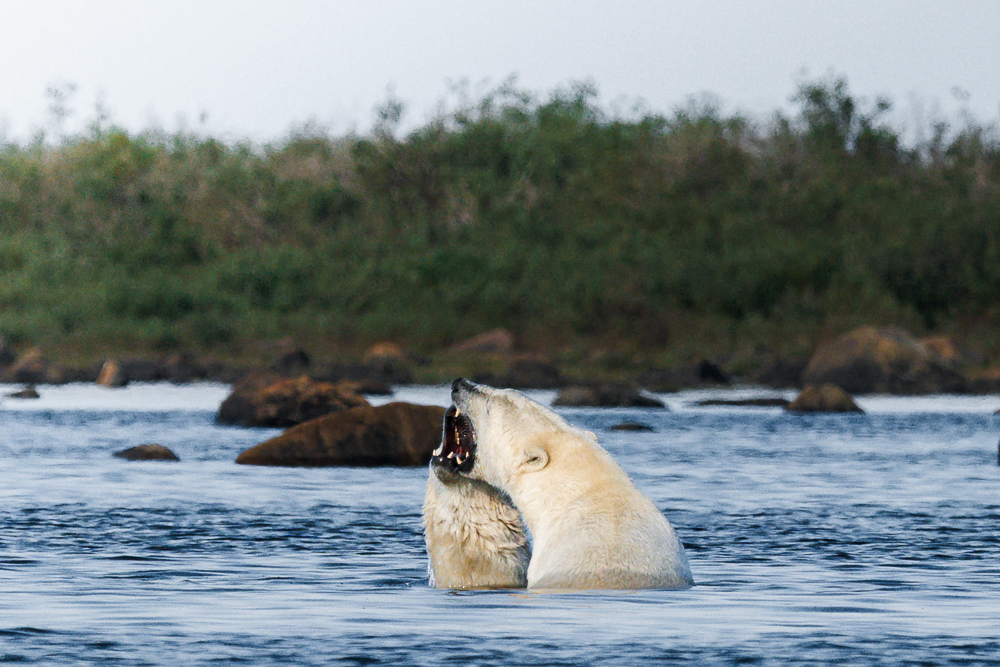
Polar bears playing in the water at Seal River Heritage Lodge. Erin Sobon photo.
The tundra was hot that week, which meant the bears were spending a lot of time in the water. The boat day mattered.
“I actually think the Zodiac excursion was my favourite,” said Erin. The water was glass. They stopped for belugas first, and the canaries of the sea arrived in numbers and refused to leave. Erin got underwater footage on a GoPro, close enough to see their faces. Then they ran to the mouth of the Seal River.
“There were 10 bears in the water and on the shore nearby,” said Erin, who had come hoping for a bear. Singular.
“You’re like, oh, maybe I’ll see a bear, and there’s 10 bears here all doing different bear things,” said Erin.
The bears were not doing anything heroic. A young one swam over to an older one, apparently looking for a game, and the older one swam away. A mother and cub came through the water with the cub riding on her back, and then did something that made the guide sit up.
“Johnny [Berg] was saying it was really interesting behaviour, because the mom and the cub actually went downwind of us,” said Erin. “They swam around us to get a little bit better smell of what we were, what we were doing.”
They wanted to know what the boat was, so they went and stood in just the right place to find out.
Muddy Whites
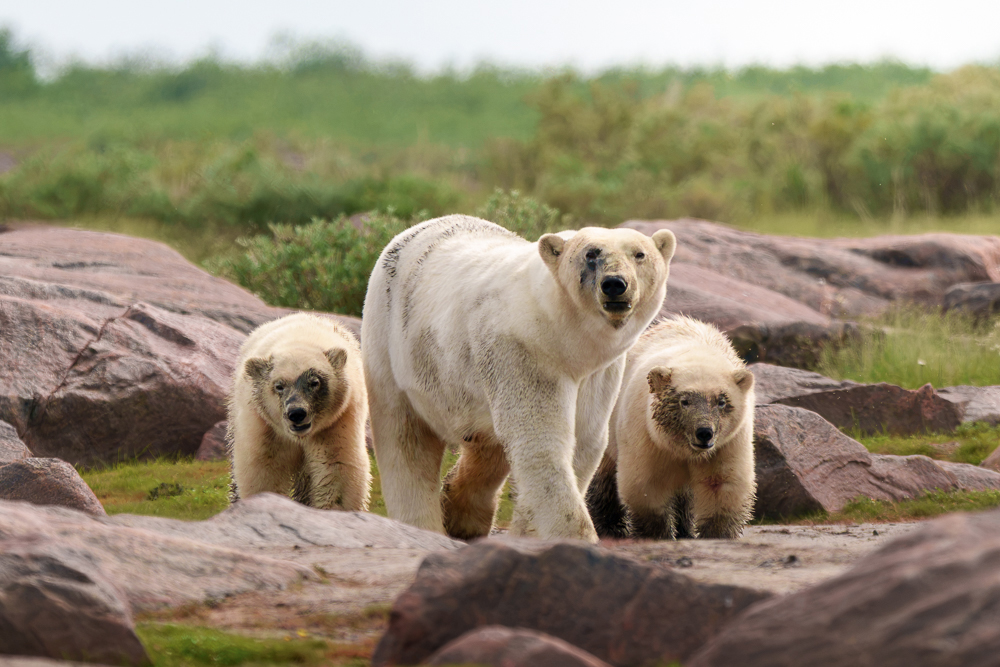
Muddy whites. Seal River Heritage Lodge. Erin Sobon photo.
The other thing nobody warns you about during the summer in polar bear country is the mud.
Everyone arrives with the same polar bear in their head: white animal, white background, winter. When the bears first come off the ice, they are often pure white. But what Erin found was a mother and two cubs who looked like they had lost a fight with a slough.
“The mom and the cubs were filthy,” said Erin. “Boomer [Jerritt] was like, that’s one filthy cub. They were just covered. They almost looked like little potbelly pigs, like they were playing in the mud and had been rolling around.”
Fireweed. Mud. And bears in it. “I didn’t expect them to be covered head to toe in mud, and just having these big personalities that were really cute and curious,” said Erin.
Ethical Wildlife Viewing
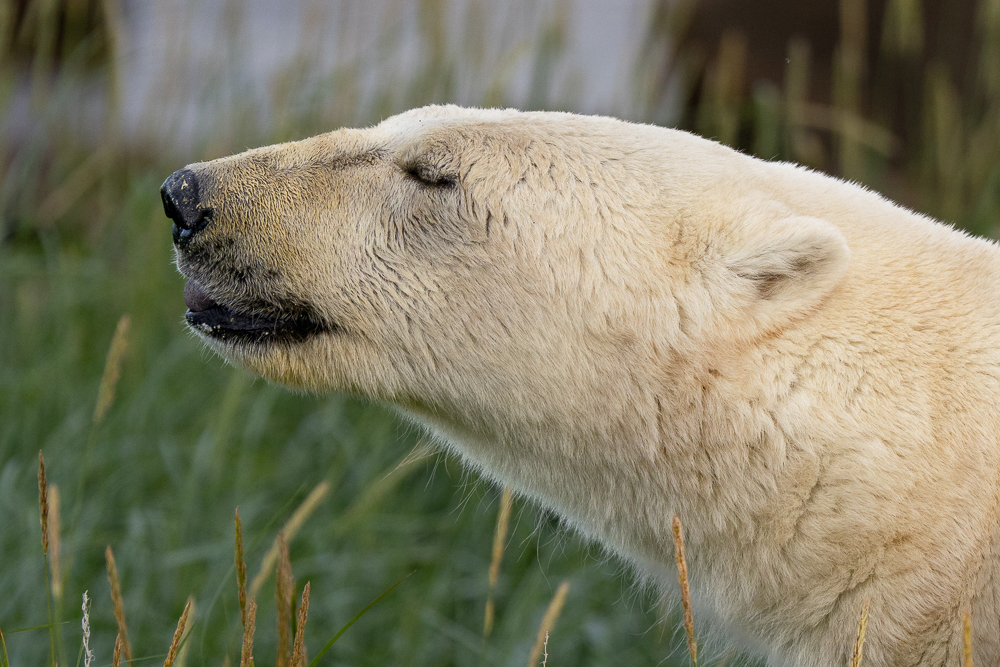
Contentment. Ethical wildlife viewing. Erin Sobon photo.
They were on foot for their next excursion down the coast. This was the part people at home had trouble with before Erin left.
“A lot of people were like, there’s no way, you’ve got to be in a car, how do you do this?” said Erin. Some of them thought she was being reckless. Others thought she was making it up. But she was never frightened. “I always felt very comfortable with it, I think because our guides were such experts,” said Erin. “If I were out there by myself, no.”
What she watched for, being who she is, was not whether the humans were safe. It was whether the bears were. “A lot of ecotourism can focus on exploitation of the animals,” said Erin. “As a wildlife photographer, ethical wildlife viewing is just something I’m very passionate about.”
Erin watched the guides read a bear and wait, hold the group in formation, and let the animal come to a decision about them rather than the other way around.
“It was always about the bear’s comfortability,” said Erin. “It was done really intentionally to introduce us to the bear so that they know we’re there, we’re not surprising it. And at any time if the bear looks uncomfortable or agitated, then we’re the ones who are going to pull back and change our behaviour.”
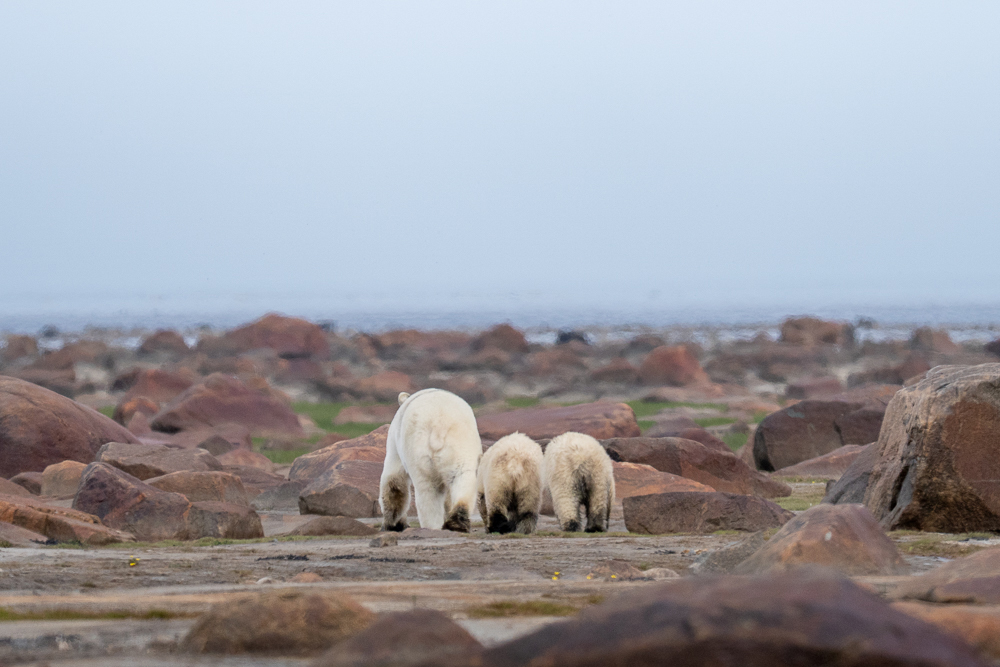
Muddy mom and cubs heading back to Hudson Bay at Seal River Heritage Lodge. Erin Sobon photo.
One of the cubs got a little too interested in the group. Erin watched the guides discourage it from coming closer, as they always do, and understood the calculation.
“That’s really appreciated, that they’re looking out for the bears’ best interests as well,” said Erin, who had done the math on the traffic, too. “There’s two little Zodiacs that go out once or twice a week that these bears see. It’s not hundreds of boats crowding these bears.”
Out on the walks, they crossed tent rings, the stone circles left by people who lived on this coast thousands of years before there was ever a lodge to fly into.
“The people-to-bear ratio is ideal up there,” said Erin.
Tripod, the Three-Legged Polar Bear
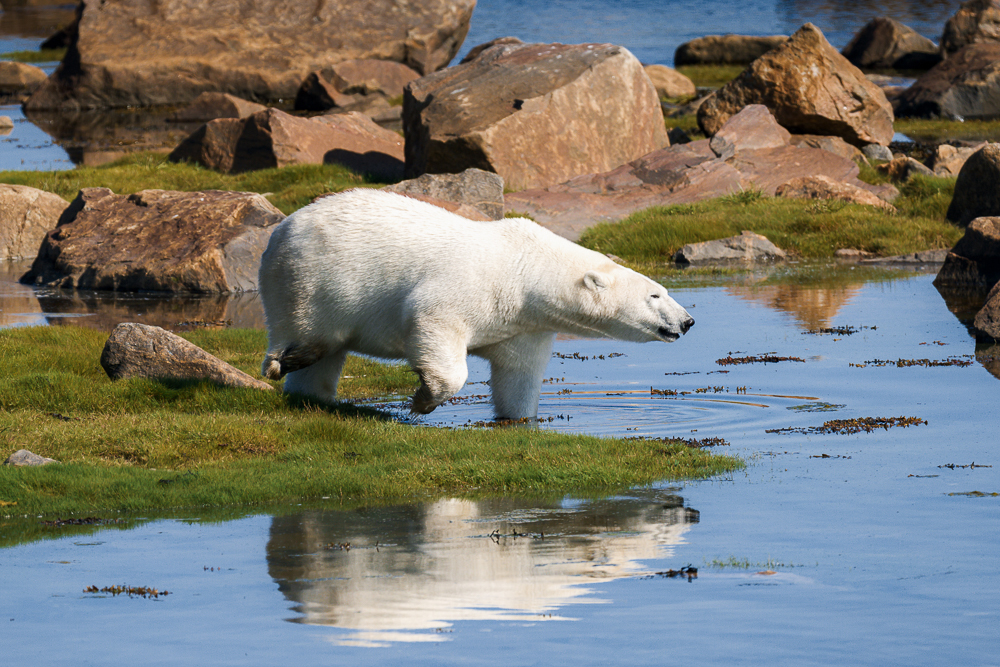
Tripod at Seal River Heritage Lodge. Erin Sobon photo.
On the last morning of the trip, when they were getting ready for their final walk, a bear came up to the lodge instead.
She had three legs. The guides call her Tripod, and she’d been coming to the lodge long enough to be entirely relaxed about the buildings and the people in them, and long enough to have raised a cub that is no longer with her. It was the first time anyone had seen her this season. Pauline had been hoping for exactly this.
She knew that bear. She had seen her on Instagram.
“We got to see her for quite a while before we had to fly out,” said Erin. “And at one point another bear came up as well, and they tolerated each other. They hung out for a while on the peninsula, on the rocks, and we got to see them meet each other and interact for a little bit.”
Erin, who thinks about how animals move, watched the walk.
“Watching her walk was really interesting, like how she moves,” said Erin. “She’s a very deliberate bear when she goes. It seems like she takes things a little bit slower.”
A bear missing a leg, on a coast that kills healthy ones. Fat, by all appearances, and fine.
Then they flew home.
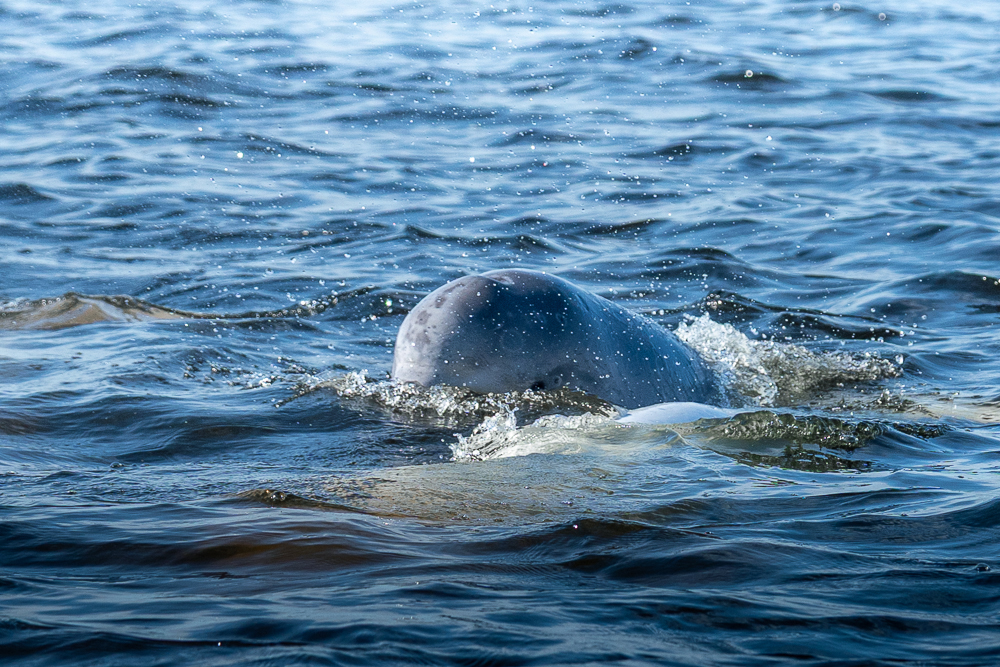
Mom’s favourite part of the trip. The beluga whales. Erin Sobon photo.
Ask Erin what her mother’s favourite part of the trip was, and she does not say polar bears. She says belugas. The sounds they made, how close they came, how she sat and listened to them breathe.
Erin came back with full SD cards and thousands of frames to sort: the mud, the 10 bears, the belugas coming up at the boat, Tripod on the rocks. Her mother came back with none, and that was the point. “My mom’s not a photographer, she didn’t carry any cameras out,” said Erin.
“She loved just being there in the moment for it. For all of it.”