
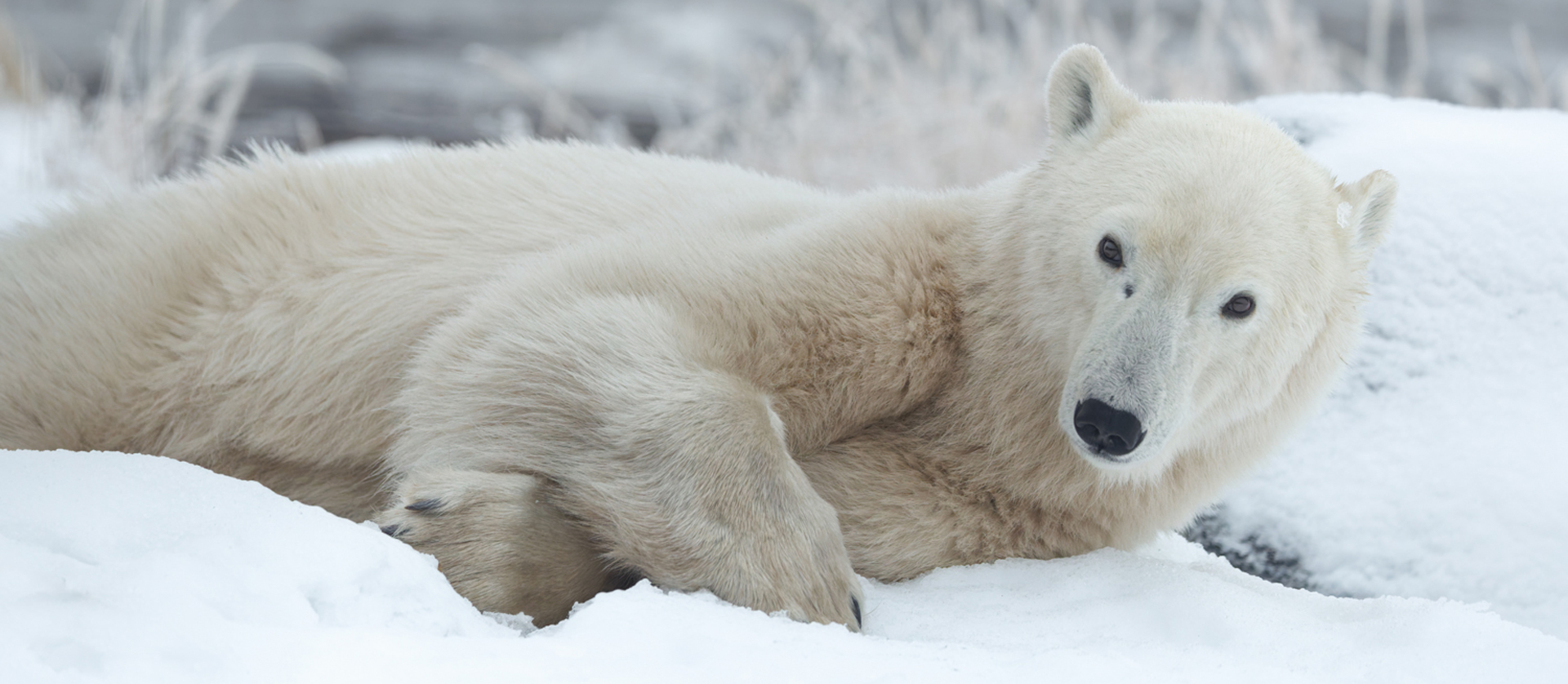
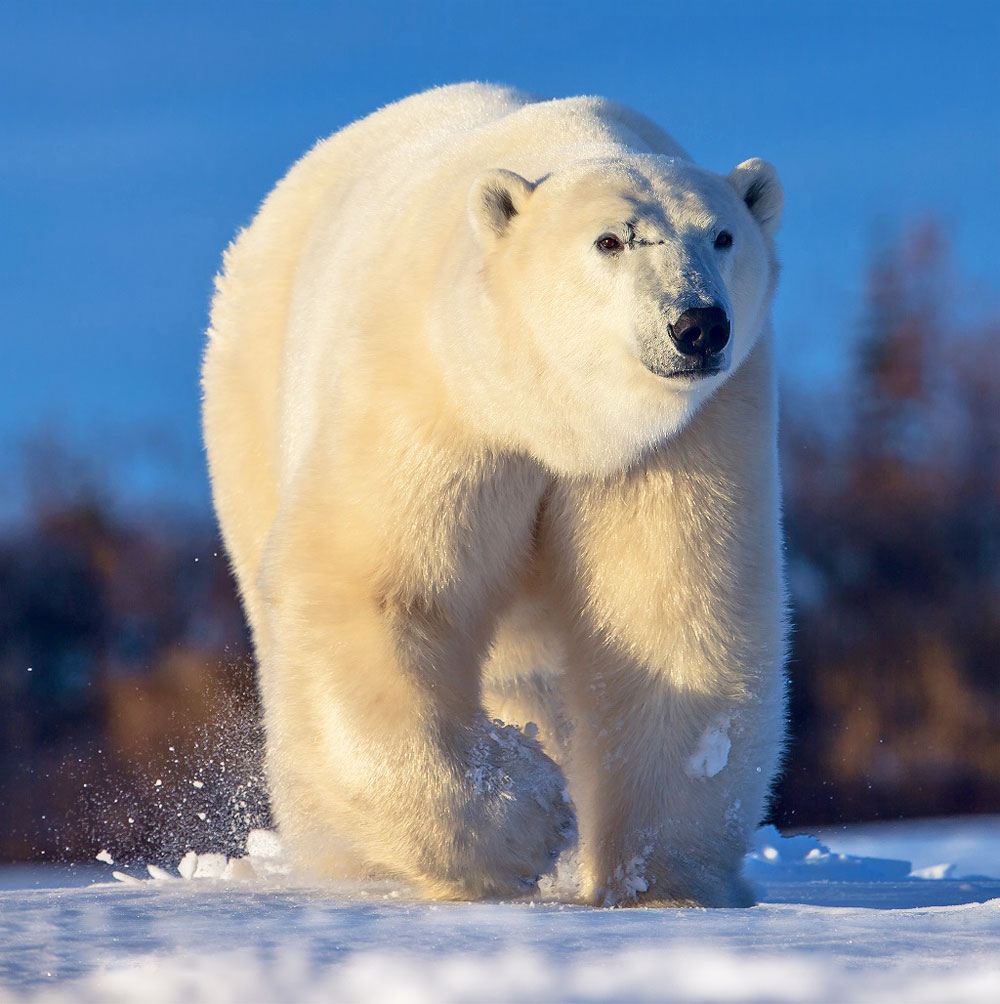
Scarbrow has visited Dymond Lake Ecolodge for 16 of the past 17 years. Jianguo Xie photo.
Answers by “Scarbrow,” a 20-year-old Hudson Bay polar bear
Scarbrow, a massive polar bear with a distinctive scar above his right eye, has been visiting Churchill Wild’s ecolodges for 16 of the past 17 years. First spotted as a curious three-year-old, he now stands as an elder of Hudson Bay at nearly 20 years old. His scar, earned in a legendary fight with a wolverine in his first year away from his mother, gives him his name and marks him as one of the most recognizable bears along what guides call the “Polar Bear Highway.”
We sat down (in spirit) with Scarbrow to discuss his life, his travels, and what two decades on Hudson Bay have taught him.
Meet Scarbrow
Q: Scarbrow, when did you first start visiting the lodges?
Scarbrow: I was just a scrappy three-year-old when I first wandered into Dymond Lake. That was nearly 17 years ago. The guides noticed me right away, not because I was particularly large, but because of this scar above my right eye. It came from a tussle with a wolverine. Fierce little creature. I won, obviously, but it left its mark.
Q: How old are you now in human terms?
Scarbrow: I’m about 20 winters now. For a polar bear, that’s like being in your seventies or eighties in human years. Most of us don’t make it past 15-18 in the wild, so I suppose I’m what you’d call a senior citizen. But don’t let the gray whiskers fool you, I can still hold my own when it matters.
The Polar Bear Highway
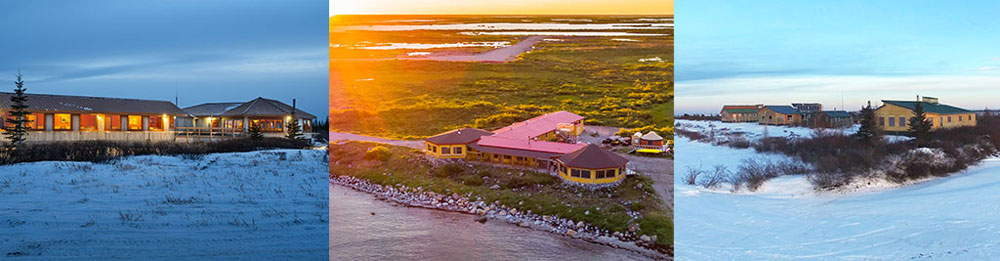
The “Polar Bear Highway” runs by all three Churchill Wild ecolodges.
Q: We keep hearing about the “Polar Bear Highway.” What is that exactly?
Scarbrow: It’s the route we bears have walked for generations along Hudson Bay’s coast. From Churchill north through Dymond Lake Ecolodge, up to Seal River Heritage Lodge, then back south through Churchill and down to Nanuk Polar Bear Lodge where the boreal forest meets the bay.
Your lodges didn’t create this path, you just built them along it. Smart thinking, really. We’ve been using this highway long before humans arrived. It follows the ice edge, the best seal hunting, the denning areas. Everything we need for survival.
The Polar Bear Highway Route:
- Churchill (starting point and the Polar Bear Capital of the World)
- Dymond Lake Ecolodge (tundra meets Hudson Bay)
- Seal River Heritage Lodge (beluga whale territory)
- Nanuk Polar Bear Lodge (where polar bears meet black bears and wolves)
Polar Bear Breeding and Reproduction Cycle
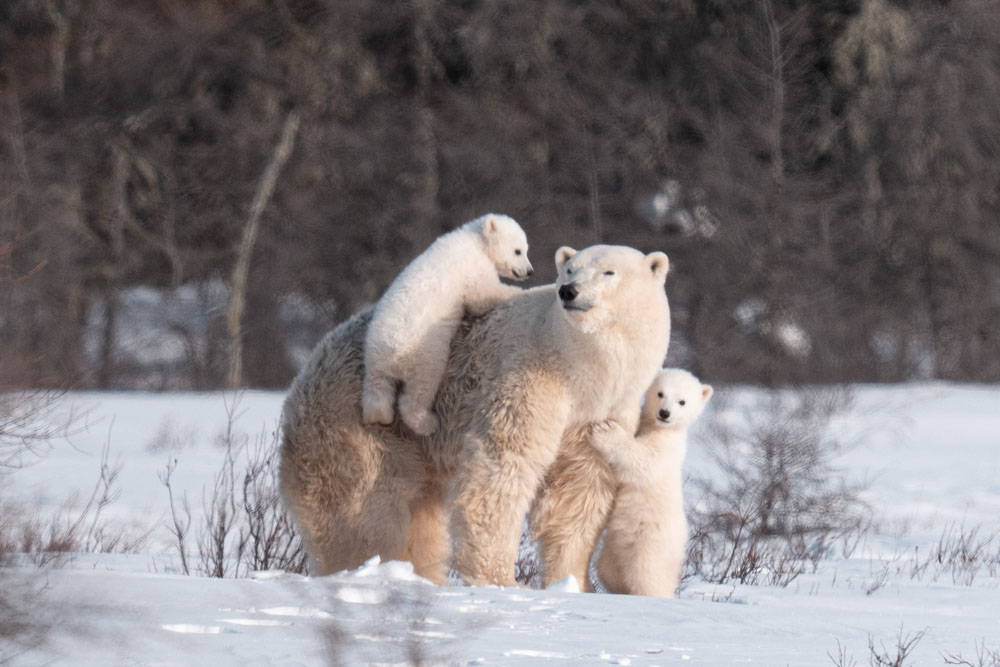
Mom with her two cubs at Nanuk Polar Bear Lodge. Fabienne Jansen photo.
Q: How many cubs do you think you’ve fathered over the years?
Scarbrow: That’s impossible to know for certain. We males don’t stick around after mating, that’s entirely the mother’s responsibility. But given my size, my years of breeding success, and the number of springs I’ve spent courting females, I’d estimate at least a dozen, maybe more. Some of those young bears guests you see sparring at Dymond Lake or Seal River could well be my offspring.
Q: Do you ever mate with the same female more than once?
Scarbrow: It happens occasionally if our paths cross again, but it’s not the norm. Most years bring new encounters. We follow scent trails in the spring, and if a female accepts me, we might stay together for a few days. Then we go our separate ways. Polar bear romance isn’t built for the long term.
Q: How fierce is the competition for females these days?
Scarbrow: Always intense. Young males are hungry to prove themselves, and they’ve got strength and stamina on their side. But I’ve got something they don’t have, nearly two decades of experience. I know when to fight and when to walk away. These old scars didn’t come from backing down from every challenge, but wisdom means picking your battles carefully.
Q: Can you still father cubs at your age?
Scarbrow: Absolutely. If I can still spar, still hold territory, still prove I’m fit, then yes, I can sire offspring. Age brings caution, but it doesn’t eliminate capability. Just this past spring I successfully mated. The day I can’t compete anymore is the day I step aside, but that hasn’t come yet.
The Science of Polar Bear Breeding
Polar bears have a fascinating reproductive cycle. Mating occurs in spring (April-May) on the sea ice, but fertilized eggs don’t implant until autumn, a biological adaptation called delayed implantation. This ensures cubs are born during the optimal winter denning period. Mothers give birth in December or January to 1-2 cubs the size of guinea pigs, then nurse them with milk that’s 31% fat, the richest of any land mammal. Fathers like Scarbrow play no role in raising cubs. Mothers handle everything alone for 2-3 years.
Life Through the Seasons
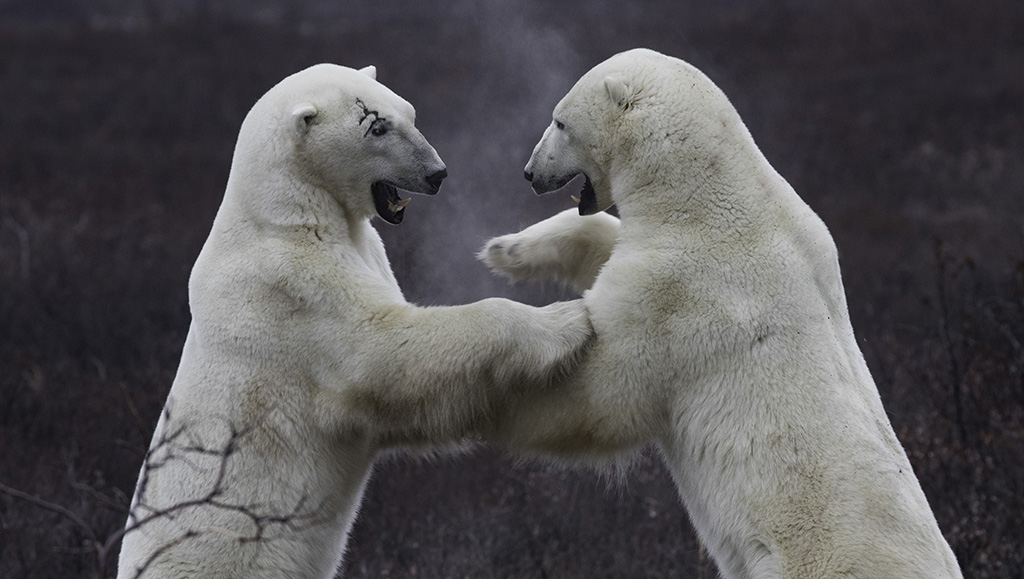
Scarbrow sparring at Dymond Lake Ecolodge. Robert Postma photo.
Q: Walk us through your year, season by season.
Scarbrow: Each season has its rhythm:
Winter is my prime time. While pregnant females are tucked away in dens, the rest of us are out on the sea ice hunting seals. I’ll wait at breathing holes for hours, sometimes days, for one seal to surface. Patience is everything.
Spring is feast season. Young seals are everywhere, and mothers emerge from dens with tiny cubs. This is when I pack on most of the fat I’ll need for the rest of the year. Mother’s milk is incredibly rich, over 30% fat, helping cubs grow rapidly.
Summer is the lean time. The ice disappears completely, and I’m forced onto land. I fast, sometimes for four months, living entirely off stored fat. I might lose a kilogram or two per day. Guests often see me sprawled in the fireweed. They call it “bear yoga,” but it’s really just energy conservation.
Fall is anticipation season. Hundreds of us gather near Churchill and Dymond Lake, sparring and pacing the coast, waiting for Hudson Bay to freeze again. The first ice can’t come soon enough.
Q: What’s it like living through summer without hunting?
Scarbrow: Imagine your longest diet, then multiply it by four months. I’ll snack on berries, kelp, bird eggs, maybe find a carcass washed up on shore, but nothing compares to seal blubber for calories. It’s about conserving every bit of energy, which is why you see me lying so still in the flowers. Every movement costs precious fat reserves.
The Famous Breakfast Incident
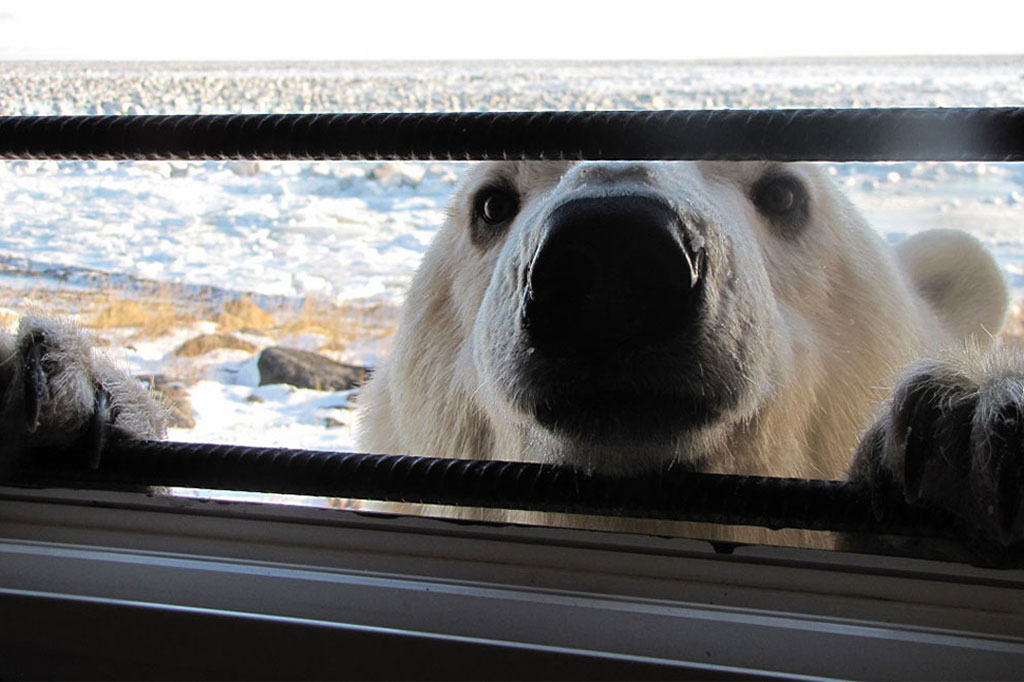
Is that a polar bear at the window?
Q: We heard you once surprised guests by looking in the window of their room at Dymond Lake. What happened?
Scarbrow: One morning I decided to check out what all the activity was about inside the lodge. I rose up on my hind legs, all eight feet of me, and peered through a bedroom window. The guests were having their morning coffee when suddenly there’s a 1,200 pounds of polar bear saying hello through window. You can’t do that anymore, there are fences round the windows now.
You should have seen their faces. Someone took a video of it. I stayed there for a few moments, just as curious about them as they were about me. The guide quipped something about whether the ladies wanted him to stay for protection. I decided I’d seen enough and ambled away, but I could hear the excited chatter continuing long after I left.
Guest Testimonials:
“Seeing a polar bear on foot was unforgettable!” ~ Debra Hartsell & Michael James
“Scarbrow followed us along the hiking trails… a spectacular trip and we would go again in a heartbeat!” ~ Mary Giesler
Polar Bear Diet and Hunting Behavior
Q: What’s your favorite meal?
Scarbrow: Seal blubber, without question. Pure energy in its most concentrated form. I can eat 45 kilograms, that’s about 100 pounds, of blubber in one sitting when I’m really hungry. I often eat just the fat and skin, leaving the rest for Arctic foxes, ravens, and other scavengers. Nothing goes to waste in the Arctic.
Q: If you could order a sandwich, what would it be?
Scarbrow: A seal-blubber sub on an ice-cold baguette. Hold the lettuce, vegetables are just garnish in my world.
Q: Do you really hunt beluga whales at Seal River?
Scarbrow: A few of us have learned this technique, yes. We position ourselves on rocks at the river mouth and wait for high tide to push the belugas within striking distance. It’s risky, belugas are large and powerful, but when you’re desperate during the ice-free season, innovation matters. The BBC even filmed one of these hunts for Seven Worlds, One Planet. Most bears stick to seals, but some of us have adapted to new opportunities.
Q: Do you eat plants?
Scarbrow: In summer, sure, berries, kelp, bird eggs, even grass sometimes. But they’re snacks, not meals. A bear my size needs serious calories, and only seal blubber provides that.
Polar Bear Physical Characteristics and Arctic Adaptations
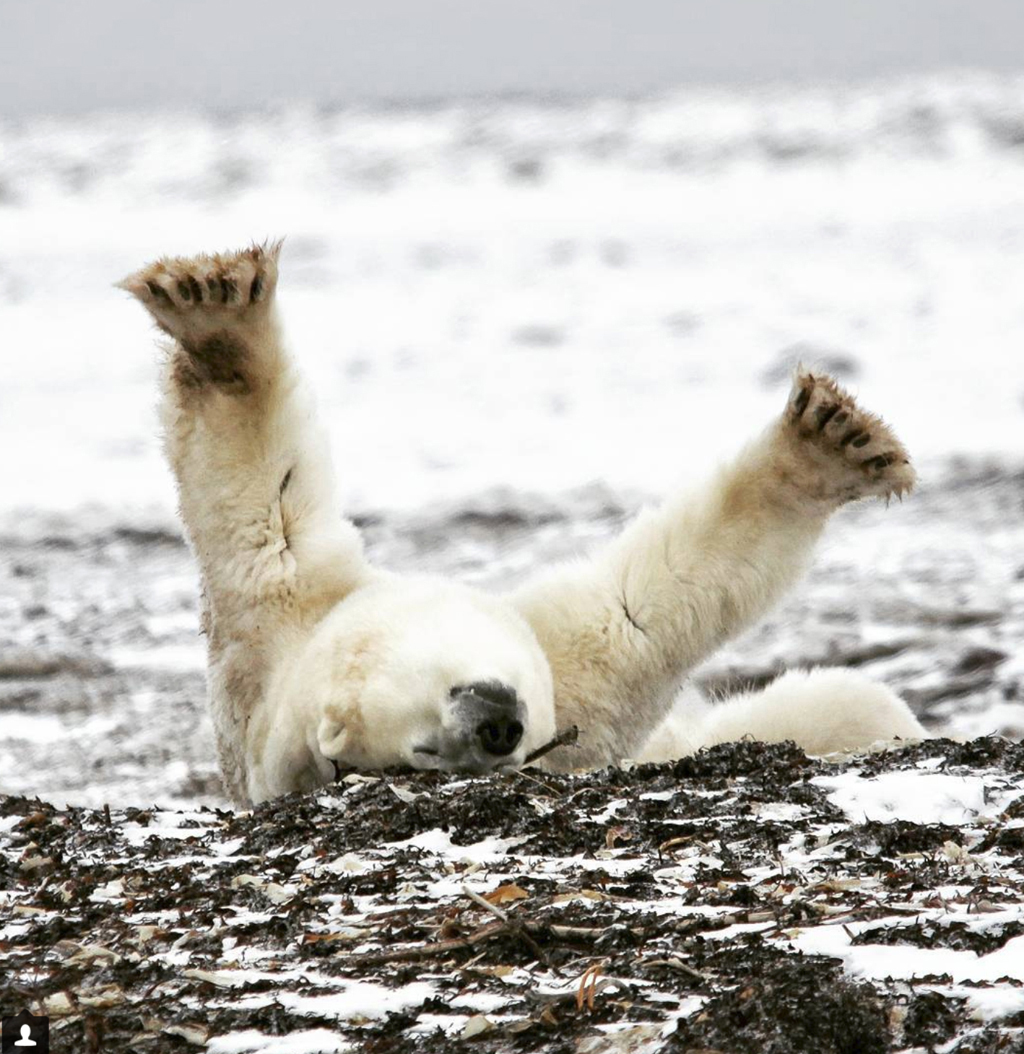
Rock ‘n roll Scarbrow. Dax Justin photo.
Q: How big are you exactly?
Scarbrow: At my peak after a good hunting season, I’ve weighed close to 600 kilograms, that’s about 1,300 pounds. By late summer, I slim down to maybe 1,000 pounds. My paws are nearly 30 centimeters across, like built-in snowshoes with traction pads.
Q: What’s your superpower?
Scarbrow: My nose. I can smell a seal from 20 miles away under the right conditions. Some say we can detect odors from even 40 miles in perfect weather. Through snow, through ice, scent is my GPS system. When humans talk about “following their nose,” they have no idea what that really means.
Q: How fast can you run?
Scarbrow: Faster than I look. In short bursts, I can hit 40 kilometres per hour, that’s about 25 miles per hour. But I overheat quickly, so speed is for emergencies only. Most of the time I prefer a steady plod that conserves energy.
Q: How far can you swim?
Scarbrow: We’re marine mammals, so swimming is natural. The record belongs to a female who swam 687 kilometers, that’s 426 miles, over nine straight days when the ice retreated. I prefer shorter crossings between ice floes, but climate change is forcing longer swims. Some of us don’t make it.
Q: Do polar bears form friendships?
Scarbrow: We’re naturally solitary creatures, but relationships do form. I’ve seen pairs of bears travel together, and some return to the same companions year after year. Churchill Wild has documented that polar bears have feelings too, we’re not just hunting machines. We can show affection, playfulness, and even what humans might call friendship, though it looks different from your social bonds.
Human Encounters
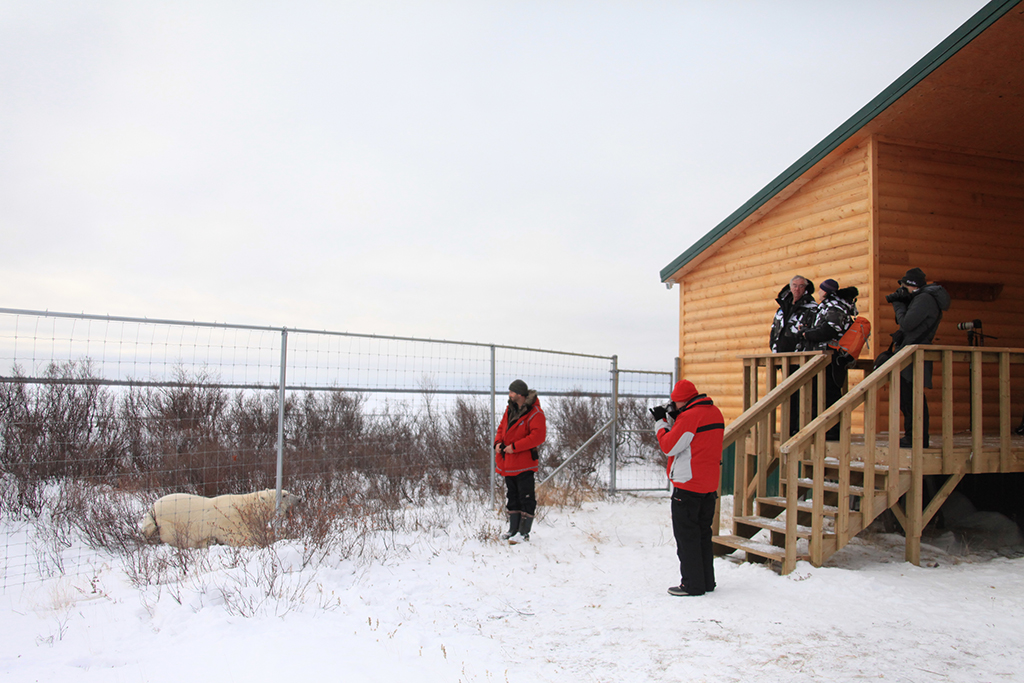
Polar bear and guests. Dymond Lake Ecolodge. Dafna Bennun photo.
Q: How do you feel about tourists photographing you?
Scarbrow: At Churchill Wild’s lodges, I don’t mind. The guides have five decades of experience keeping both bears and humans safe. They know our behavior, keep respectful distances, and never try to bait or harass us. Sometimes I’ll wander closer just to watch the excitement on people’s faces. It’s entertaining to see grown humans freeze when I approach.
Q: What happens if bears wander into Churchill town?
Scarbrow: The town has what locals call the “Polar Bear Holding Facility” or bear jail, essentially. Problem bears are safely captured and held until freeze-up, then released far from town. It keeps everyone safe. I spent a night there once in my younger days, got a green spray-paint mark and a helicopter ride north. Not my finest moment.
Q: When’s the best time for polar bear viewing season?
Scarbrow: Depends what you want to see.
- July-September: Walking safaris at Seal River Heritage Lodge and Nanuk Polar Bear Lodge, plus thousands of beluga whales in the Churchill and Seal Rivers. This is peak Arctic summer when we’re fasting on land.
- October-November: Sparring season and first ice formation, the classic Churchill polar bear tours experience at all three Churchill Wild lodges. The snow and ice makes great backdrops for photos, especially in the right light.
- February-March: Den emergence season when mothers bring their cubs into the world and walk from Nanuk Polar Bear Lodge out to the Hudson Bay sea ice.
- Each season tells a different part of our story along the Hudson Bay ecosystem.
Q: What’s the most awe-inspiring moment you’ve shared with a human?
Scarbrow: There have been many, but two stand out. Explorer Dax Justin once walked from the runway at Dymond Lake straight onto the tundra and found himself surrounded by sparring bears, including me. No barriers, no vehicles, just raw Arctic wildlife presence. He later wrote that “the moment doesn’t belong to you—it belongs to the bear.” That’s the kind of feeling you won’t find on any other polar bear adventure—that mutual recognition between species that changes people forever. And of course, my conversation with head guide Terry Elliott at the Dymond Lake Ecolodge fence was a special one, simply because we have known each other for so long.
Hudson Bay Polar Bear Population and Conservation
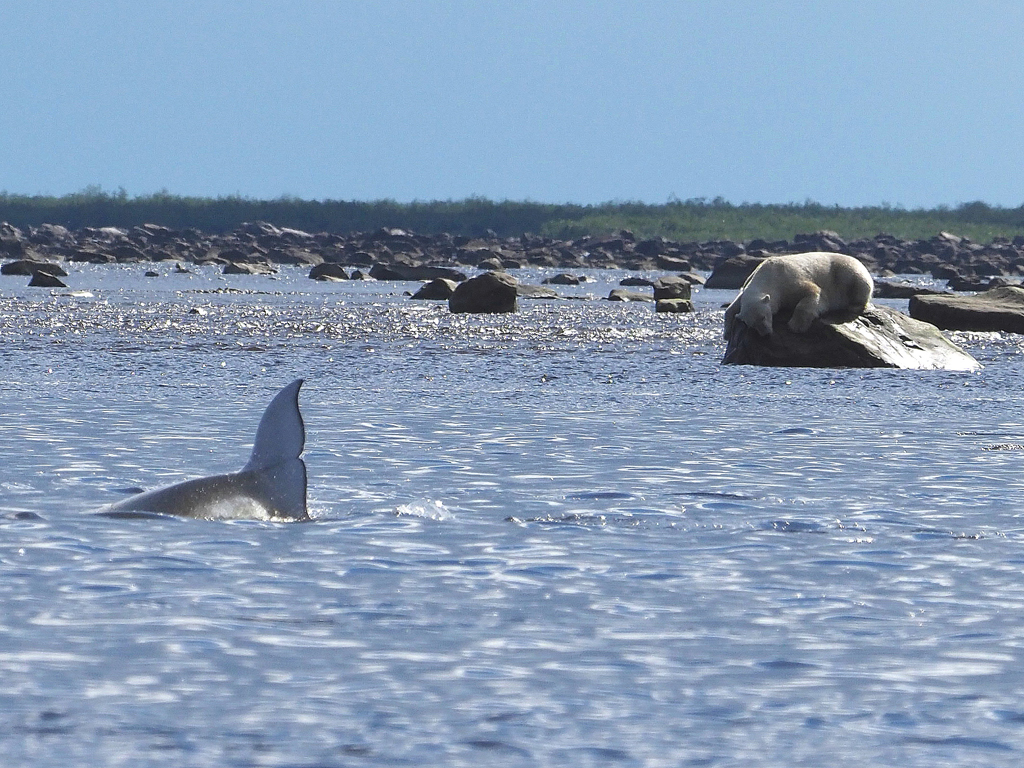
Patient polar bear hunting beluga whales. Seal River Heritage Lodge. Quent Plett photo.
Q: Are Churchill’s bears doing well?
Scarbrow: The individual Manitoba polar bears you see here are generally healthy and strong. Some say our Western Hudson Bay population has dropped significantly, but I’m not seeing it. And we’re part of the broader Arctic wildlife ecosystem that includes Wapusk National Park, one of the world’s most important polar bear denning areas.
Q: What’s the biggest threat to your survival?
Scarbrow: Sea ice hunting loss. Simple as that. Later freeze-up, earlier melt means less time for seal hunting. Every week of lost ice time means more Arctic summer fasting, thinner bears, and fewer surviving cubs. Scientists predict two-thirds of polar bears worldwide could be gone by 2050 if current climate change trends continue.
No ice equals no seals. No seals equals no polar bears. It really is that straightforward, but we’re adapting. Some of us are hunting beluga whales regularly during the summer.
Q: What gives you hope?
Scarbrow: That people still come to walk with us. That they leave with stories and a deeper understanding of what’s at stake. Every guest who meets me eye-to-eye becomes an ambassador for Arctic conservation. Tourism here isn’t just about seeing bears, it’s about creating connections that inspire protection.
Q: Have you known any other elder bears like yourself?
Scarbrow: I’ve encountered a few over the years. There was an old male we called “Warrior Pete” who took his final walk at Seal River a few seasons back. He was even older than me, a true ancient by polar bear standards. Watching him reminded me that we all have our time, and when it comes, there’s dignity in accepting it on familiar ground. He chose to end his journey in a place he knew well, surrounded by the sounds and scents of home.
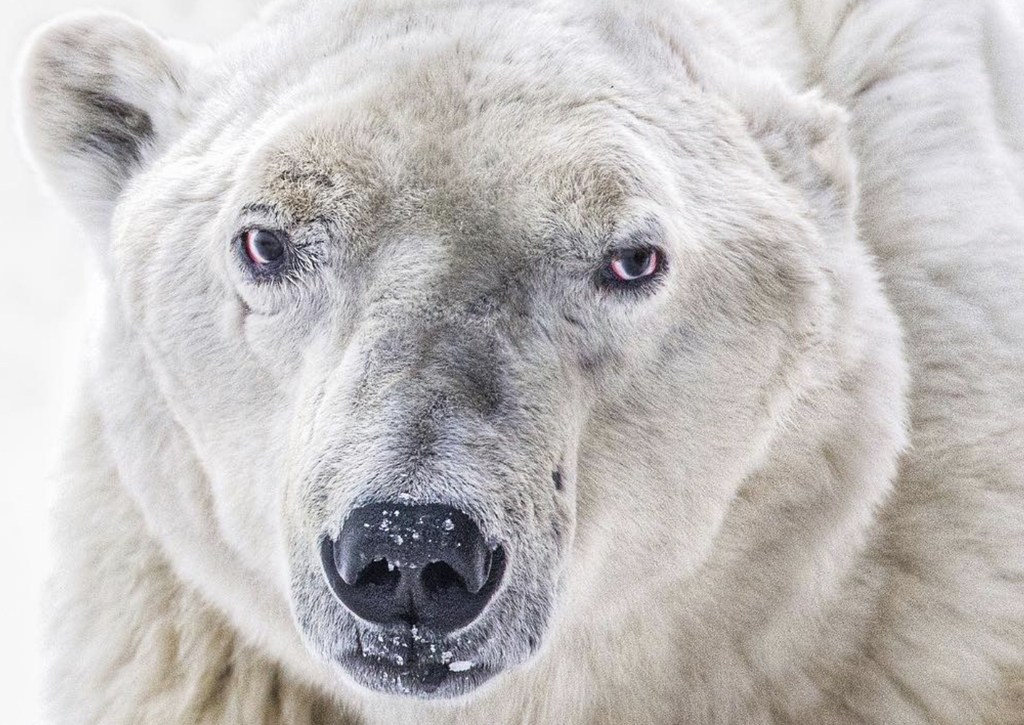
Warrior Pete. Ruler for decades. Jenny Loren photo.
Quirky Questions
Q: Do you have a favorite weather?
Scarbrow: Cold, still days with just enough wind to carry scents. Perfect hunting conditions. My least favorite? Warm rain in fall that delays ice formation and extends my fasting period.
Q: Ever get bored during summer?
Scarbrow: Never truly bored. There are always belugas to watch in the estuary, young bears to observe sparring, or new scents to investigate. Think of it as Arctic Netflix, always something interesting if you know where to look.
Q: If you ruled the Arctic, what law would you pass?
Scarbrow: “Mandatory ice preservation.” But seriously, protect the sea ice habitat. Everything else we can adapt to, but without ice, there is no future for polar bears.
Q: How do you feel about being famous?
Scarbrow: I’ve been photographed thousands of times and appeared in documentaries. Fame is fine as long as it serves a purpose, helping people understand and care about polar bears. If my scar and my story can inspire conservation action, then I’m happy to be recognizable.
Final Thoughts
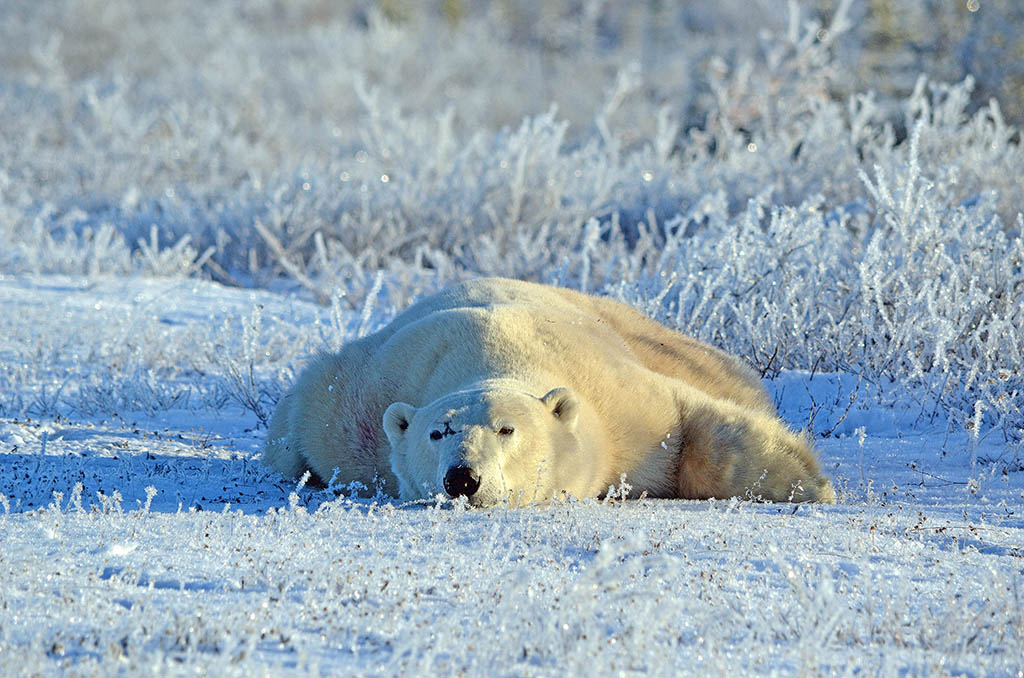
Scarbrow relaxing at Dymond Lake Ecolodge. Ruth Schneider photo.
Q: What other Arctic wildlife will I see in the Hudson Bay ecosystem?
Scarbrow: Thousands of beluga whales during the summer at Seal River and in Churchill, Arctic foxes year-round, snowy owls, caribou, wolves (especially at Nanuk), black bears, moose, and over 200 bird species. At Nanuk three ecosystems converge, marine, tundra, and boreal forest, so the wildlife is incredibly diverse.
Q: How close can you get to polar bears safely?
Scarbrow: Churchill Wild’s walking safaris get you closer than anywhere else—sometimes within 100 meters when conditions are right. Their five decades of experience mean they read our behavior perfectly. No feeding, no baiting, just natural encounters.
Q: What do you want people to take away from meeting you?
Scarbrow: That I’m more than just a photo opportunity. I’m a living story, a survivor, a father, a witness to two decades of change in the Arctic. Every season I return is another chance for humans to walk with me and understand what we’re all fighting to protect.
My scar tells one story of survival. The shrinking ice tells another. When you meet me at Dymond Lake or Seal River, you’re not just seeing a polar bear, you’re looking into the eyes of an elder who has walked this coast through good times and lean times, through thick ice and thin.
Respect me as the wild creature I am. Walk with me along the Polar Bear Highway. Photograph me, be awed by me, but remember, my future depends on sea ice. Protect that, and you protect me, and the chance for future generations to meet bears like me.
Q: Any final words of wisdom?
Scarbrow: Twenty years on Hudson Bay have taught me that survival requires both strength and adaptation. The young bears will learn, as I learned, that patience beats power, that wisdom comes from scars, and that some stories are worth telling over and over again.
Keep walking with us. Keep telling our stories. And keep fighting for the ice that makes it all possible.
To walk with Scarbrow and other polar bears along Hudson Bay, visit Churchill Wild’s Dymond Lake Ecolodge, Seal River Heritage Lodge, or Nanuk Polar Bear Lodge. Experience the magic of ground-level polar bear encounters on the only walking safaris of their kind in the world.
Sources & Further Reading
Churchill Wild Polar Bear Tours and Safaris 2025-2026











Loved your Scarbrow “interview.” Congratulations to whomever devised that way to convey all sorts of information — much, much more than is typically found. WOW!
Thank you so much Carolyn! All credit to Scarbrow 🙂