
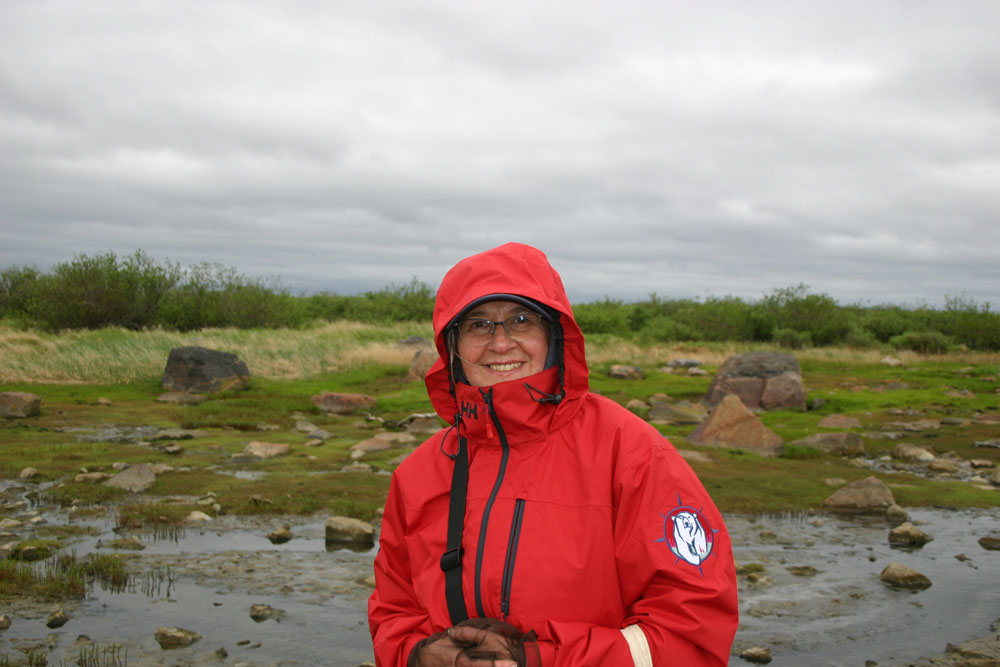
Dr. Diana Robson. Curator of Botany at the Manitoba Museum.
Most guests come to Seal River Heritage Lodge hoping to see a polar bear. Dr. Diana Robson came hoping to fill a gap in the province’s plant record.
“The polar bears were going to be sort of a bonus for me,” Robson said, “because the main reason I was going up there was to look for the plants.”
Robson is Curator of Botany at the Manitoba Museum, and she spent her week on the tundra doing something most guests never think to do, collecting a specimen whenever something caught her eye.
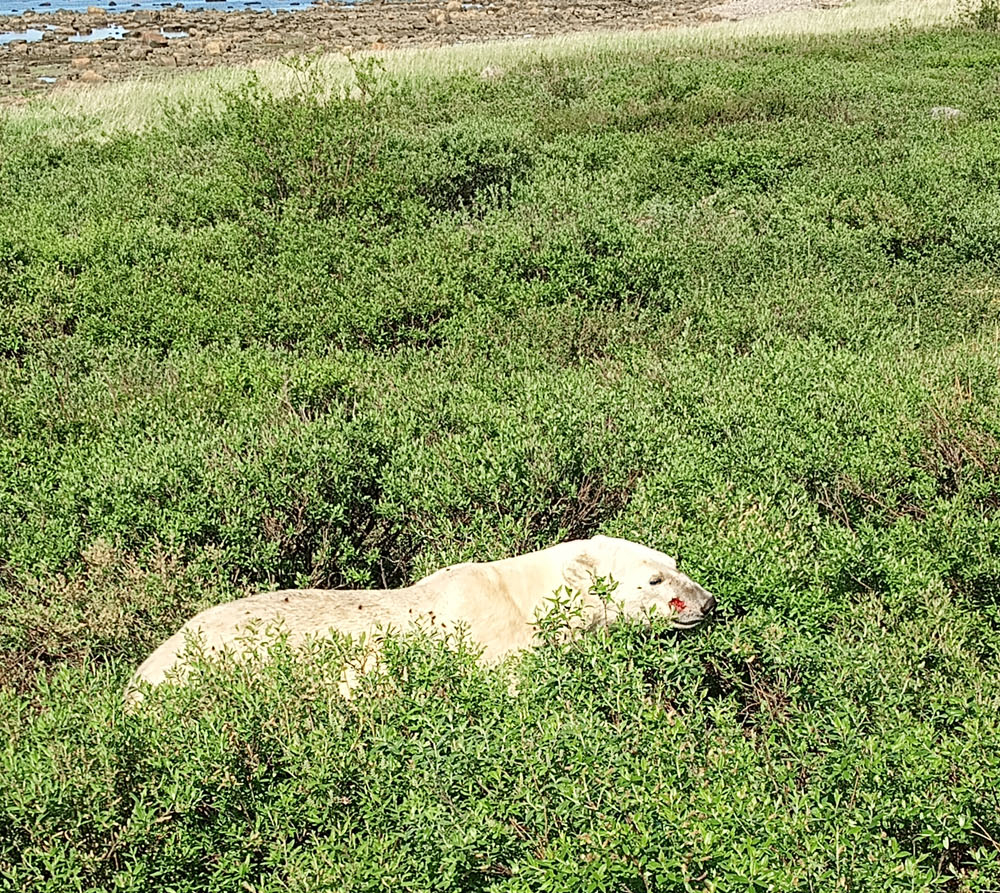
The polar bears were a bonus. Dr. Diana Robson photo.
She’d snap off a stem or dig up a single sample of each new species and slide it into the plant press tucked in her duffel bag, all while trying to keep pace with the group. It’s the same method herbaria have used for centuries: one dried, catalogued specimen per species added to a permanent research collection, not a fistful of flowers picked for a bouquet. By the end of the week the other guests had started keeping score.
“There was one couple who always asked, ‘How many plants did you get today?’” Robson said. “I’d tell them I’m up to 30, or I’m up to 40. And they’d be amazed.” She left Seal River Heritage Lodge with about 140 specimens. Collecting them was the reason she came.
Robson has worked at the museum for 23 years. Last year she published the first volume of Manitoba Flora: A Guide to the Vascular Plants of Manitoba, a book that tracks where in the province every plant species grows. Each entry lists an ecozone. While writing it, she kept running into the same odd pattern: plants collected around Churchill had never been collected at Seal River, even though the two sit close together on a map.
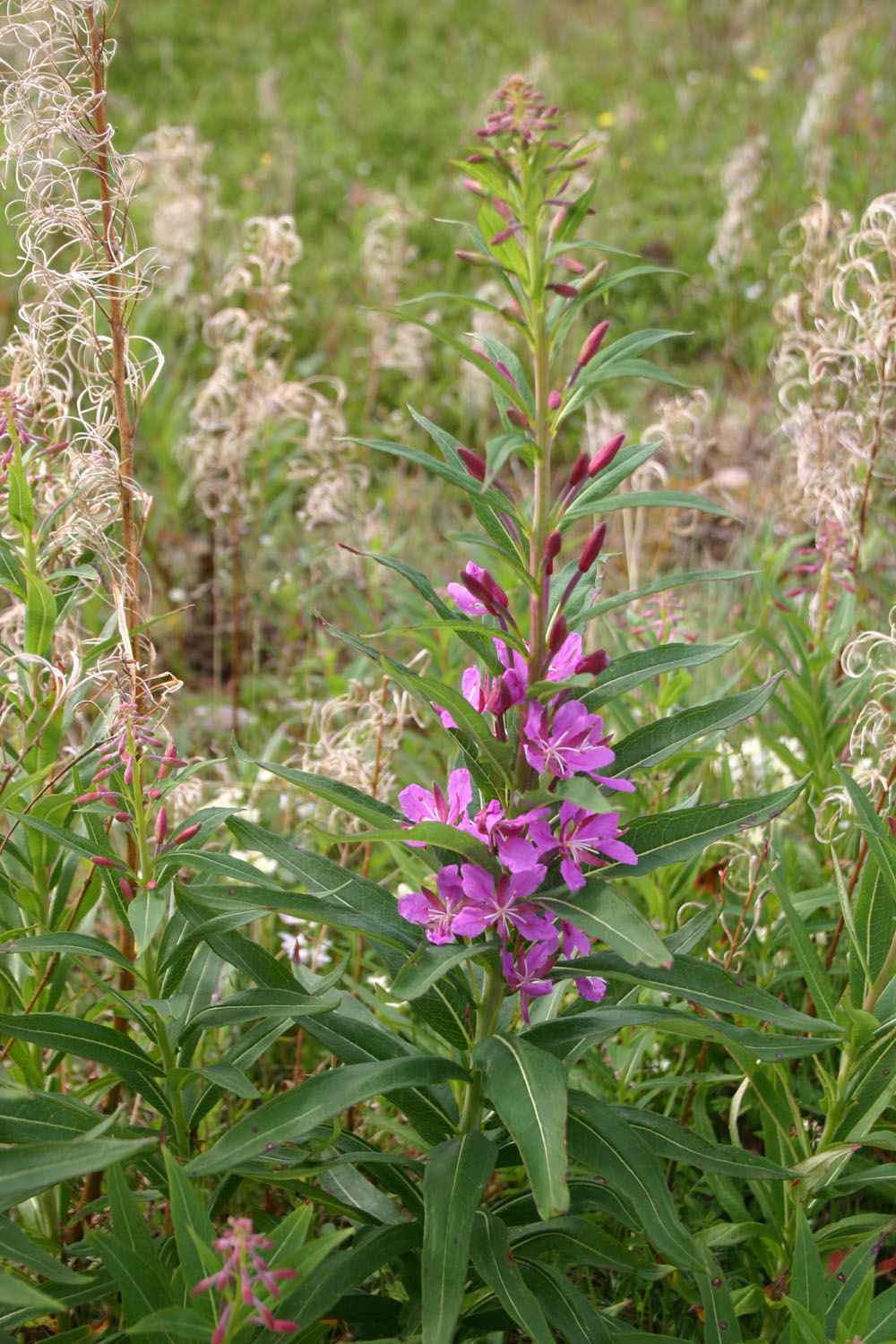
Broad-leaved fireweed at Seal River. Dr. Diana Robson photo.
“There were quite a few plants that had been collected around Churchill that had not been collected in the Seal River area, which is actually a different ecozone,” Robson said. “It’s part of the Southern Arctic ecozone.”
That sliver of coast between Hudson Bay and the tundra inland shares more in common with Nunavut than with Churchill’s subarctic terrain. Nobody had been out to formally collect there in more than 40 years. A previous museum curator made two trips, in 1973 and in 1983. After that, nothing. Robson checked with the University of Manitoba as well, but their northern fieldwork had gone to Wapusk National Park, not Seal River.
“It’s difficult to get up there, it’s expensive to get up there, there’s polar bears everywhere,” Robson said. Not exactly a place botanists pass through on the way to somewhere else.
So Robson closed the gap herself. She found the lodge online, contacted Churchill Wild directly, and asked whether they could help make the trip work. The museum and Churchill Wild split the cost, and Robson joined the lodge’s Birds, Bears and Belugas safari this July.
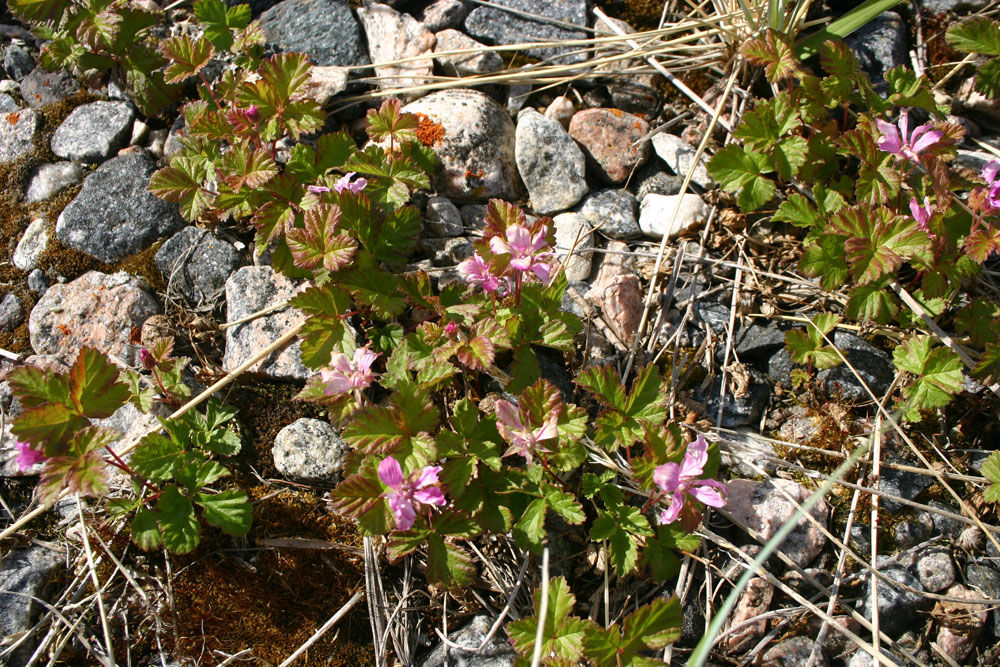
Cloudberries at Seal River. Dr. Diana Robson photo.
Of the 140 specimens she brought home, at least a dozen species had never been recorded in that ecozone before, including an aquatic burrweed that will make her own first volume of Manitoba Flora out of date before the second is even finished.
“I don’t know if there’s anything new to the province,” Robson said, “but there were, I think, about a dozen plants that had at least not been collected in that ecozone before.” If anything from the trip does turn out to be new to the province entirely, her best guess is a sedge, a grass-like plant common in cold, marshy ground.
Robson won’t have a final count of rare finds until she works through the collection under a microscope this fall. The specimens are in a drying oven at the museum now. Each one, once flattened and dried, is glued to a sheet of paper with its collection data and filed alongside roughly 50,000 others already held at the museum, some dating back to the 1800s.
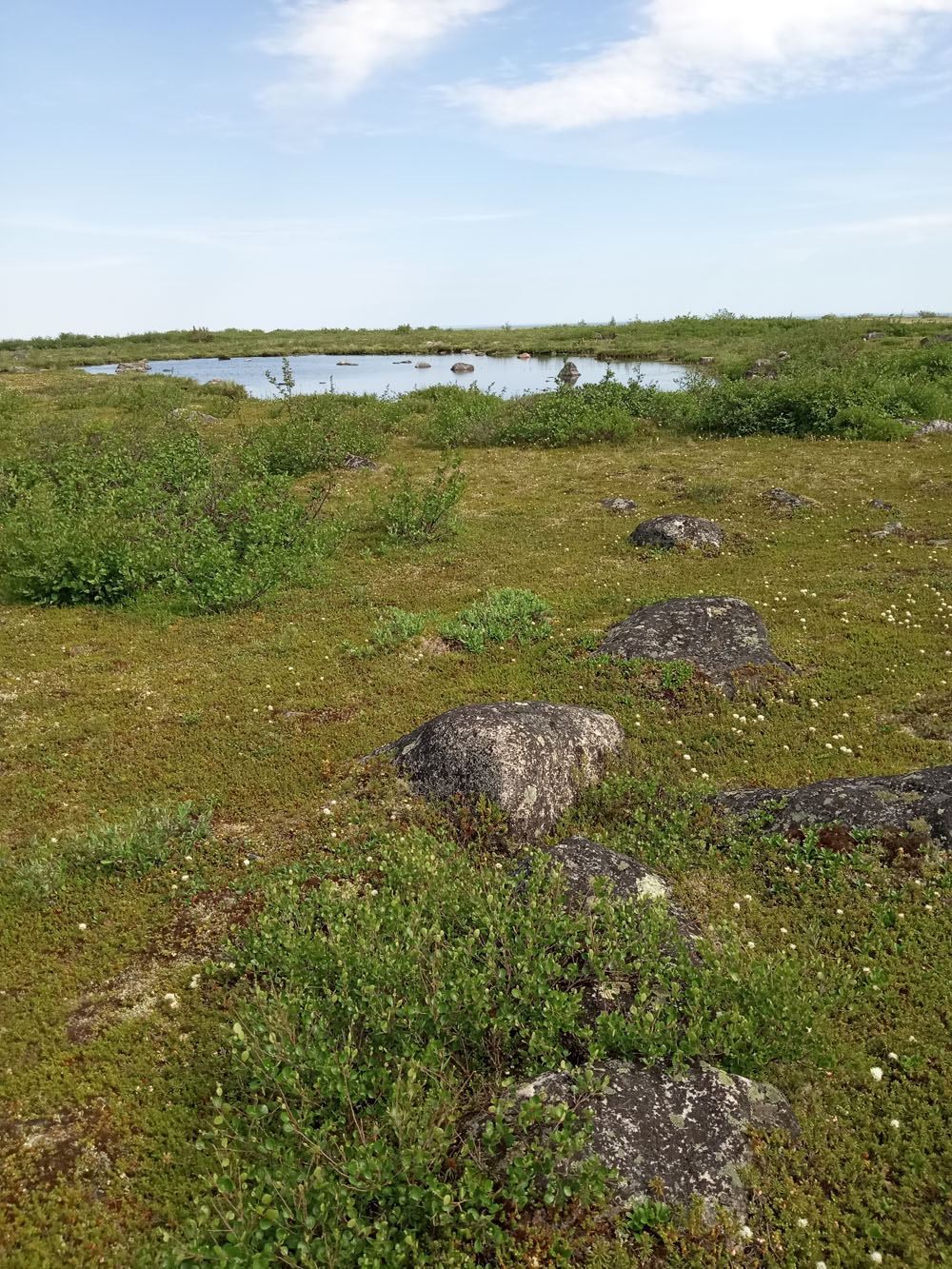
Low Arctic tundra vegetation. Dr. Diana Robson photo.
Scientists use that kind of archive to run genetic studies and to track how flowering times shift with the climate. Robson plans to compare her Seal River specimens against the ones collected in 1973 and 1983 to see whether the plants are flowering earlier now than they were several decades ago.
Robson thinks about that value in two ways. The specimens from the 1800s were collected long before anyone could imagine extracting DNA from them or studying their genetic structure, and she applies the same logic forward.
“When I’m collecting a plant, I often think to myself, well, one hundred years in the future, how are people going to be using these plants?” Robson said. “Maybe this is going to be really important if there’s any kind of large-scale ecological disaster. Maybe the specimens that I’ve collected are going to be essential for restoring species.”
She ties that directly to what is happening now.
“With climate change we’re seeing potentially ecosystems starting to unravel,” Robson said. “We need those plants to clean the air and clean the water and provide food. There are just so many ways these ecosystems are supporting us, many we probably don’t even really know.”
Her favourite find on the trip wasn’t rare at all. It grows along the beach in plain view of anyone walking the shore.
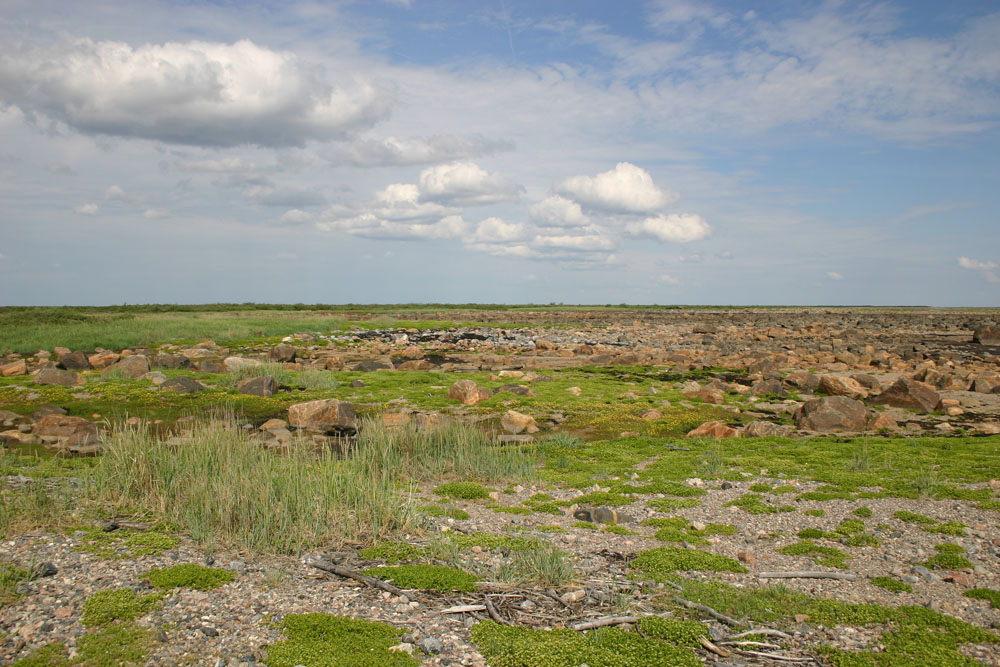
Sea Purslane. Seal River Heritage Lodge. Dr. Diana Robson photo.
“My favourite plant was the Sea Purslane,” Robson said, “The bright, vibrant green colour was so stunning against the seashore landscape.”
Sea Purslane grows only on those beaches, tolerating the salinity of the shoreline, with slightly fleshy leaves and small white flowers tucked into the foliage. Robson had only ever seen it in seed before this trip. At Seal River she caught it in flower for the first time.
“It’s just a fun little plant,” she said.
Two other plants made her photo list for a different reason: she got to eat what they grew. Cloudberries and cranberries were both flowering during her visit, low-growing plants that later produce the berries the lodge serves in its cranberry cake with warm butter sauce, and as jam. Staff showed her the cranberry patch behind the lodge on her last night there.
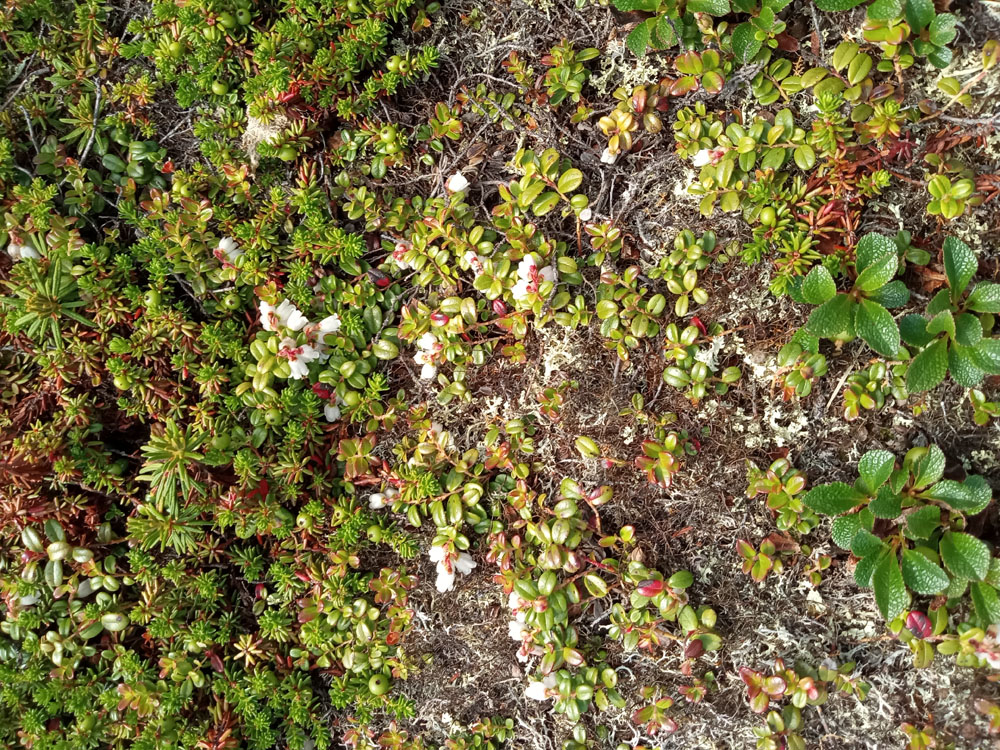
Dry-ground cranberries at Seal River. Diana Robson photo.
“It was also really, really nice when the last night we had that lovely cranberry cake,” Robson said, “And I know those guys were telling us that those were the cranberries that they helped collect.” And they weren’t the only ones enjoying the berries.
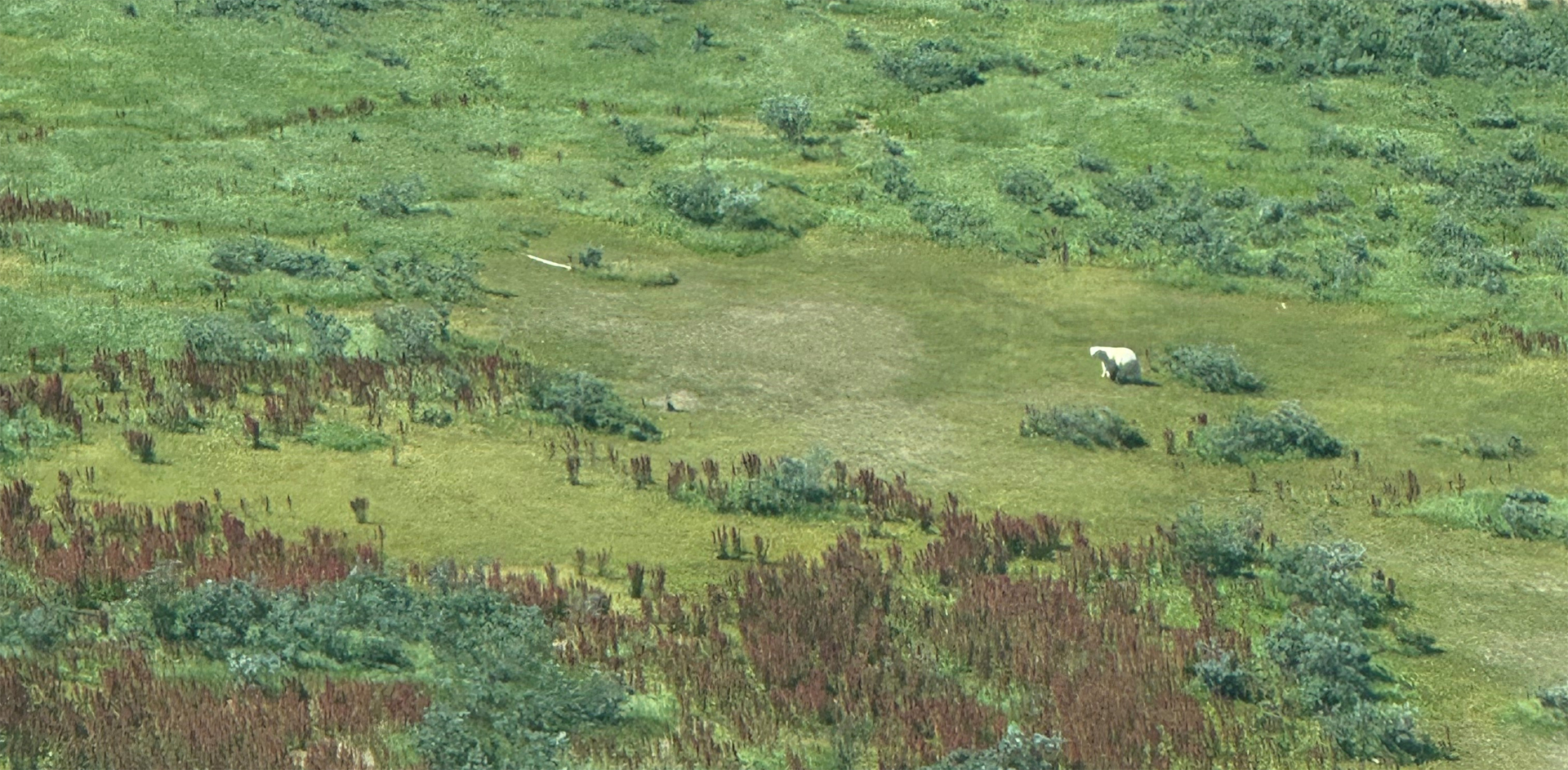
“There was a bear was just outside the compound, rummaging around in the bushes, I think feeding on berries that were on the ground,” Robson said.
Seal River gave her the closest look at a polar bear she’s ever had, close enough that she put the distance at about five metres, with only the compound fence between them. The only other time she’d been that near a bear was outside the Churchill Northern Studies Centre, and that one had stayed roughly 20 metres off.
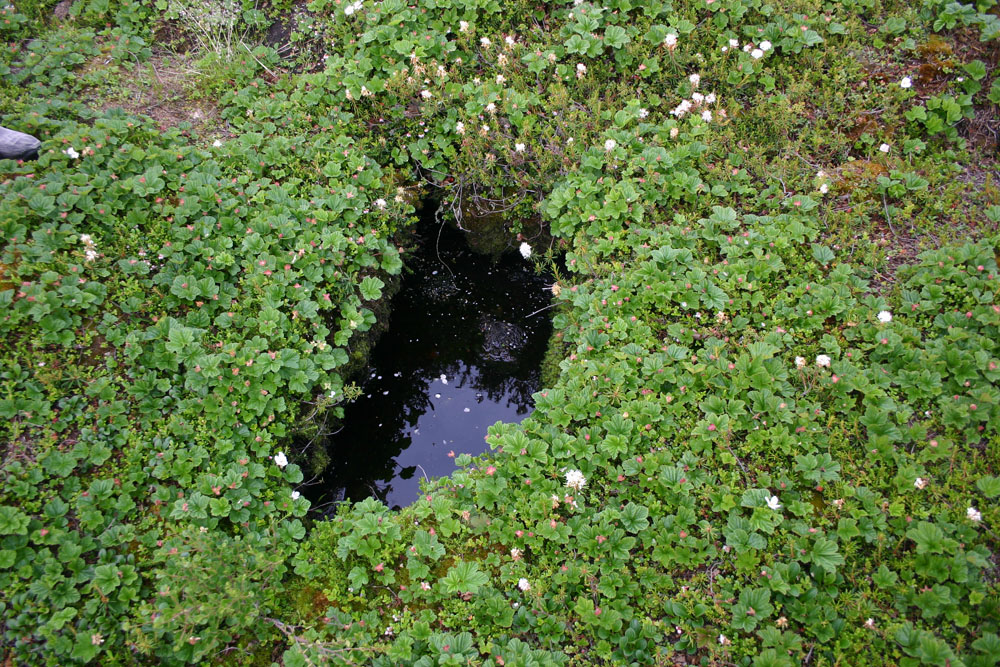
Permafrost at Seal River Heritage Lodge. Dr. Diana Robson photo.
A smaller discovery came the same week, one most guests would walk straight past. Ben Lawrence, who manages Seal River Heritage Lodge with his wife Nicole, asked the group if anyone wanted to touch permafrost through a crack in the moss. Robson expected to have to push her arm in up to the shoulder. It took about a foot.
“There really isn’t much of an active layer for these plants to grow in,” she said.
That shallow frozen layer explains much of what she saw on the walk. Only shallow-rooted, cold-tolerant, low-growing plants can survive it, which is also why reindeer lichen does so well there. It isn’t a true plant but a fungus and algae living together, with no root system, so it simply grows on top of the frozen ground. Caribou depend on it as a primary food source, one more link in a landscape where plant, lichen, insect, and animal all rely on each other.
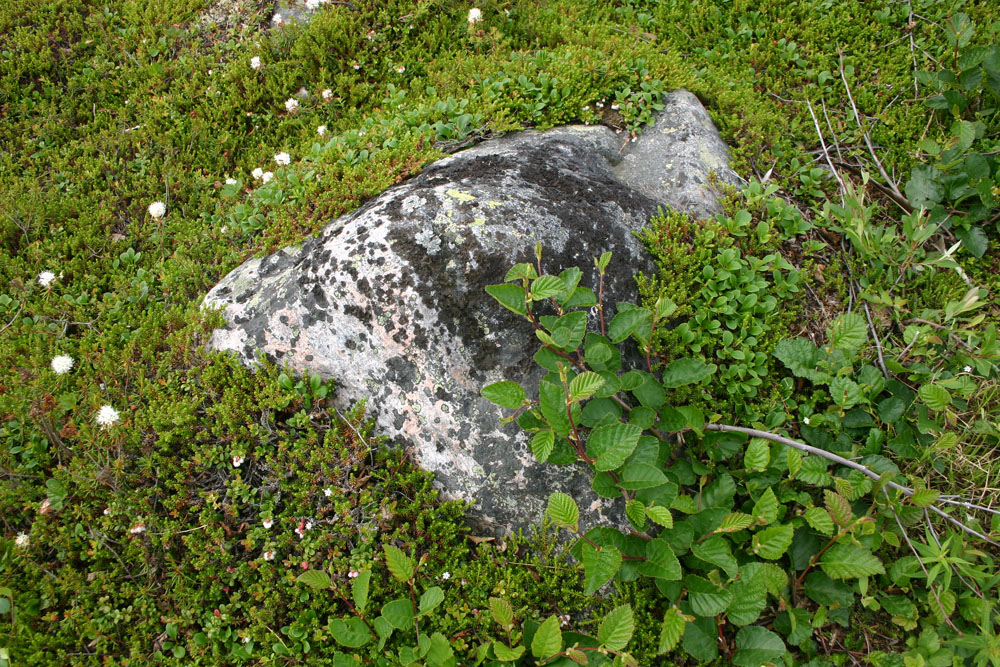
Lichen covered rocks at Seal River. Dr. Diana Robson photo.
Pollination up there works differently as well. Robson studies pollinators as part of her research, and she expected to find few insects this far north. A dozen or so Arctic bumblebee species work the tundra, alongside mosquitoes, black flies, and flower flies, insects built specifically to feed on nectar. One warm evening she watched a swarm of dragonflies move in on a cloud of mosquitoes outside her window.
“I’ve never seen anything like that before,” she said.
Robson had visited Churchill before, but only in August and September, after the tundra had gone quiet for the season. Seal River in July gave her something those earlier trips never did.
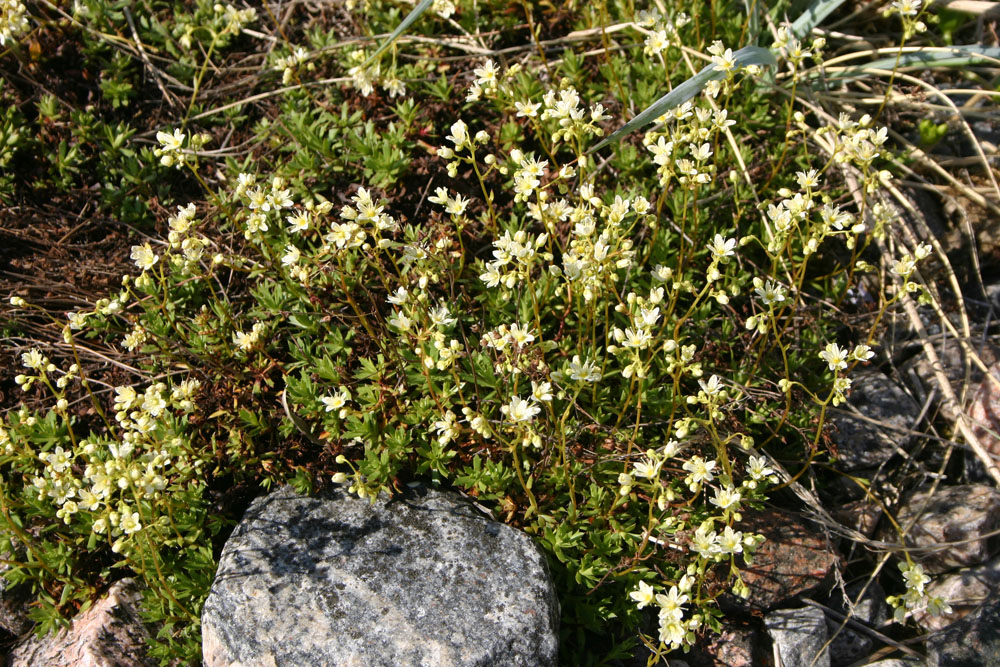
Three-toothed saxifrage at Seal River. Dr. Diana Robson photo
“It was just nice to see the profusion of flowers,” she said. Every flower she saw was a wild species native to Manitoba, she added, with none of the cultivated or introduced weeds she deals with farther south.
Robson’s work isn’t only about what’s on the tundra. The Manitoba Museum is hoping to raise funds to update its Arctic and Subarctic Gallery, largely unchanged since it was built in 1975.
But asked to sum up the trip itself, she didn’t hesitate. “It was an experience like I’ve never had anywhere else,” said Robson.
“For me, this was really the trip of a lifetime.”
Learn more about Dr. Diana Robson’s work and support the Manitoba Museum:
- Diana Robson Biography
- Prairie Pollination Virtual Exhibit
- Manitoba Museum’s Botany Collection and Blog Posts
- Support the Manitoba Museum
- Book: Manitoba Flora: A Guide to the Vascular Plants of Manitoba
- Manitoba Flora: A Guide to the Vascular Plants of Manitoba and Karen Johnson’s Wildflowers of Churchill can be purchased directly from the Manitoba Museum Shop as well as at FriesenPress, Amazon and McNally Robinson.
- Aurorae: Current Manitoba Museum Planetarium Show on the Northern Lights