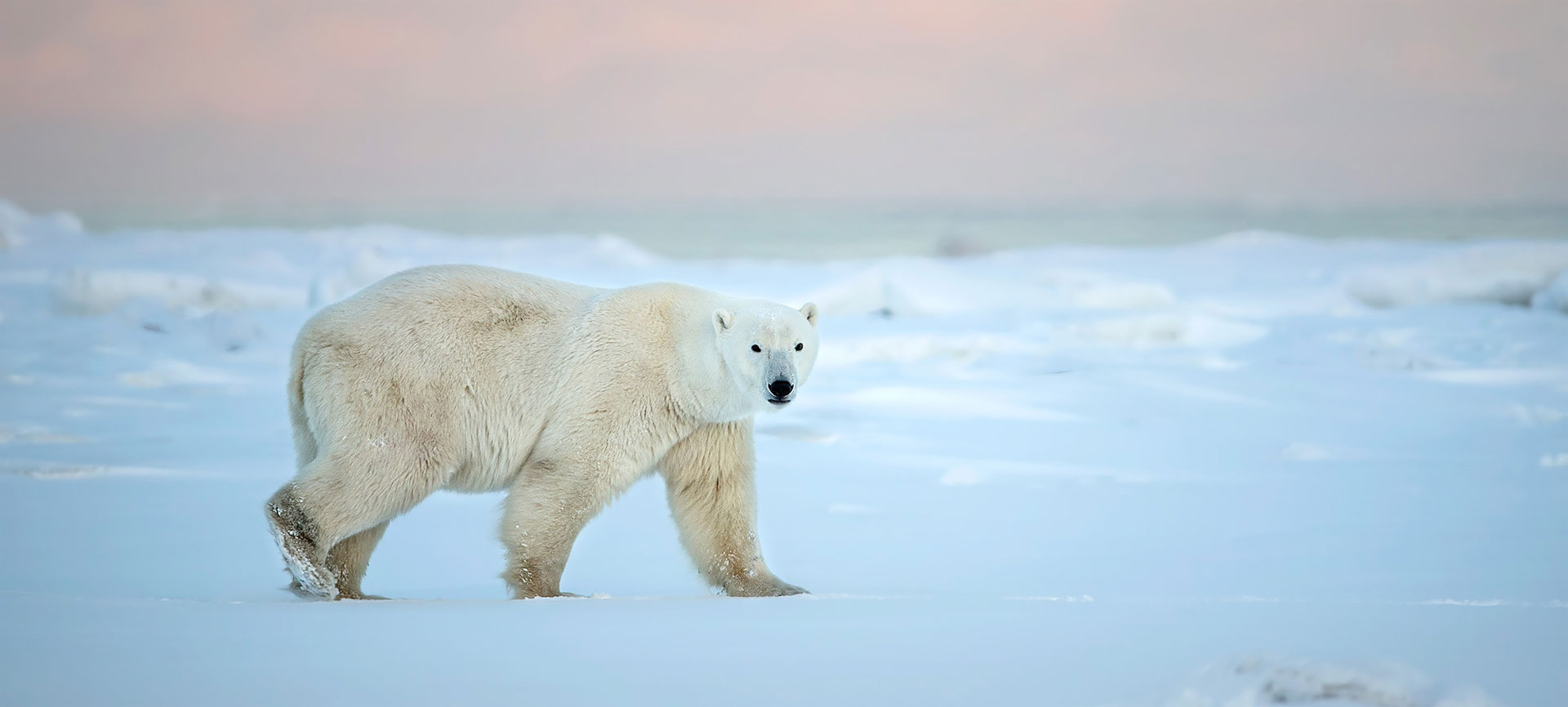
Compare me with Everest. Dymond Lake Ecolodge by Robert Postma photo.
Here is a number that surprises almost everyone.
Roughly 7,500 people have ever stood on the summit of Mount Everest. Not in a season. In all of recorded history, from the first ascent in 1953 to the most recent climbing season. The most famous adventure on Earth, the one whose name is shorthand for human achievement, has been completed by fewer people than fit in a mid-sized concert hall.
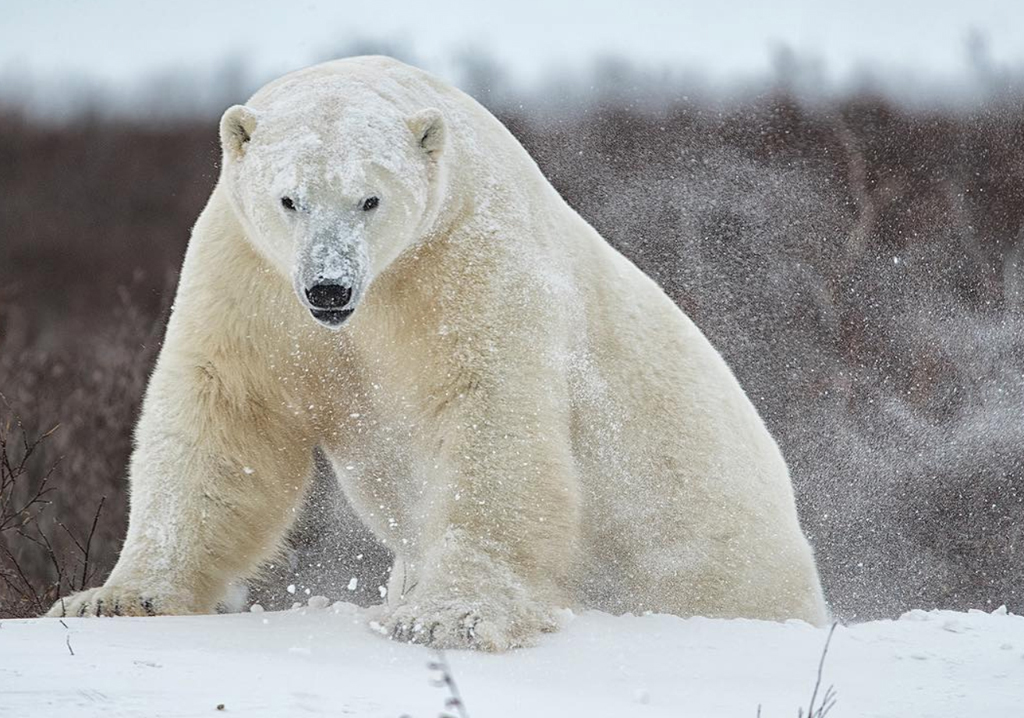
Now here is the part we find more interesting. The number of people who have walked, on foot, at ground level, among wild polar bears on the Hudson Bay coast sits in the very same range. Just over 10,000 of them, in fact, across more than thirty years. Both experiences belong to a tiny group of people measured in the thousands, not the millions. One of them you have heard of your whole life. The other you may be hearing about for the first time right now.
We are not a neutral party here, and we will not pretend to be. But the comparison is worth making honestly, because the two adventures are opposites in nearly every way that matters, and the rarity they share is the least of it.
Let’s Start Where Everest Wins

Digital photograph of Mount Everest taken at an elevation of 5,300 metres from Gokyo Ri, Khumbu, Nepal.
Credit where it is due. As a physical feat, nothing about a polar bear safari compares to summiting Everest. Reaching 8,849 metres is one of the hardest things a human body can do. It demands years of training, weeks of acclimatization, and a tolerance for genuine suffering. The achievement is real, the prestige is earned, and anyone who stands on that summit has done something extraordinary.
If your goal is the single hardest physical accomplishment money and grit can buy, Everest wins, and it isn’t close.
But here is the thing about rarity. It can come from difficulty, or it can come from obscurity. Everest is rare because it is brutally hard. Walking with polar bears is rare because almost no one knows it is possible. Same small numbers, completely different reasons.
Why So Few Have Climbed Everest
Everest is exclusive by punishment. The mountain filters people out through altitude, cost, time, and risk. You need months. You need a body that can survive the band of the mountain above 8,000 metres, where there is roughly a third of the oxygen there is at sea level and the human body begins to shut down. You need to accept that people who start the climb do not always finish it, and that some never come home. More than 300 have died on the mountain over the decades, and many of their bodies remain where they fell.
That is why the number is only around 7,500. Not because the world lacks ambition, but because Everest turns most of that ambition away at the door.
Why So Few Have Walked With Polar Bears
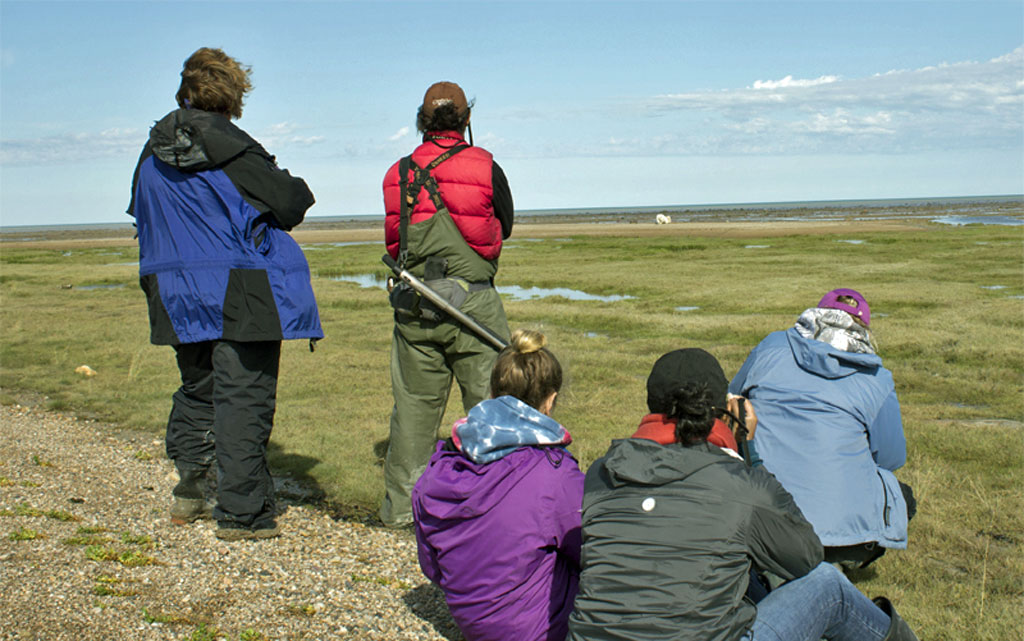
If you can walk on uneven ground, you can walk with polar bears. Robert Postma photo.
The polar bear walk is exclusive for the opposite reason. It is not punishing. If you can walk on uneven ground, you can do it. The number is small because the experience itself is small, and rare, and quiet by design.
There is one company doing lodge-based polar bear walking safaris out of ecolodges on the Hudson Bay coast. The groups are tiny, often fewer than a 16 people. The lodges are fly-in only, deep in polar bear territory on the Hudson Bay coast, far from any town. There is no road. There is no crowd. There is no queue. The whole thing is built to keep the experience rare, because the moment it stops being rare it stops being what it is.
So the number stays small. Just over 10,000 people have done it in more than thirty years, the same order of magnitude as everyone who has ever climbed the most famous mountain on Earth. You don’t conquer anything. You don’t suffer for a summit. You walk quietly across the tundra with expert guides and meet the largest land predator on Earth in its own house, at eye level.
The Honest Comparison
| Climbing Everest | Polar Bear Walking Safari | |
| Roughly how many have done it | About 7,500 people, all of history. | Just over 10,000, in three-plus decades. |
| Why it’s rare | Brutally hard. The mountain filters people out. | Quiet by design. Almost no one knows it exists. |
| The draw | The summit. The hardest climb on Earth. | Meeting a wild polar bear on foot, at ground level. |
| Physical demand | Extreme. Years of training, real suffering. | Moderate. If you can walk on uneven ground, you can do it. |
| Crowds | Hundreds per season; queues on the summit ridge. | Small groups, often under 16 people, in empty wilderness. |
| Solitude | Increasingly hard to find. | The default. |
| Risk | Significant and well documented. | Carefully managed; an exceptional long-term safety record. |
| Duration | Two months, including acclimatization. | A week, give or take. |
| What you bring home | One of the great physical achievements. | The feeling of having stood face-to-face with a polar bear, in the truly wild. |
So, Which One?
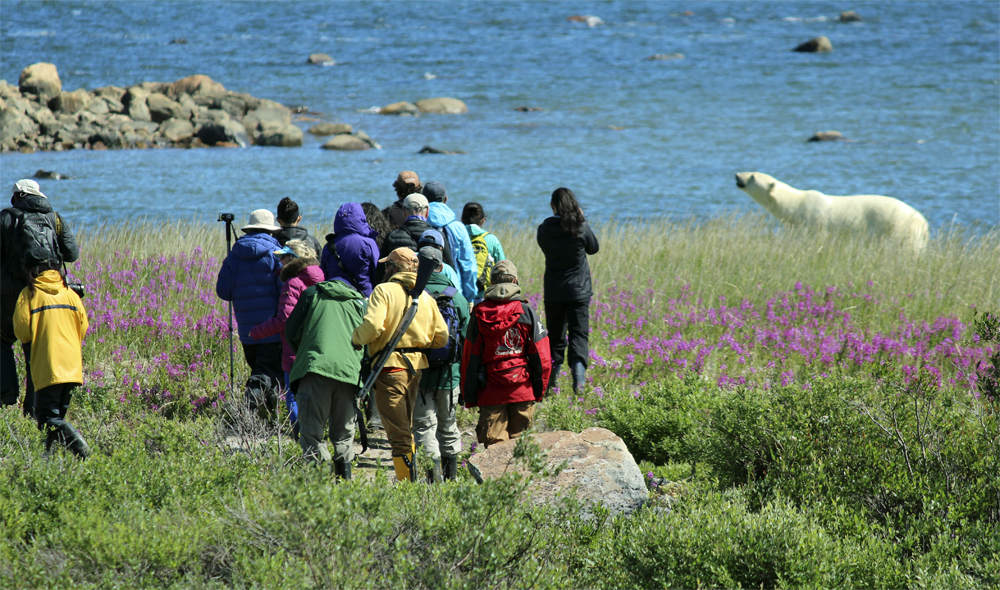
Guests observing a polar bear at ground level. Seal River Heritage Lodge.
If you want to test the absolute limits of your body and stand where the air runs out, climb the mountain. It is a magnificent thing to do, and we mean that without a trace of irony. You will join one of the most exclusive clubs on Earth, and you will have earned every metre of it.
But if what you are really chasing is the feeling underneath the bucket list, the sense of being somewhere wild, rare, pristine and untouched, then consider this. There is another club just as small, and you can join it without years of training, without needing oxygen, and without the queue.
About as few people have walked with polar bears on the Hudson Bay coast as have stood on the summit of Everest. They just got there on foot, at eye level, on a quiet coastline most of the world has never heard of.
We know which one we’d choose.