
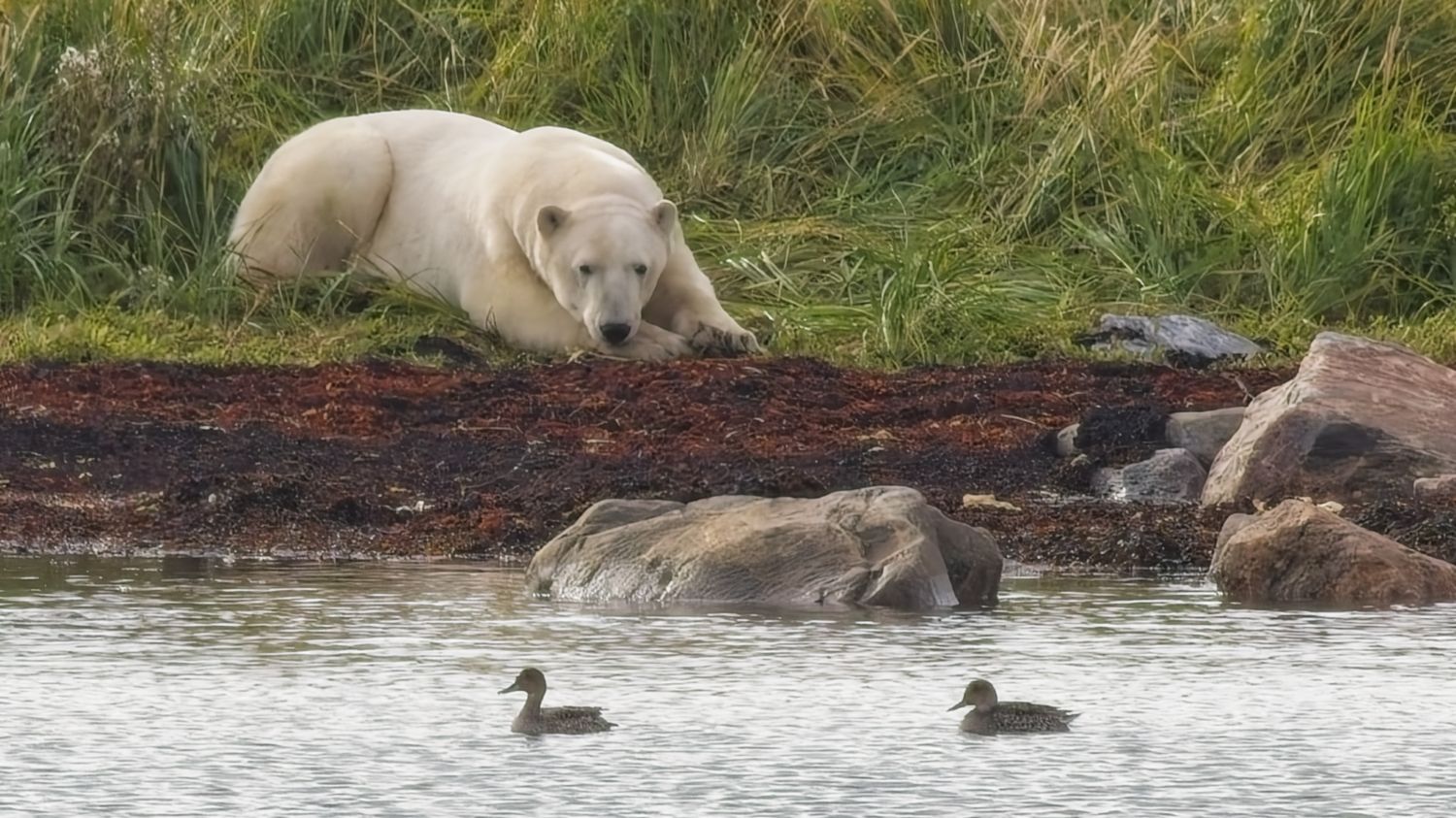
What an honour to blend in so well that you can watch a polar bear totally intrigued by something other than yourself. Roberta Oswald photo.
After three trips with Churchill Wild over eight years, Roberta Oswald has figured out what keeps bringing her back to the edge of the Arctic. It’s not just the polar bears, though walking among them is an experience like no other. It’s not just the northern lights painting the sky in shades of green and purple. It’s not even the stark beauty of the tundra stretching to an impossibly distant horizon.
“What we have discovered is that it’s the staff that make the trip,” said Roberta.
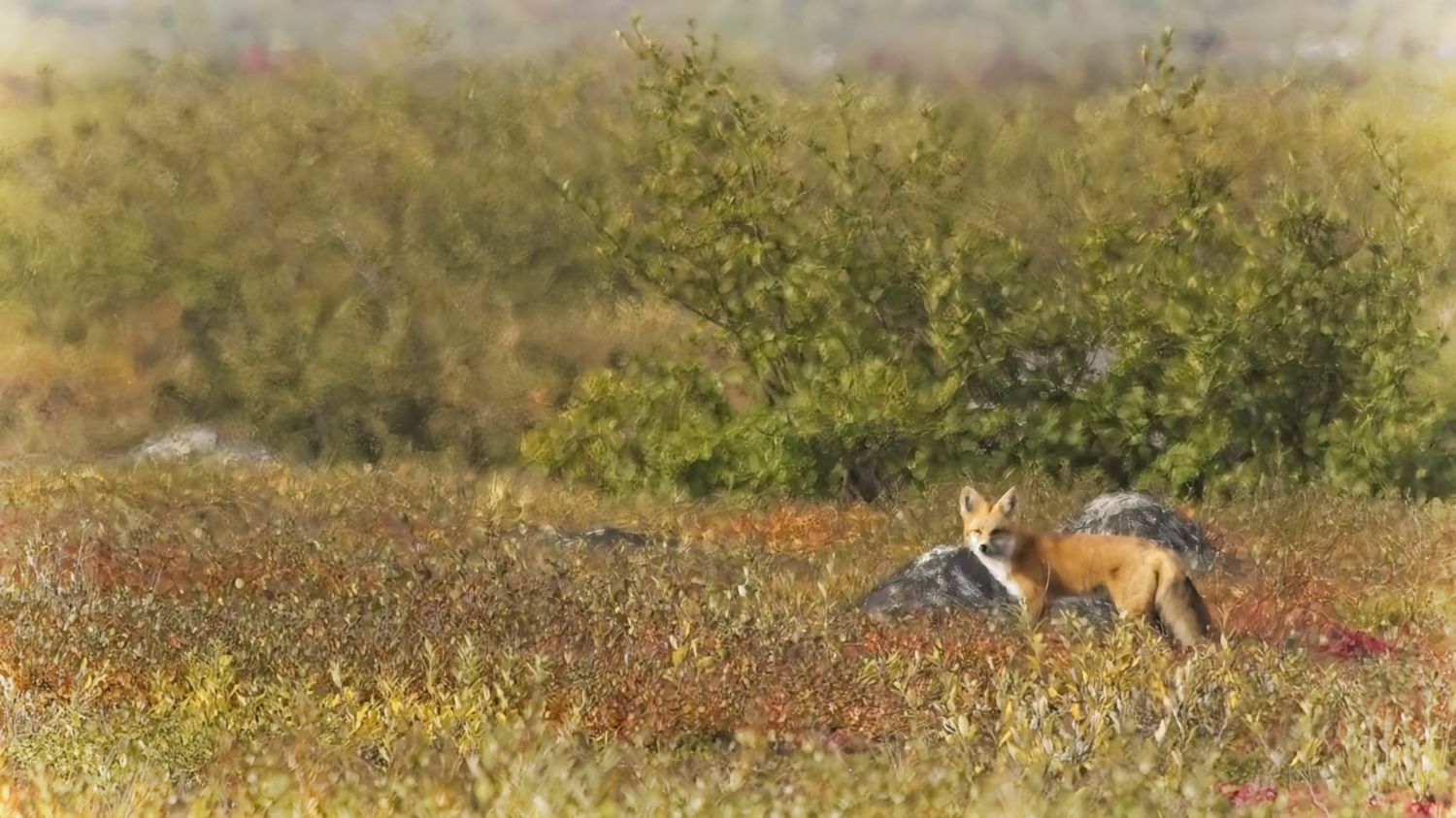
It’s not just polar bears. Walk quietly, observe, listen. There are many gifts to behold. Roberta Oswald photo.
It’s a surprising revelation from a wildlife photographer who has travelled extensively, from New Zealand to Iceland to the high Arctic. But for this seventy-year-old retired teacher from Oshawa, Ontario, and her partner Betty, seventy-six, the people of Churchill Wild have become as much a part of the experience as the landscape itself.
This September, Roberta and Betty returned for their third journey with Churchill Wild, the Arctic Safari, which includes three days camping on the tundra followed by time at Seal River Heritage Lodge. For two women who have paddled wilderness rivers for weeks at a time and traversed much of Canada’s backcountry, the prospect of sleeping under canvas in polar bear country held no terror, only anticipation. And the chance to reconnect with the staff who have made each visit memorable.
A Love Affair With the North
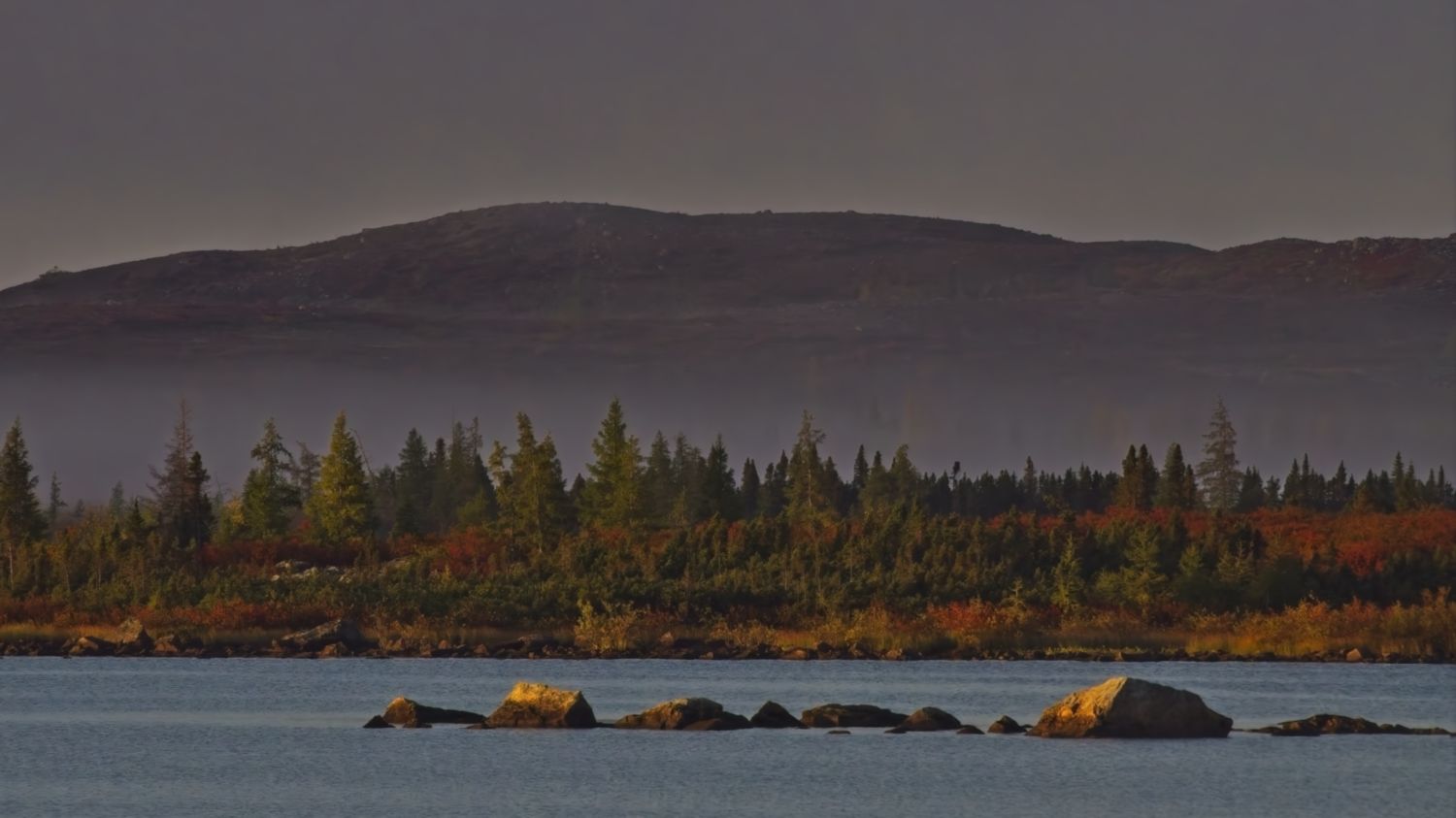
Early morning wake up, crawl out of the tent to witness total serenity. Roberta Oswald photo.
Roberta’s relationship with Churchill Wild began in 2016, when she and Betty embarked on their first adventure: the Birds, Belugas and Bears safari. “It was awesome,” said Roberta, the memory still fresh despite the years. They had been searching for something specific, a trip to Canada’s Arctic, a chance to see polar bears, an experience that felt authentic rather than manufactured.
“We love the Arctic,” said Roberta. “We’ve been up to the high Arctic on several occasions.” They had travelled with Quark Expeditions, cruising to Greenland and the Canadian High Arctic aboard ships carrying over a hundred passengers. While Quark delivered professional service and supplied all necessary equipment, something was missing. “When you’re trying to see a walrus and there’s a hundred of you and you can only get to it by Zodiacs and you’re going out ten at a time, you don’t get quite get the same…” Her voice trailed off, the comparison making itself.
Churchill Wild offered something different: small groups, intimate encounters, and a scale that allowed for connection rather than orchestration. So they went for it.
Two years ago Roberta and Betty were at Nanuk Polar Bear Lodge for the Cloud Wolves of the Kaska Coast safari. “We had a fantastic time,” said Roberta, her enthusiasm evident even in recollection.
What Makes the Difference
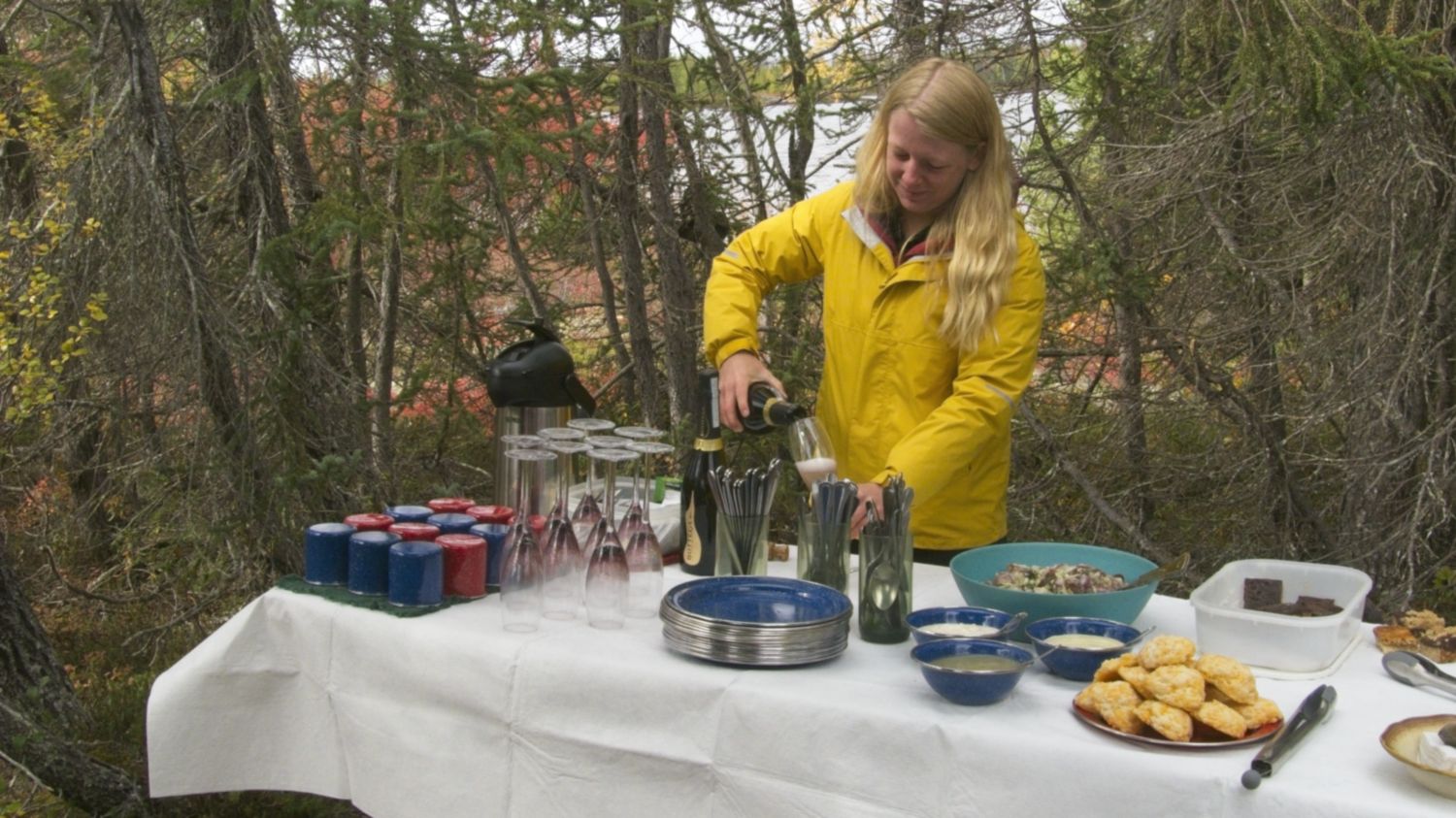
Staff went the extra mile to enhance a wonderful experience. Fish fry and Prosecco on the beach. Roberta Oswald photo.
Yet when Roberta discusses what has truly distinguished Churchill Wild on all three of her experiences, she speaks not of wildlife or landscape but of people.
“You’ve got the scenery,” said Roberta. “And you’ve got the wildlife. I mean, you’d have to really do something stupid to annoy a bear there because, I mean, it’s there. You’ve got the northern lights. But it’s the staff, they just go out of the way to make your trip as pleasant as can be.”
She describes something subtle but profound: a quality of attention and genuine care that transcends professional hospitality. “Without making you feel like you’re a customer,” said Roberta. “You almost do become part of the family in a very bizarre way. It’s a very pleasant feeling.”
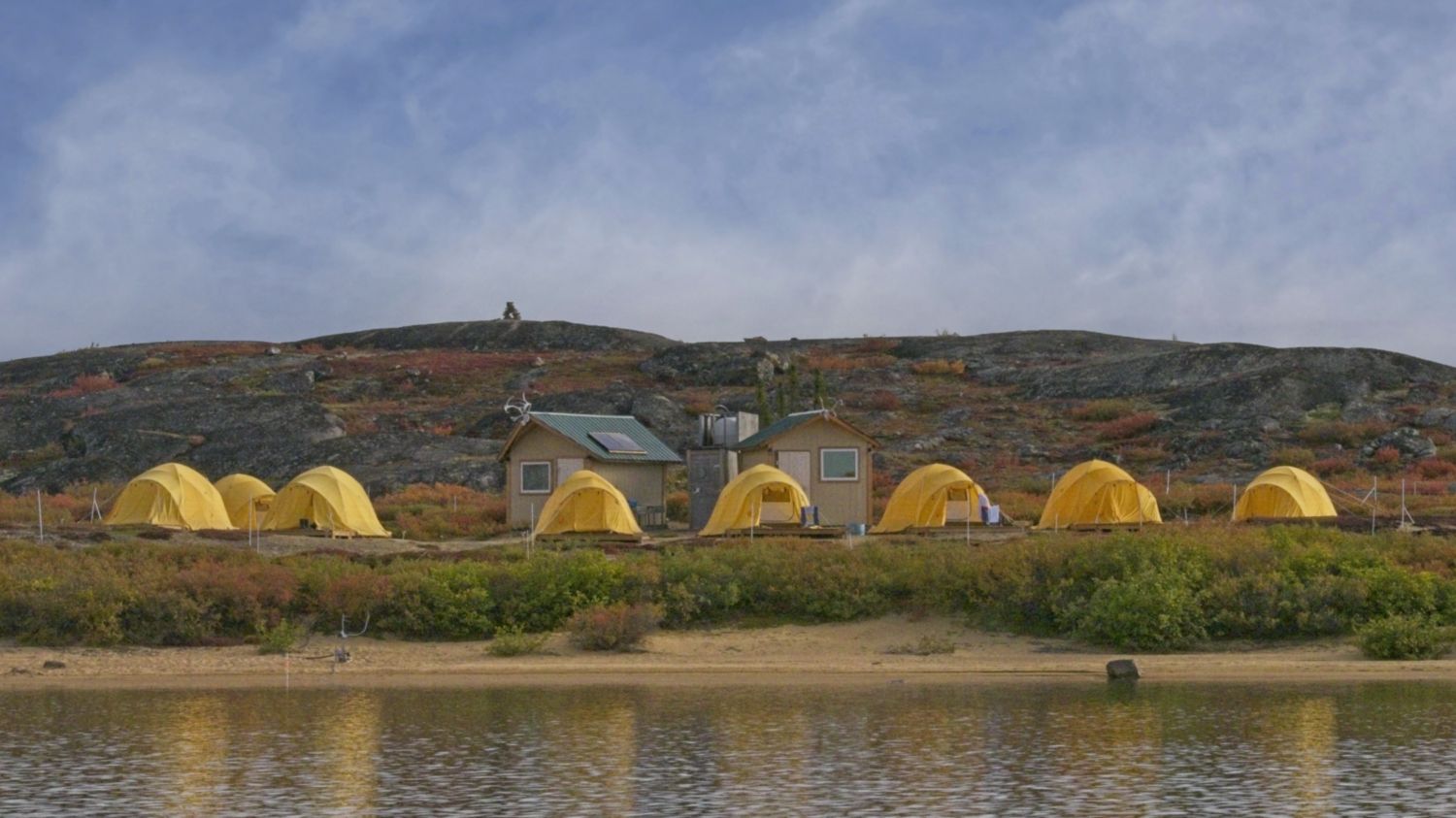
Camping in sheer wilderness, surrounded by the beauty of the tundra. Roberta Oswald photo.
The proof, for her, comes in small moments. Dinner is being served when someone spots a polar bear outside the lodge. Immediately, the kitchen staff abandon their posts and rush outside to look. “You know they’re hooked as much as you are,” said Roberta. “So you’re standing side by side with the kitchen staff watching the polar bear. You all are sharing that experience and it really is one of the things that I think makes Churchill Wild stand out.”
She traces this philosophy back fifty years, to Doug and Helen Webber, to Mike and Jeanne Reimer, to a tradition of hiring people who share a fundamental orientation toward others and toward the wild. The guides spend all day in the field with guests, then reappear at dinner, offering presentations and conversation, going what Roberta calls “the extra mile.” They’re excellent, she says. All of them.
The Magic of September
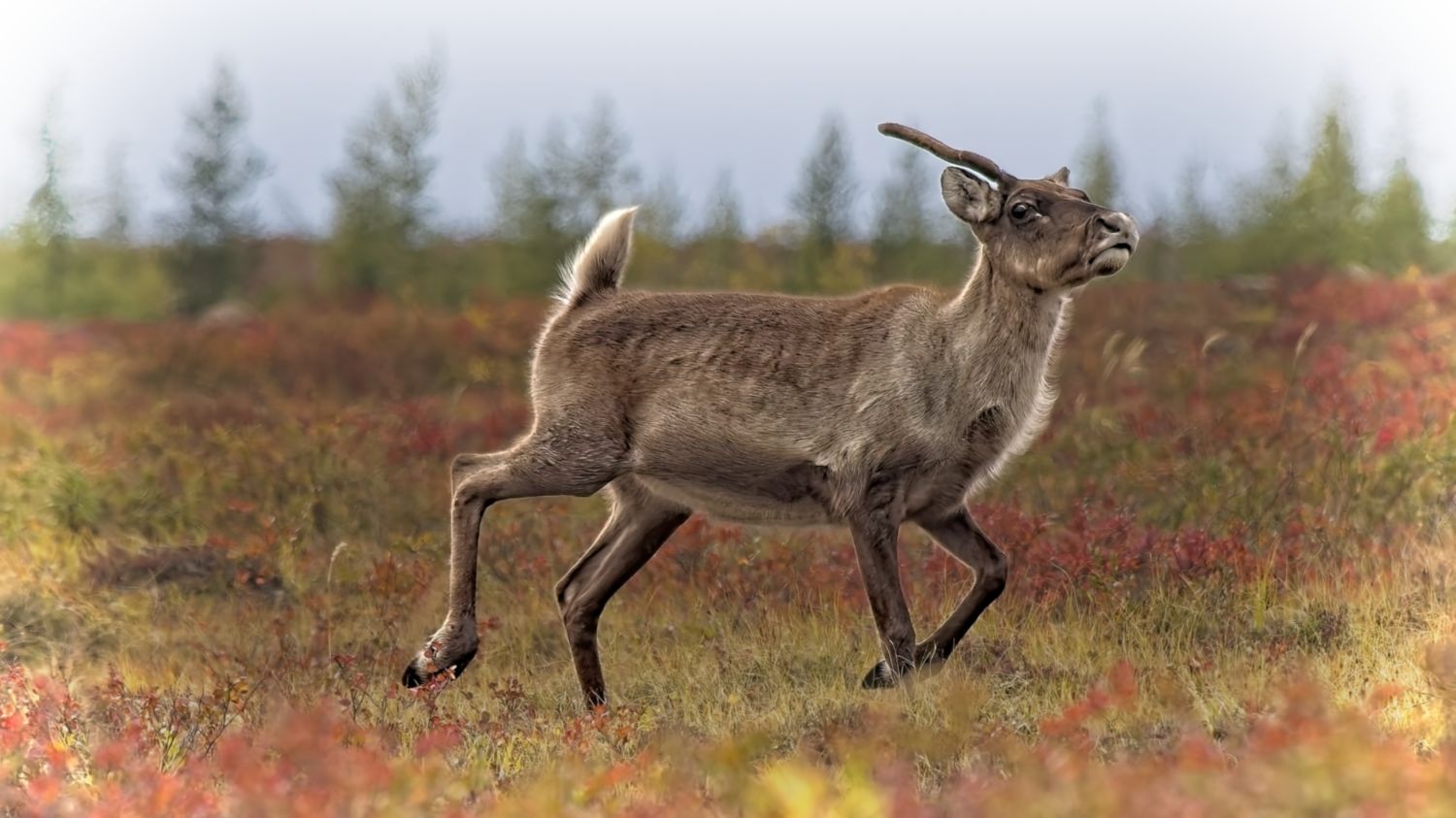
This young caribou ran right past us, stopped, turned around, ran past us again, and stopped again. An unexpected gift. Roberta Oswald photo.
This September, the Arctic offered them a wolf. It appeared at Seal River, materializing in that sudden way wild things have, as if they’ve been watching you long before you notice them. The encounter felt like a gift, unearned but deeply appreciated.
But Roberta’s enthusiasm for this latest journey goes deeper than any single sighting, remarkable as it was. When asked about the highlights of her trip, she paused. “There are just way too many highlights,” said Roberta. “I mean, there really are.”
She could talk about the polar bears, and they did see polar bears, close enough to watch the light catch in their guard hairs, close enough to see the intelligence in their dark eyes. “Where else can you walk with polar bears?” said Roberta. The answer, of course, is nowhere. This is Churchill Wild’s particular gift, the ability to move on foot through polar bear habitat with experienced guides, to exist in their world rather than observing it from behind glass or across water. “You’re almost standing in reverence when the polar bear walks by and you just, you feel blessed,” said Roberta.

The unexpected. Two young polar bears sparring… in the WATER. Roberta Oswald photo.
One of the special moments came when they witnessed two polar bears sparring. “We got to see one pair that were sort of sparring on land,” said Roberta. “And then they chased each other into the water and continued in the water and had quite a splish-splash time. That was really awesome.”
The northern lights danced above them for two nights at the tundra camp and two more at Seal River. Those wavering curtains of green and purple light painted the Arctic sky while Roberta and her fellow travellers stood in the darkness, faces tilted upward, cameras momentarily forgotten.
There were three young male polar bears that approached them on one memorable occasion, curious and cautious, moving with that deceptive fluidity that makes a thousand-pound animal look weightless. At tundra camp, guide Jad Davenport spotted caribou in the distance and added to their already ten-mile hike to get closer. They saw a mother with her young, and after sitting to catch their breath, a young caribou ran past them about a hundred yards away, stopping and running back repeatedly, curious about these strange visitors to its domain.
And there were the quieter moments: the vast sweep of the tundra, the quality of light that exists nowhere else, the profound silence broken only by wind and the occasional call of a bird. The fall colours in September were “just gorgeous.”
A Memory Rekindled
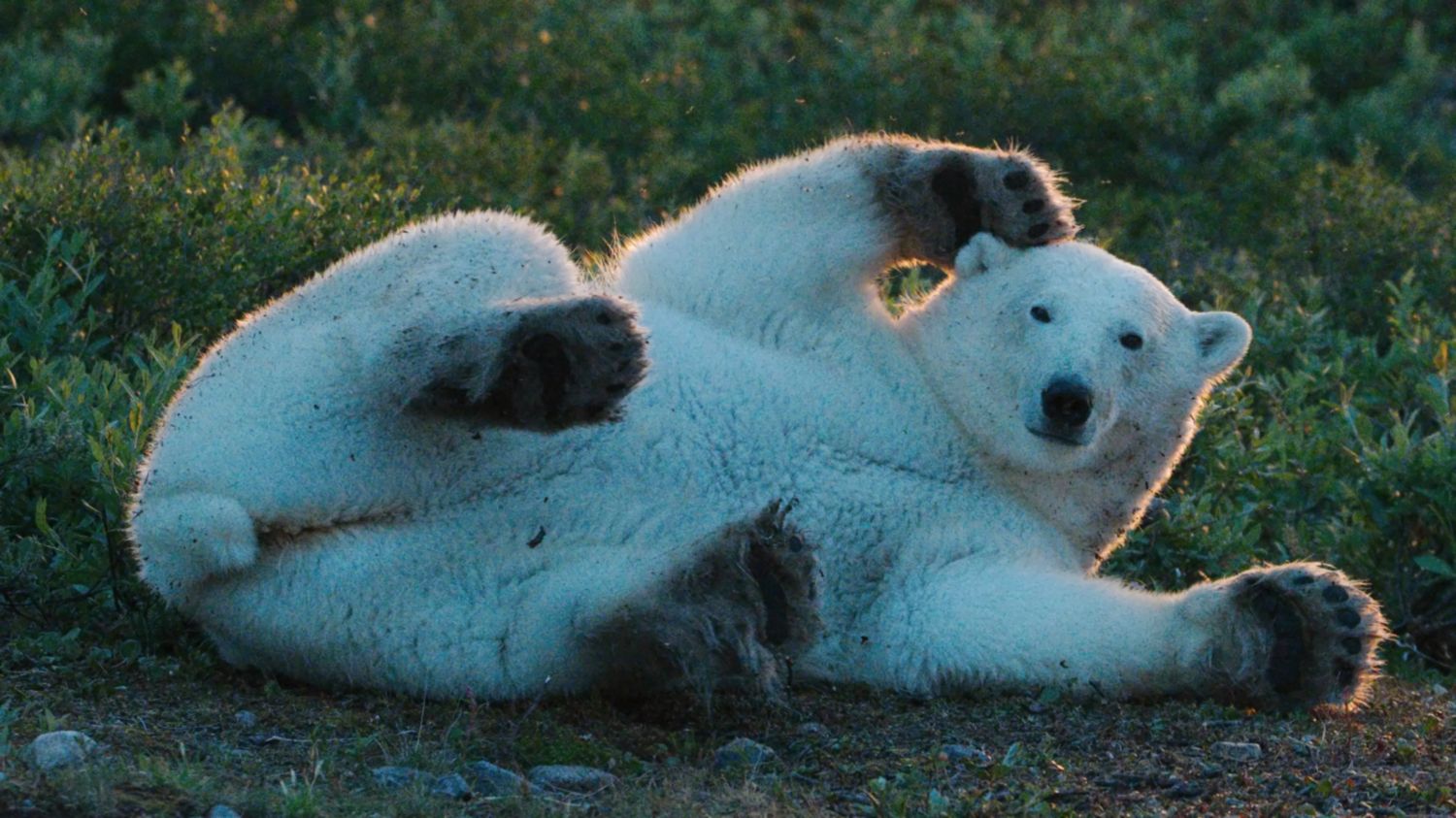
This backlit polar bear brought back memories. Roberta Oswald photo.
But sometimes these connections go deeper than anyone could anticipate. On this trip, after a day of hiking across the tundra with Seal River Heritage Lodge assistant manager Shayna Plett and Jad, both “terrific people,” Roberta notes, the group stopped at the tent where appetizers are served. Even after miles of walking across unforgiving terrain, Shayna sat down with Roberta and Betty, chatting over a glass of wine, wanting to know about their other experiences.
Roberta mentioned that they had been probably the last people able to swim with the beluga whales. “Yeah, that sounds like about 2016,” Shayna said.
“It was awesome,” said Roberta. Then Shayna added something that stopped the conversation cold: “I was kitchen staff at Seal River in 2016.”
Roberta looked at her. “You said kitchen staff?” said Roberta.
“Yes,” Shayna replied.
The memory came flooding back. “The second night we were at Seal River Heritage Lodge on that trip, I couldn’t sleep,” said Roberta. “I was so excited. I was up wandering the halls and I saw this young gal who called me over, told me to get my camera, and there was a bear coming down the pathway.” She grabbed her camera and rushed out to find a beautiful bear backlit by the setting sun at 10:30 p.m. The bear rolled on its back, paws in the air, putting on a show. Just Roberta and this kitchen staff person, photographing together in the golden light.
“It was just the two of us,” said Roberta. “And it was like, thank you, whoever you are. What an experience.”
Now, eight years later, sitting in a tent on the tundra, she looked at Shayna carefully. “It was you, wasn’t it?” said Roberta.
“Yeah, it was me. I called you. I remember that,” said Shayna.
She brought out her phone and showed Roberta the photos she had taken that night. They had the same images, the same bear, the same magical light, captured from slightly different angles years earlier.
“We hugged each other,” said Roberta. “It was like, oh yes, we’ve met before. It was just really cute. But I mean, that’s the staff thing. She didn’t have to talk to us that day, but she was interested. And here we realized we had a similar memory.”
From kitchen staff to assistant mananger, Shayna had grown with Churchill Wild. And here was Roberta, who had also grown with Churchill Wild, returning for a third time. Their paths had crossed twice, eight years apart, in two different roles but with the same sense of wonder at a polar bear doing what polar bears do.
A Life Shaped by Wilderness
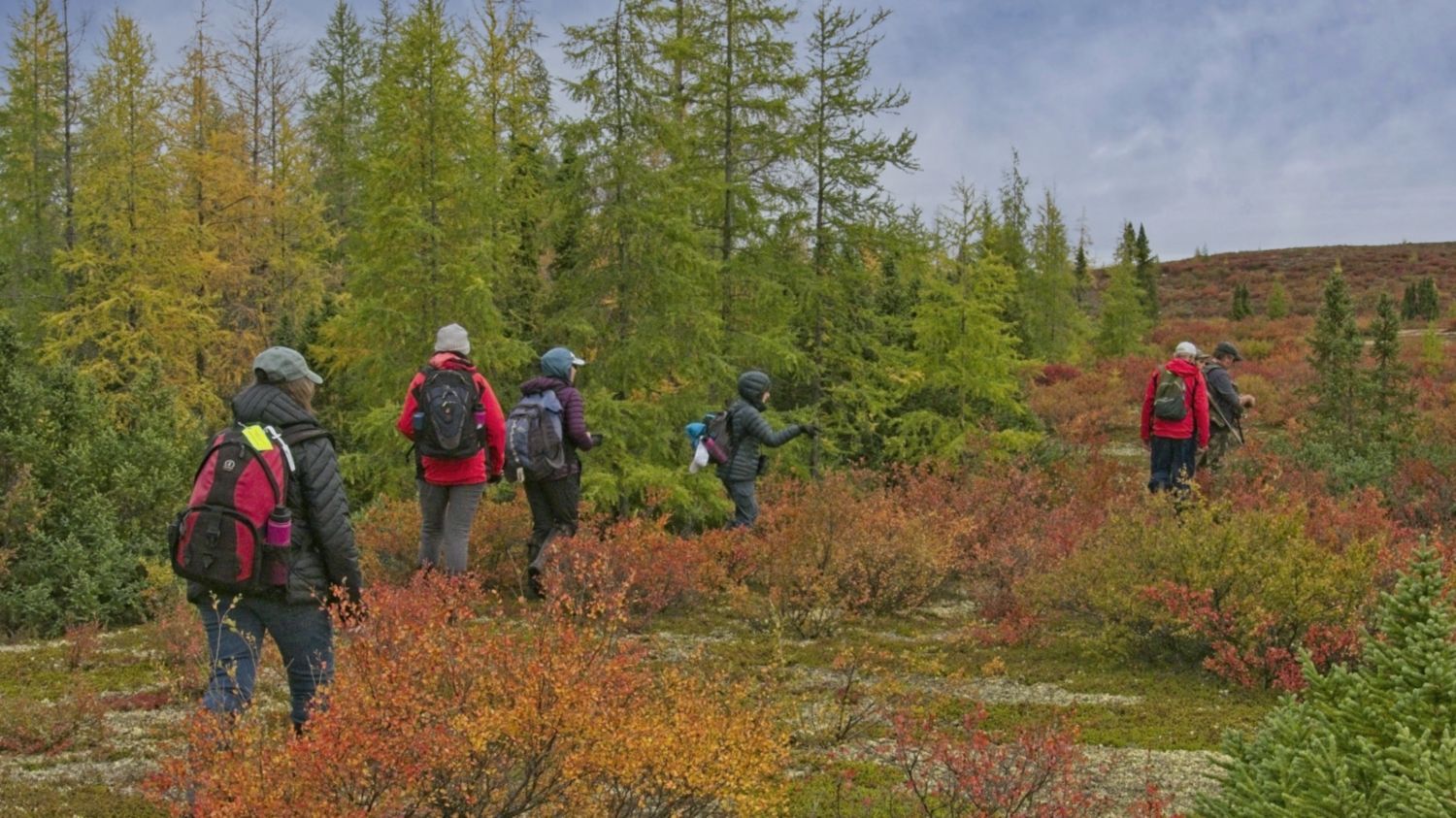
Trekking through the tundra. The experience leaves you humbled and in awe. Roberta Oswald photo.
To understand Roberta’s appreciation for what Churchill Wild offers, you need to understand the life she’s led. A retired teacher who has been photographing wildlife since she was a kid, Roberta and her partner Betty, who spent her career in the medical profession, have travelled extensively: New Zealand, Iceland, Nebraska for sandhill cranes, British Columbia for grizzlies. They’ve camped across Canada, from coast to coast to coast. They used to do serious wilderness canoeing, two or three weeks into the wild, carrying everything in, carrying everything out. The real thing: no resupply, no emergency extraction, just you and your partner and the river and whatever you can carry in a canoe.
“I’ve never had a problem with it,” said Roberta, referring to the stark wilderness that makes some people nervous. “I have more trouble walking down the streets of some of our cities.”
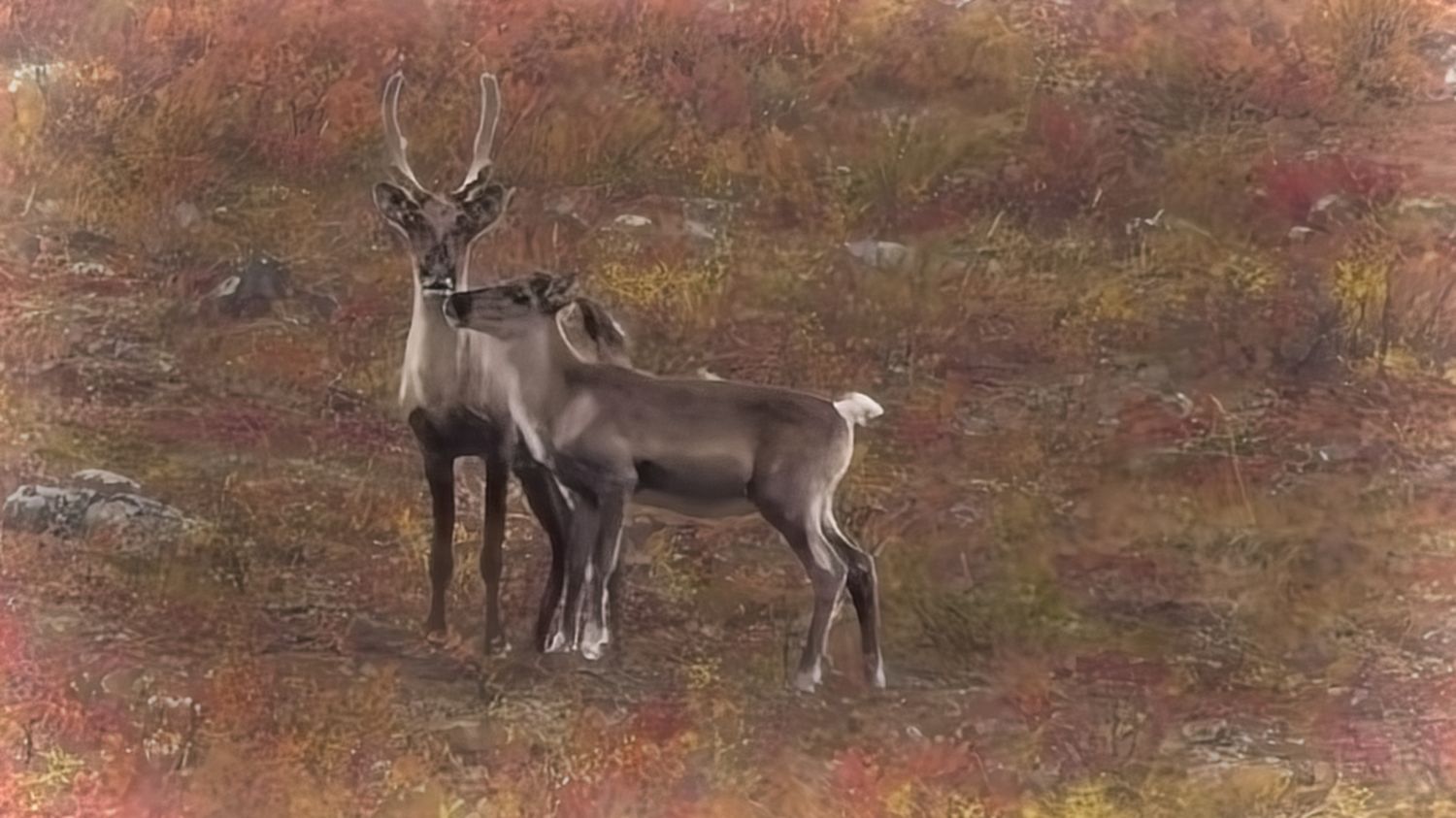
Mother caribou with calf. The group became quiet and still in order to witness this. Roberta Oswald photo.
Now seventy years old, with Betty at seventy-six, these two women have graduated to a van converted for comfort. “It’s got everything in it,” said Roberta, a hint of satisfaction in her voice. They’ve earned their comfort, after decades of portages and paddles and nights in canvas tents listening to the wind.
But they haven’t gone soft. When the opportunity came to camp on the tundra in September, when night temperatures can drop below freezing, they didn’t hesitate. “We loved it,” said Roberta. “We absolutely loved it.”
Walking the tundra proved challenging for some of the younger guests. “We did it much better than a couple of the younger ones,” said Roberta. There was another fellow, John, who was closing in on eighty, and he kept up too. “The three oldies probably did a better job than half the younger ones,” said Roberta.
The Perspective of Experience
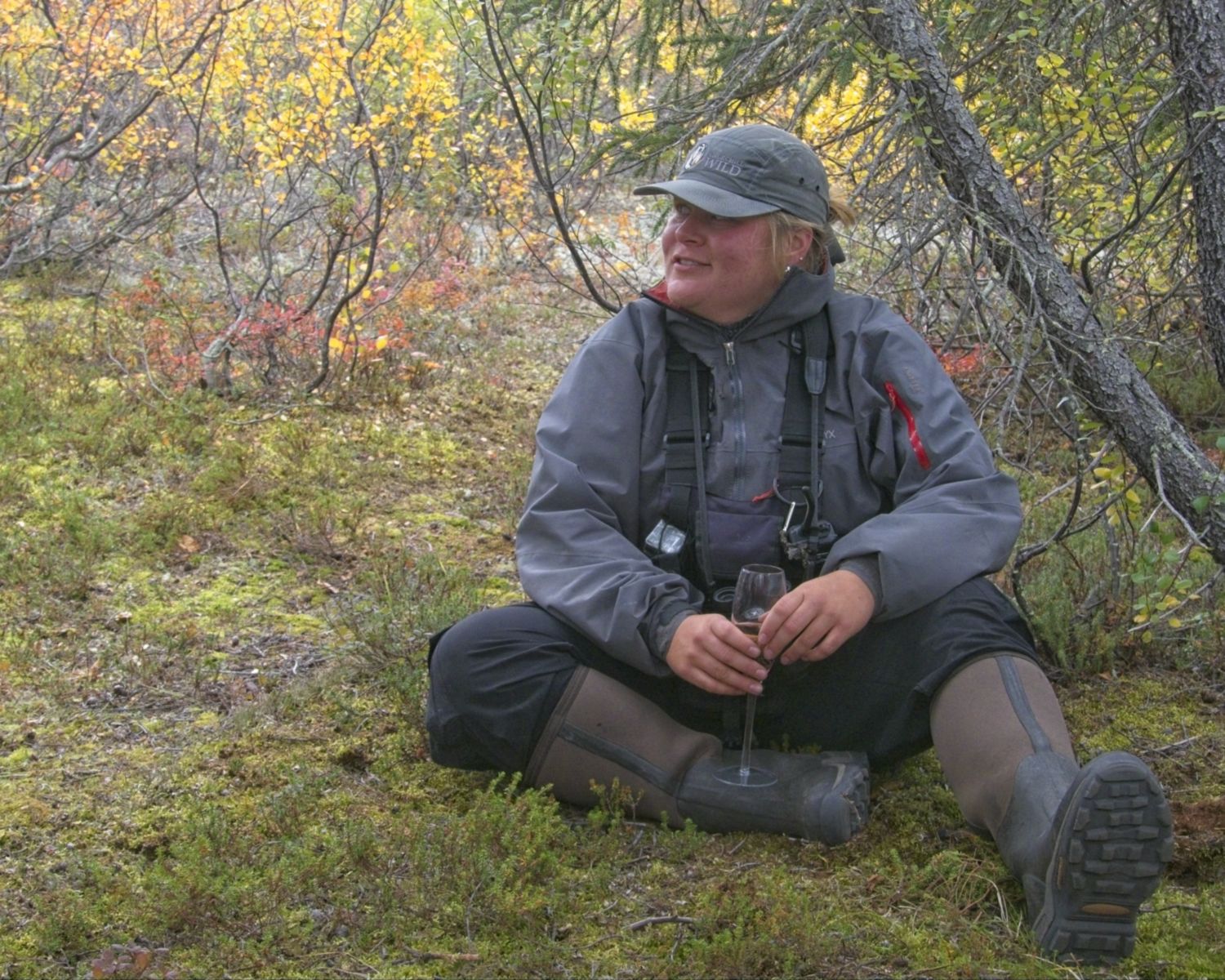
Shayna Plett working as a guide at Tundra Camp. She brought back memories. Roberta Oswald photo.
Having travelled with operators ranging from boutique Canadian outfitters to Quark Expeditions—”one of the elite providers of travel in the world,” Roberta can assess Churchill Wild with the critical eye of someone who knows the difference between competence and excellence.
Quark is great, she acknowledges. They do a bang-up job, supply all necessary equipment, operate professional expeditions. But when you’re one of a hundred passengers trying to photograph a walrus from Zodiacs that go out ten people at a time, something is lost. The scale defeats intimacy.
At Churchill Wild, with its small groups and walk-in access to polar bear habitat, with its staff who abandon dinner service to watch a bear, with its lodges that offer hot showers powered by solar panels in the middle of nowhere, the balance tips differently. “You’re not roughing it,” said Roberta. “But you’re there and you’re surrounded by wilderness and it’s just an amazing place to be.”
When asked how she describes Churchill Wild to others, Roberta was thoughtful: “If you want to have a Canadian experience in the wilderness and be part of that wilderness, part of what’s going on around you, the Churchill Wild trips are just the best,” said Roberta. “You become just part of it. And when you’re out with the guides and you’re walking, for me, it’s not just the polar bear, I mean, if it flies, if it has wings, I want to take a picture of it.”
She pauses, then adds simply: “It’s a privilege. Really, it’s a privilege.”
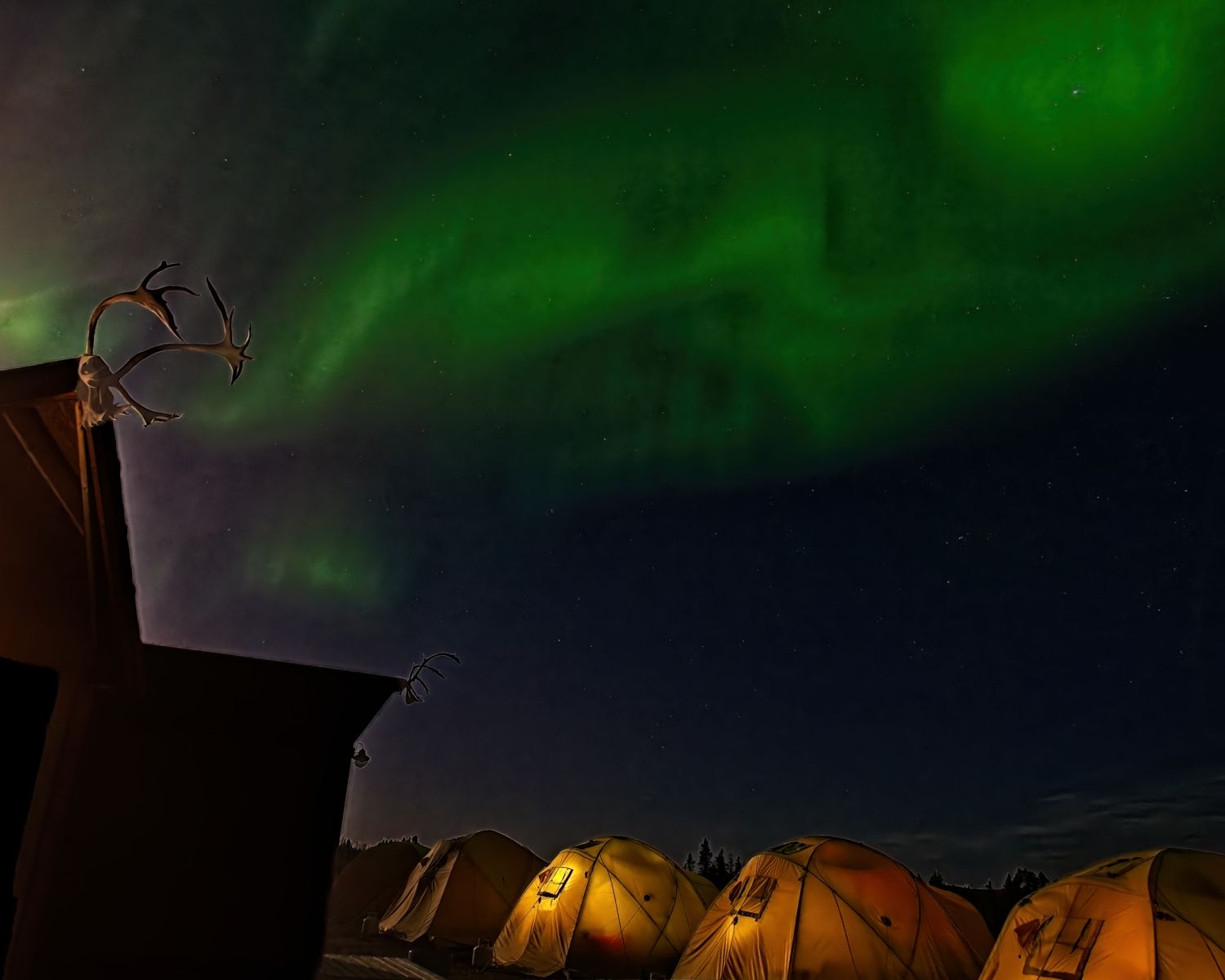
Northern lights over Tundra Camp. Betty Hrycyshyn photo.
The tundra camping itself presents its own unique experience. “There’s nothing there,” said Roberta. “There’s you and nothing for miles.” But that emptiness becomes the point. “You just feel almost like you’re the only person on the planet and that you’re also totally, totally insignificant.” It’s a humbling realization, delivered by landscape that stretches uninterrupted to the horizon.
“I’m more afraid to walk the streets of Toronto than I am of walking with polar bears,” said Roberta, putting the perceived danger of the wilderness into perspective.
When pressed to identify a single favourite moment from her recent Arctic Safari, Roberta laughs. “I just can’t do it,” she said. “It would be really difficult.” The entire experience, the three trips, really, folding into each other, constitutes a single memory of connection: to place, to wildlife, to people who share her fascination with the far North.
Return Migration
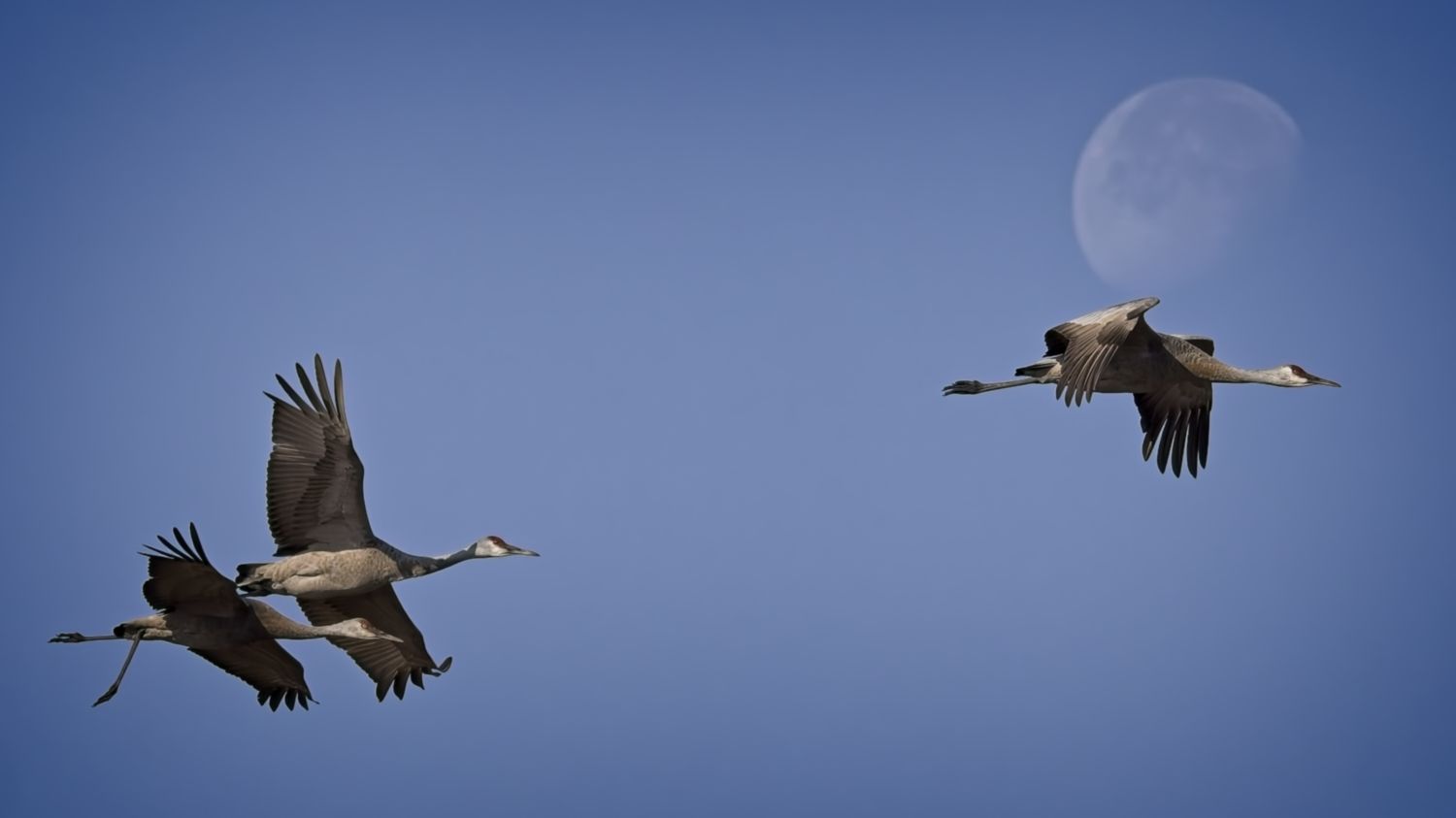
Don’t forget the skies… sandhill cranes flying past the moon. Roberta Oswald photo.
After the Arctic Safari, someone mentioned the possibility of writing a story about her experience. What struck her, Roberta explains, was a realization that had been building over three visits and eight years: while wildlife sightings are remarkable, and Churchill Wild delivers them reliably, the deeper gift is the people who create and share these experiences. “It’s the staff that make the trip,” said Roberta, returning to her central theme.
She and Betty are already planning their next adventure. Perhaps something which combines all of Churchill Wild’s locations. “That’s probably at least a couple years down the road,” said Roberta. But she wouldn’t rule out another Churchill Wild trip. In fact, she sounds certain there will be one.
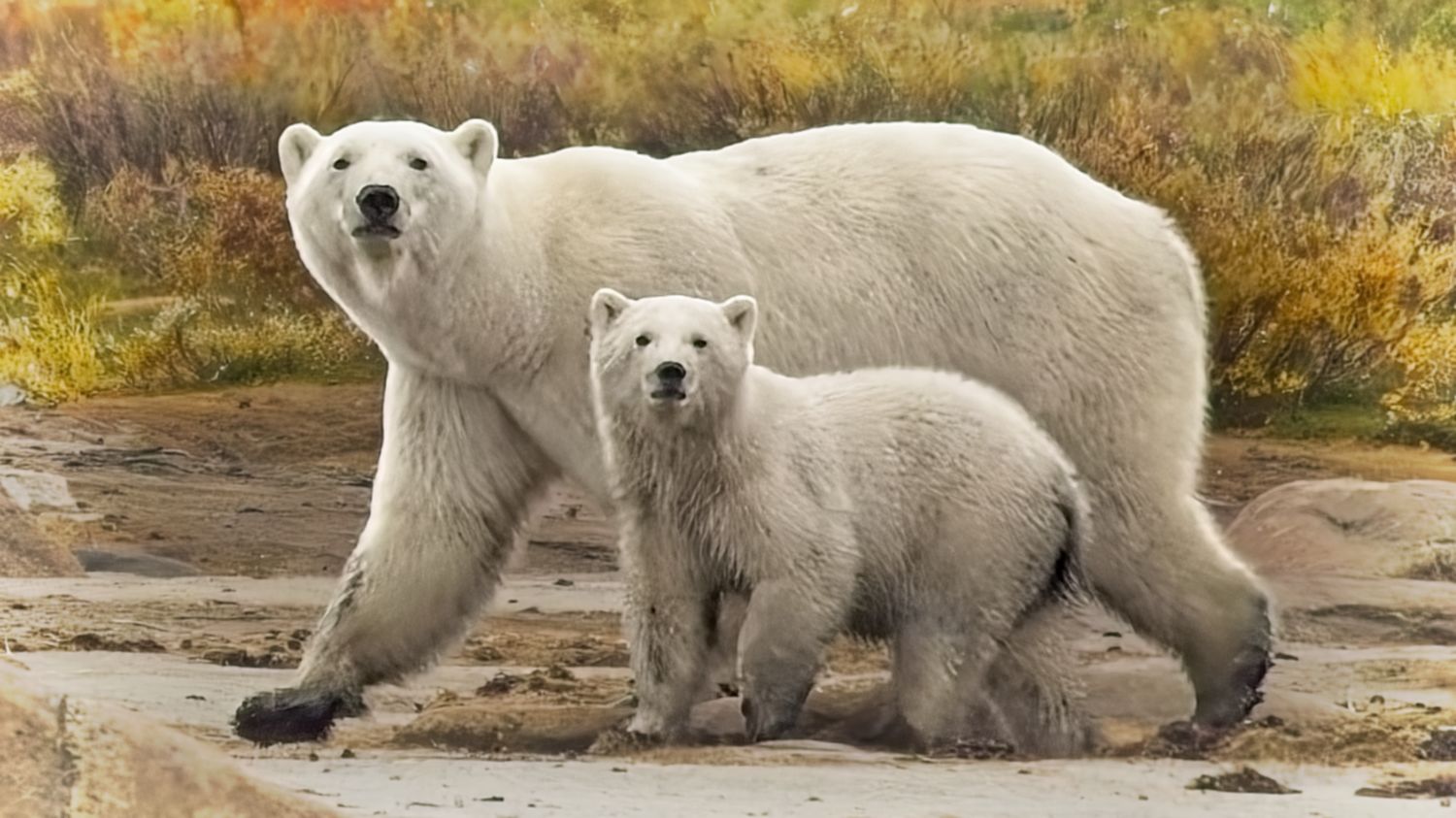
An honour, mother and young polar bear walk right past us. Roberta Oswald photo.
Like the bears that return each year to the denning areas where they were born, like the caribou that follow ancient migration routes, Roberta has found her way back to this edge of the world where the trees grow stunted and the land stretches to a horizon that seems impossibly distant. She has discovered what many before her have learned: that the Arctic gets into your blood, that Churchill Wild offers something increasingly rare, a chance to walk among apex predators, to sleep under northern lights, to stand on ground where humans are visitors rather than masters.
But perhaps most importantly, she has discovered that what makes these journeys truly unforgettable isn’t just the place…
It’s the people.
Nanuk Polar Bear Lodge