
The day Sarah Skinner handed in her resignation, her husband had one piece of advice waiting for her at home.
“I followed you on social media for years, and kind of had the one day, one day, one day,” said Skinner. “And the day I put in my resignation, I came home and my husband said to me, ‘Book it, book it now.’ And so I did.”
The 58-year-old retired head teacher from Essex, England, spent 36 years in education before leaving a little early. Her gift was the Hudson Bay Odyssey at Nanuk Polar Bear Lodge in September, and the trip fell in the third week of her retirement.
“Polar bears are absolutely my childhood love,” said Skinner. “I guess I’ve been animal mad, but I am a photographer, so I love my photography. It was just the perfect combo really. Dream come true, really.”
Skinner has been a hobby photographer on and off for years. Once the trip was booked, she went all in, buying a Nikon Z8, a second Nikon body, a 180-600mm zoom, and a 600mm with a converter that took it to 840mm.
“It’s cost me an absolute fortune,” said Skinner. “Brilliant.”
Her husband, who retired a year earlier and spends much of his time on motorcycle trips, offered to come along.
“He said, well, I’m doing my bike trips, you have this as your trip,” said Skinner. “He would have loved it, but the polar bears and the photography is not really his thing.”
It took four flights to get there: London to Ottawa, then Winnipeg, Churchill, and finally Nanuk. The wildlife was waiting on the runway.
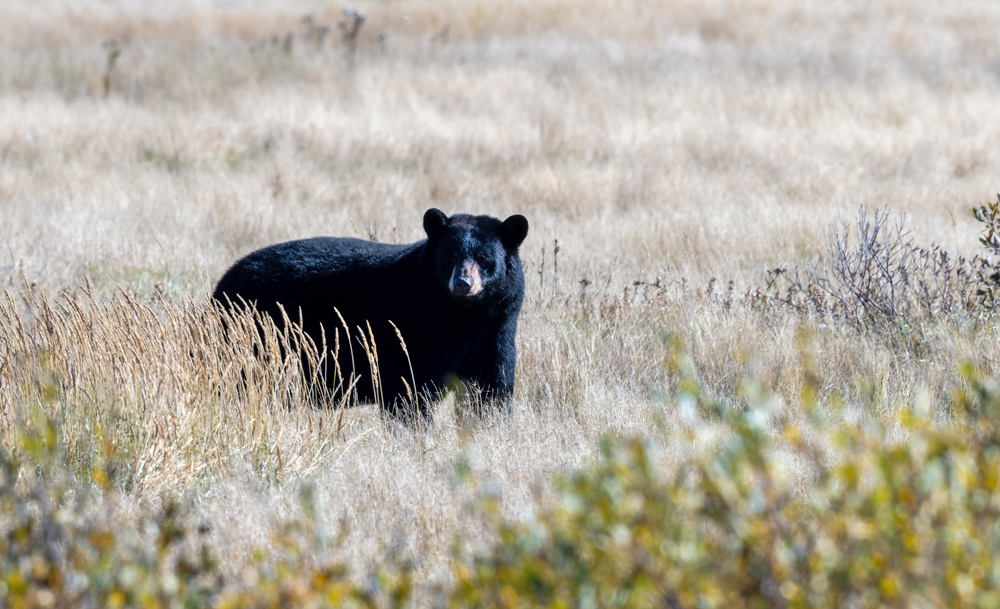
Greeting committee. Nanuk Polar Bear Lodge. Sarah Skinner photo.
“We basically landed and there was a black bear almost waiting to greet us,” said Skinner. “So the first sighting was amazing. The lodge welcome from Emma and Danny was unbelievable. We had just the most amazing group. There were 15 of us and everybody got on.”
As a celiac, Skinner is usually on guard when she travels. At Nanuk, she could relax.
“I was a complete pain for food, but honestly, I’ve travelled some places and I’ve never had such good food that I could completely trust, to not be ill,” said Skinner. “I missed out on nothing. I got what everybody else got. The chef was honestly amazing.”
Rain, Then Reward
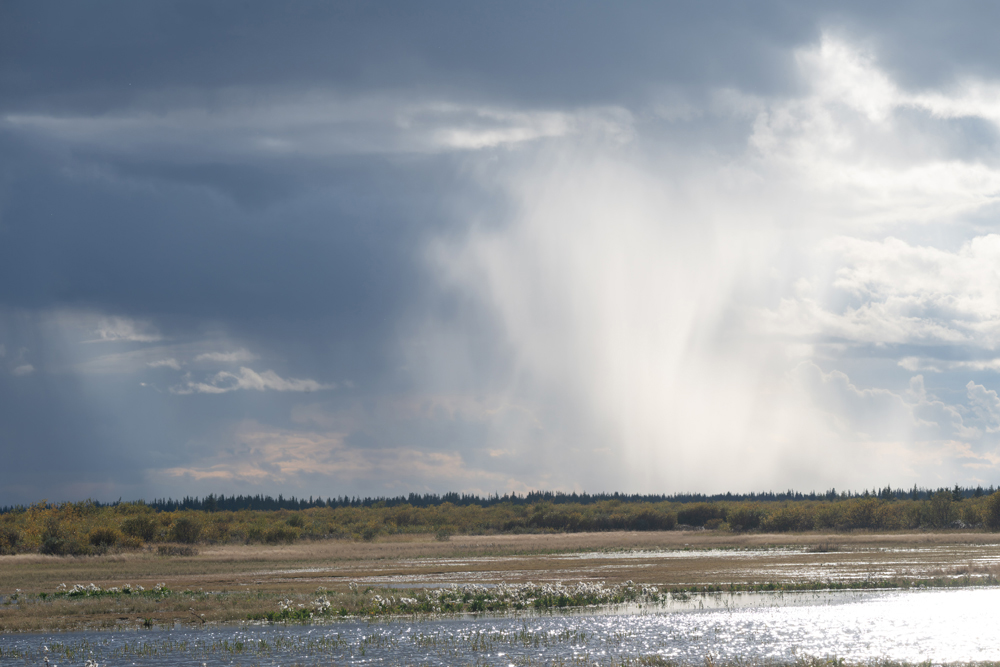
The first outing set the tone for the week.
“First morning, freezing, pouring with rain,” said Skinner. “Didn’t really see anything, camera out under a rain mac, and we got back and we all had to hang our stuff up. We were soaked.”
The afternoon was different. Out in the Tundra Rhino, the group came across their first polar bear, a female who popped up out of the willows beside the track.
“We didn’t approach her. She just popped up,” said Skinner. “We stopped the truck and she just stayed there. She sat up and stood up and didn’t move, just stayed there looking at us.”
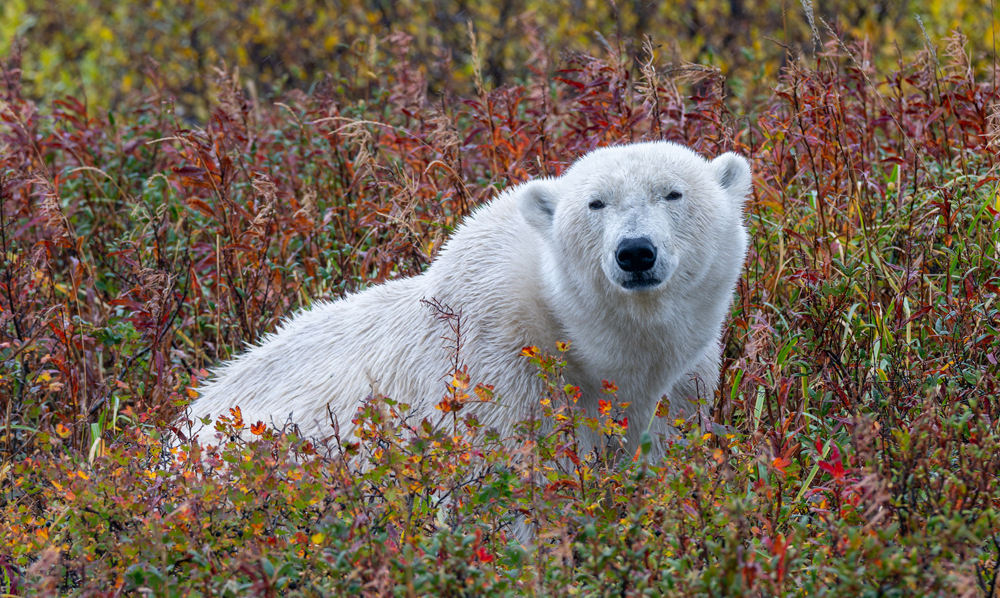
“We didn’t approach her. She just popped up.” Sarah Skinner photo.
The guides thought she was a younger bear who had likely seen the Rhinos before and wasn’t fazed.
“It did feel like a little bit of a reward after minus 2 in the wind,” said Skinner.
It poured nearly every day of the trip. The group had one clear day.
“We did stick some hideous weather, but my God, did we get the rewards,” said Skinner.
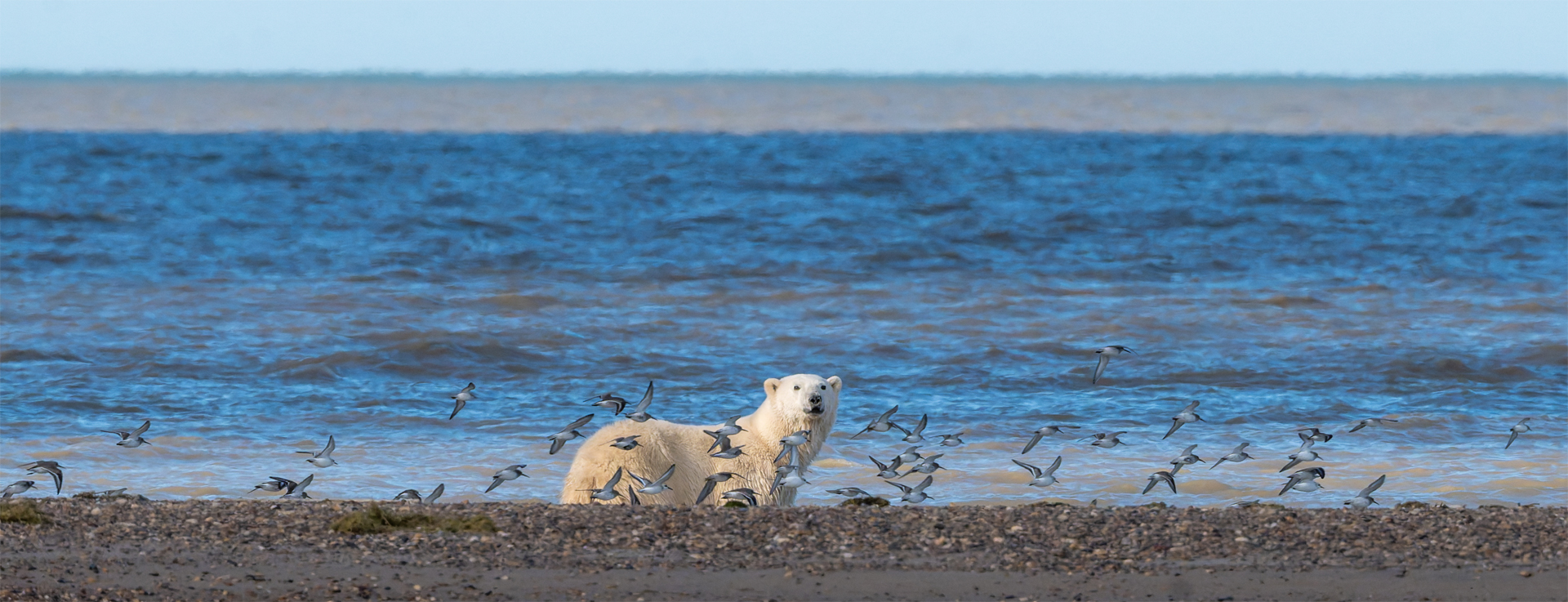
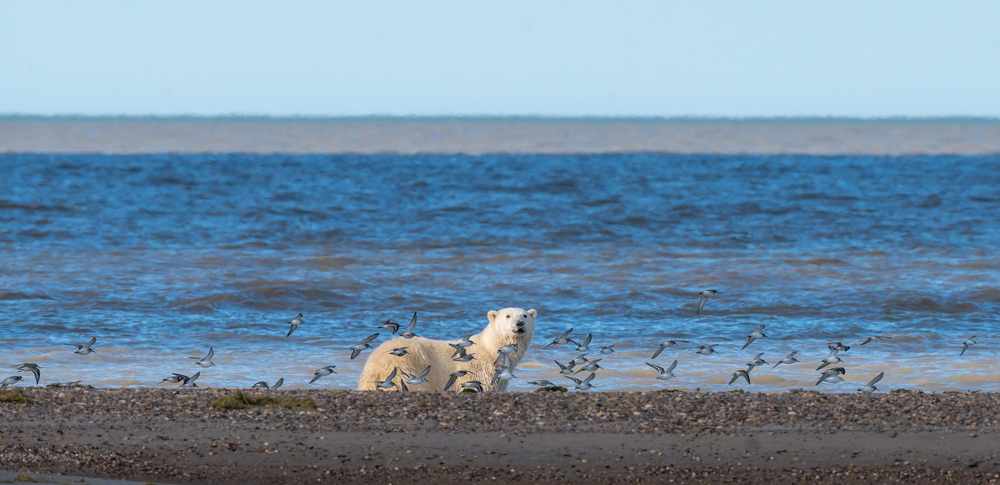
They saw three polar bears in three different settings. After the bear in the willows, they walked out to one on a sandbank with blue sea behind him. Later they found another sleeping against a bank.
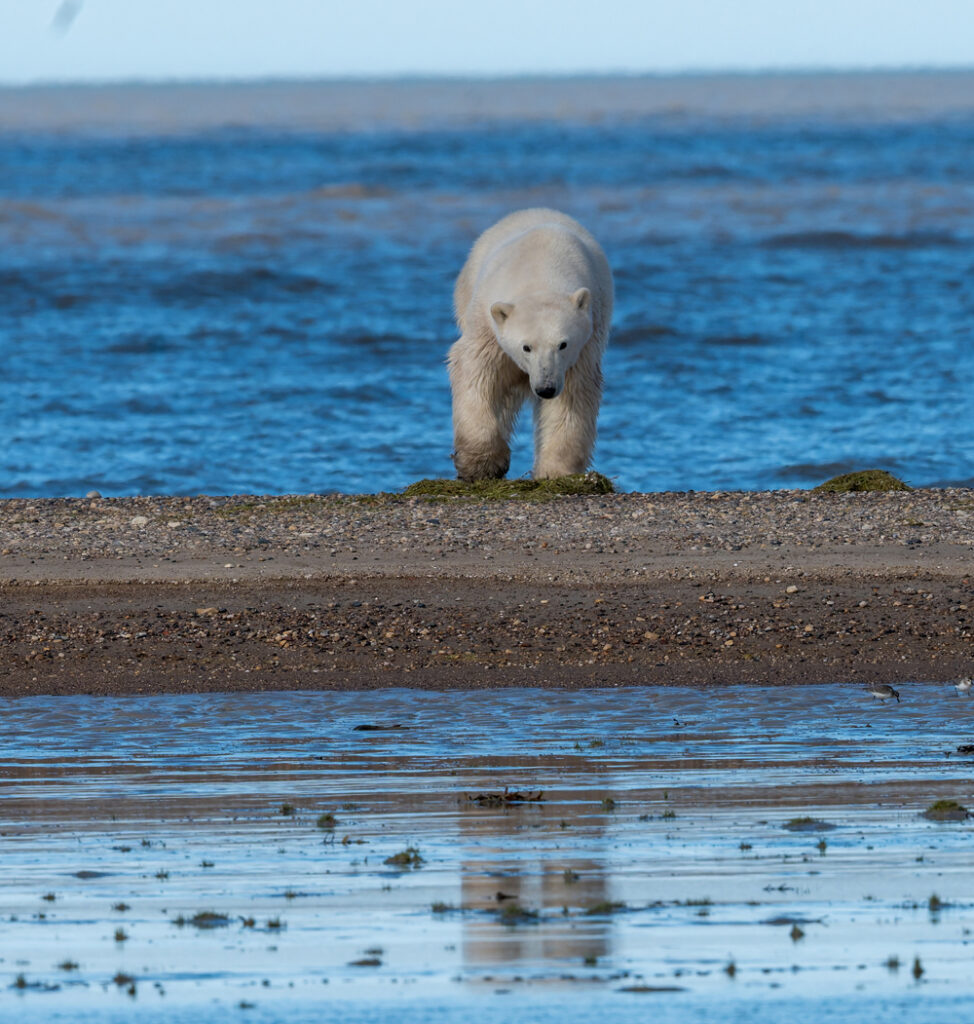
Get your camera ready. Sarah Skinner photo.
“Just obviously got out of the wind and lifted his head as if to say, just leave me alone, I’m having a snooze,” said Skinner.
Skinner never felt scared on foot, even when the sandbank bear got up and started pacing.
“The protocols are so clear, and we’re so very well supervised and instructed,” said Skinner. “At no point did the guides have to use any form of deterrent. We just sort of blended into the landscape, really.”
She called her guides, Emri, Brandon, and Alex, “honestly excellent.”
Wolves and a Fresh Kill
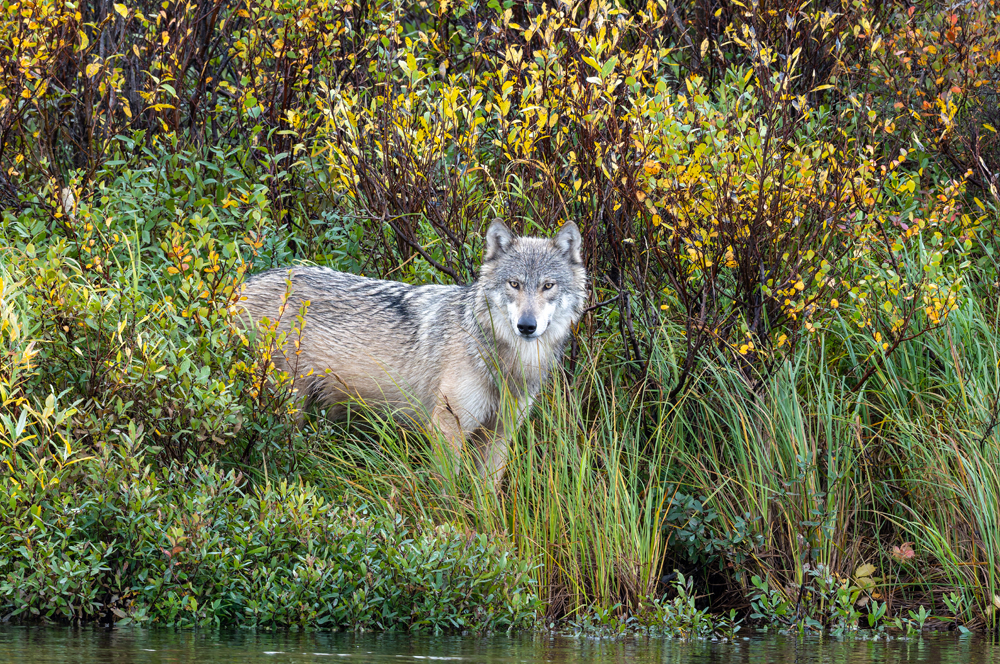
Wolf on the riverbank at Nanuk. Sarah Skinner photo.
Skinner had asked about wolves before they went out and was told they hadn’t been around.
“The wolves surprised me,” said Skinner. “I guess I was sort of expecting to come across a polar bear. I don’t think I thought we’d see the wolves.”
The group saw a pack of four, then a single wolf, and heard them howling.
“Got a great phone recording of the pack howling, and then the female, I think, returning the howl,” said Skinner. “And I’ve got a lovely picture of her looking up into the sky, howling. Oh my God, it’s so eerie, the sound.”
Then came the kill.
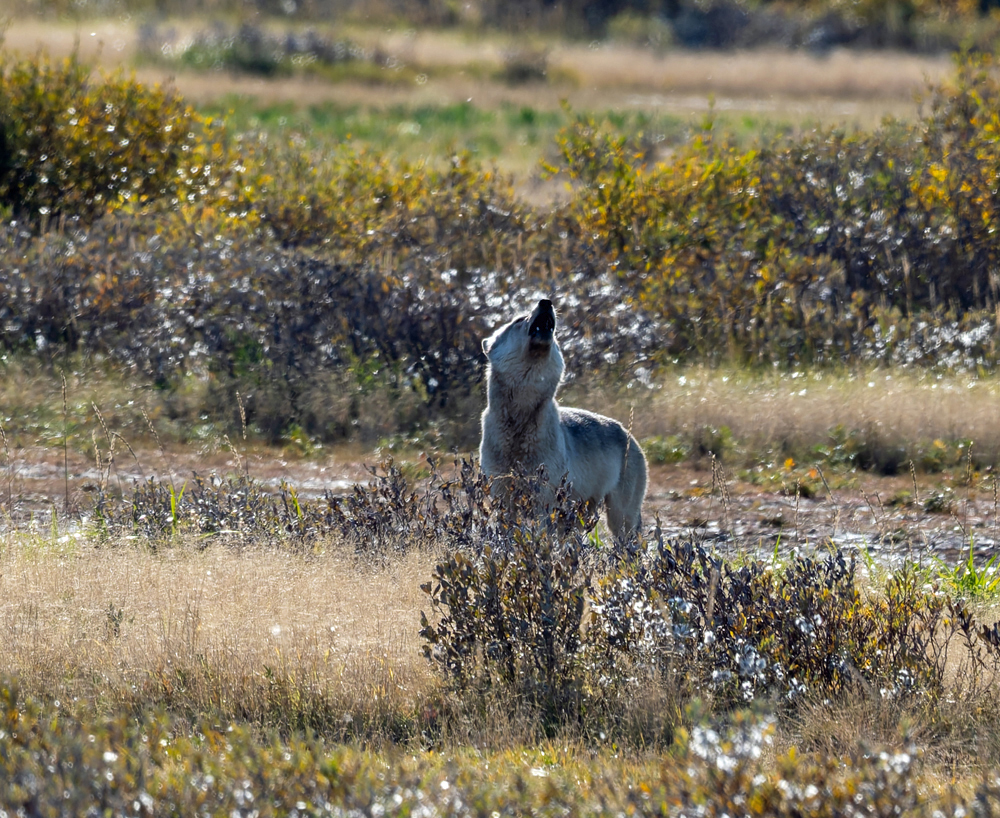
“We saw the wolves, then we saw some birds circling, so we went out and I said, hmm, there might be a kill there,” said Skinner. “We went out, the wolves had gone, we looked at the kill, and then we saw the wolves.”
The wolves had taken a young moose.
“It was gruesome, but it’s life, isn’t it?” said Skinner.
That evening’s presentation was on predator and prey.
“Very timely,” said Skinner.
The guides were excited too and asked for her photos.
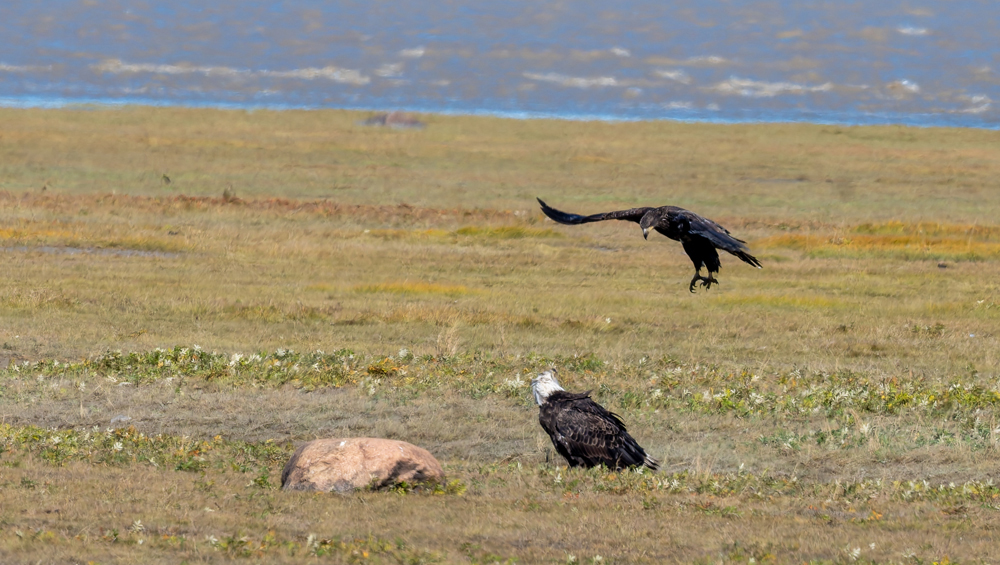
The sightings kept coming. There were a moose and two calves crossing the river, a caribou with huge antlers out on the open tundra, and bald eagles.
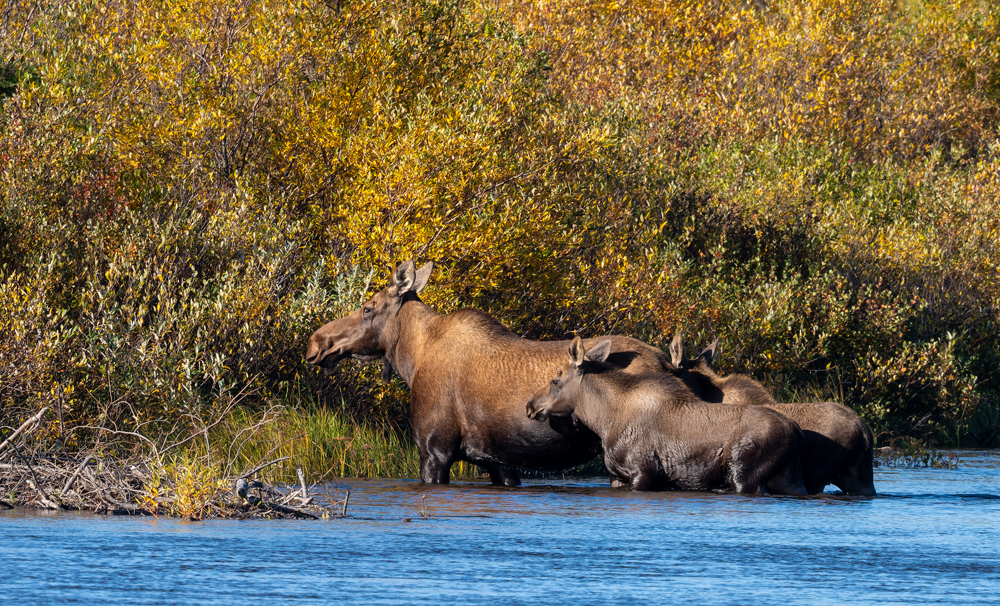
Moose calves with mom. Sarah Skinner photo.
“We saw a fox killing a goose and carrying a goose that it had just killed, and the goose was still alive and it was bigger than the fox,” said Skinner. “We saw some gruesome stuff, but we saw nature literally in its rawest. There wasn’t anything left to tick off the list.”
On the last night, the northern lights came out in green and red.
“Honestly, you just can’t make it up,” said Skinner.
Not Part of the Problem
Skinner has travelled widely, including Borneo, Vietnam, and Africa. For her, the difference at Nanuk was in how you see the wildlife.
“The thing that puts me off an African safari is one lion and 15 buses and everybody taking a picture, and it feels like you’re part of the problem,” said Skinner. “Whereas here, you didn’t meet anyone, you didn’t see anyone. You were the people out there, and that felt quite special, and it felt like you weren’t adding to the problem of the environment.”
She puts that ahead of the price tag.
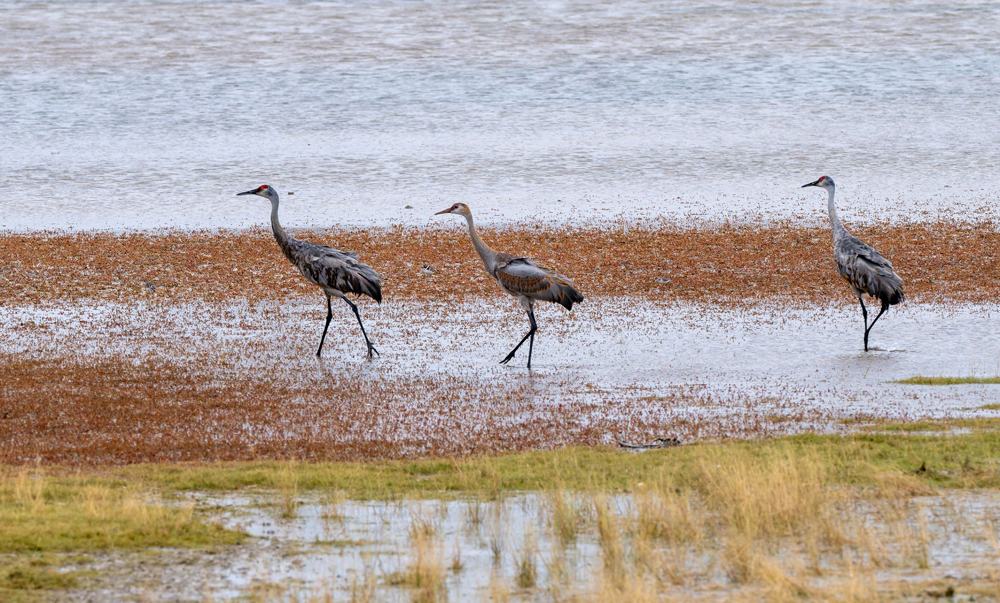
Sandhill cranes on the edge of Hudson Bay at Nanuk. Sarah Skinner photo.
“I could probably do an African safari for probably half the price,” said Skinner. “I’d sooner miss a year and then perhaps do Seal River, because that’s important to me.”
She has since booked a photography trip to India for tigers. Before booking, she checked the company thoroughly to make sure she was doing it the right way.
She also had some advice for Churchill Wild.
“If I was going to say one thing about all your great publicity, I think the ethical bit could come through stronger,” said Skinner. “When you read stuff, it’s about would you like to see polar bears, can you believe you can see polar bears in summer. All that’s amazing and that obviously draws people in. But people who love wildlife of that nature don’t want to go to a zoo and see a polar bear. That’s just like the worst thing ever.”
The ethical wildlife viewing, she said, is “where you stand apart from every other safari.”
“The way you do it, the remoteness, the lack of people,” said Skinner. “I think there’s two vehicles out on the tundra at any given time, and that’s it. And I didn’t know that until I got there.”
Just Do It
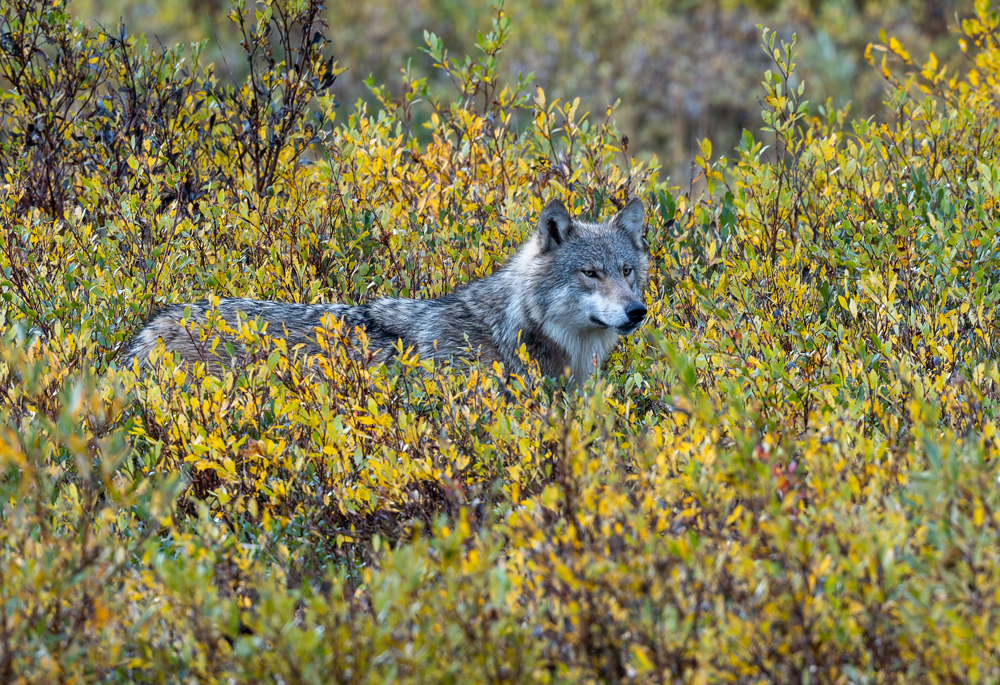
Wolf in the willows. Sarah Skinner photo.
Her friends back home had one question.
“I come from a school environment where we do a risk assessment about just about everything, and they were like, have you done a risk assessment?” said Skinner. “They thought it was amazing, but possibly not something they’d do. But now they’ve seen the photos, I think they might be a little bit more keen.”
Her husband’s reply to the first bear photo was more direct.
“His reply was, thank God for that, this could have been the worst present ever,” said Skinner.
She didn’t read a single review before she booked.
“I was coming regardless,” said Skinner. “If I’d have seen a polar bear and everything else had been rubbish, I’d have still been a happy woman.”
When people comment on Churchill Wild’s social posts that they’d love to go, Skinner is one of the people replying.
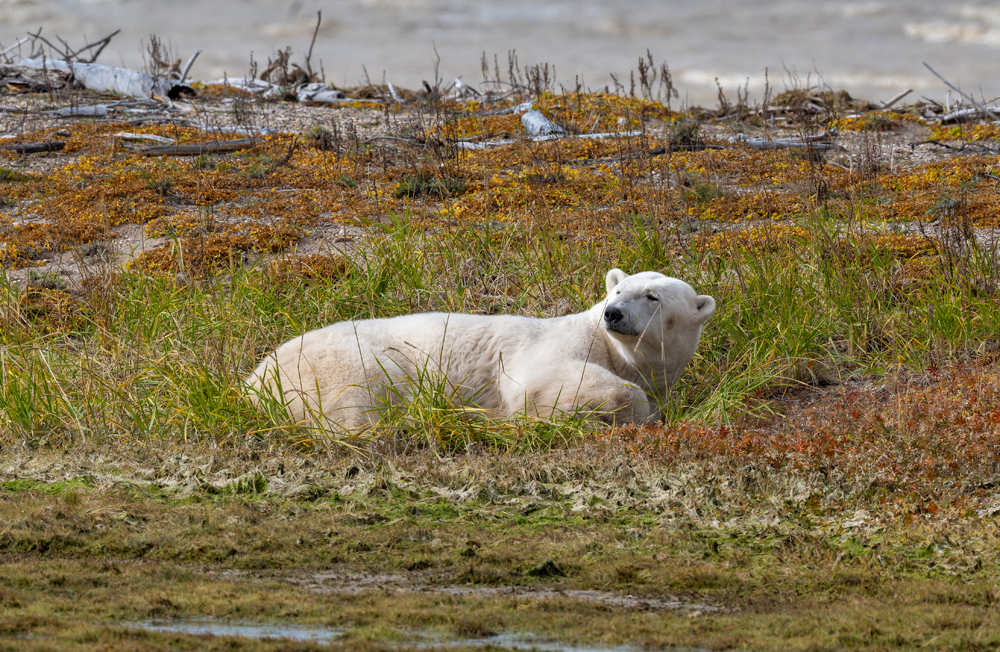
Polar bear watching guests. Sarah Skinner photo.
“I’m literally replying going, do it, it’s amazing,” said Skinner. “If I’d seen nothing, I still would have loved it. I’d have been a bit disappointed, but I knew I would love it, and it was better than I could have imagined.”
Her advice for anyone on the fence is short.
“Just do it, because you won’t go anywhere like it in the world. I truly believe that,” said Skinner. “You will never experience the remoteness and the sense of isolation in the most magical place.”
Retirement is off to a busy start. Skinner and her husband head to Costa Rica in January. In April, while he takes a motorcycle trip to Nepal, she’ll be in India photographing tigers.
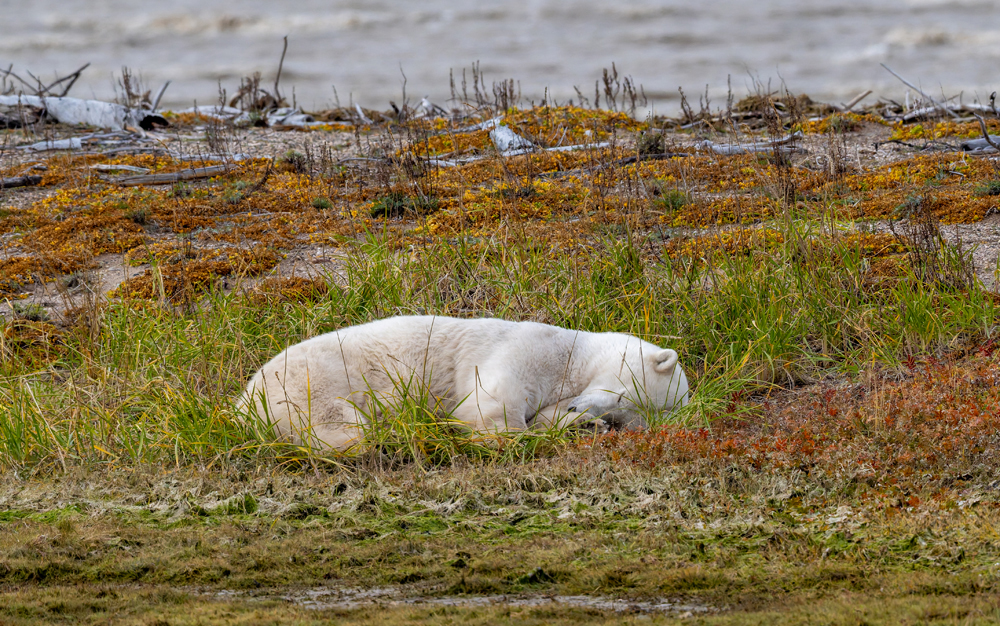
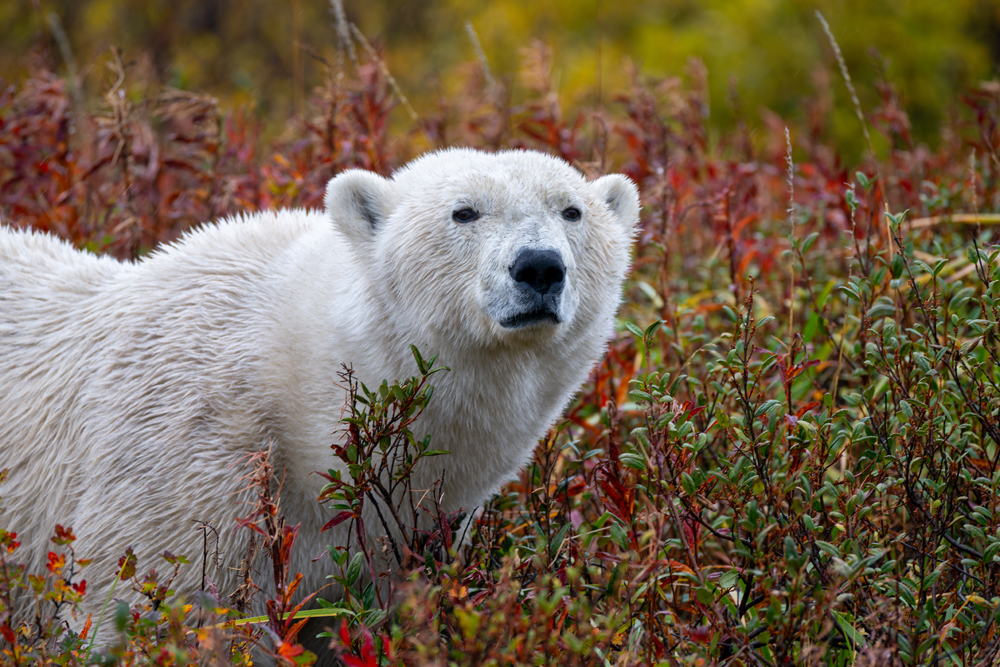
A nap in fall colours. Sarah Skinner photo.
“It’s a good start to my retirement,” said Skinner.
The polar bears and wolves of Nanuk are still the main topic of conversation at home.
“I haven’t stopped talking about it,” said Skinner. “He’s had to go on a motorbike trip to Ireland to avoid me now.”
Some retirement gifts are worth the wait.