
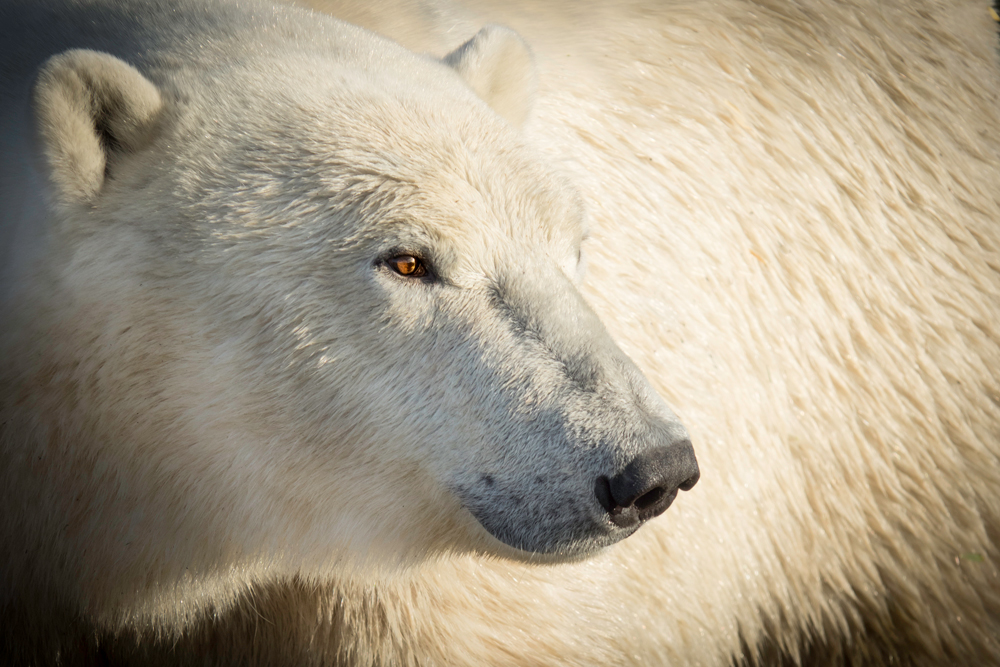
A hundred metres away on the edge of the Hudson Bay sea ice, a thousand-pound polar bear catches our scent, lifts his head in the air, and pauses to think. Are we a threat or a curiosity? On a frosty gravel ridge, a handful of photographers stand motionless, telephoto lenses resting steady on monopods and tripods, waiting for the bear to step into the low Arctic light.
To National Geographic photographer and filmmaker Jad Davenport, that quiet space before a shutter is tripped holds the entire craft.
“What I see so often now are people getting out in front of an animal, everyone has big lenses, and they’re getting great shots for the cocktail party,” said Davenport. “You can hang a pretty portrait up in your office, but if someone asks, Why did you take that picture? the answer is usually, Because I was close to a polar bear. I want someone to be able to say, This was part of my story. I want people to be intentional with their photography so that when they push the shutter, they already have in their head what they are trying to communicate.”
Helping photographers make that leap, from someone who passively takes a snapshot to an artist who intentionally creates a picture, is the heartbeat of Churchill Wild’s final Nature & Travel Photography Masterclass of the season, running November 23 to December 2 at Nanuk Polar Bear Lodge. The first departure sold out almost immediately, prompting Churchill Wild to open a second session. With just four rooms remaining, the eight-day field workshop offers both seasoned pros and ambitious beginners an opportunity to rethink the way they see.
Forty Years Behind the Lens
Davenport’s perspective comes from four decades working in some of the most remote and demanding corners of the world. Before spending more than twenty years on assignment for National Geographic, he spent a decade as a freelance conflict photojournalist covering wars in Bosnia, Iraq, Cambodia, and El Salvador. His editorial beats later took him investigating the disappearance of Michael Rockefeller in Papua New Guinea, tracing lost Norse settlements in Greenland, and crawling through the subterranean Maya sacrifice caverns of Belize for stories in LIFE and National Geographic.
He was an early pioneer in digital field craft, producing National Geographic’s very first fully digital cover story back in 2004, and is a certified photo instructor through the Society. Along the Hudson Bay coast, he is already a familiar face as Churchill Wild’s Director of Wolf Programs, leading the Cloud Wolves of the Kaska Coast safaris at Nanuk, as well as the the Arctic Safari out of Seal River.
Despite his credentials, Davenport is quick to dispel the myth that elevating your photography requires tens of thousands of dollars in specialized glass.
“It’s really not about the equipment; it’s about new ways of seeing,” said Davenport. “If you are a newly retired professional and this is your second career, we’ve got you covered. But if you show up with just an iPhone, you can still make extraordinary, magazine-quality pictures. The masterclass is designed to help you develop a true, personal photographic style.”
As Davenport explained during a recent Churchill Wild webinar, the core lesson comes down to mindset:
“Taking a photo is just recording what happens to be in front of you. Making a picture means bringing intention into the frame: understanding light, choosing your background, waiting for the moment, and knowing what you want to say before your finger touches the button.”
Where the Forest Meets the Sea

Nanuk Polar Bear Lodge sits 250 kilometres south of Churchill, perched right where the massive Canadian boreal forest gives way to coastal flats, the vast Arctic tundra, and the open waters of Hudson Bay.
“Stand on the lodge porch facing south, you’re looking into thick black spruce and heavy willows,” said Davenport. “Turn around 180 degrees to the north, and it looks like you’re standing at the North Pole with endless tundra and sea ice. At Seal River, it’s all open tundra; at Dymond Lake, it’s forest. Nanuk gives you the best of both worlds.”
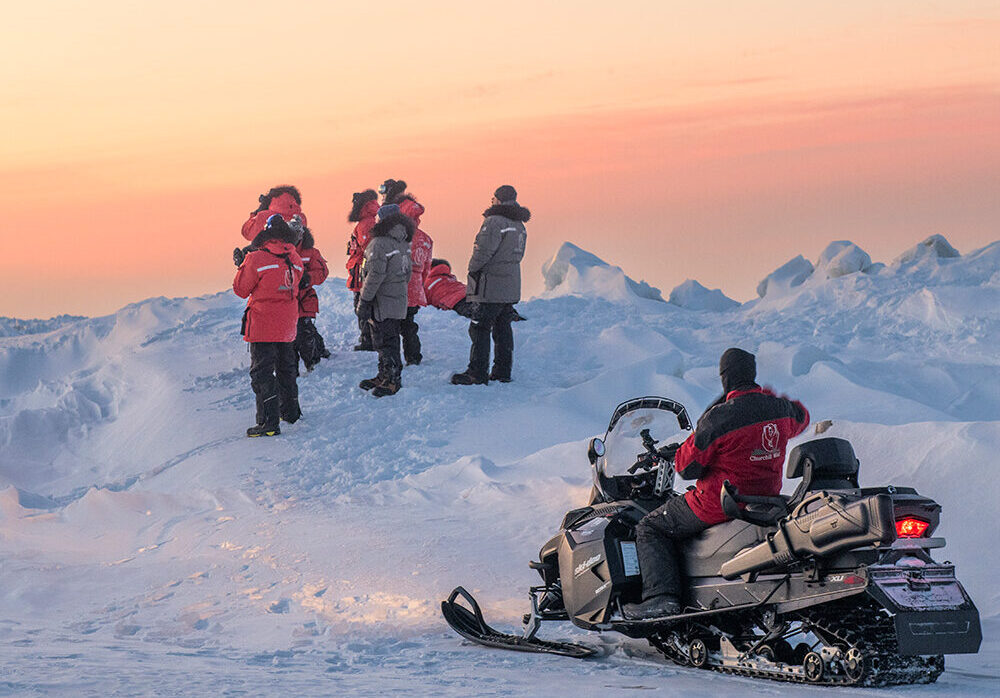
Nanuk covers an immense territory. While polar bears and wolves do occasionally pass by right outside the lodge fence, venturing further afield across the rivers, tidal flats, and beach ridges means boarding Churchill Wild’s custom-built Tundra Rhinos. These specialized machines handle the vast terrain with ease.
Yet when wildlife is located, the experience remains unmistakably Churchill Wild: you disembark. You do not photograph down from an elevated observation platform. You set up on your own two feet, working at eye level right on the ground.
Photographers collaborate closely with seasoned guides like Emri Canvin, whose field instincts have been honed through years of guiding documentary crews from Disney, the BBC, and National Geographic.
“The guides are the real masters,” said Davenport. “They have what amounts to their own PhDs in photography. While driving the trails through the willows, a guide might spot an animal in the distance and warn you that it may stand up to watch us go by. Then we step out of the vehicle on foot, and Emri will say, Hey Jad, if we move around this stand of willow, we’ll catch the low rim-light off the animal’s back. They understand animal behaviour, they know how the light falls across the ridges, and they keep everyone safe. They are genuine creative partners out on the land.”
Under the Northern Lights

With winter approaching, daylight runs from roughly 8:30 a.m. to 4:00 p.m., allowing the group to dedicate every usable hour outdoors chasing low, soft light. But when the sun dips, an entirely different visual medium opens up. November nights are long, crisp, and free from light pollution, placing Nanuk directly under the auroral oval in one of the premier locations on earth for the northern lights.
“Northern lights are always on our radar,” said Davenport. “The lodge guides take turns watching the skies overnight. The moment the green ribbons start to appear, they wake everyone up. We bundle up, head out into the yard, and stay out as long as the sky is dancing.”
Davenport works with guests on dialling in both still frames and motion time-lapses of the aurora. And on nights when the northern lights stay quiet, the dark hours become a creative playground for light-painting.
“We set up cameras on long exposures and use hand-held torches from the side to sculpt light onto old tracked Arctic vehicles, snowscapes, or lodge architecture,” said Davenport. “It takes a scene that would otherwise be flat and dark and turns it into a dramatic piece of fine art. It teaches you how light behaves better than almost anything else.”
The Rhythm of the Wild
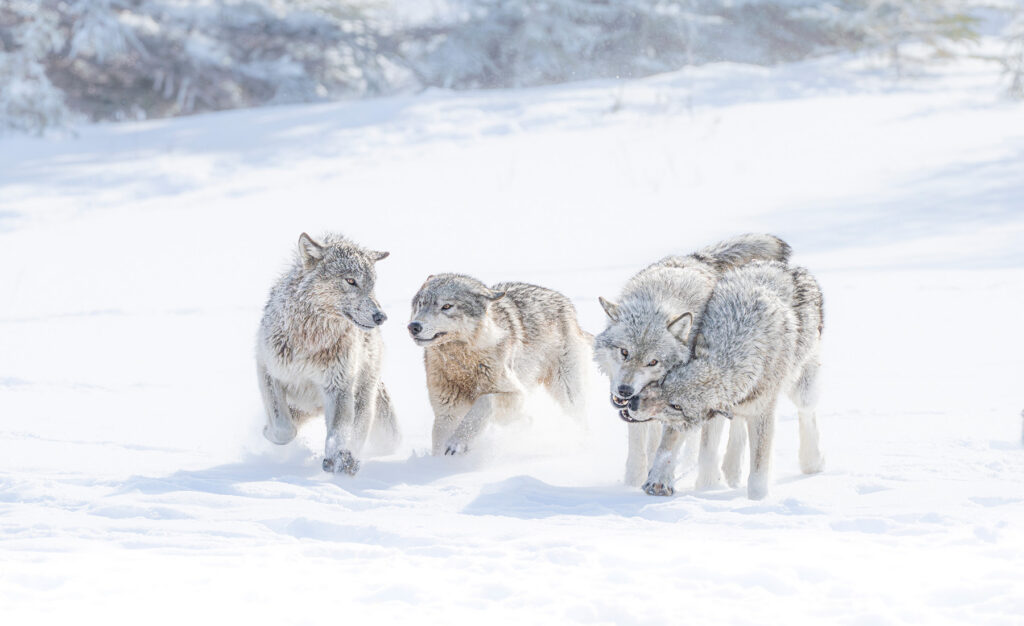
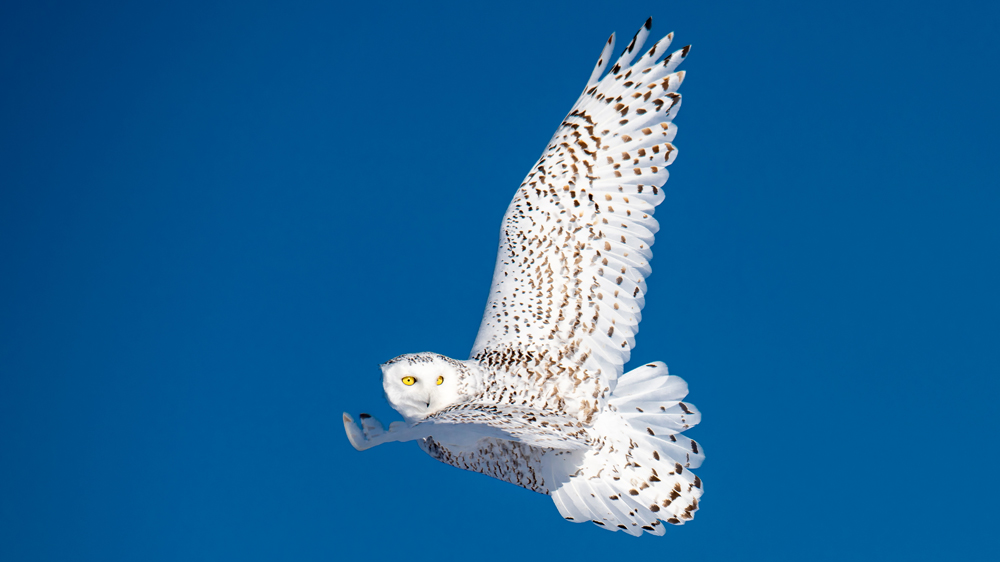
Late November is freeze-up, the season when ice begins to form along the coast and wildlife transitions for the Arctic winter. It can be a remarkably dynamic time on the bay. Polar bears often patrol the shoreline, waiting for the pack ice to firm up, with big males occasionally sparring on the flats. Wolf packs range the rivers hunting moose, and snowy owls scan the salt meadows for lemmings.
Yet, like any true wilderness, the coast makes no promises. Wildlife sightings in the Arctic can range from breathtaking encounters to quiet stretches where the land asks for patience. For Davenport, learning to work with that unpredictability is the true mark of a professional.
“This is genuine wilderness; we work for our wildlife,” said Davenport. “When you’re on a National Geographic assignment, you face the exact same reality. You might have days where the wildlife is right in front of you, and days where it isn’t. Well, you’re still an artist, and you still have a story to tell. Whenever wildlife is around, we prioritise it completely. But when the animals are resting, you learn how to look at the landscape, the frost, the architecture, and the details with the same creative intensity. That’s how real assignments are made.”
Fireplace Critiques and the Business of Photography
Back inside the warmth of the lodge, classroom time never cuts into field hours. Over late-afternoon appetizers by the Great Room fireplace, Davenport leads 40-minute teaching modules covering perspective, portraiture, art concepts like Rembrandt’s chiaroscuro lighting, cinematography, and post-production workflows.
Following family-style dinners from the lodge kitchen, steeped in the acclaimed Blueberries & Polar Bears culinary tradition, the group gathers for evening critiques.
“That’s where the most growth happens,” said Davenport. “You don’t put up your easy, guaranteed photos to get a pat on the back. You put up the frame you cared about where you tried something ambitious. As a group, we talk through what worked and how to take it to the next level. And because we’re together for eight days, you get to wake up the next morning, pull on your parka, and try it again in the field.”
Davenport also pulls back the curtain on the business side of nature photography, from pitching story ideas to magazine editors and licensing prints, to navigating contracts and understanding what competition judges look for.
“It’s a boot camp and an investment in your eyes,” said Davenport. “Whether you go home with sparring bears, running wolves, dancing aurora, or a striking portfolio of subarctic landscapes, you leave with a completely transformed visual toolkit. What you learn in eight days on the Hudson Bay coast is something you will carry with you on every journey you take for the rest of your life.”
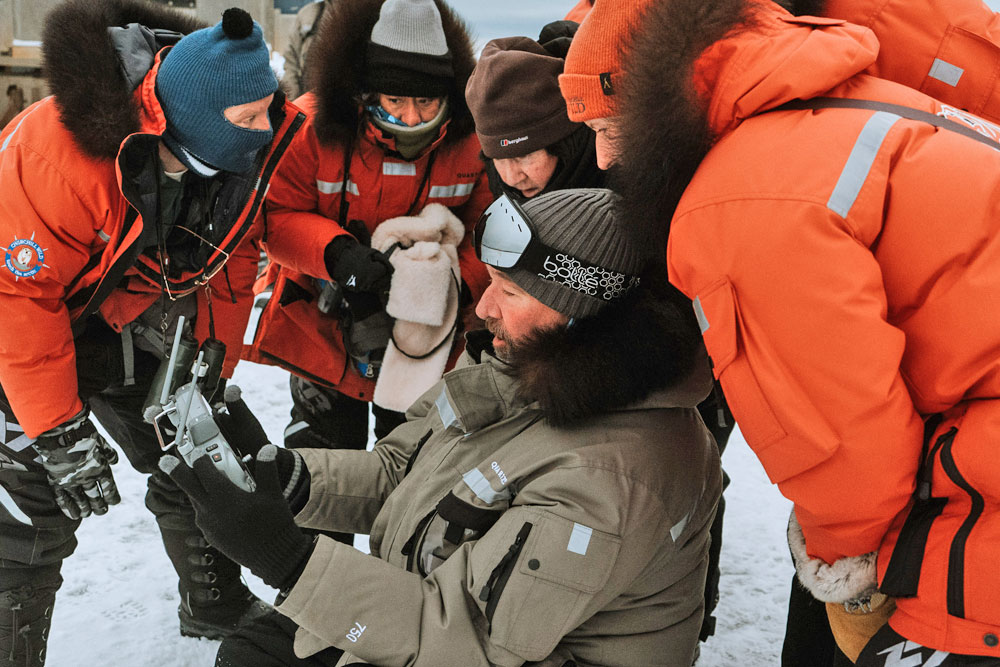
The final Nature & Travel Photography Masterclass for 2026 runs November 23 to December 2 at Nanuk Polar Bear Lodge. Packages include return flights between Winnipeg and the lodge, accommodations, dedicated guiding, winter outerwear, meals, and full masterclass instruction. With only four rooms remaining, contact Churchill Wild for current availability.