
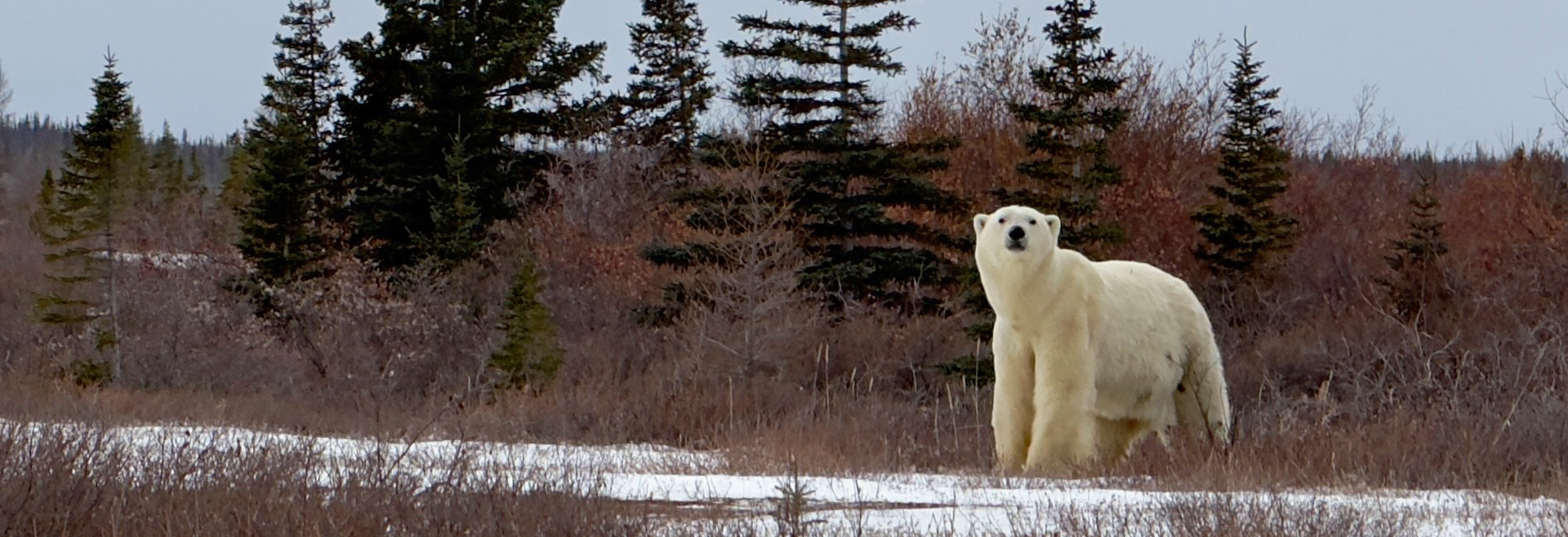
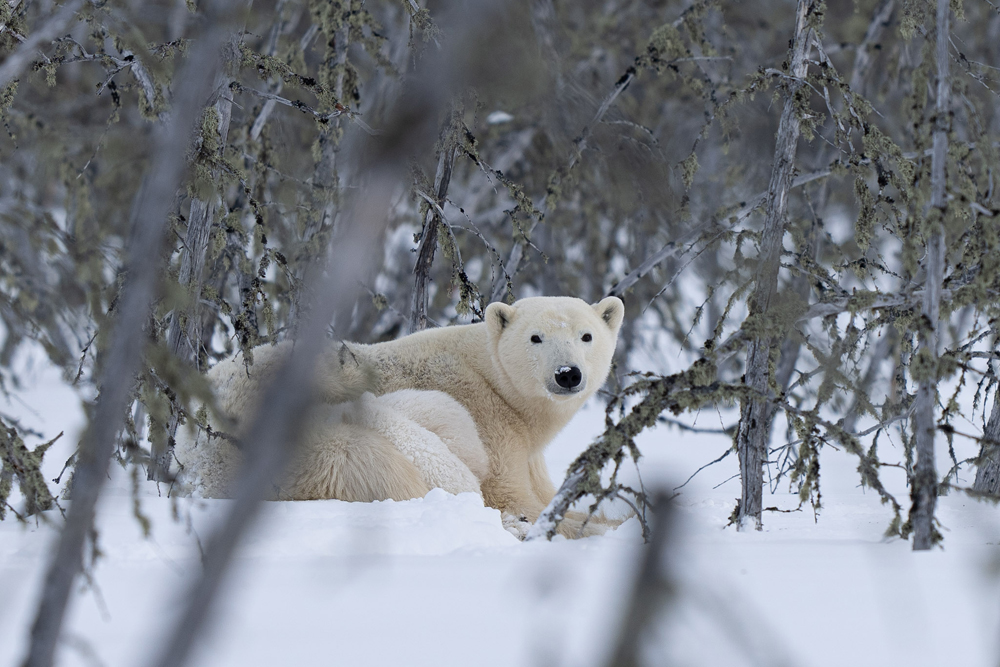
Safe haven. Nanuk Polar Bear Lodge. Fabienne Jansen / ArcticWild.net photo.
What would you do if a thousand-pound polar bear emerged from the forest in front of you?
When we posted this question alongside video footage from Nanuk Polar Bear Lodge, the responses flooded in. “Run!” declared dozens. “Polar bears don’t live in forests,” insisted others. “That’s AI-generated,” claimed skeptics. Some suggestions were creative, if impractical: “Give him a Coca-Cola.” “Scratch his belly?” One person summed up the general disbelief perfectly: “Wake up. Polar bears don’t live in the forest.”
Here’s the thing: They absolutely do.
View this post on Instagram
The Great Misconception
The image most people carry of polar bears (majestic white giants striding across endless Arctic ice) isn’t wrong. It’s just incomplete. In Southern Hudson Bay, although there is substantial tundra along the coast, the landscape is predominantly boreal forest, making it the only part of polar bears’ range where individual bears spend considerable time in a forest ecosystem.

Boreal forest landscape. Nanuk Polar Bear Lodge. Andrew Lasken photo.
Both Nanuk Polar Bear Lodge and Dymond Lake Ecolodge sit at this remarkable ecological crossroads. Nanuk, located 250 kilometres southeast of Churchill, Manitoba, has Canada’s boreal forest as its literal backyard. Dymond Lake, positioned 30 kilometres north of Churchill near the treeline, experiences the same phenomenon. These aren’t anomalies or rare sightings; this is where polar bears actually live when the ice melts from Hudson Bay.
The polar bears of Southern Hudson Bay live farther south year-round than any other polar bears in the world. During summer and fall, when sea ice disappears, these bears don’t vanish into some mystical Arctic dimension. They come ashore and move through the very forests that people insist they don’t inhabit.
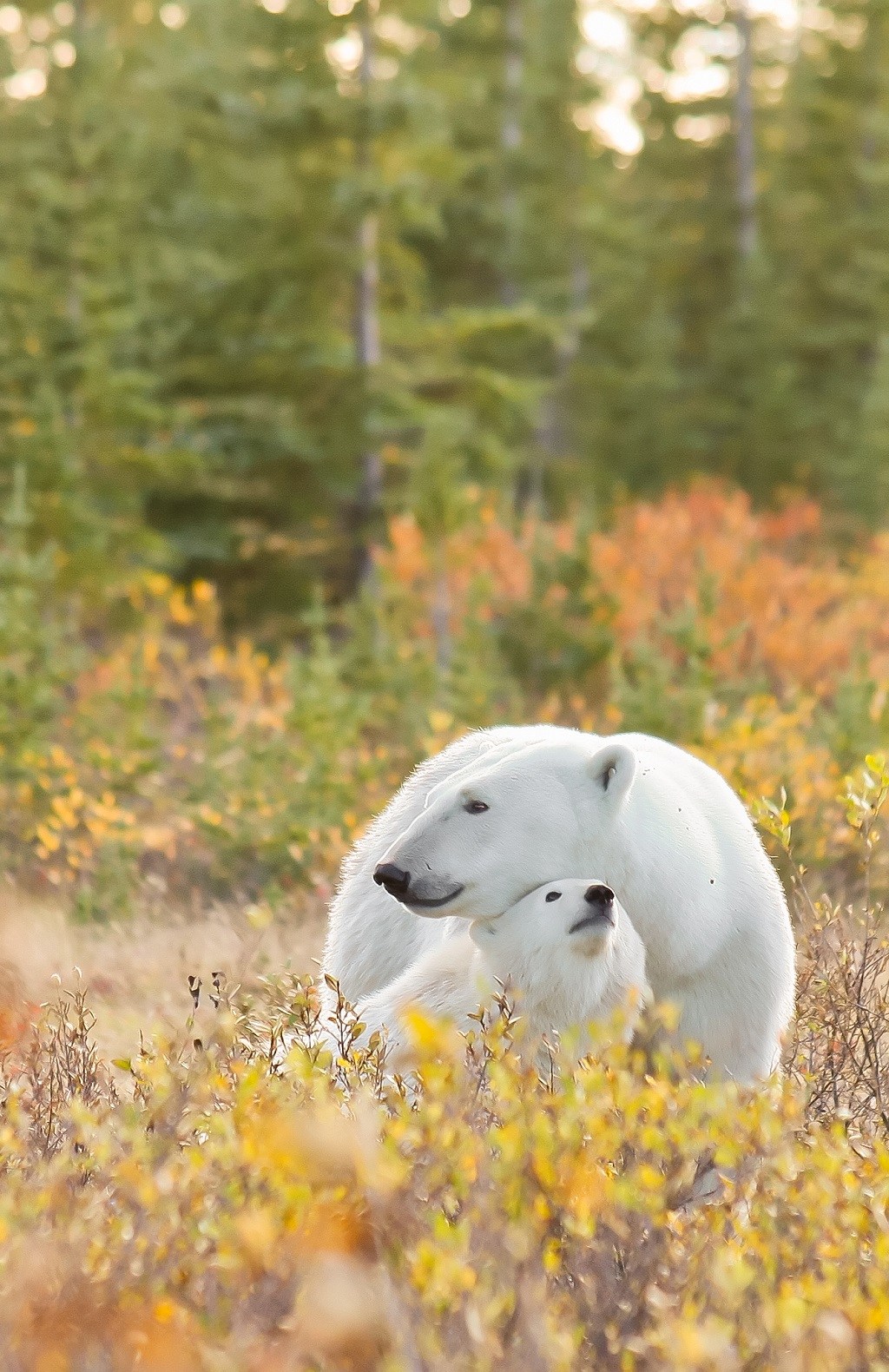
Polar bear mom and cubs in fall colours on the edge of the boreal forest at Nanuk Polar Bear Lodge. Ramona Boone photo.
Forest Denning: Where Polar Bear Families Begin
The forest connection runs even deeper than summer habitat. Wapusk National Park is a significant maternity denning area for polar bears, where pregnant females remain ashore, sheltered in maternity dens within the peatlands, giving birth in peat dens and emerging each year in March.

Nap time for a polar bear cub. Nanuk Polar Bear Lodge. Ellen Zangla photo.
South of Nanuk Polar Bear Lodge, female polar bears actively seek out the boreal forest to create their dens. They dig into deep snowdrifts among the stunted trees and peat soils, giving birth to cubs that won’t see the outside world until early spring. This isn’t unusual behaviour; it’s essential to their survival. Wapusk National Park is one of the most important polar bear maternity denning areas in the world, where pregnant females dig dens in the park’s snowbanks and peat-rich soils to give birth and nurse their cubs before emerging in early spring.
The forests of Wapusk National Park and the areas around our lodges represent some of the largest polar bear maternity denning areas on Earth. These aren’t ice caves on frozen tundra; they’re dens dug into forest soil, surrounded by trees. Polar bear mothers raising their cubs in the woods is as natural as it gets in this part of their range.
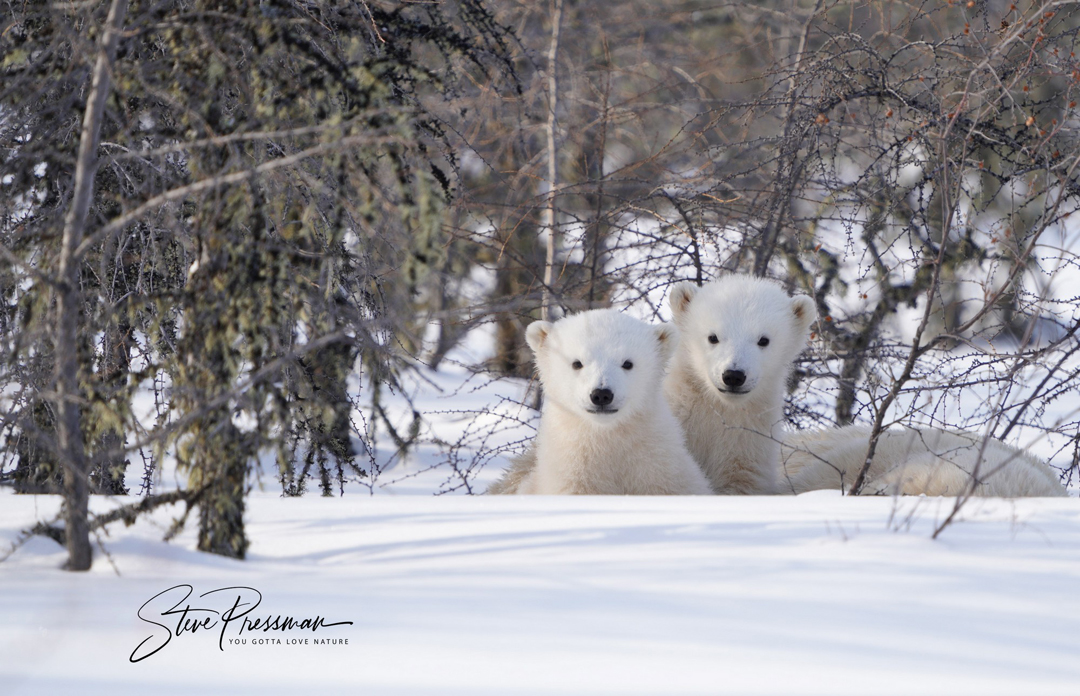
Polar bear cubs in the forest at Nanuk Polar Bear Lodge. Steve Pressman photo.
A Unique Convergence of Worlds
What makes the Southern Hudson Bay region so extraordinary is that it represents one of nature’s great meeting places. The area is predominantly boreal forest along with substantial coastal tundra, creating a transitional landscape. At Nanuk, three distinct ecosystems converge: boreal forest, tundra, and Hudson Bay’s marine environment.
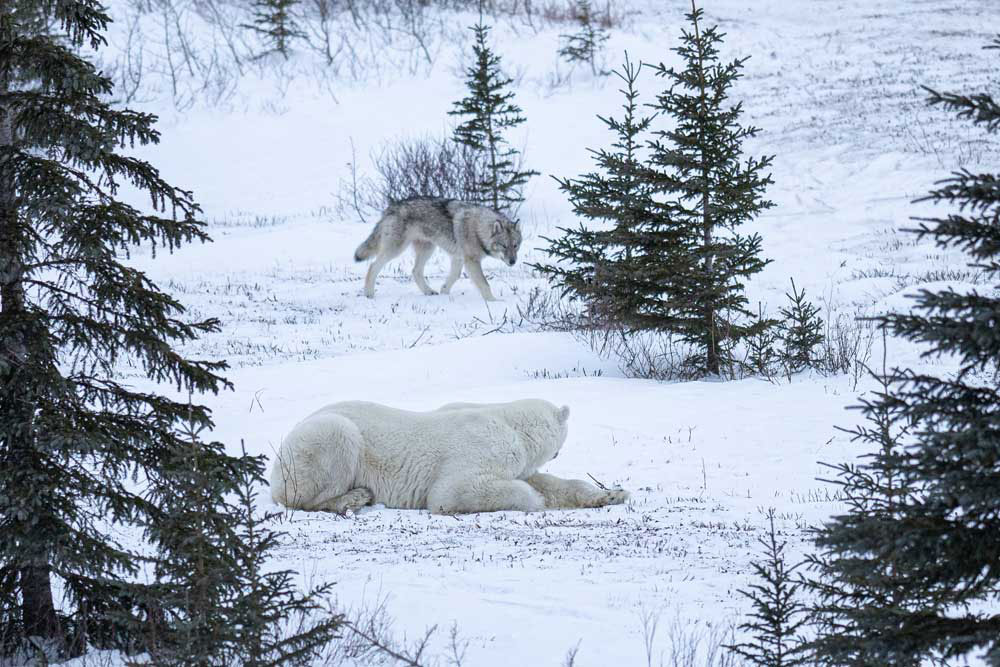
Meeting of the titans on the edge of the boreal forest at Nanuk Polar Bear Lodge. Christoph Jansen / ArcticWild.net photo.
This convergence creates wildlife viewing opportunities found nowhere else on Earth. Where else can you encounter polar bears emerging from spruce and tamarack forests, while black bears forage at the forest edge, and wolves ghost through the same landscape? In Wapusk National Park, researchers documented all three North American bear species (black bears, grizzly bears, and polar bears) on camera for the first time, a novel situation made possible by this unique transitional habitat. We have rarely seen grizzly bears around Nanuk Polar Bear Lodge, but black bears and polar bears are common. We even have them in the same photo!
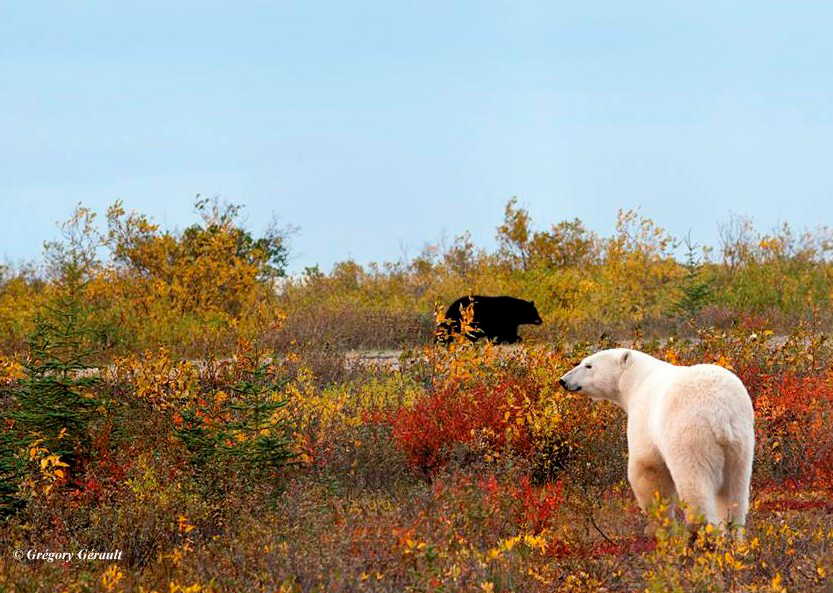
Polar bear and black bear. Nanuk Polar Bear Lodge. Gregory Gerault photo.
The photographs we have of polar bears in forested areas aren’t manipulated images or rare flukes. They’re documentation of where these bears actually spend their time when they’re not on the ice. From late June or July through October or November, polar bears in this region navigate through boreal forest, rest in the shade of stunted conifers, and move between forest and coast as they wait for freeze-up.
So What Should You Do?
Now we arrive at the crucial part. When that thousand-pound predator does emerge from the treeline, what’s the actual, life-preserving answer?
First, understand that you should never be alone in polar bear country. At Churchill Wild, we’ve spent five decades developing safety protocols specifically for ground-level polar bear encounters. Our three-guide system ensures at least 30 years of combined bear-guiding experience accompanies every group into the field.
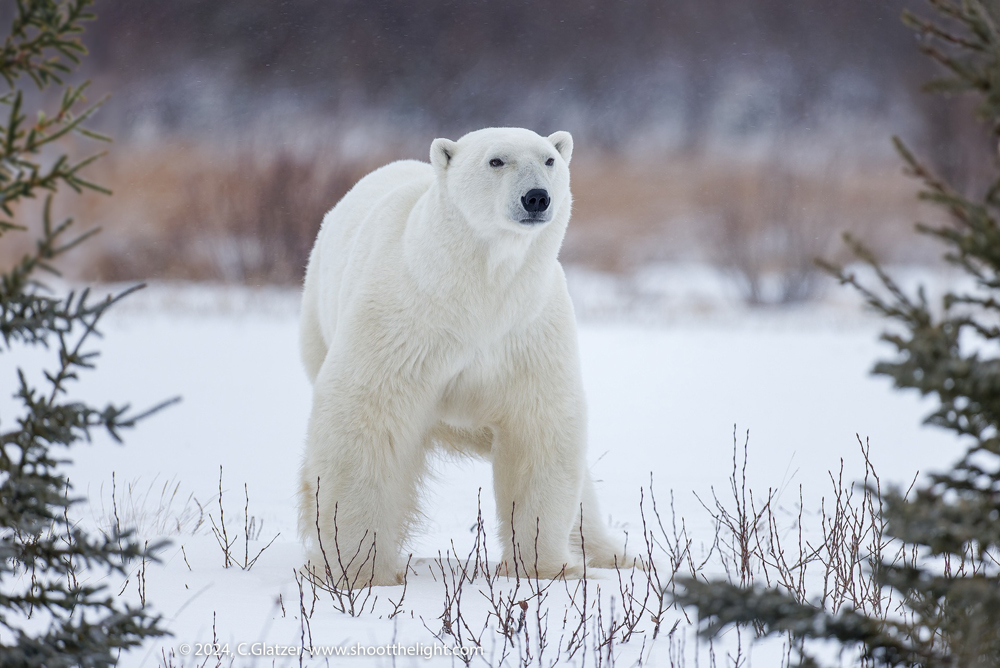
Polar bear observing guests from the edge of the forest at Nanuk. Charles Glatzer photo.
Here’s what our guides have learned through thousands of encounters:
Stand your ground. Running triggers a chase response in predators. Polar bears can sprint at nearly 45 kilometres per hour, faster than the fastest human Olympic sprinters. You cannot outrun a polar bear. Don’t try.
Stay together as a group. Polar bears rarely approach large groups of people. They’re intelligent enough to avoid situations where they might be at a disadvantage. Our walking safaris use group size as a primary safety strategy.
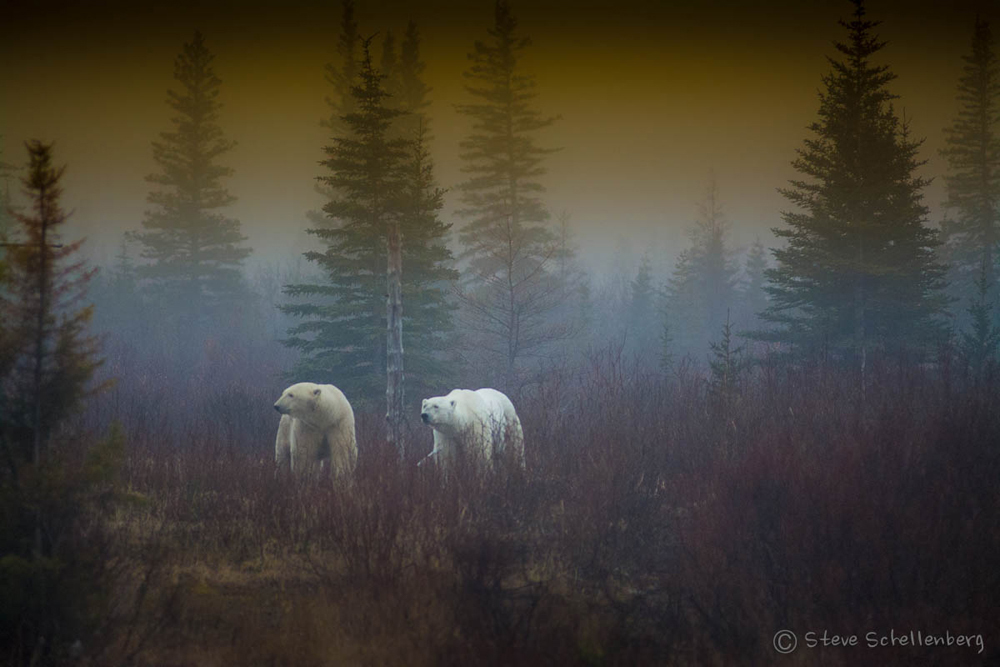
Polar bears in the mist. Nanuk Polar Bear Lodge. Steve Schellenberg photo.
Watch the bear’s body language. This is where experience becomes invaluable. A curious bear behaves differently than an aggressive one. Mother bears with cubs act differently than teenage bears. Reading these signals accurately takes years of daily observation.
Use voice and presence. Before resorting to deterrents, experienced guides use voice, standing tall, and strategic positioning to discourage approaches. The goal is always to prevent an approach rather than respond to one.
Deploy deterrents if necessary. Churchill Wild guides carry deterrents, along with firearms as a last resort. In decades of operations and over 10,000 guests, deterrents have rarely been used, but they’re always available.
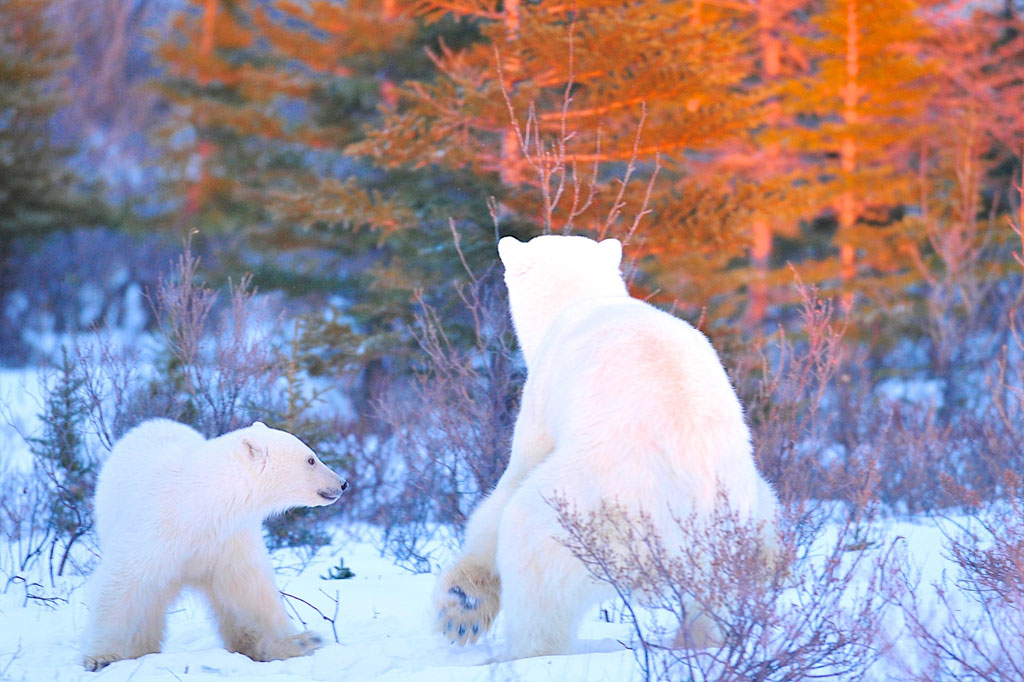
Mom and cub on the edge of the forest at Nanuk. Ian Johnson photo.
Never surprise a bear. Make noise while travelling. Stay aware of your surroundings. In areas with limited visibility, like forests, vigilance becomes even more critical.
The most important element? Experience. Our lead guides each have at least a decade of experience working with polar bears in the wild. Many have far more. As Churchill Wild co-founder Mike Reimer notes, “It really all comes down to experience and understanding animal behaviour. You have to spend time with the animals, analyze their behaviour, interpret what you’re seeing and act accordingly.”
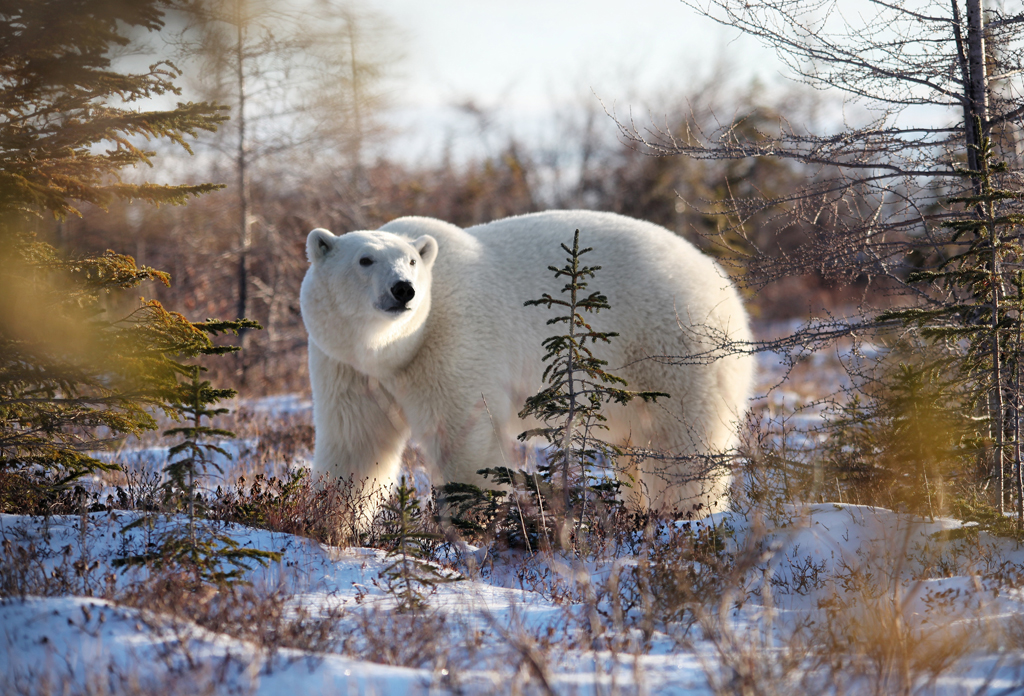
In the woods. Dymond Lake Ecolodge. Dax Justin photo.
The Ecolodge Advantage
Both Nanuk Polar Bear Lodge and Dymond Lake Ecolodge feature specialized fencing surrounding the compounds outside the lodges (high-tensile wire typically used for large animal enclosures). This allows guests to observe bears that approach the lodges safely, often coming within feet of the fence. It’s also why guests can lie on the tundra at night, watching the aurora borealis dance overhead, without concern.
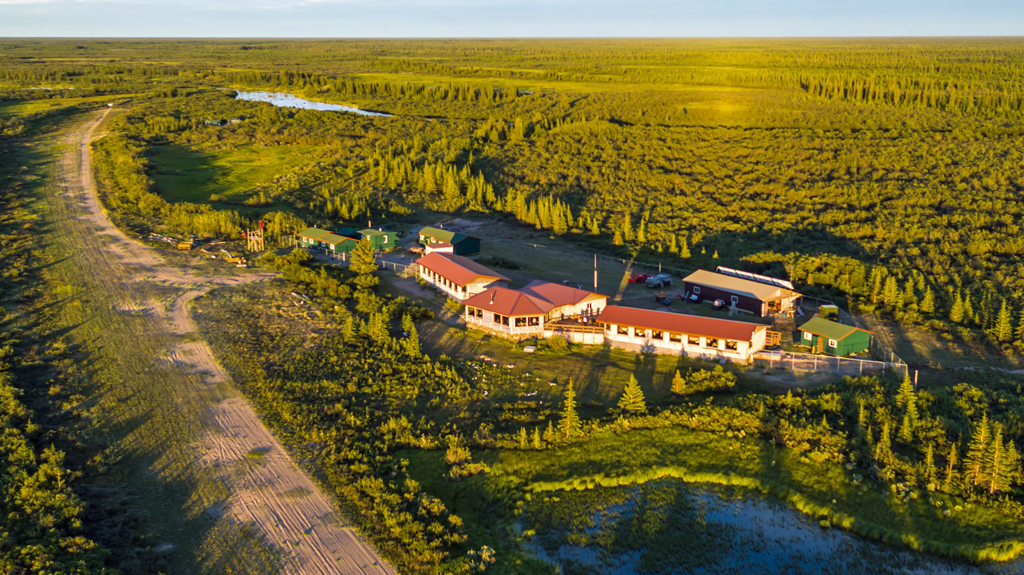
Nanuk Polar Bear Lodge is bordered by the boreal forest. Michael Poliza photo.
Inside these protected compounds, you can watch a polar bear wander past while you’re standing outside. The bears are as curious about you as you are about them, but the boundary is clear and secure. This isn’t keeping animals in captivity; it’s keeping people safe while giving everyone remarkable access to wildlife encounters.
When guides take guests outside these compounds for walking safaris, they rely on those decades of refined protocols. Remote locations like Nanuk and Dymond exist far from communities and their associated attractants. There’s no garbage, no improperly stored food, no oil spills; nothing that would teach bears to associate humans with food. The bears see people as neutral elements of the landscape, which fundamentally changes the dynamic.
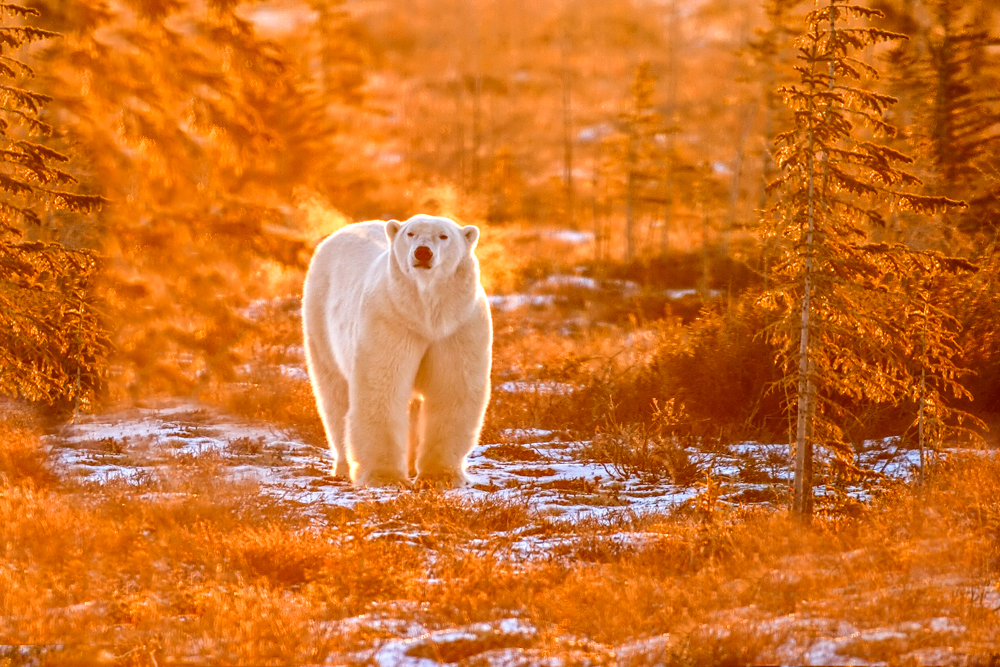
Polar bear on the edge of the boreal forest at Dymond Lake Ecolodge. Dennis Fast photo.
Living in a Changing World
The bears of Southern Hudson Bay have access to seals for approximately 10 days longer in summer than Western Hudson Bay bears, which might explain the greater reproductive success noted in this population. However, in 2024, Southern Hudson Bay bears were onshore and fasting for a record-breaking 197 days, and projections suggest that with 2°C warming, the population could be at risk of disappearing as early as the 2030s.
Every encounter with these magnificent animals at Nanuk or Dymond Lake carries added weight now. These forests may be temporary refuges for a species facing an uncertain future. The bears that den in Wapusk’s peat soils, that move through the stunted boreal forests, that patrol the tree line while waiting for ice; they’re adapting to longer ice-free seasons by utilizing forest habitat more extensively.
Understanding that polar bears do live in forests isn’t just correcting a misconception. It’s recognizing the adaptability and range of a species we thought we knew. It’s appreciating the ecological complexity of transitional zones where forest meets tundra meets sea ice. And it’s acknowledging that our simplified mental images of wildlife rarely capture the full reality.
The Next Time You See That Polar Bear
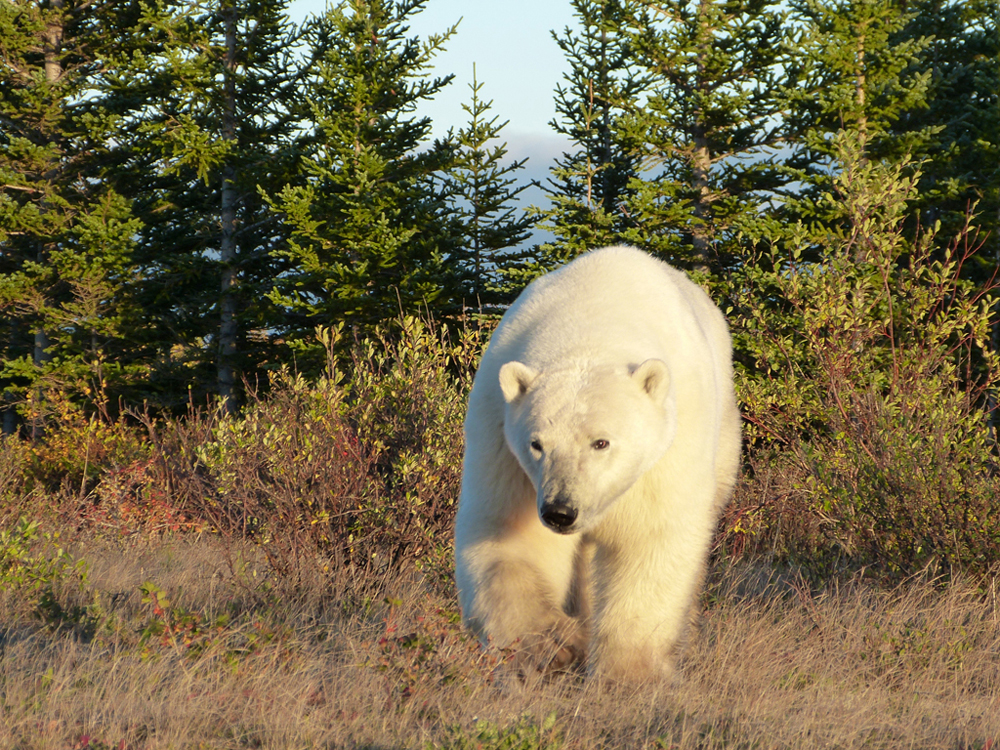
Polar bear emerges from the forest at Nanuk Polar Bear Lodge.
So when that polar bear emerges from the boreal forest in front of you (because at our lodges, it’s not ‘if,’ but ‘when’), you’ll know exactly what you’re seeing. Not an impossibility, not AI, not a fever dream. Just a polar bear doing what polar bears in this part of their range have always done: living at the intersection of worlds, moving between forest and coast, surviving in one of earth’s most remarkable ecosystems.
And what will you do? If you’re with Churchill Wild guides on a properly organized walking safari, you’ll do exactly what they tell you to do. You’ll stand with your group, keep your voice calm, watch in awe as this thousand-pound apex predator assesses the situation, and trust in five decades of hard-won expertise.
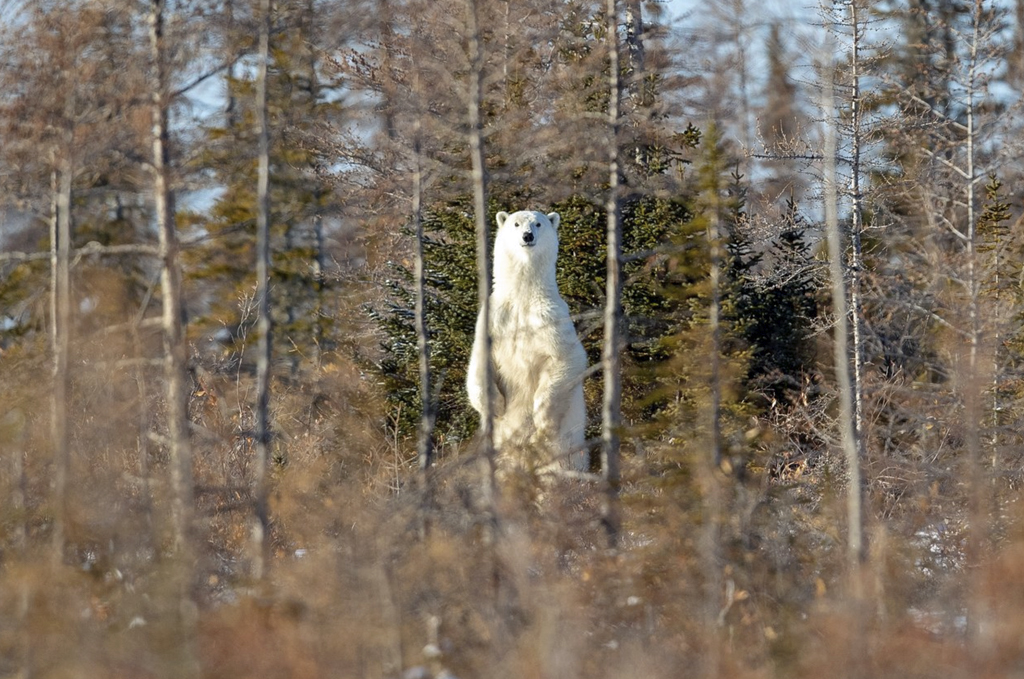
I’m watching you. Dymond Lake Ecolodge.
You certainly won’t run. And you definitely won’t offer it a Coca-Cola.
Because by then, you’ll understand this is their home. The forest, the coast, the tundra, all of it. We’re just privileged guests, given rare permission to walk among the great white bears in the places they’ve always lived.
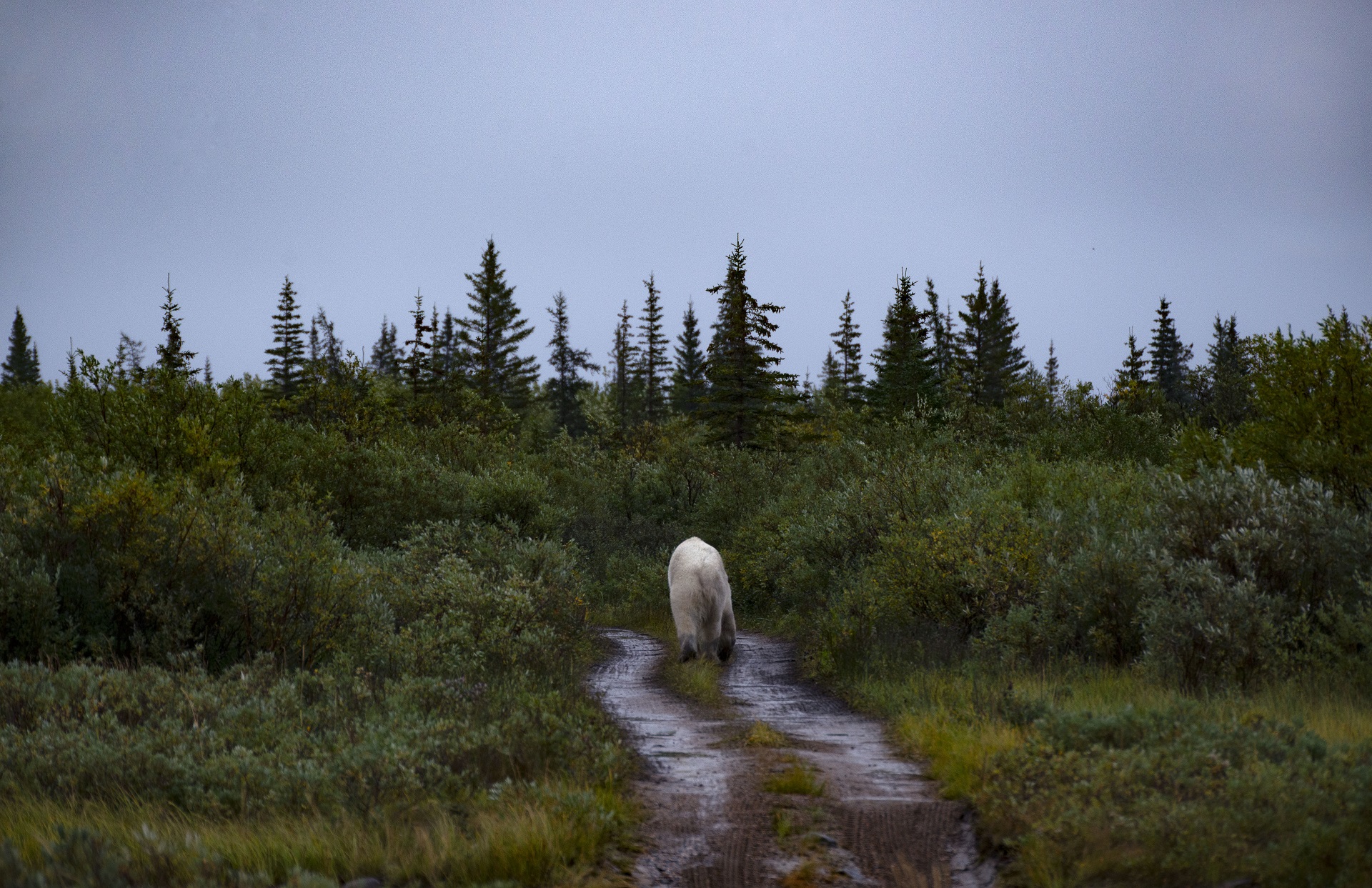
Into the forest. Nanuk Polar Bear Lodge. Cheryl Hnatiuk photo.
Nanuk Polar Bear Lodge