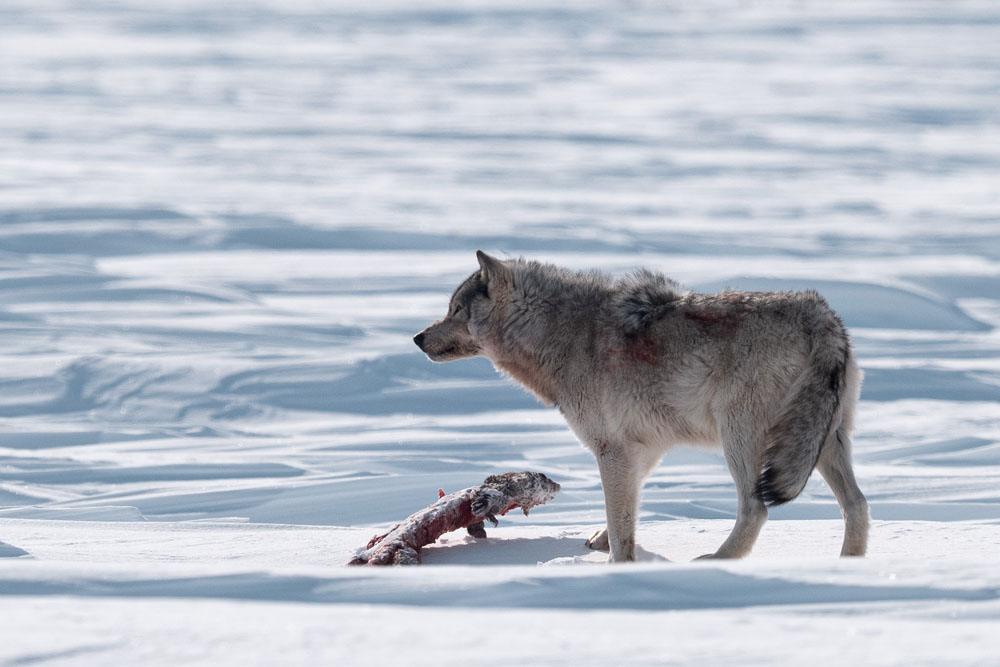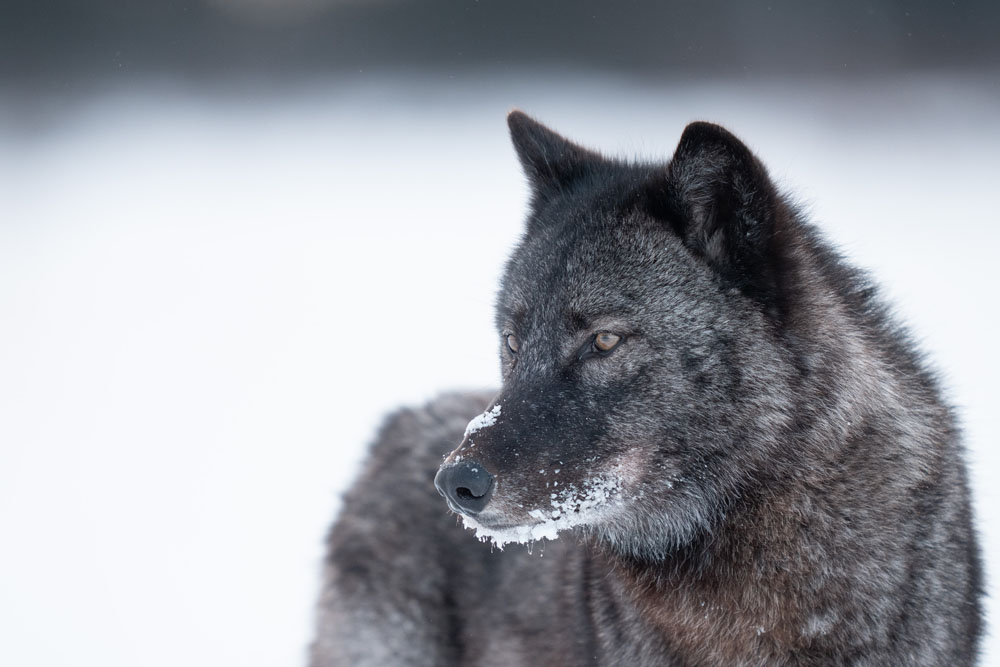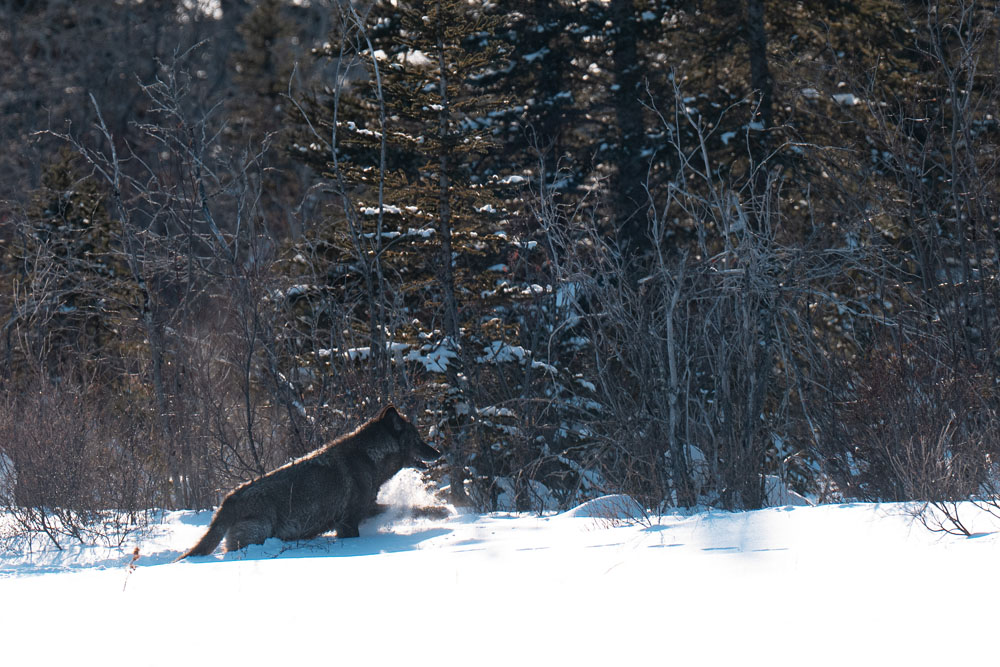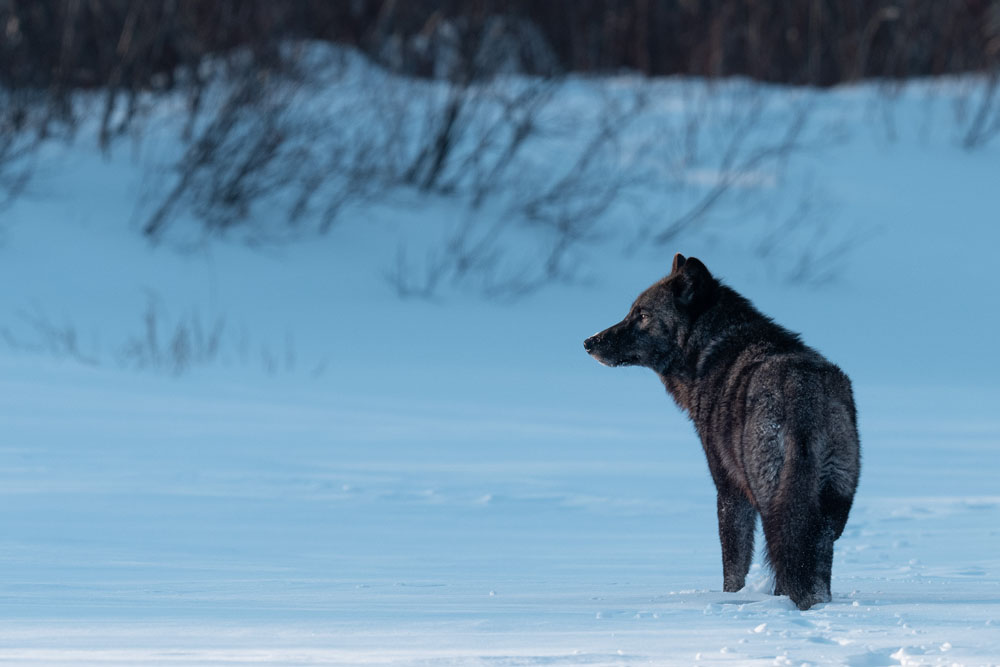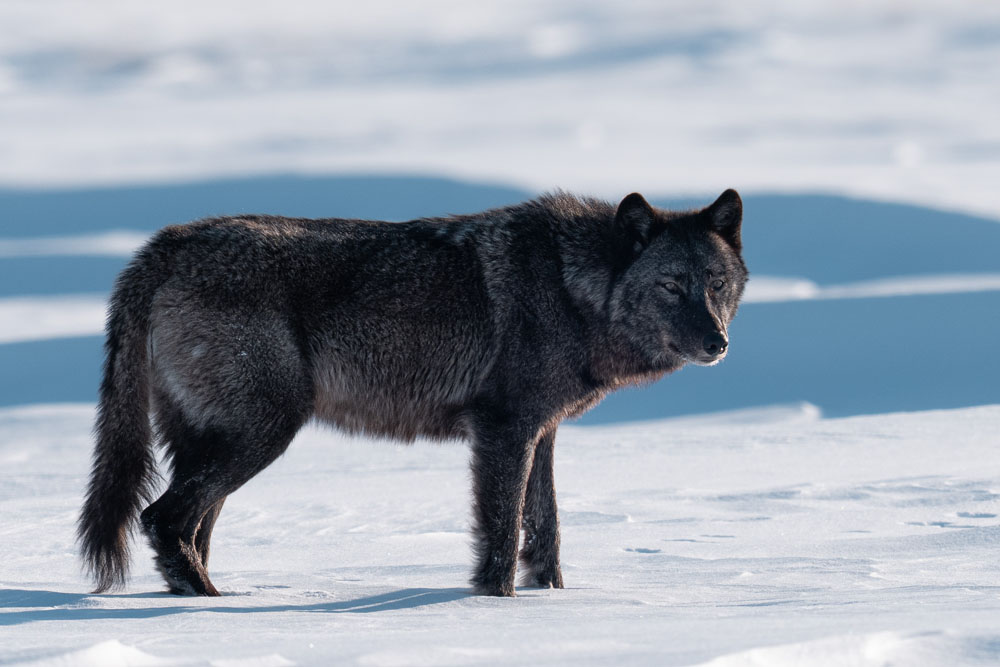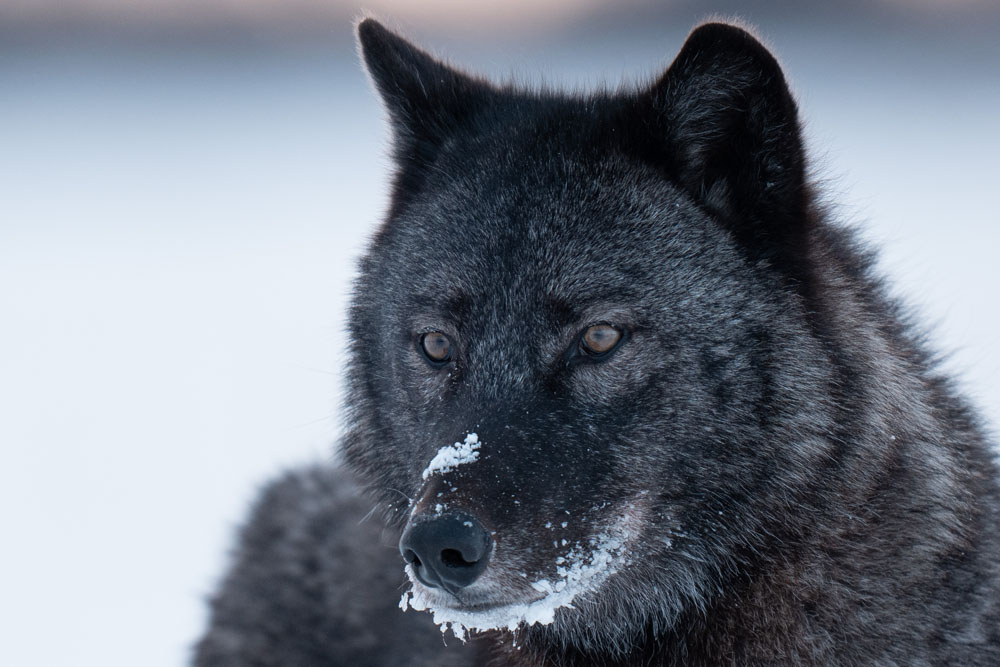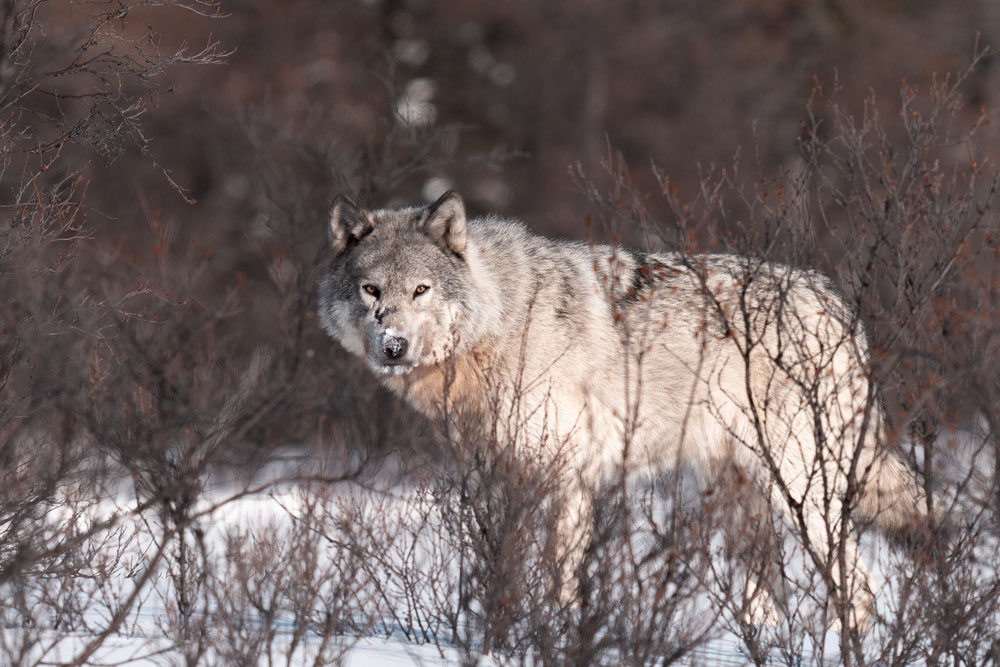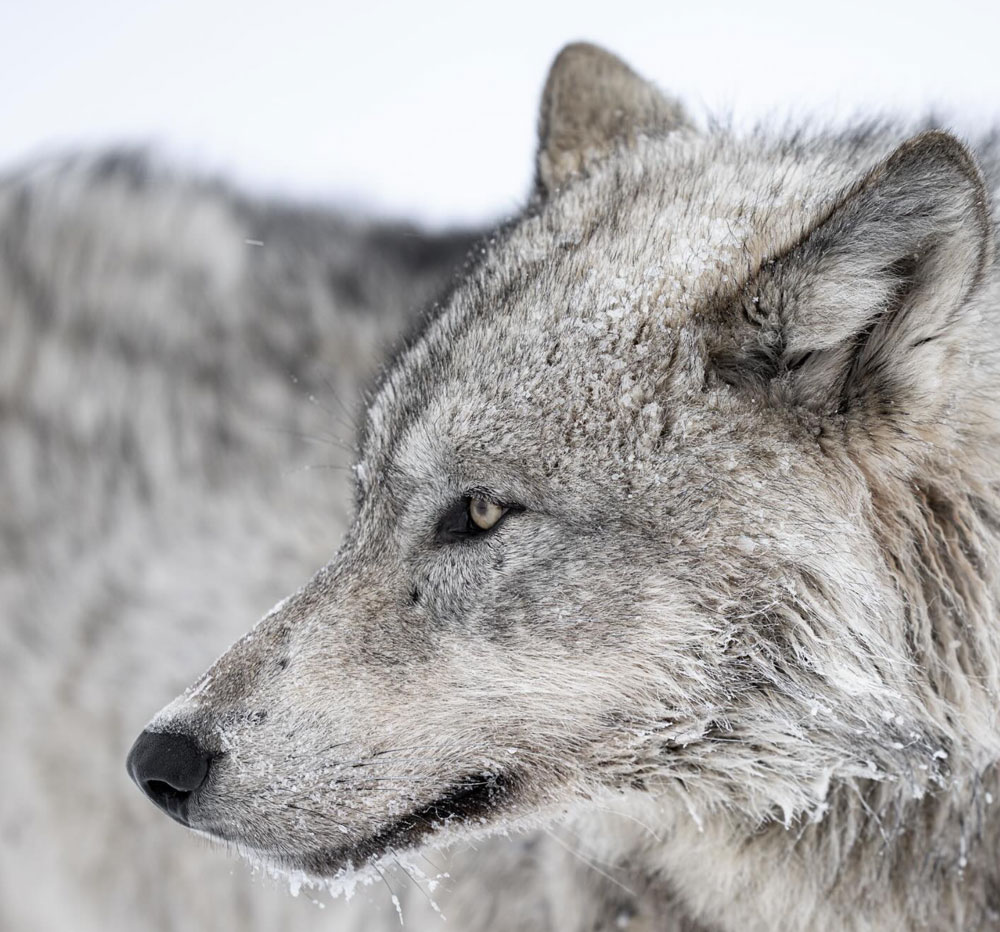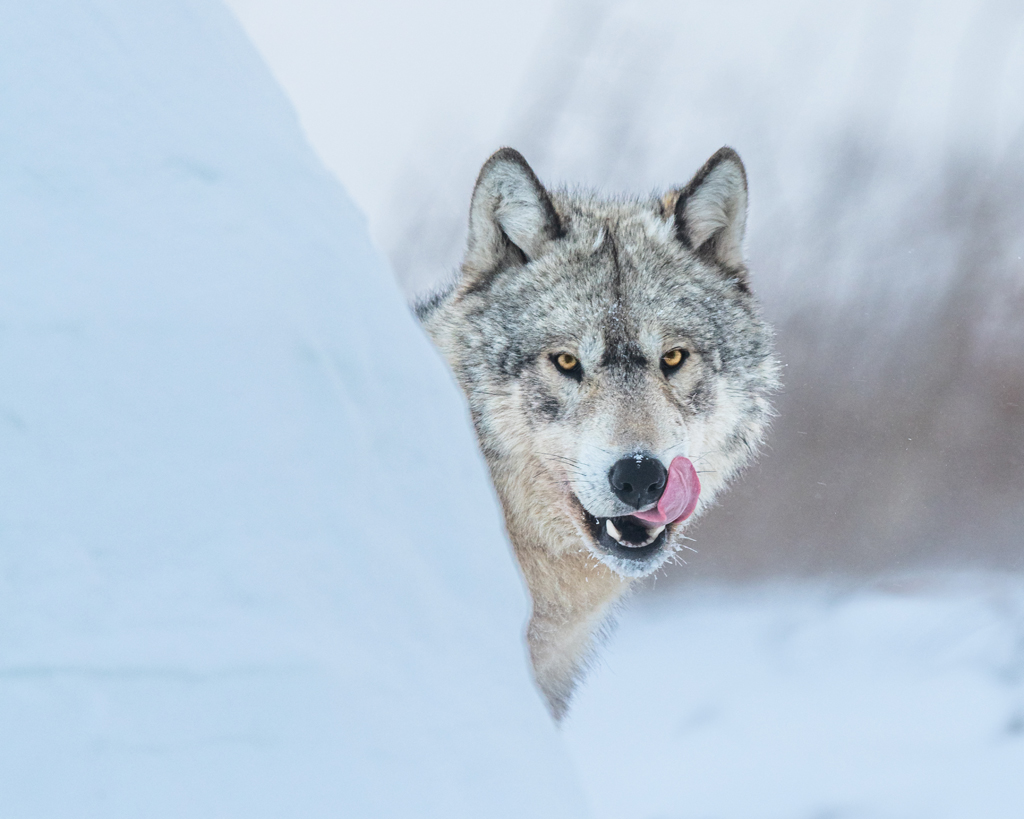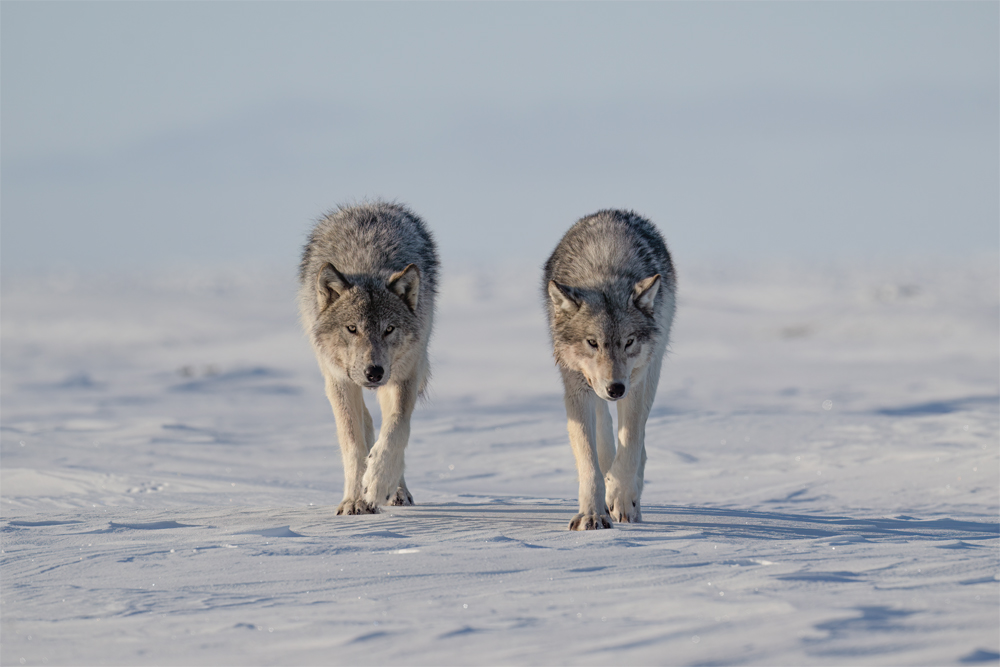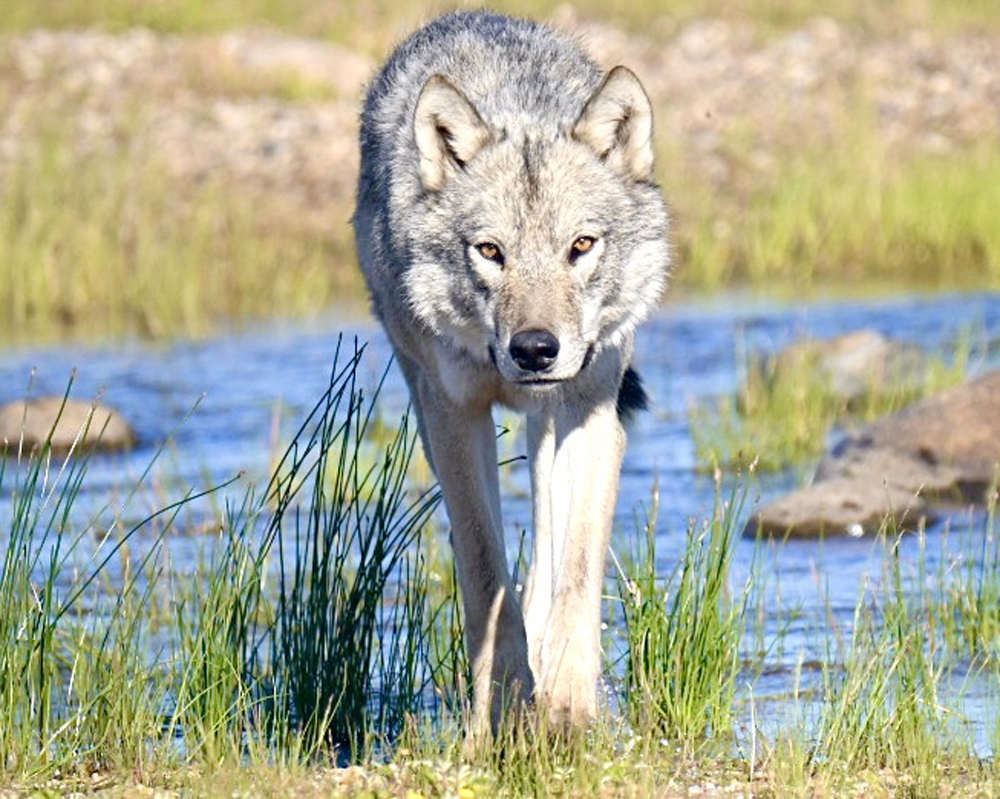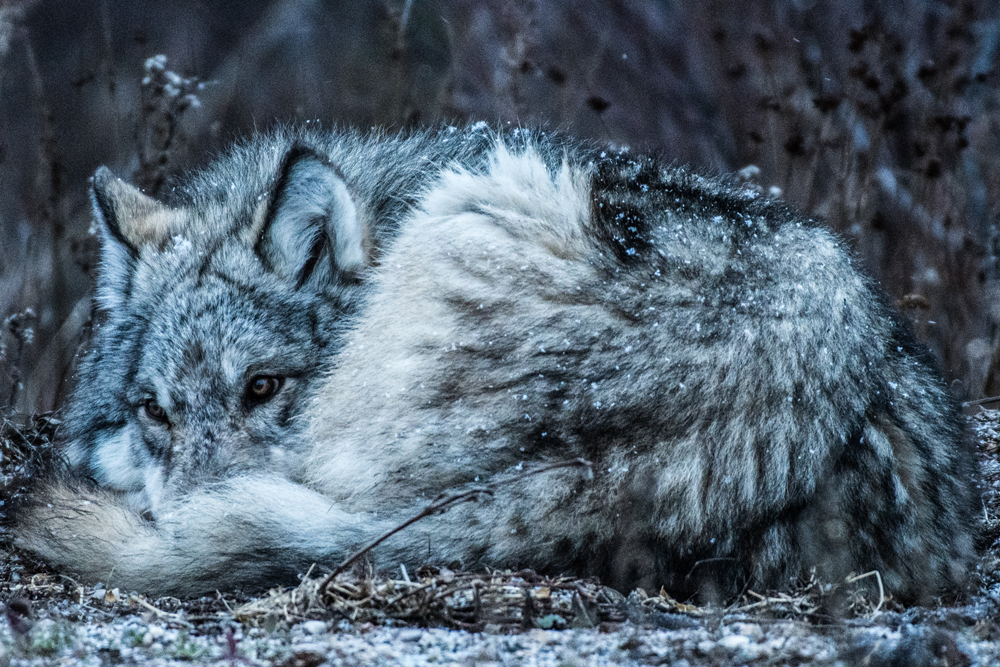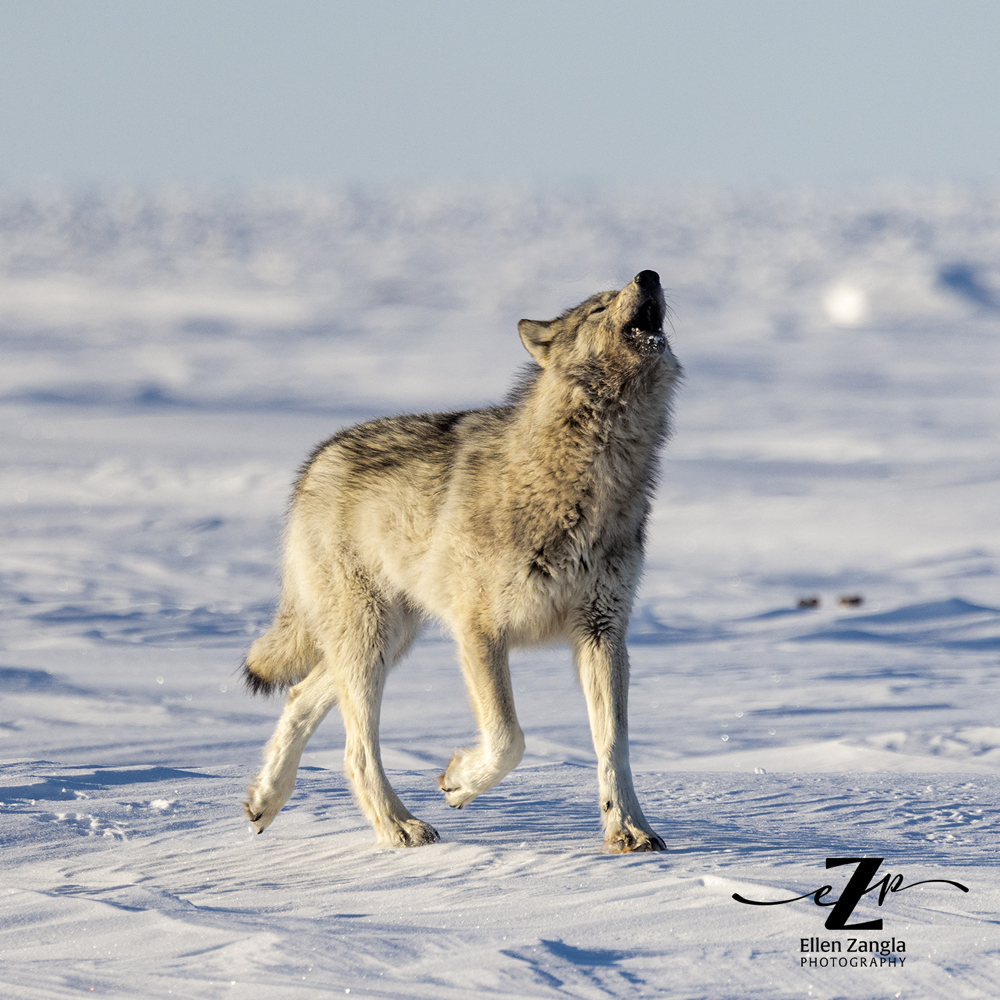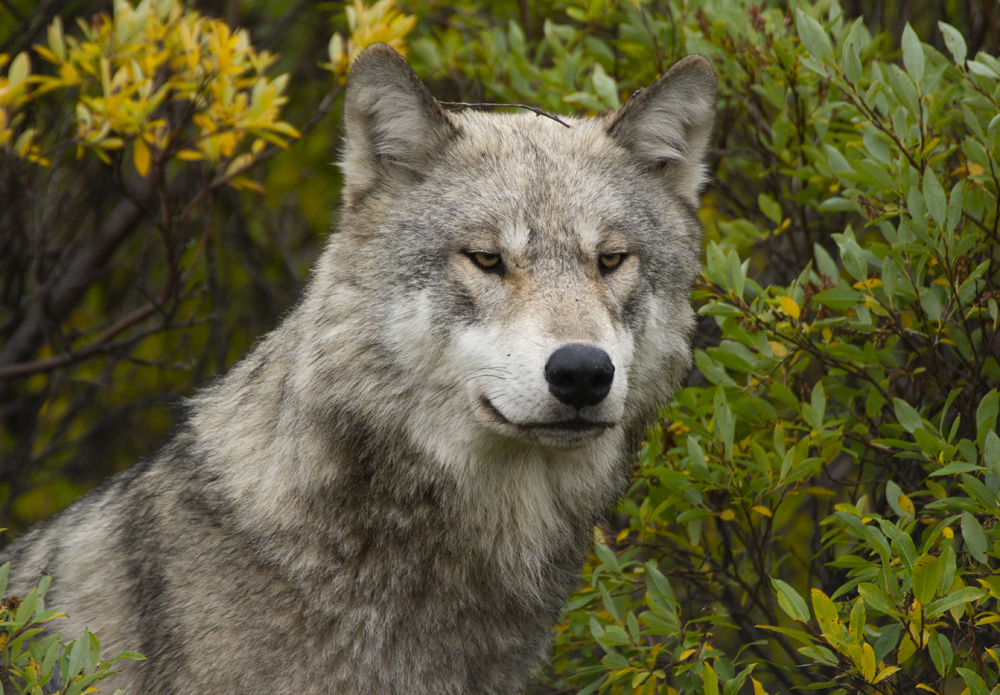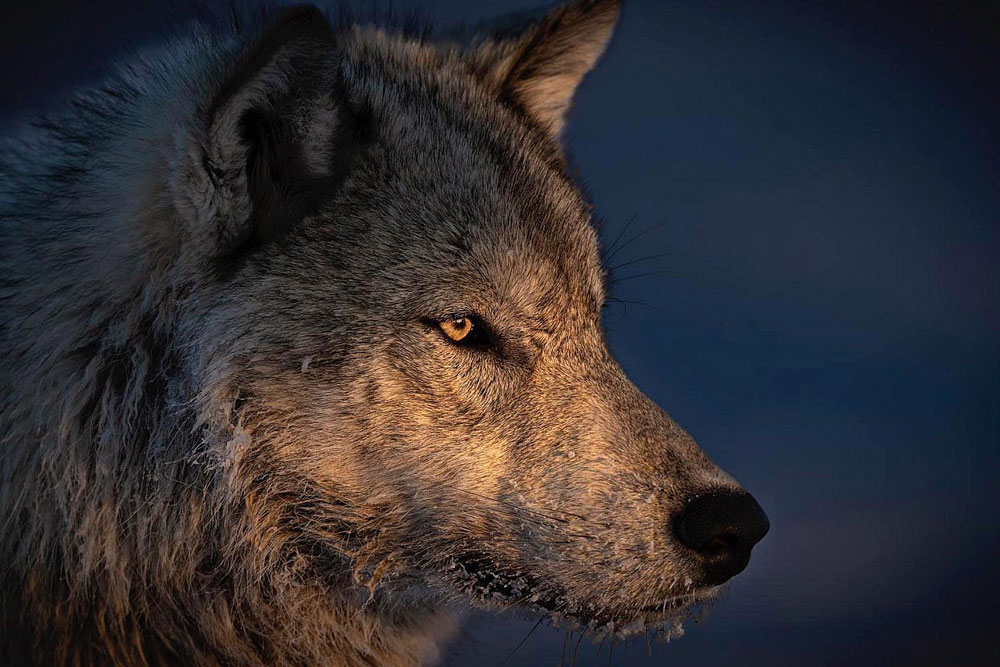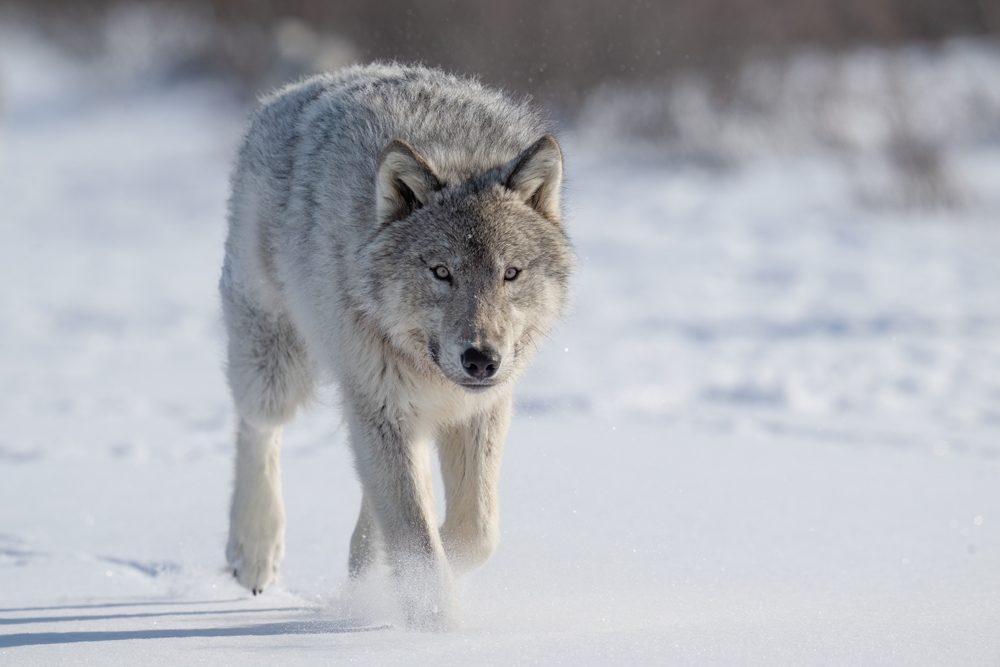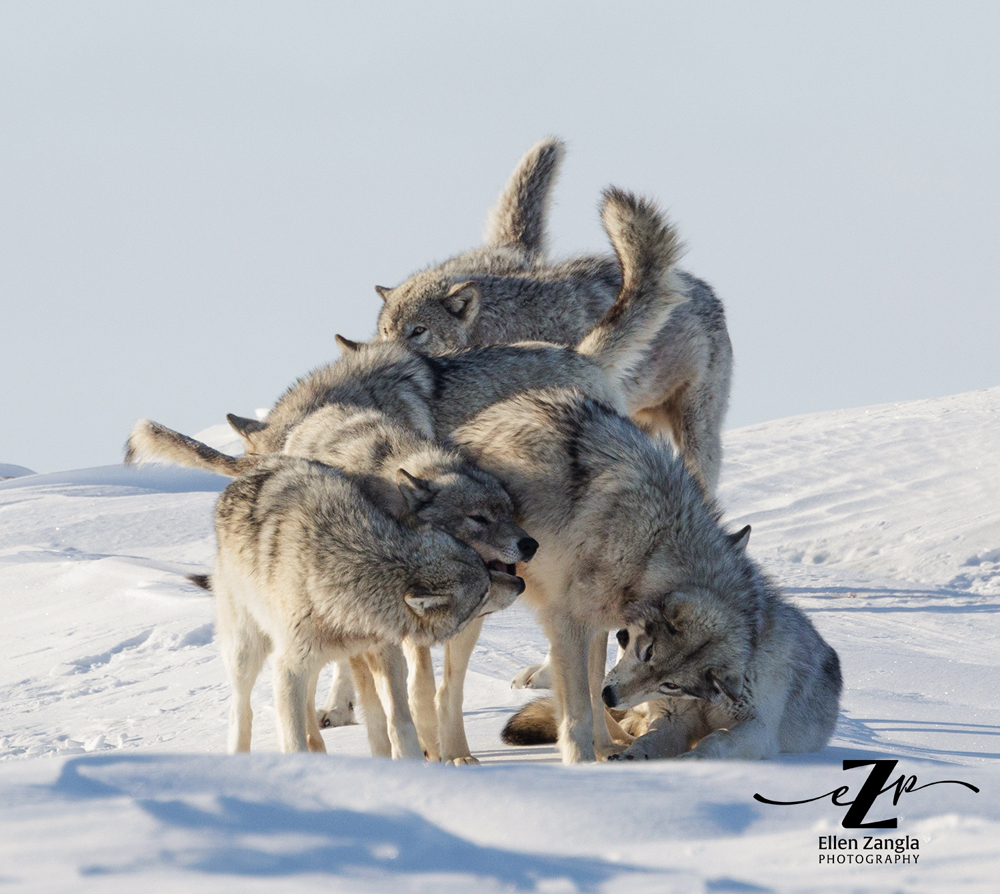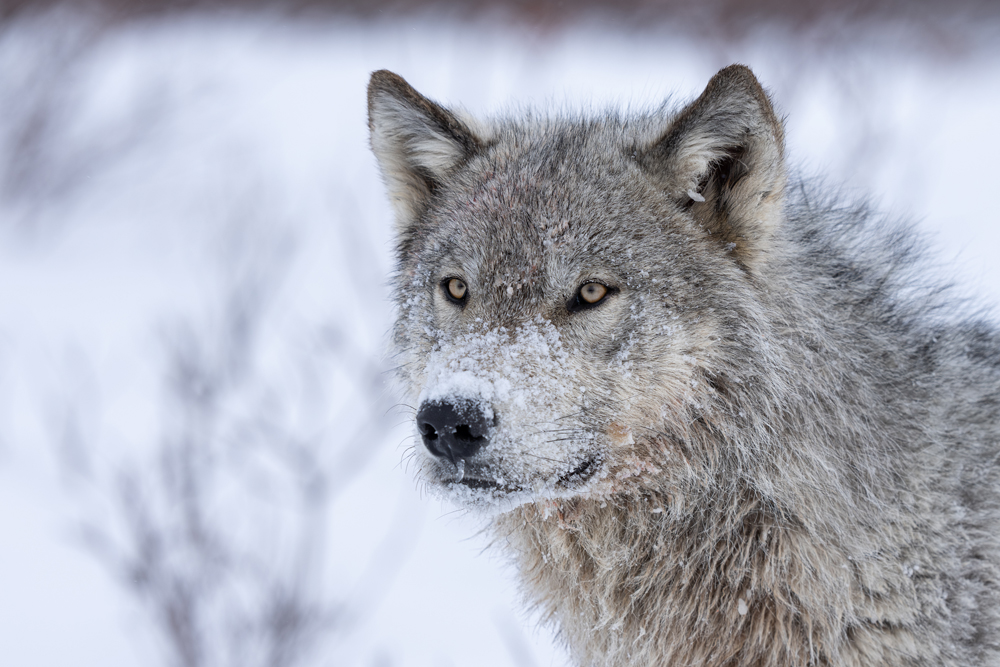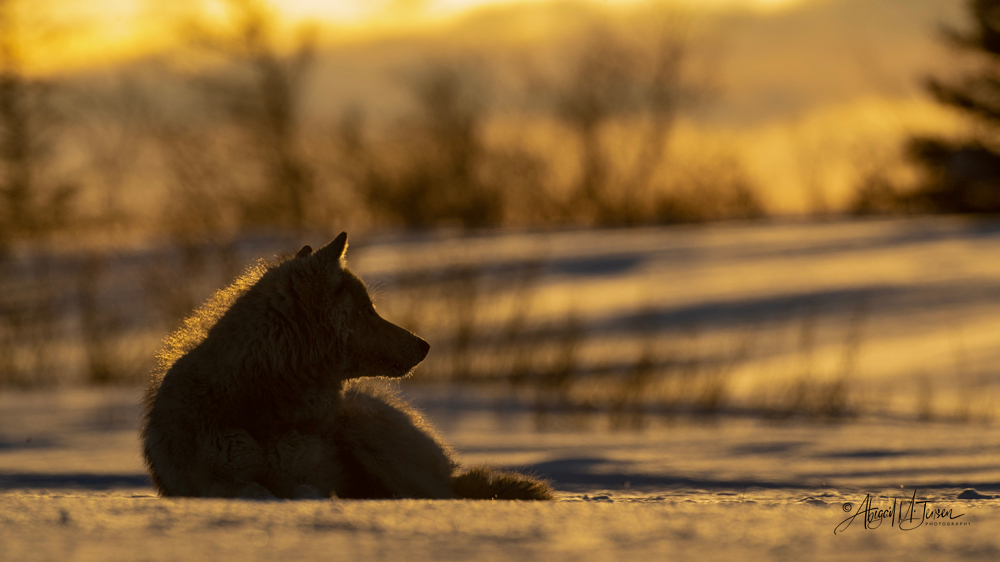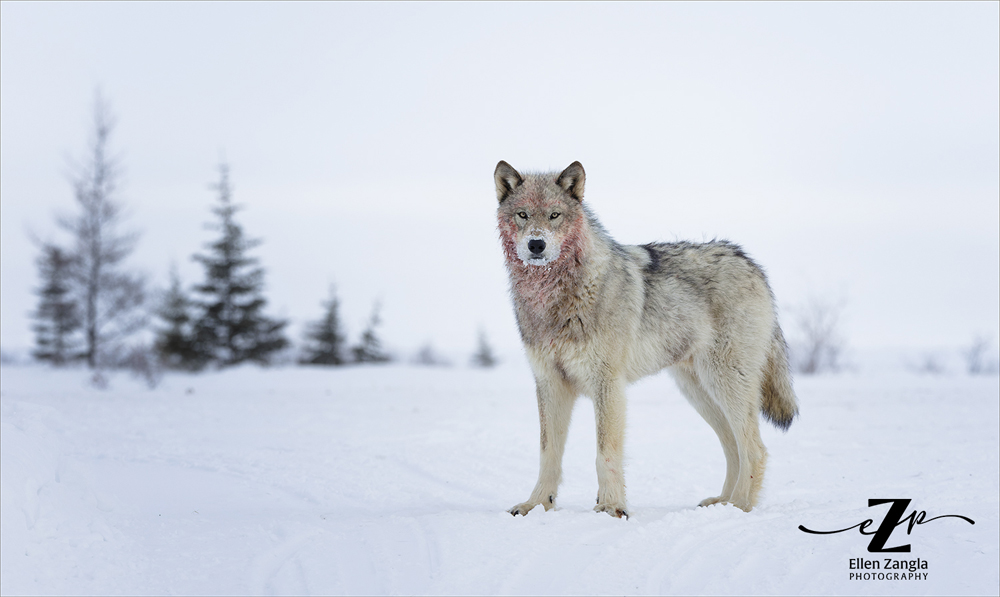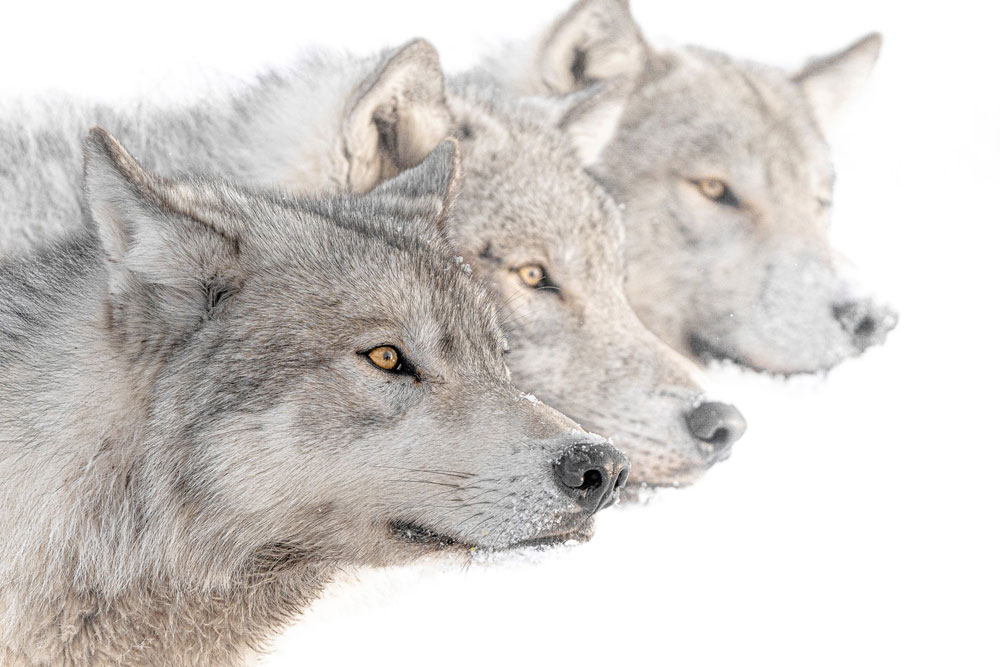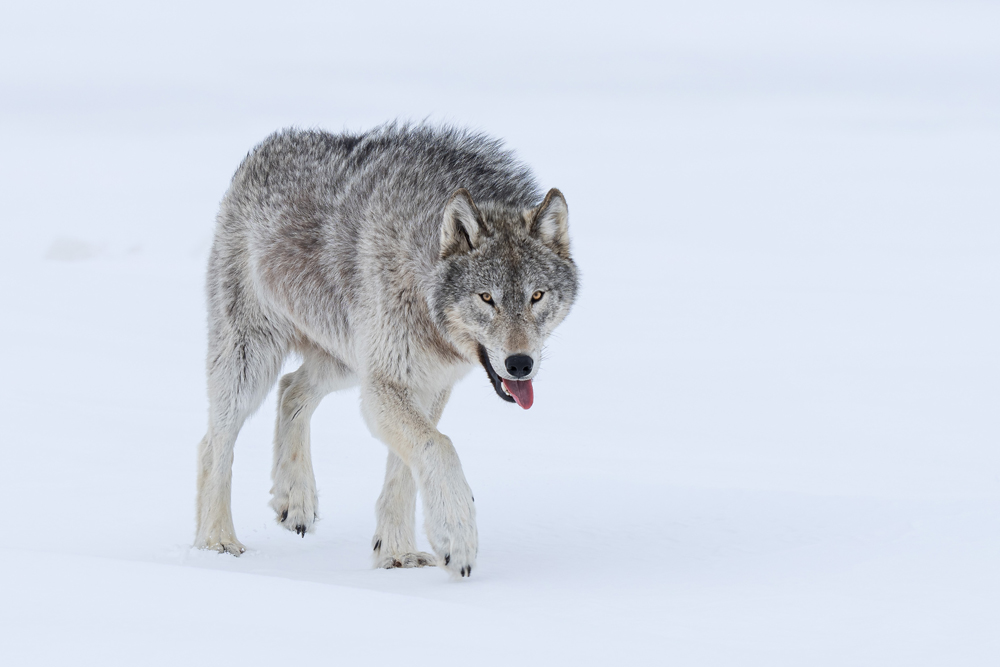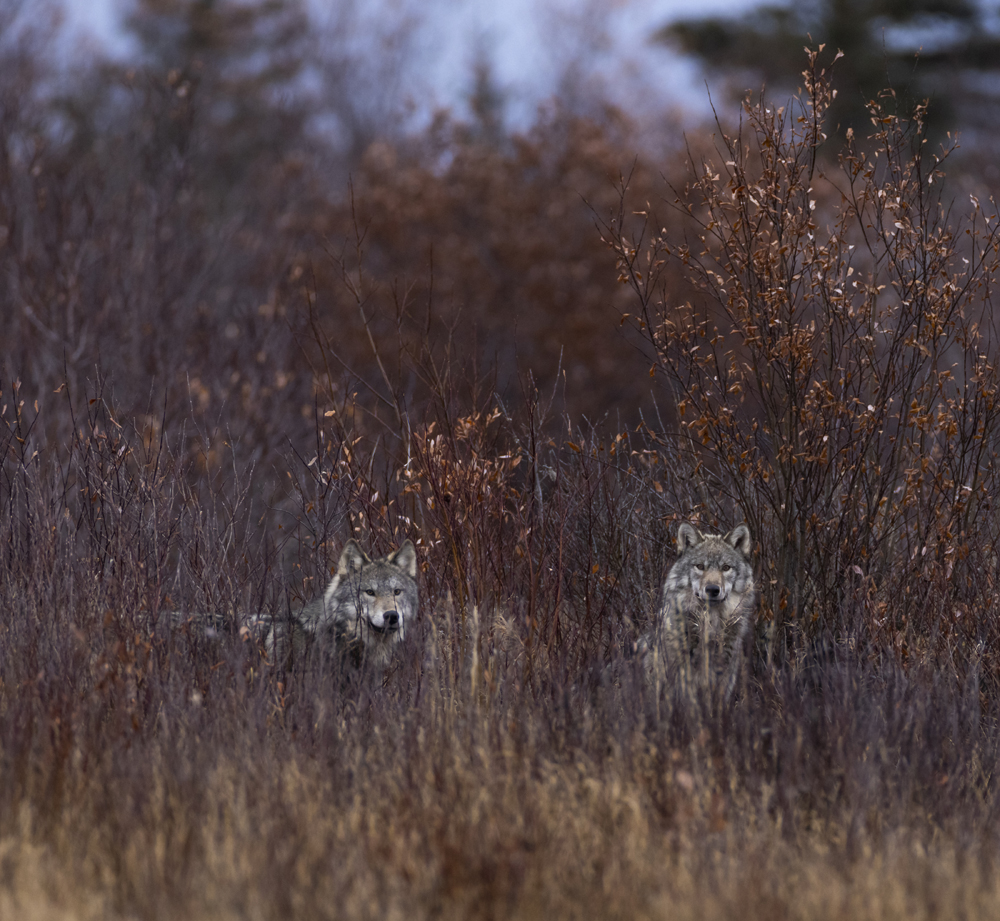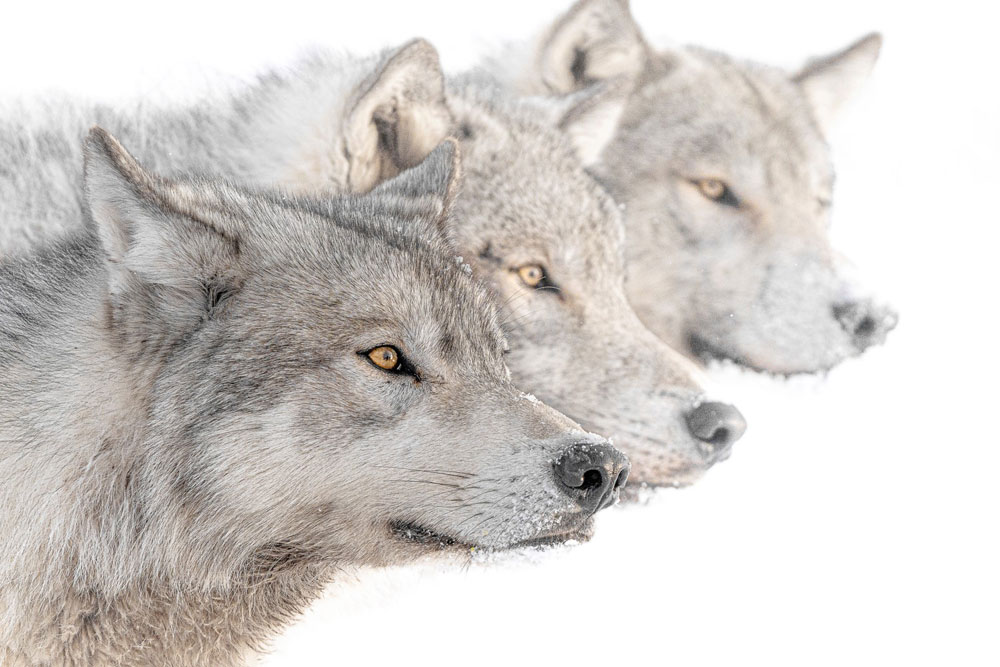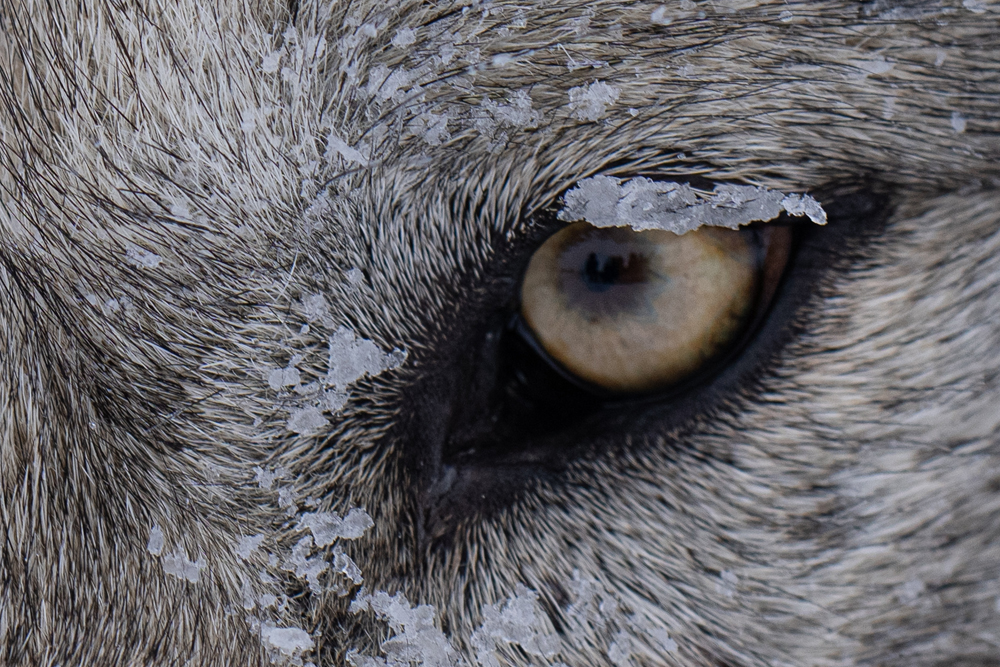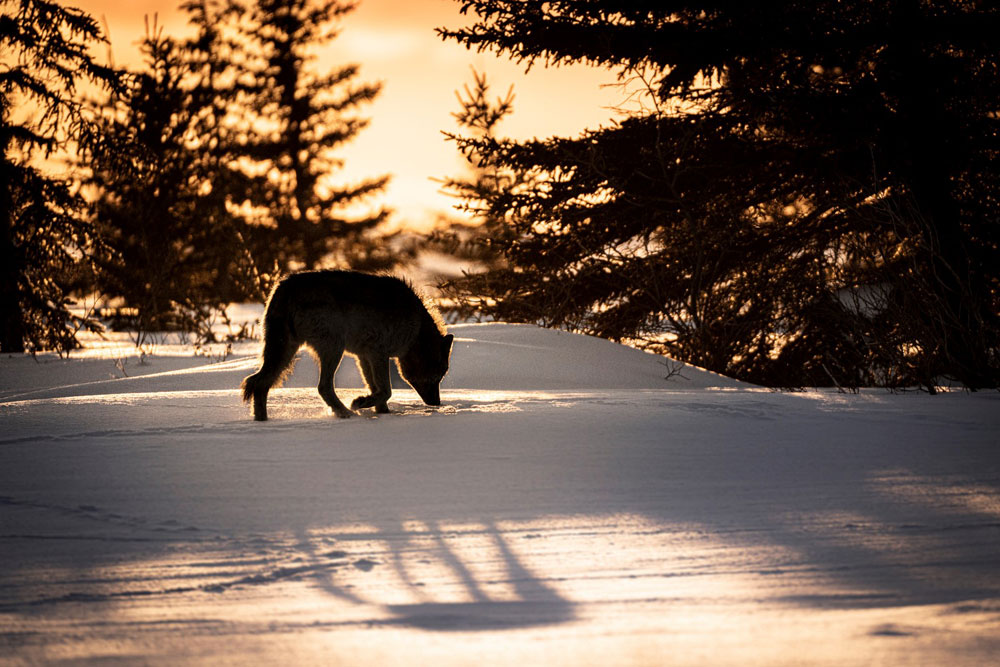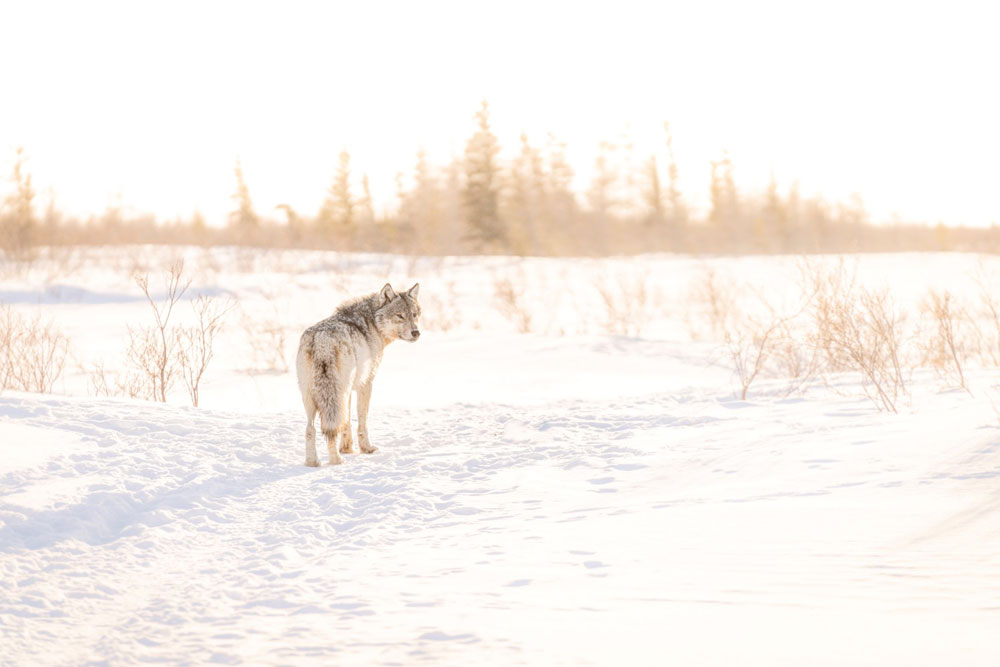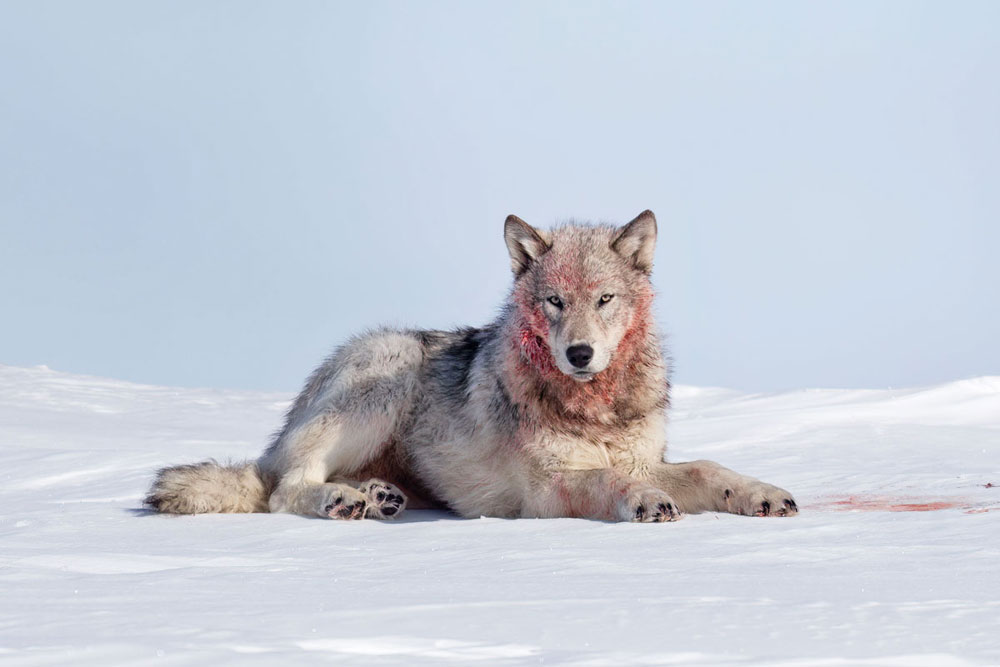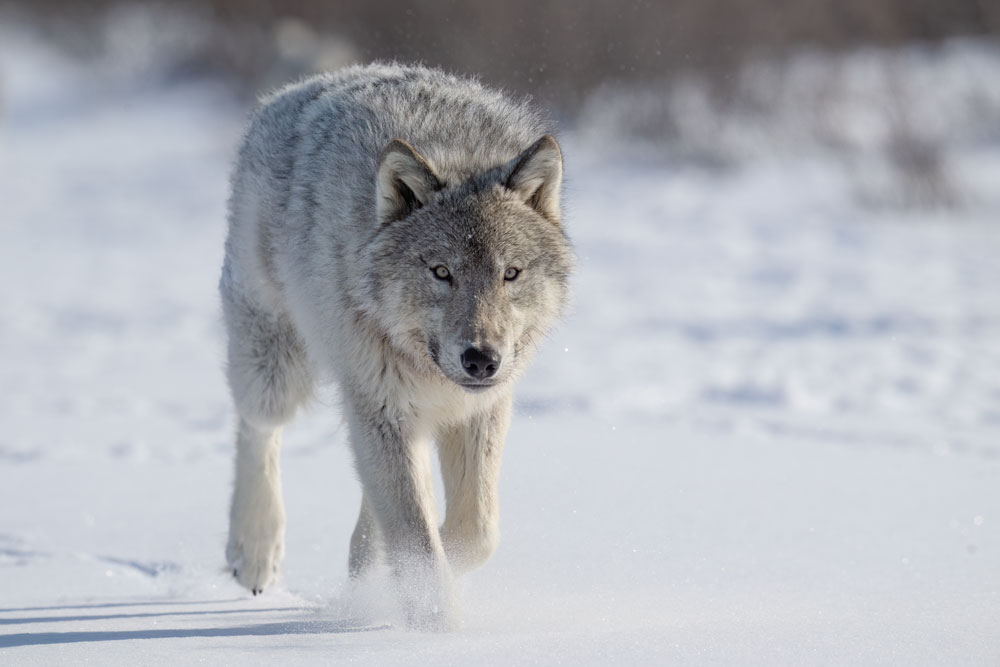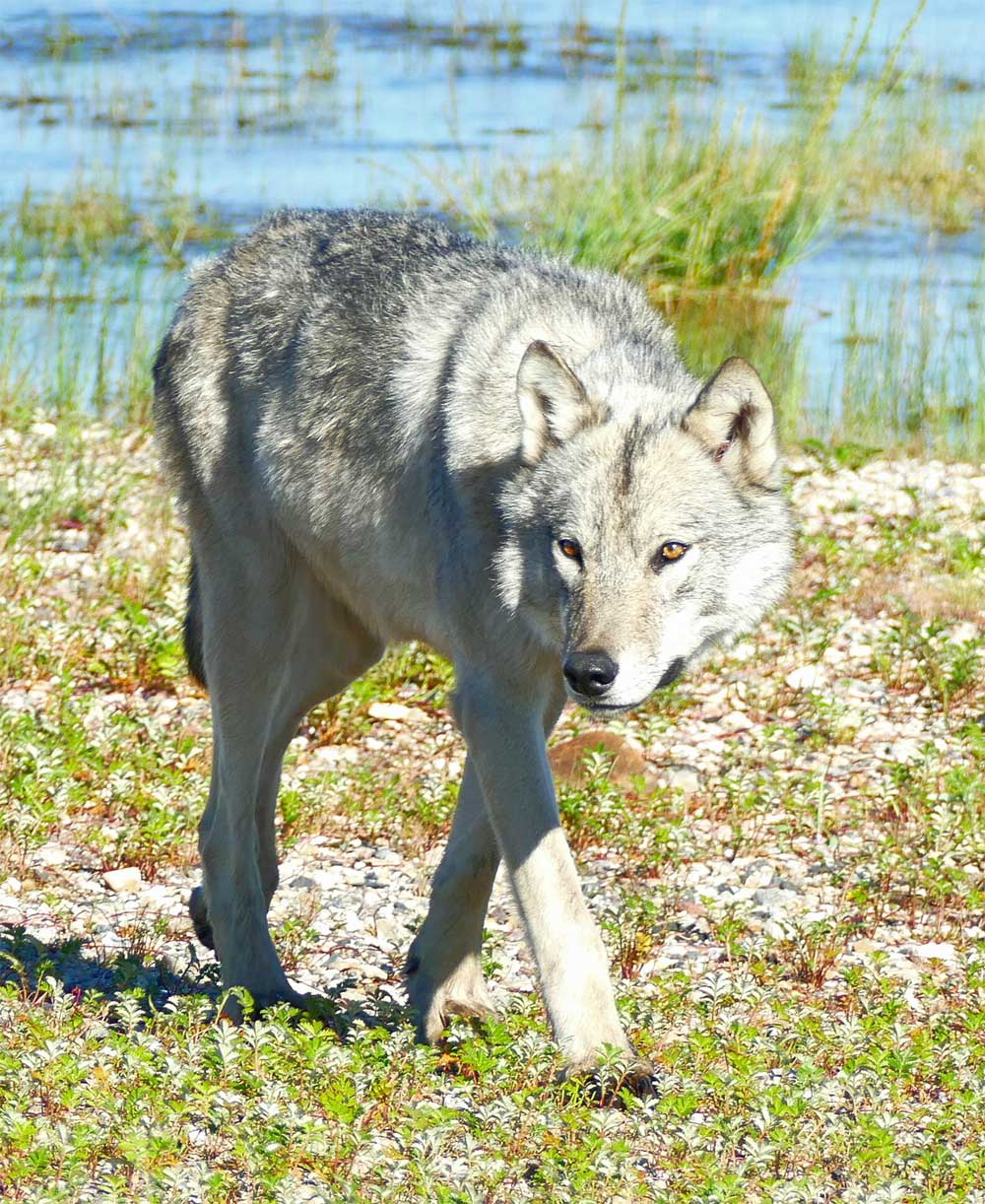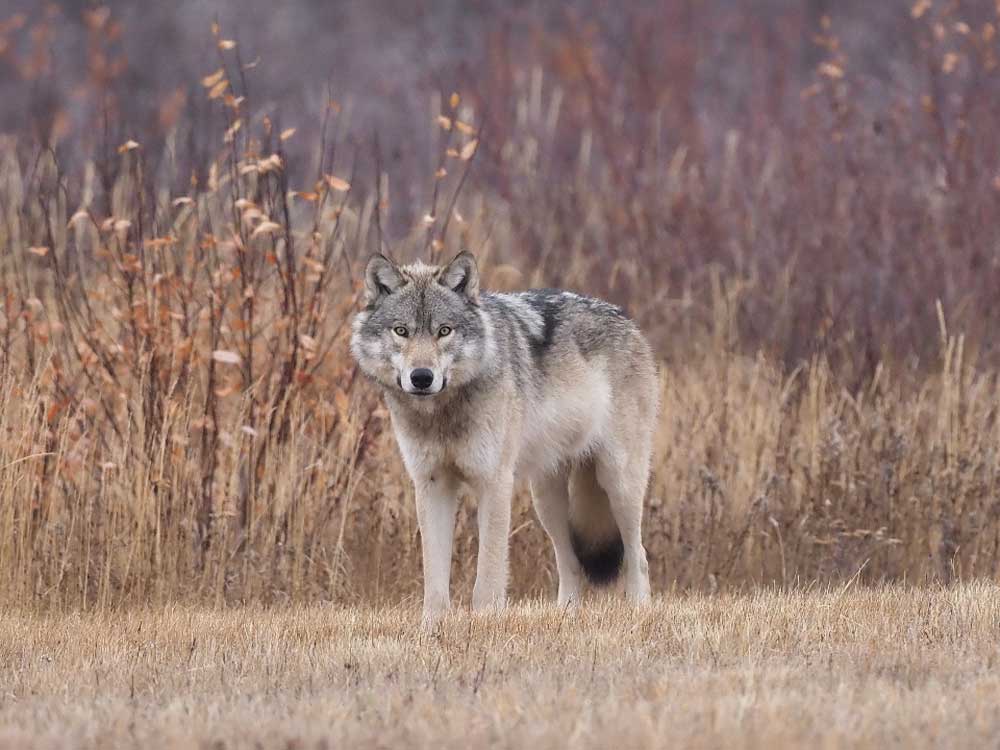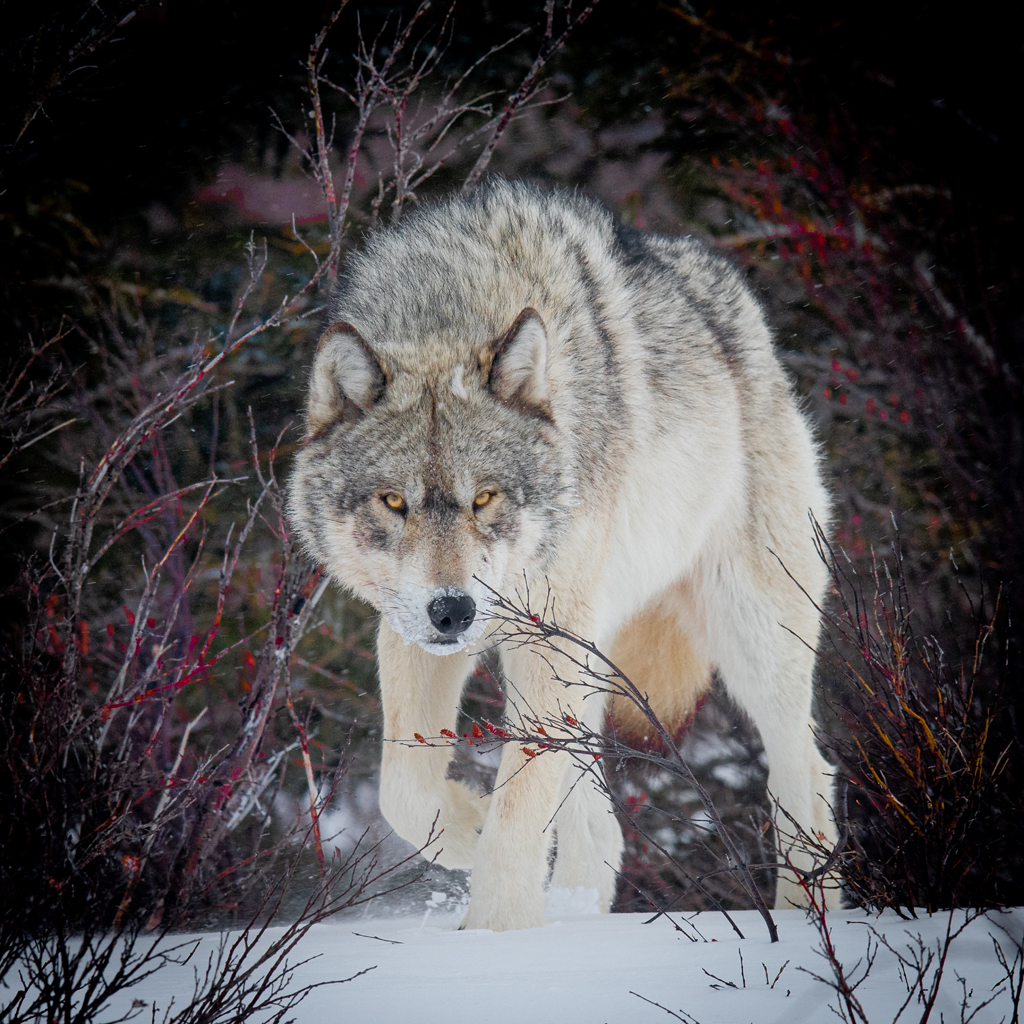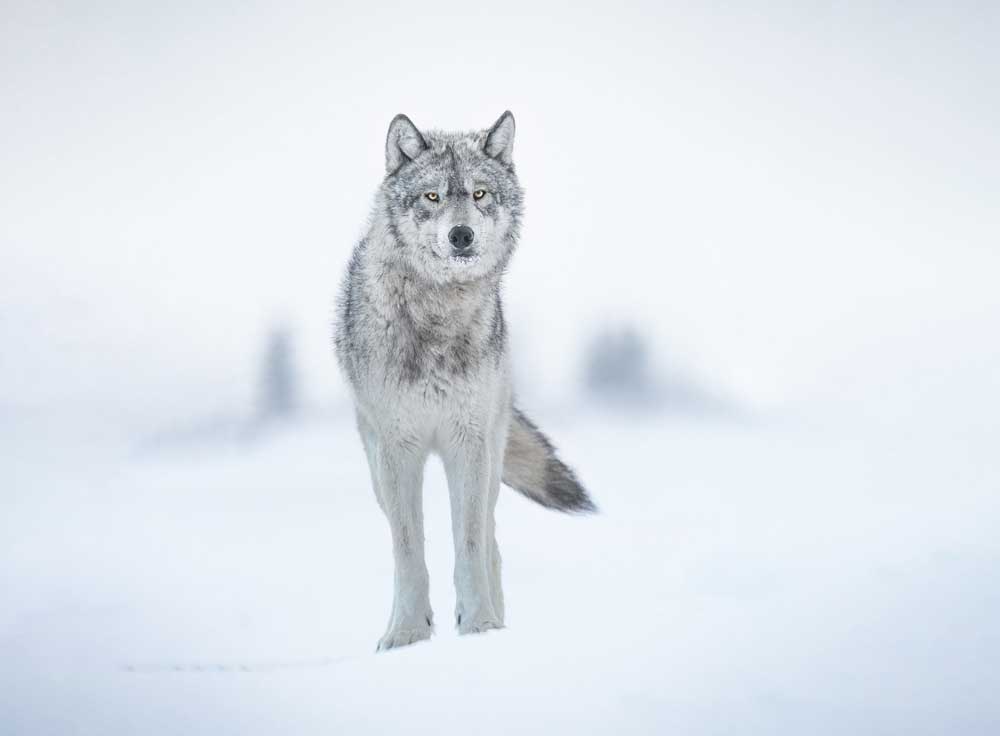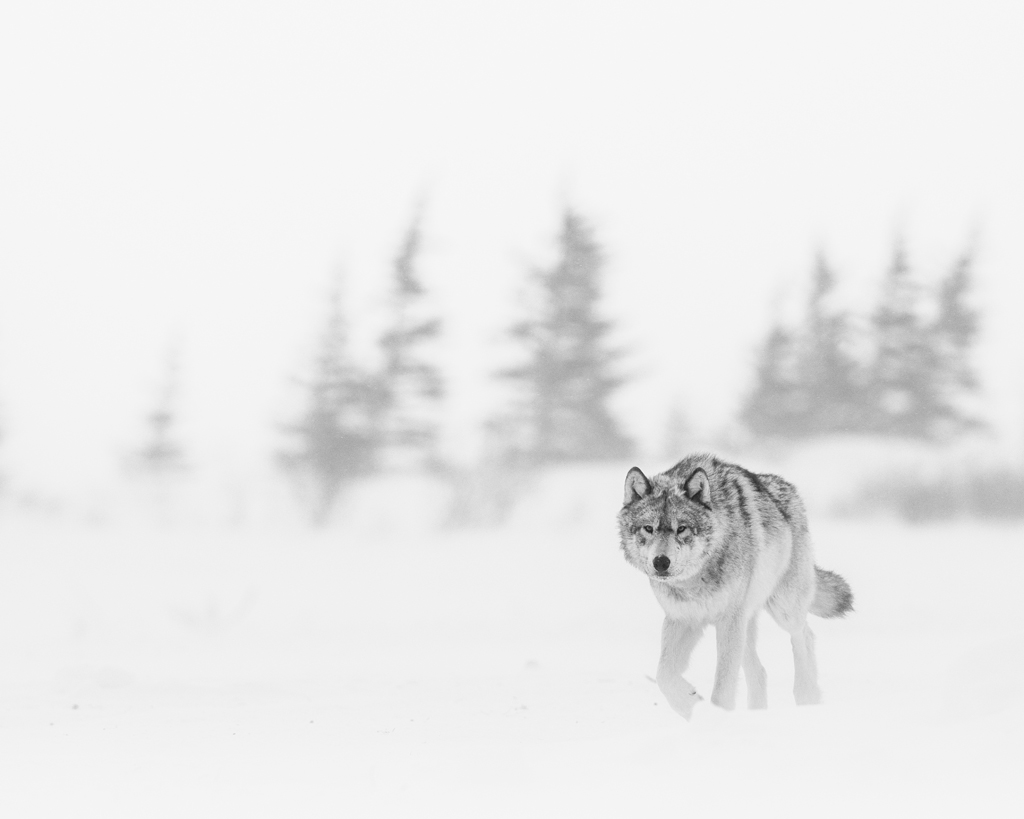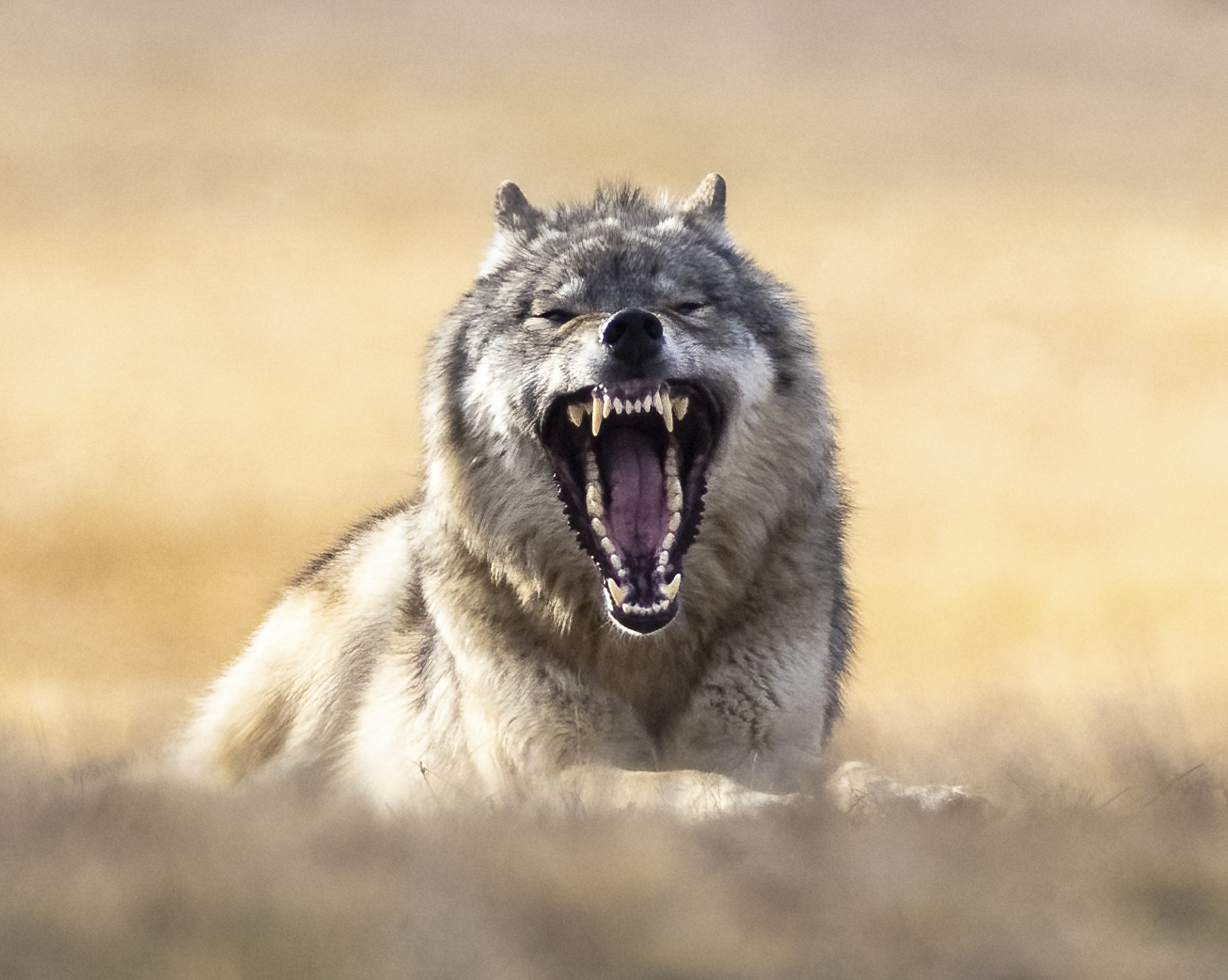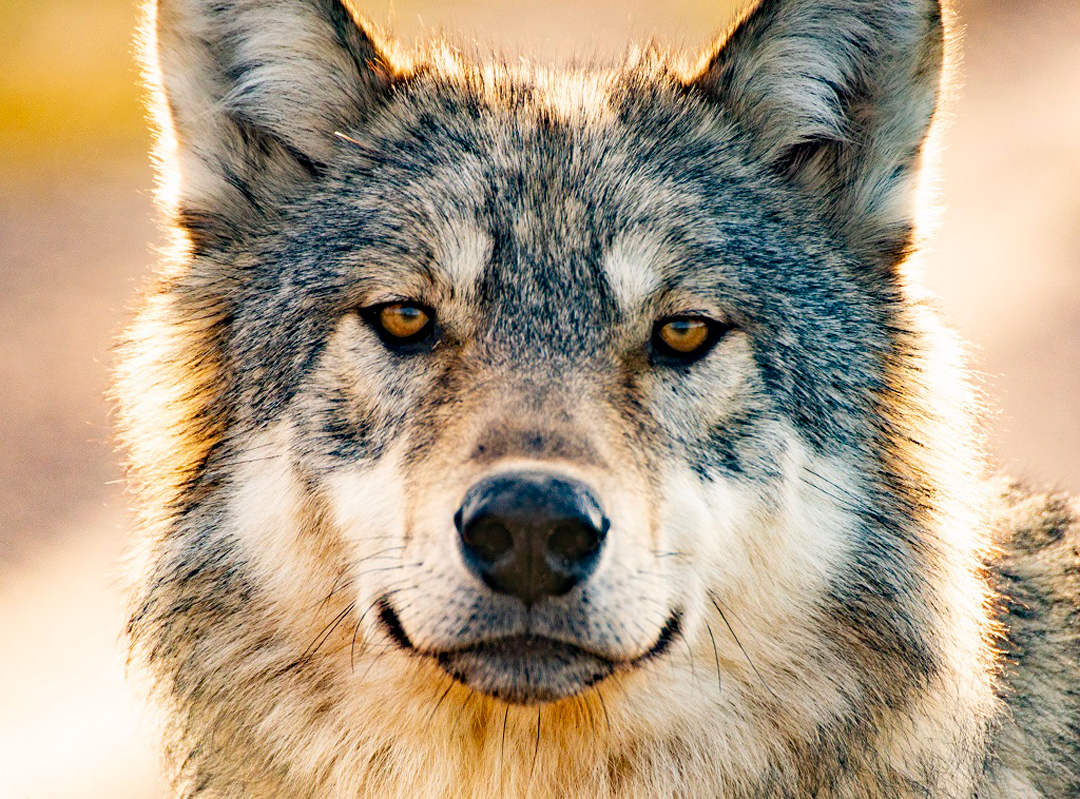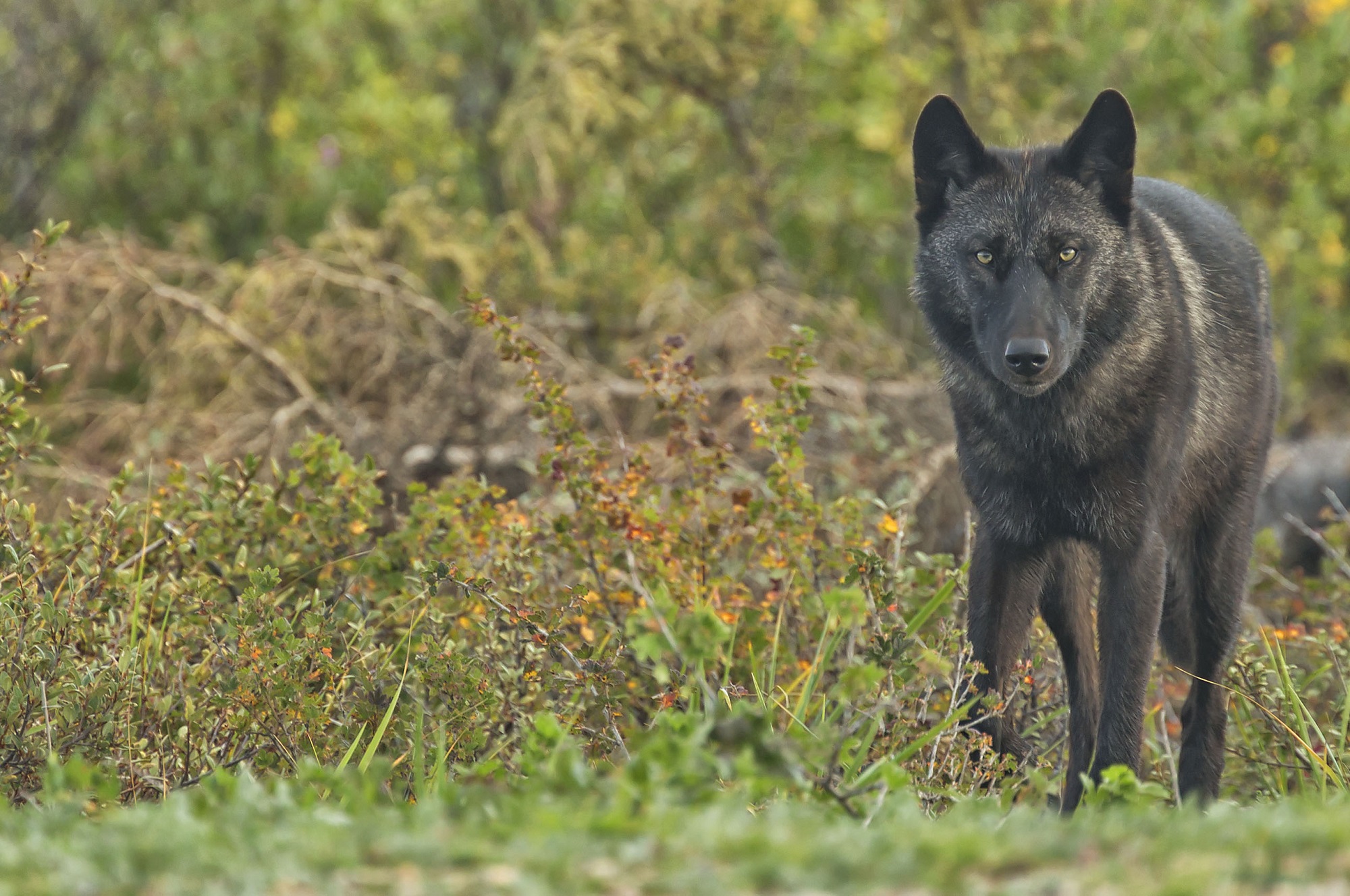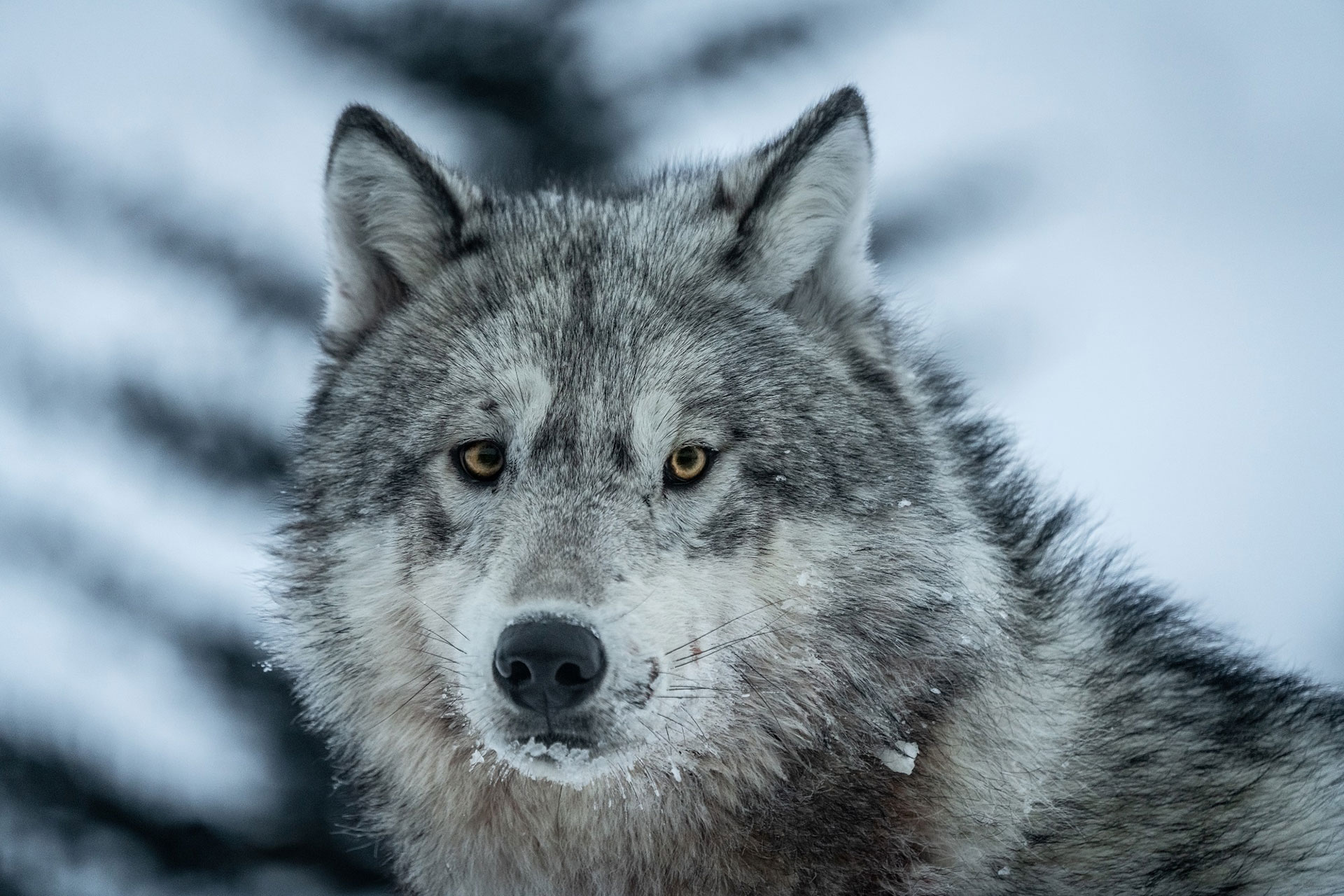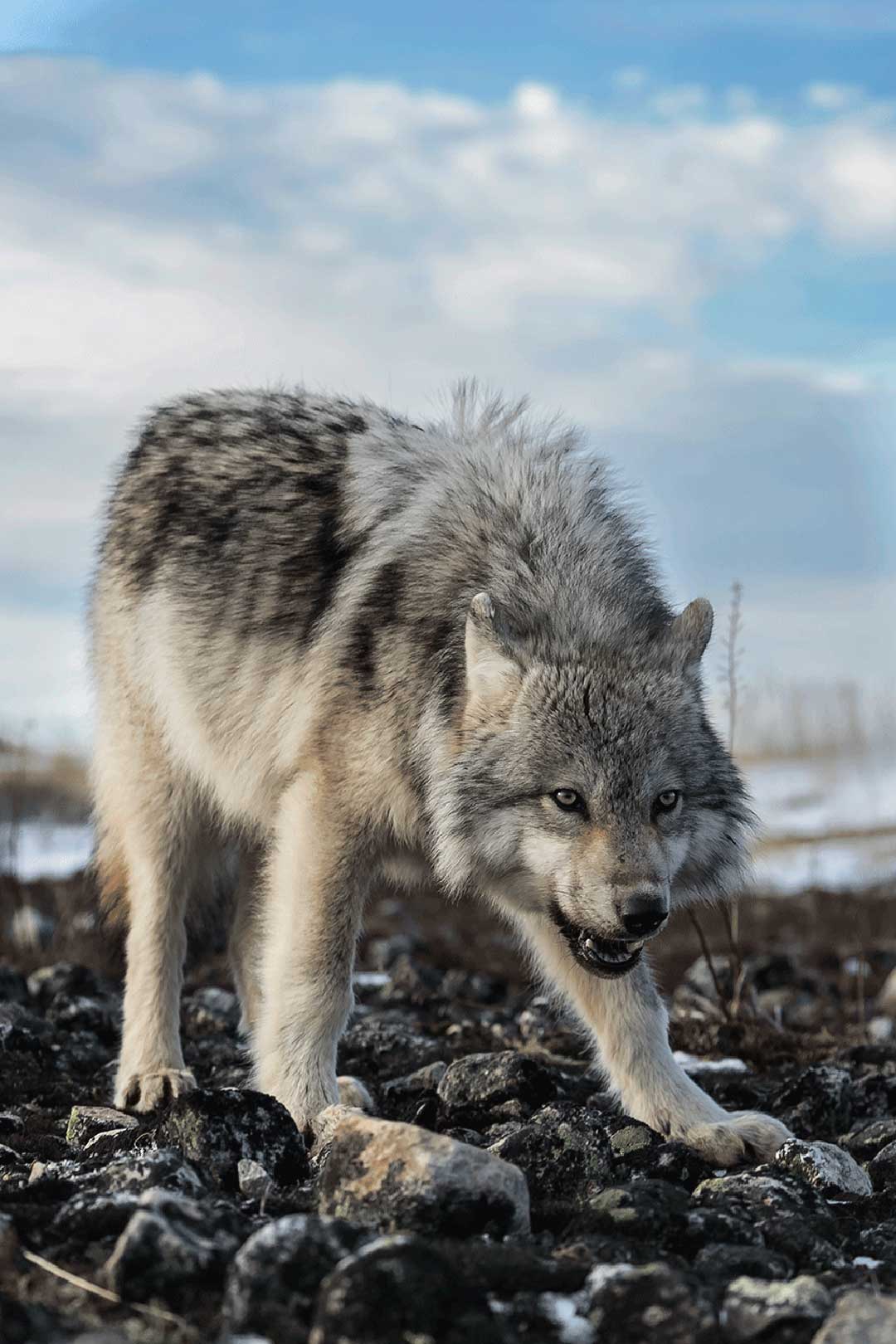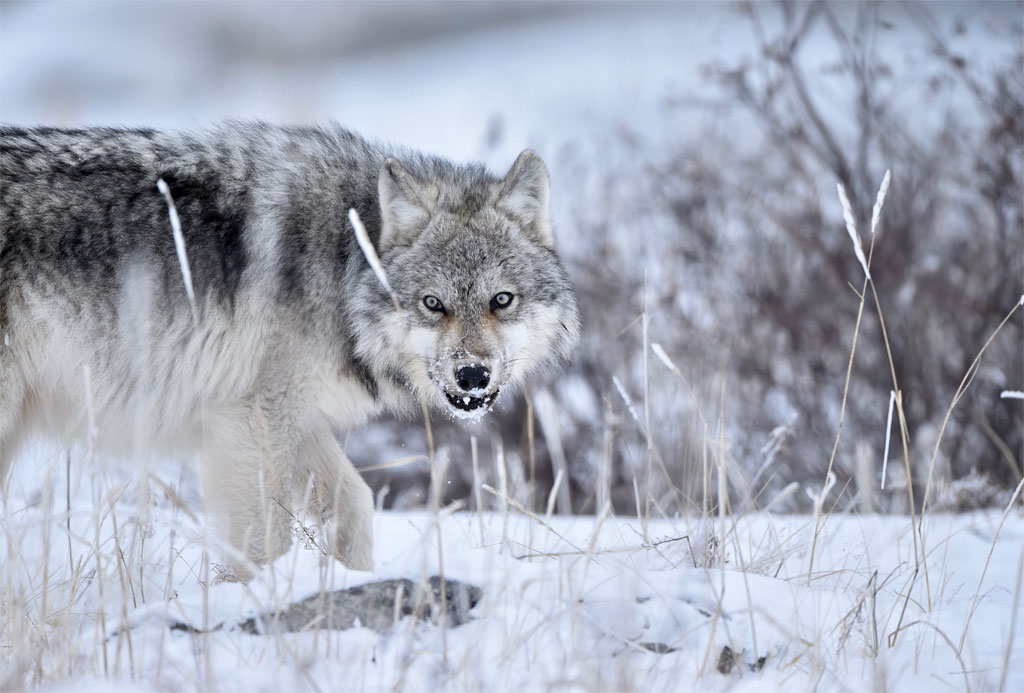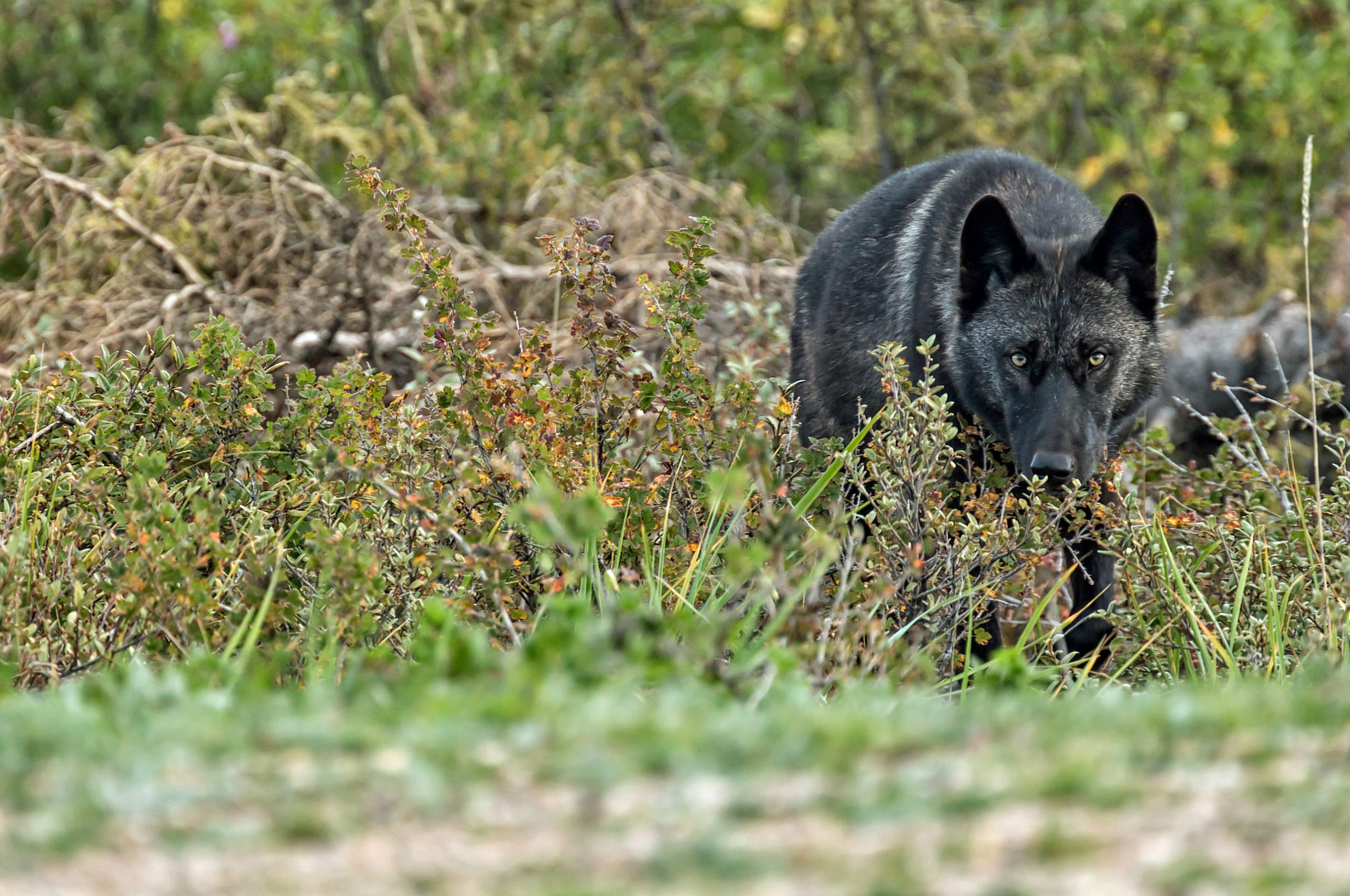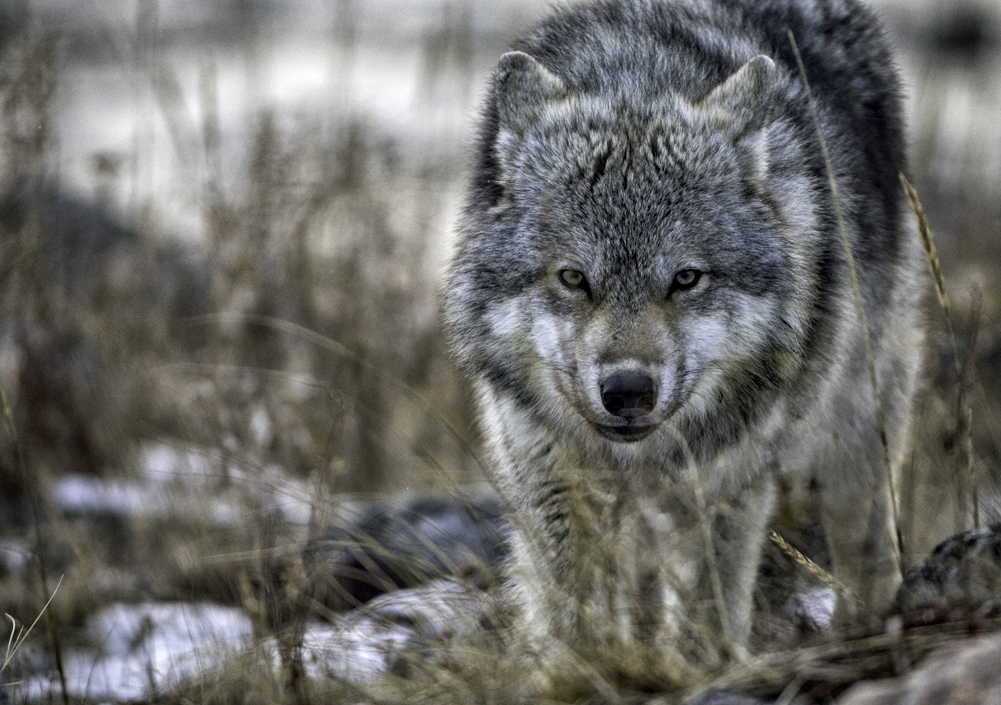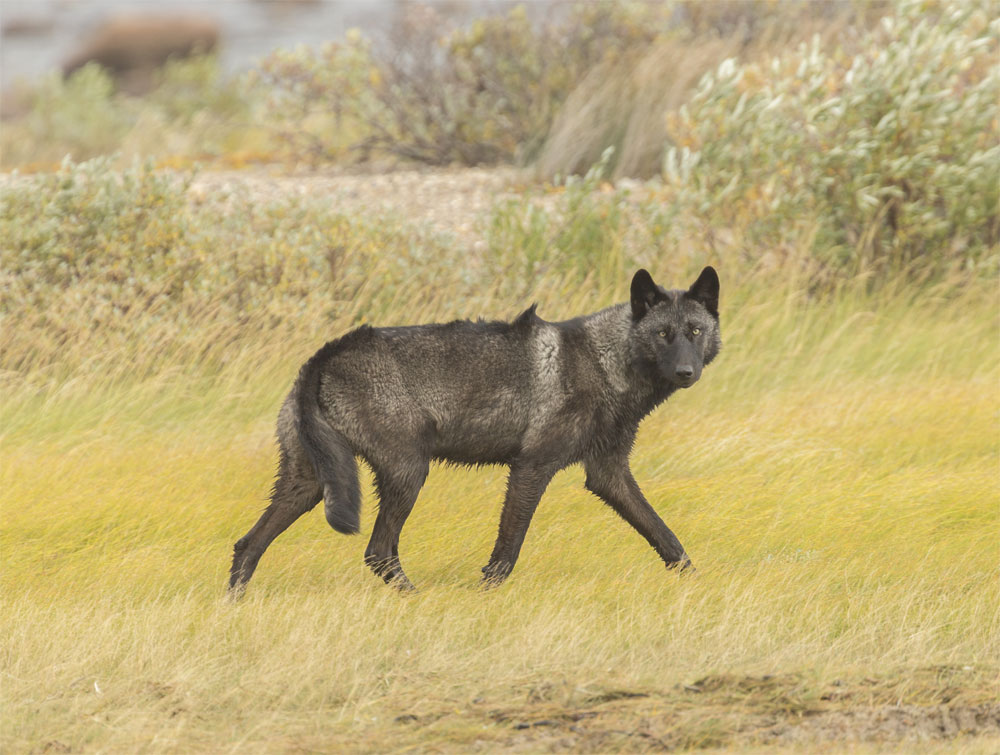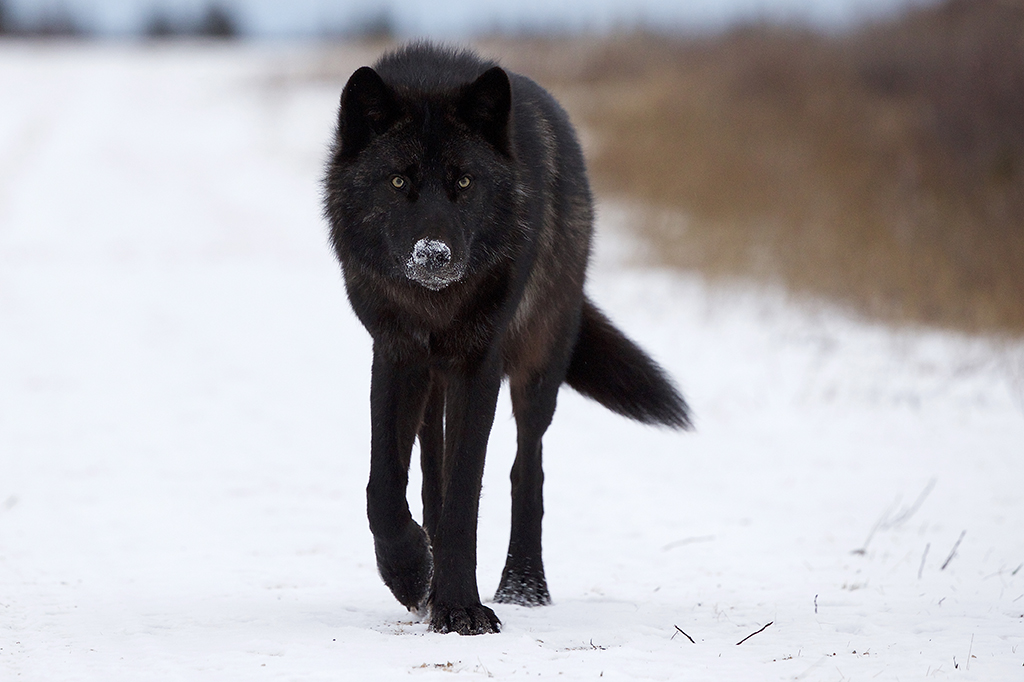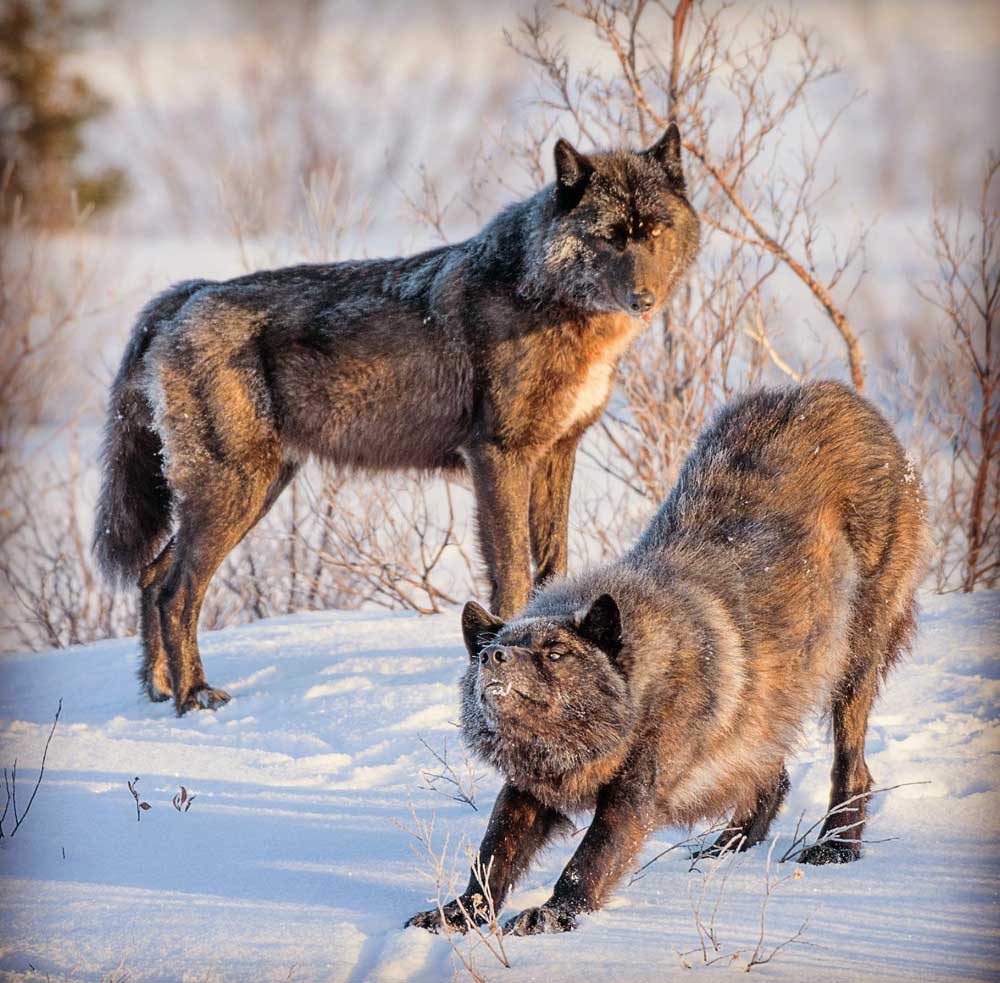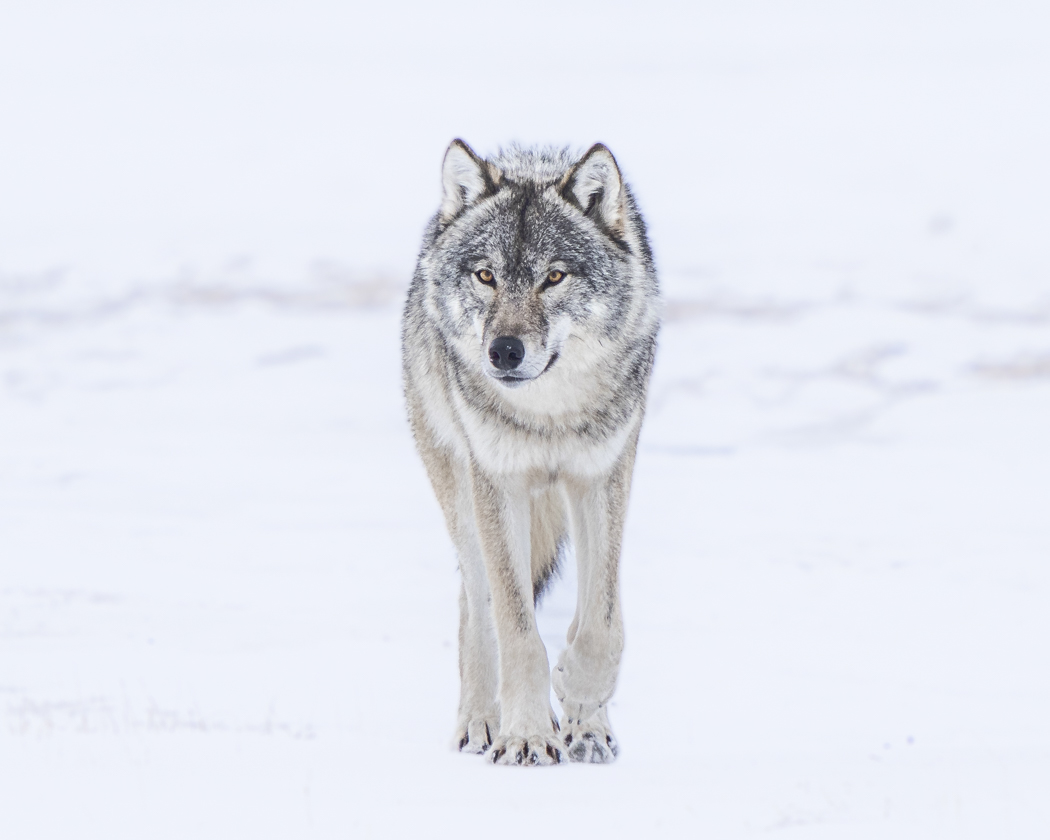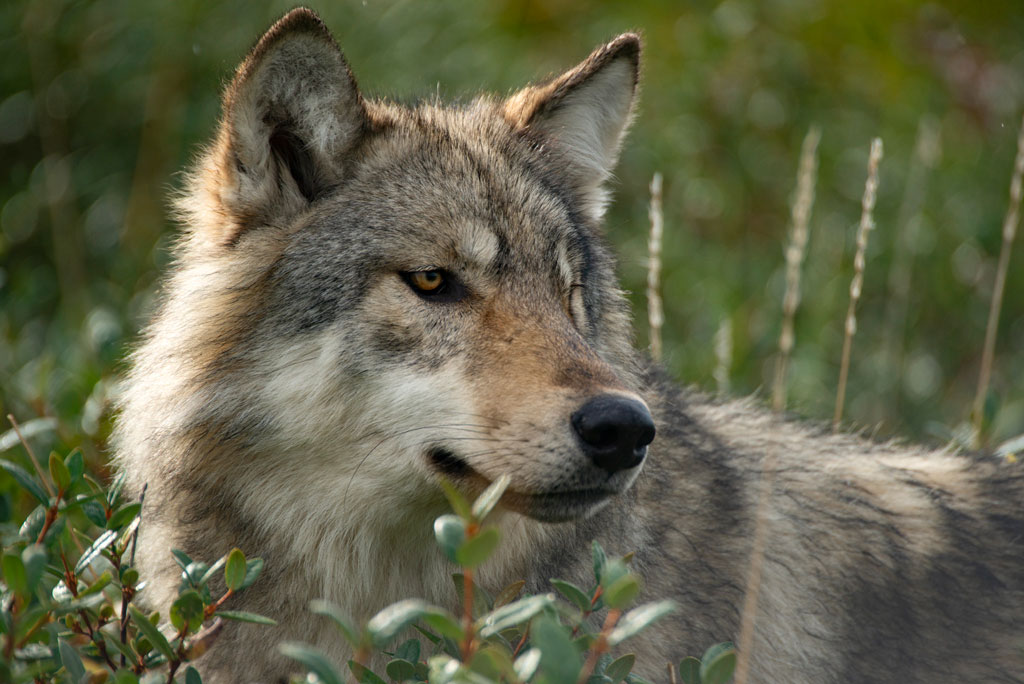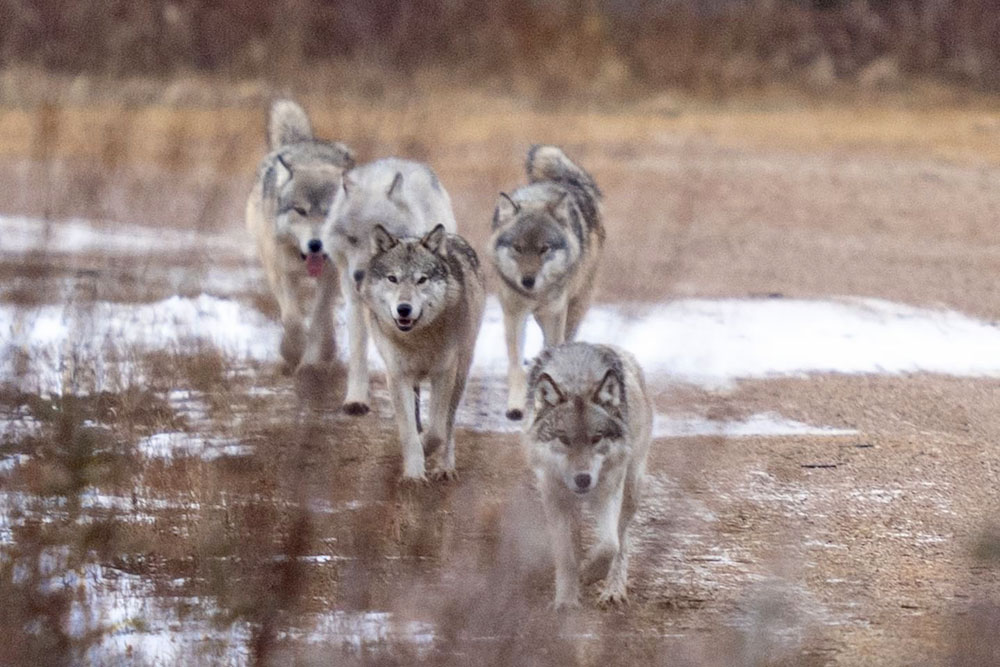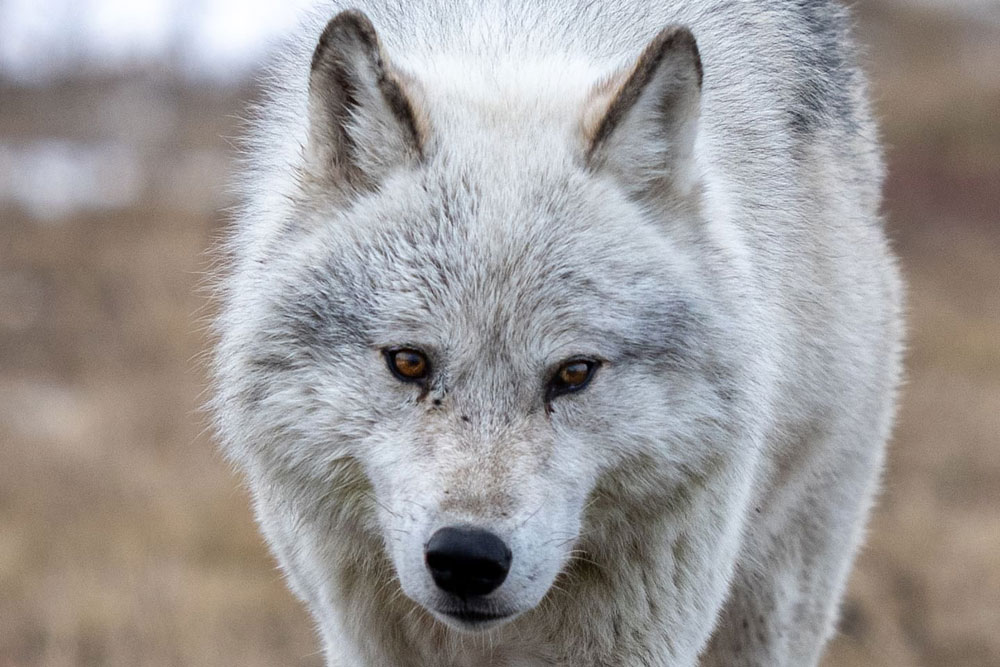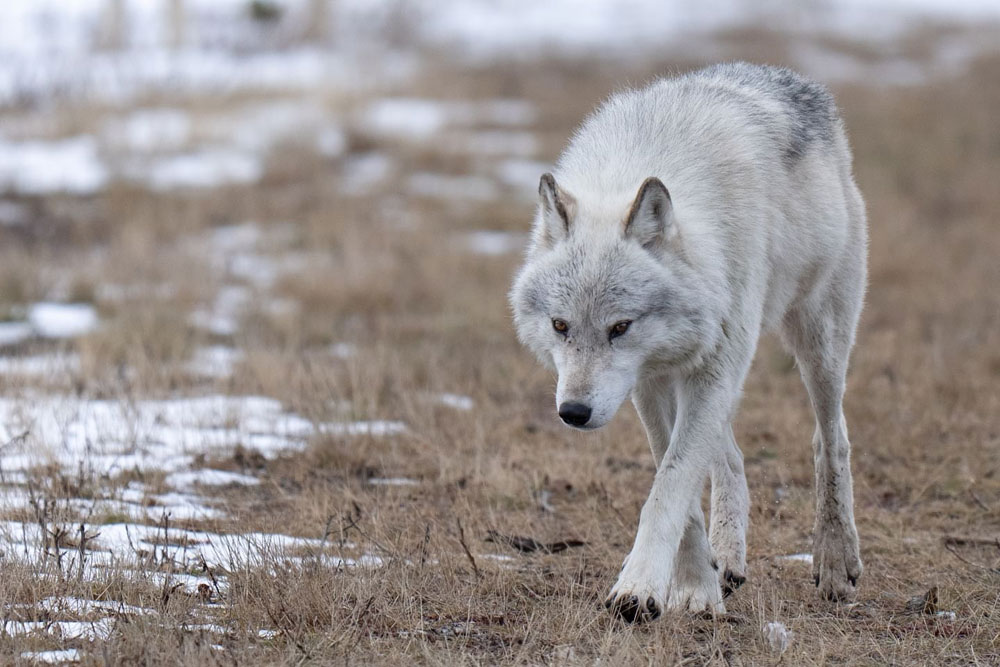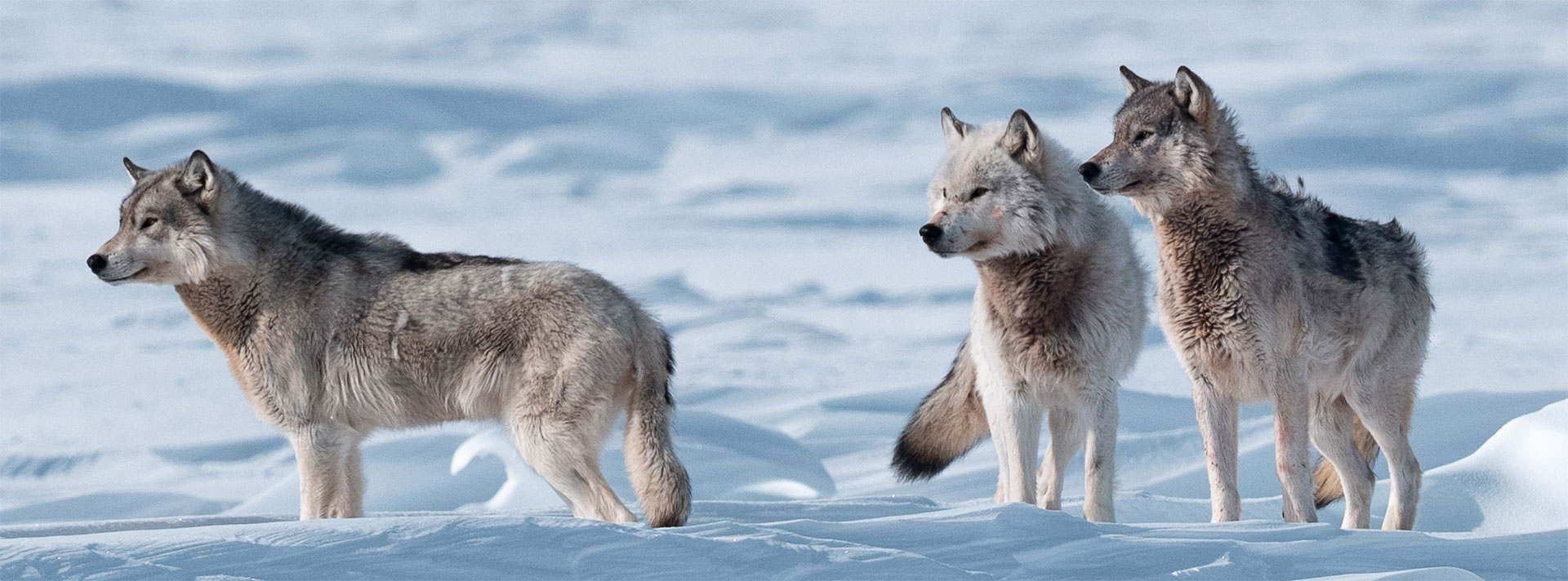
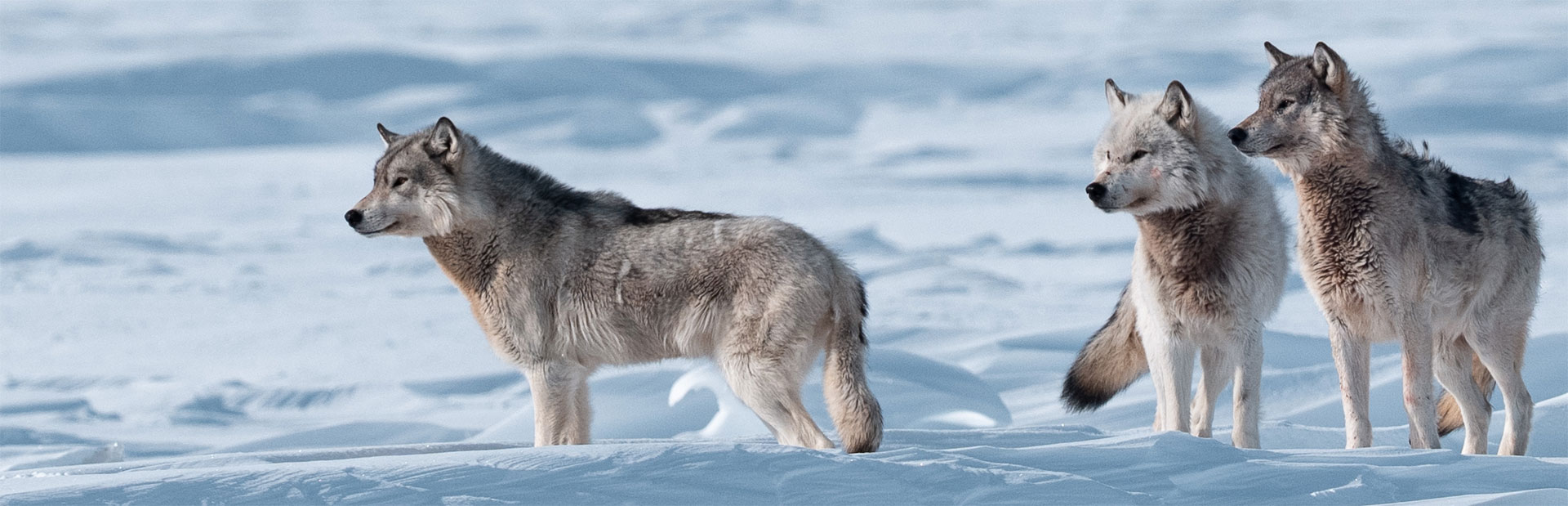
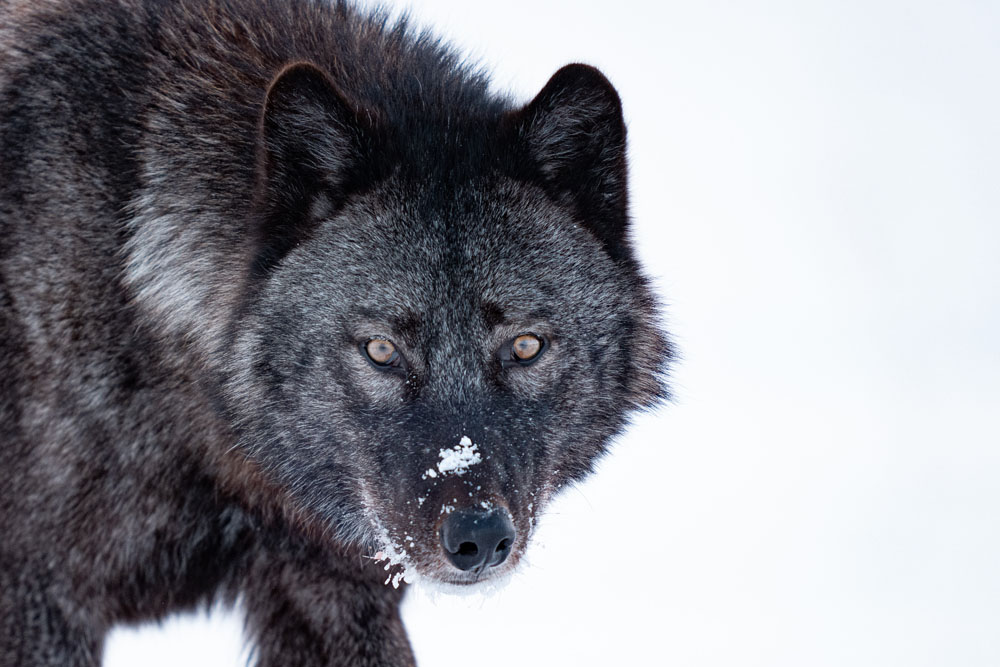
Eyes that see right through you. Fabienne Jansen / ArcticWild.net photo.
by George Williams
(With files from Jad Davenport)
Pack composition, and even the packs themselves, have changed over the past few years at Nanuk Polar Bear Lodge, so we thought it would be a good idea to update our wolf album.
The Wolf Album includes photos from all the different polar bear tours and wolf safaris that take place at Nanuk Polar Bear Lodge in summer, fall and winter. These include Cloud Wolves of the Kaska Coast and Nanuk Emergence Quest, Arctic Discovery, Hudson Bay Odyssey, the Polar Bear Photo Safari at Nanuk, Summer Dual Lodge Safari and Fall Dual Lodge Safari.
Guests on the Cloud Wolves of the Kaska Coast safari and Nanuk Emergence Quest this spring had some incredible close-up encounters with the resident wolf pack and we’re hoping to see these wolves back at Nanuk Polar Bear Lodge next spring for the first Cloud Wolves of the Kaska Coast Safari.
As Jad Davenport reported in his August 2025 Wolf Newsletter, both March Cloud Wolves of the Kaska Coast safaris were successful in locating and spending time with both the Opoyastin Wolf Pack and several ‘floater’ wolves.
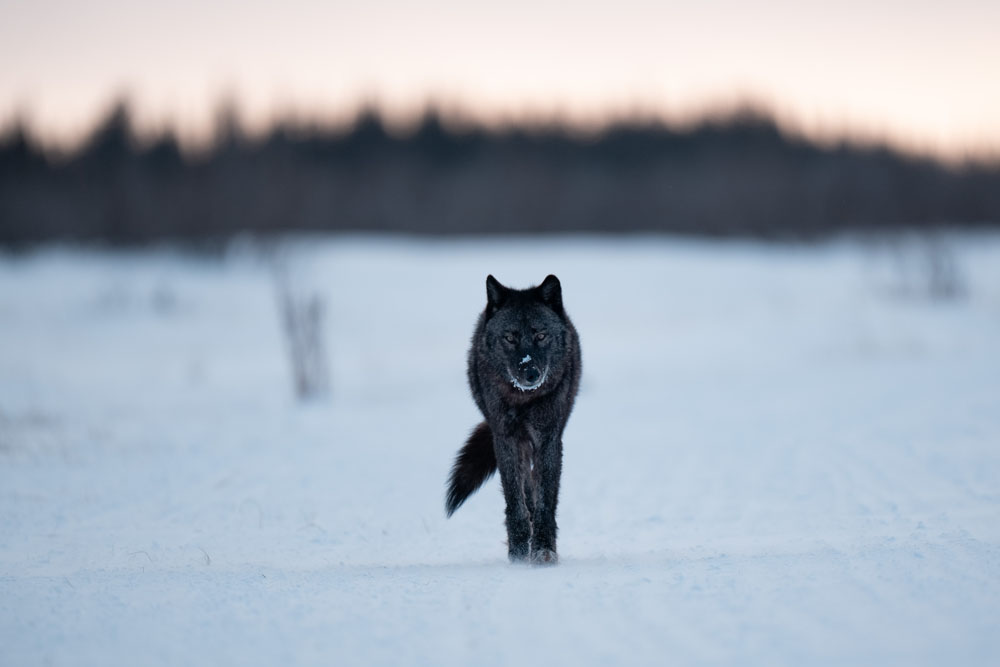
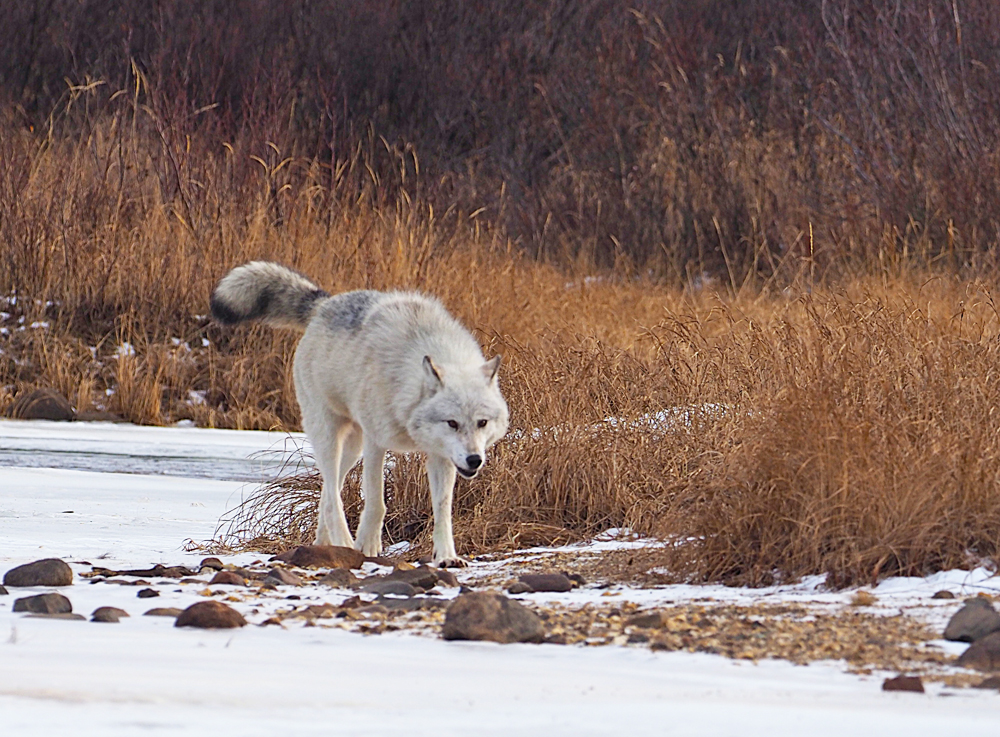
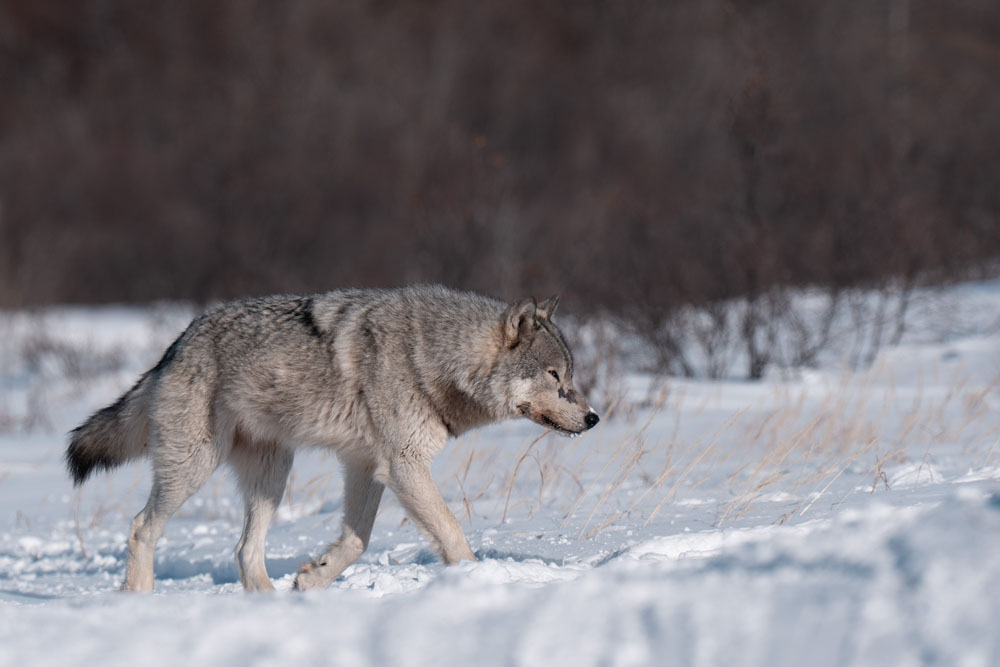
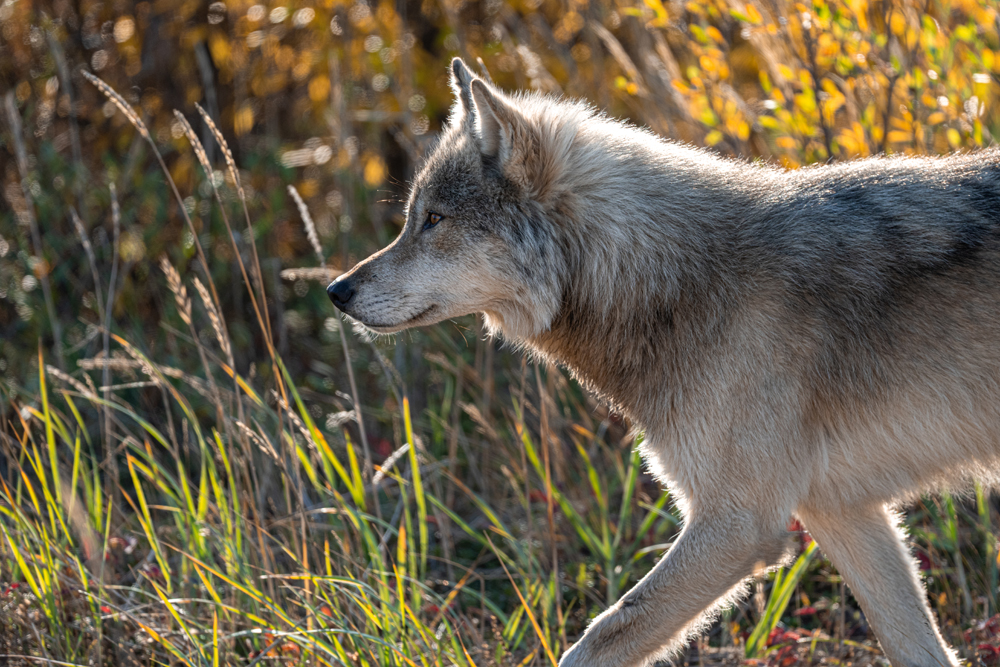
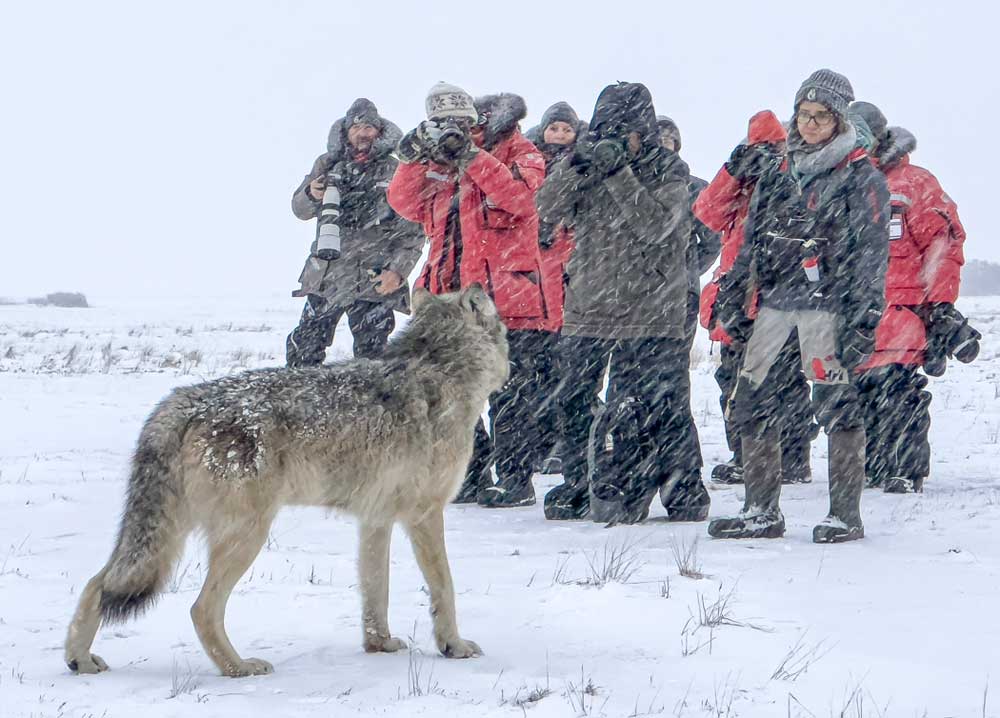
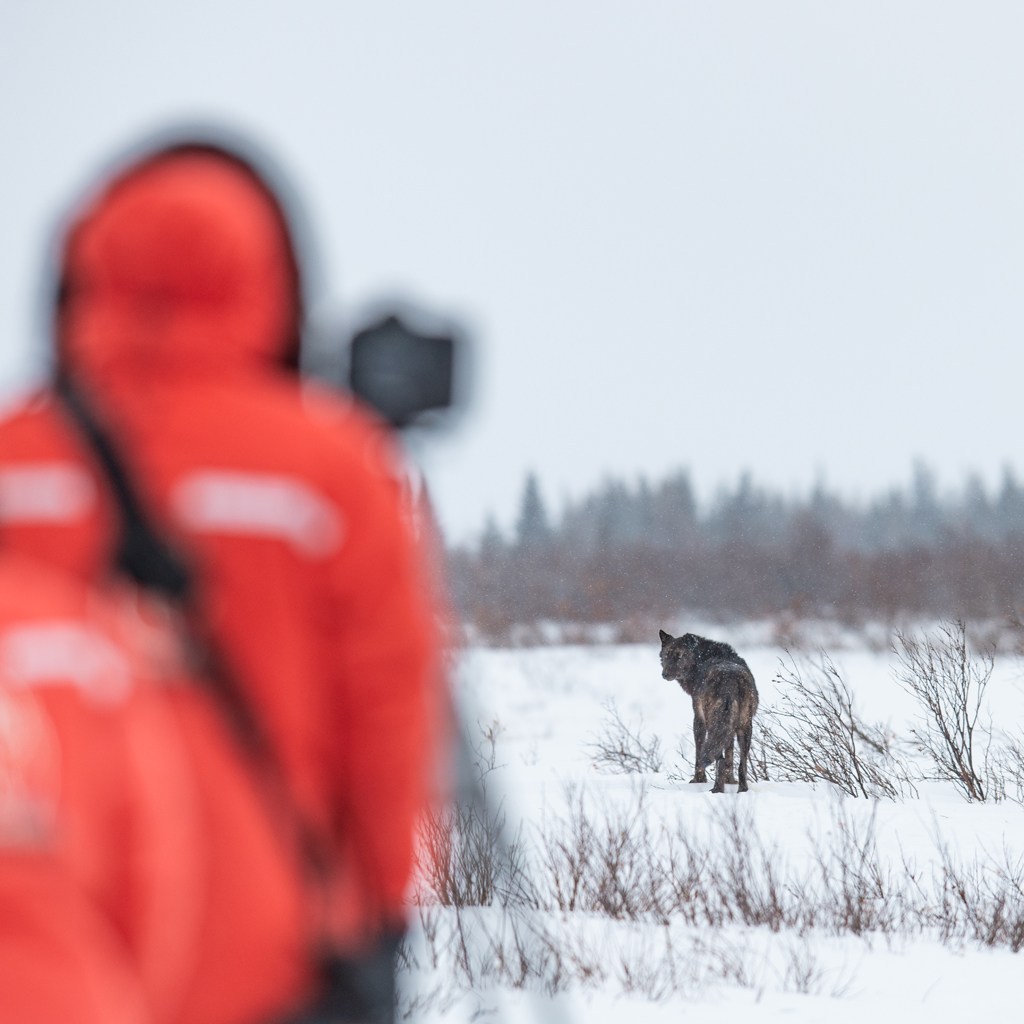
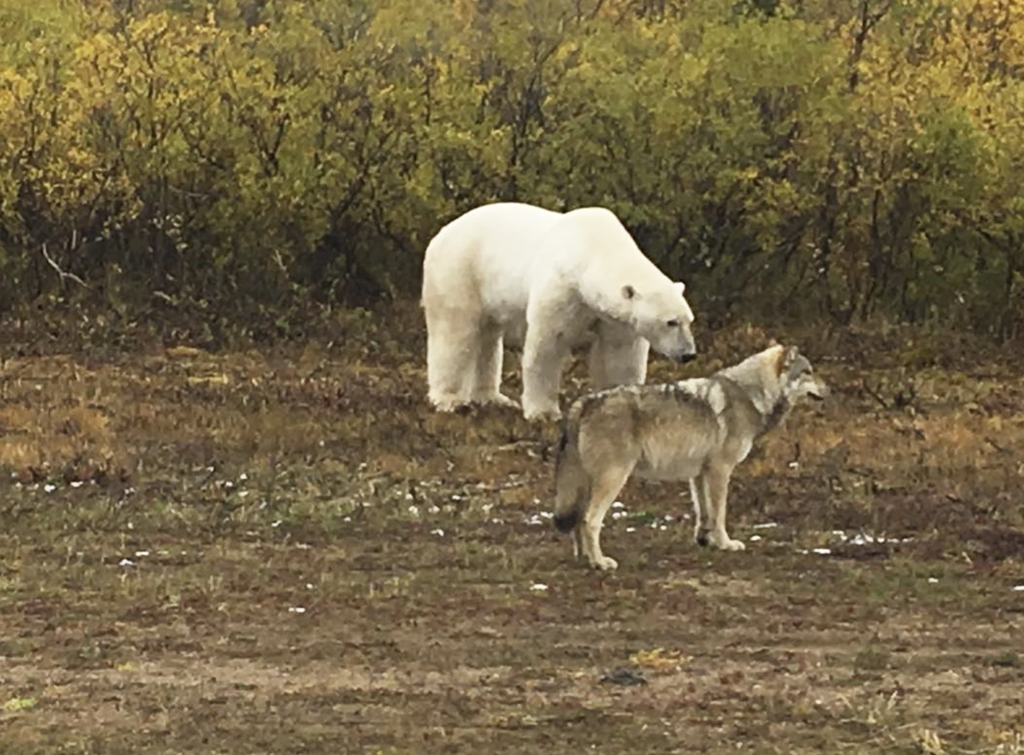
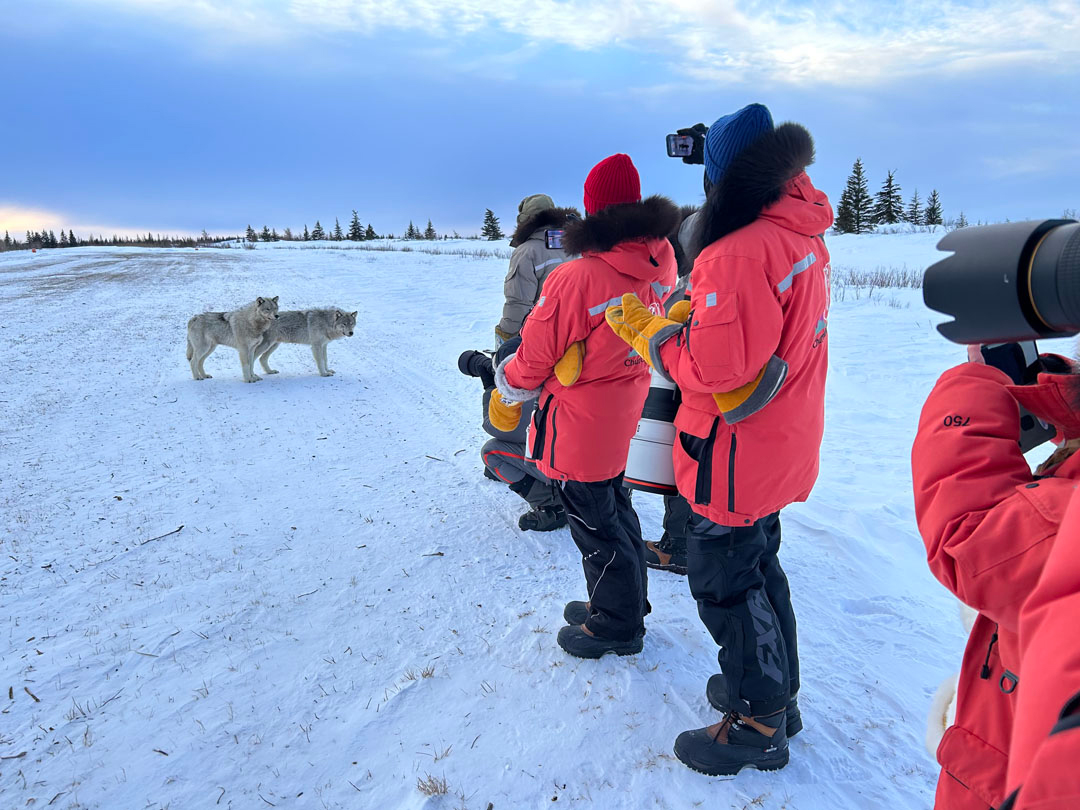
Wolf approach at Nanuk. Christoph Jansen / ArcticWild.net photo.
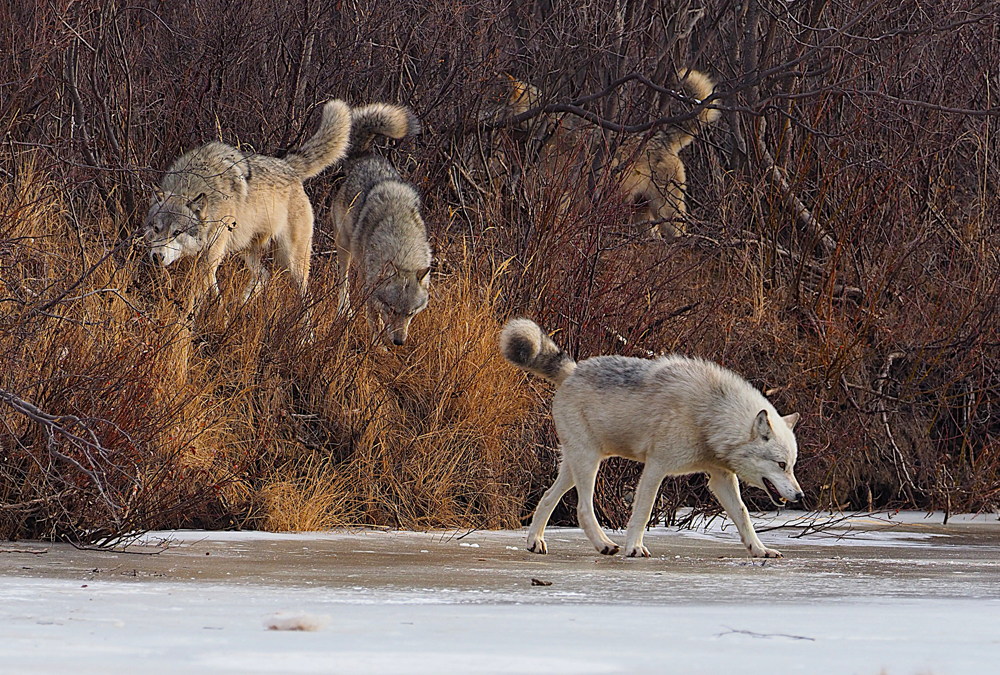
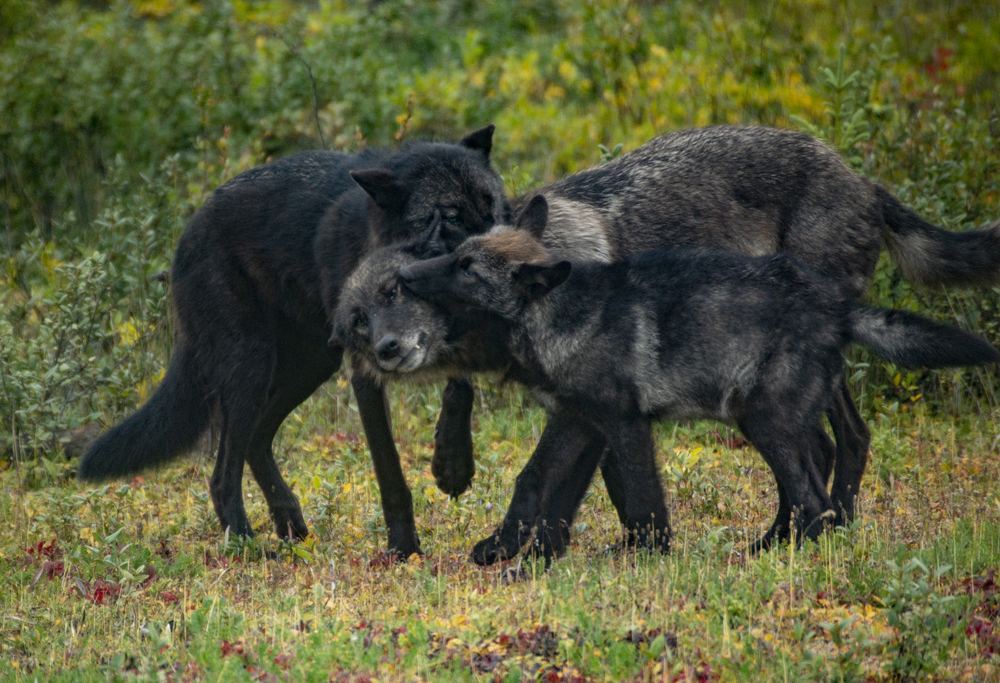
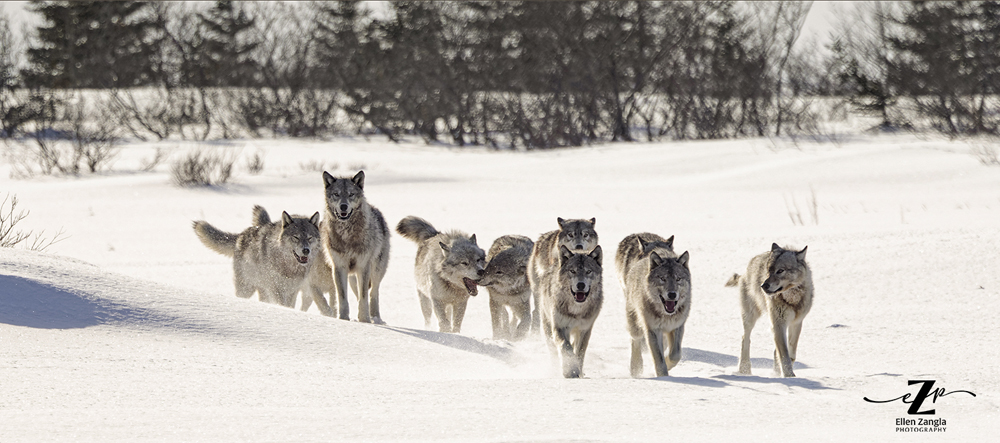
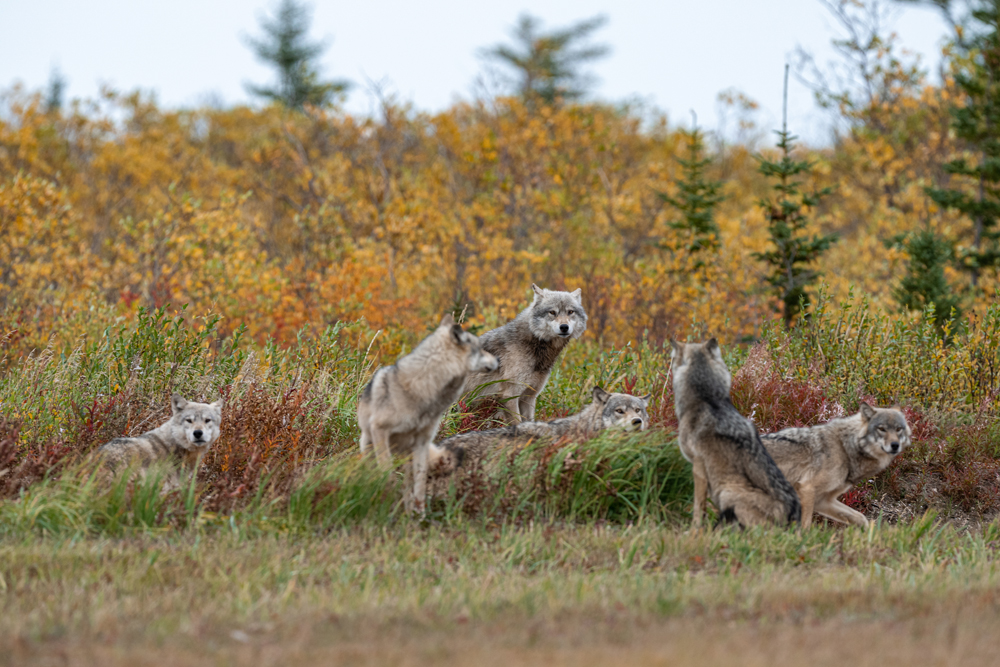
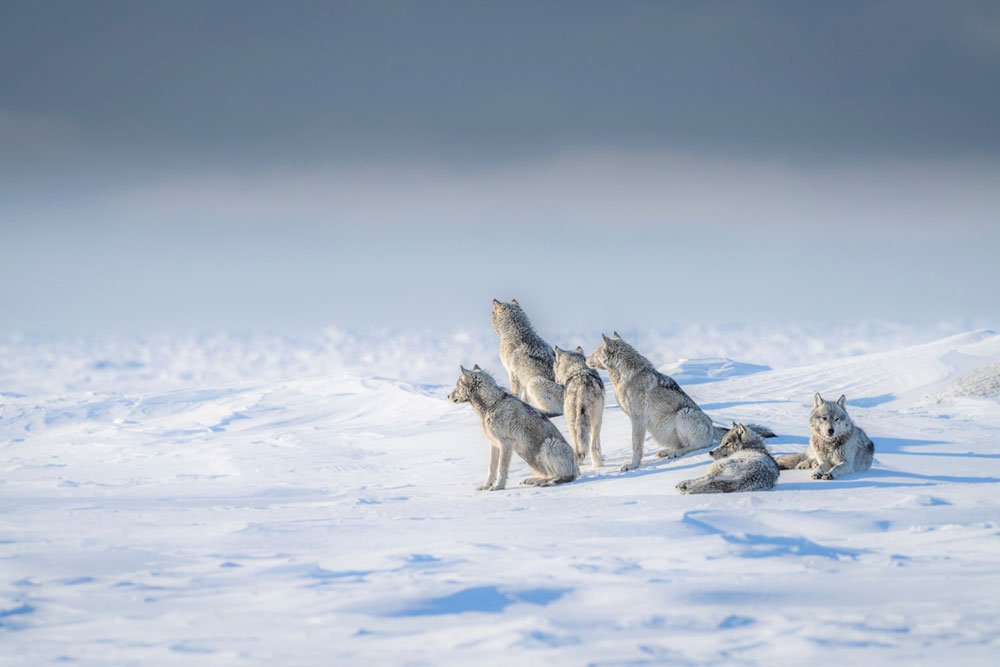
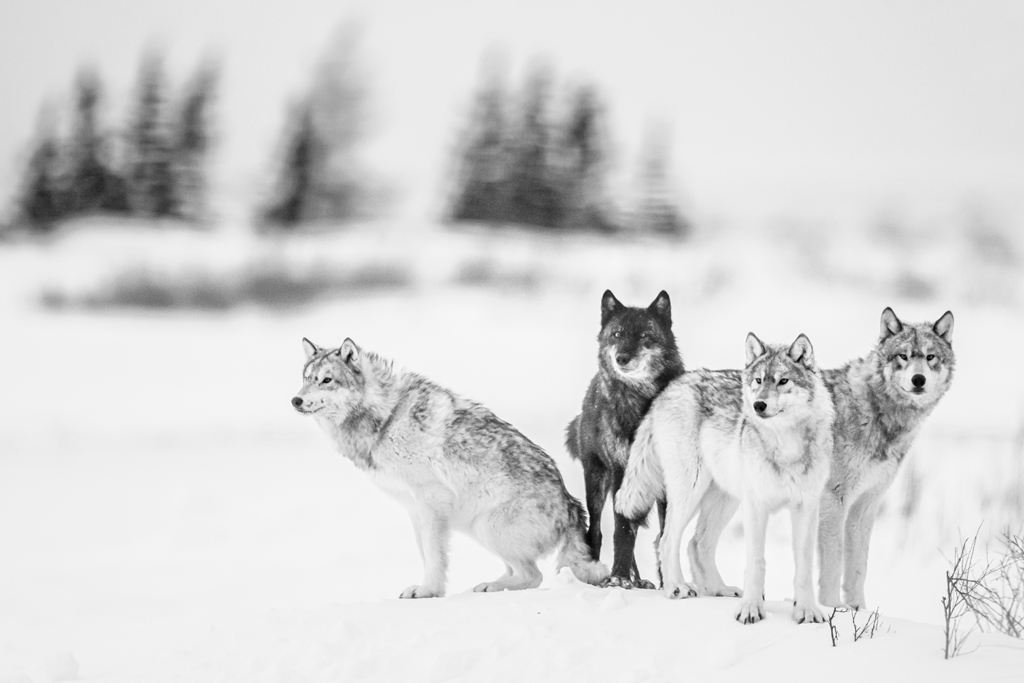
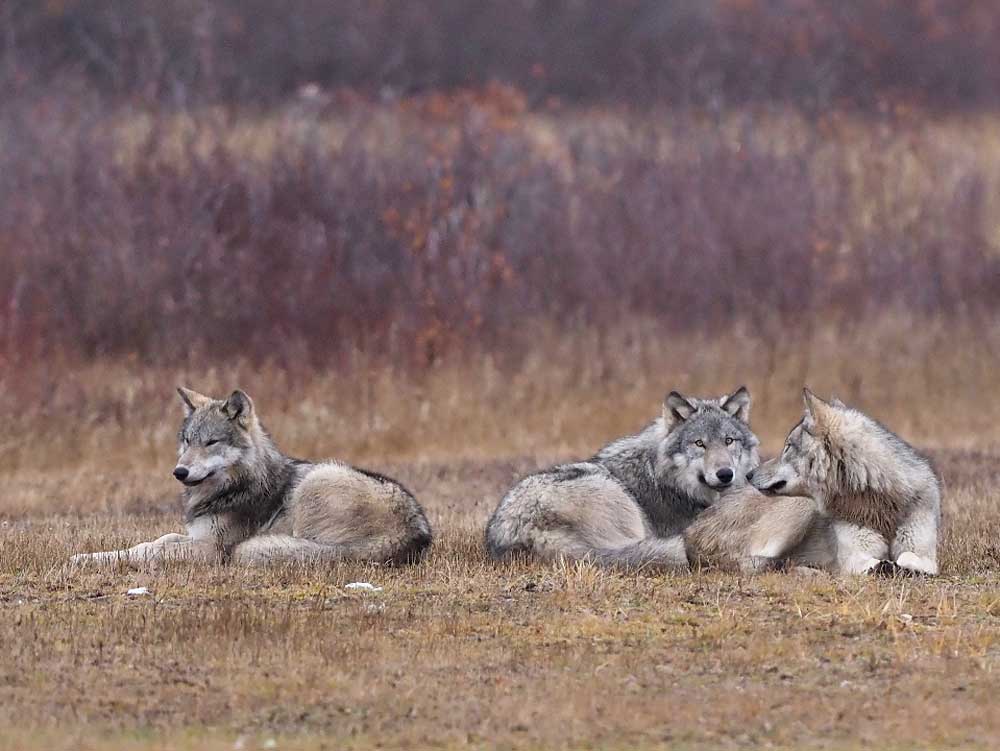
In March, sightings and trail cameras confirmed there were a total of five members of the Opoyastin Pack.
- Mestakaya (“big hair”), the breeding male
- Nikah (“mother”), the breeding female
- Kasisi (“scratchy”), a daughter of Mestakaya and his former mate, Maniway (“cheeks”)
- Makehsis (“foxy”), a subadult, unrelated female
- Osawi (“brown”), an adult male
There were four additional wolves documented in the area. These included:
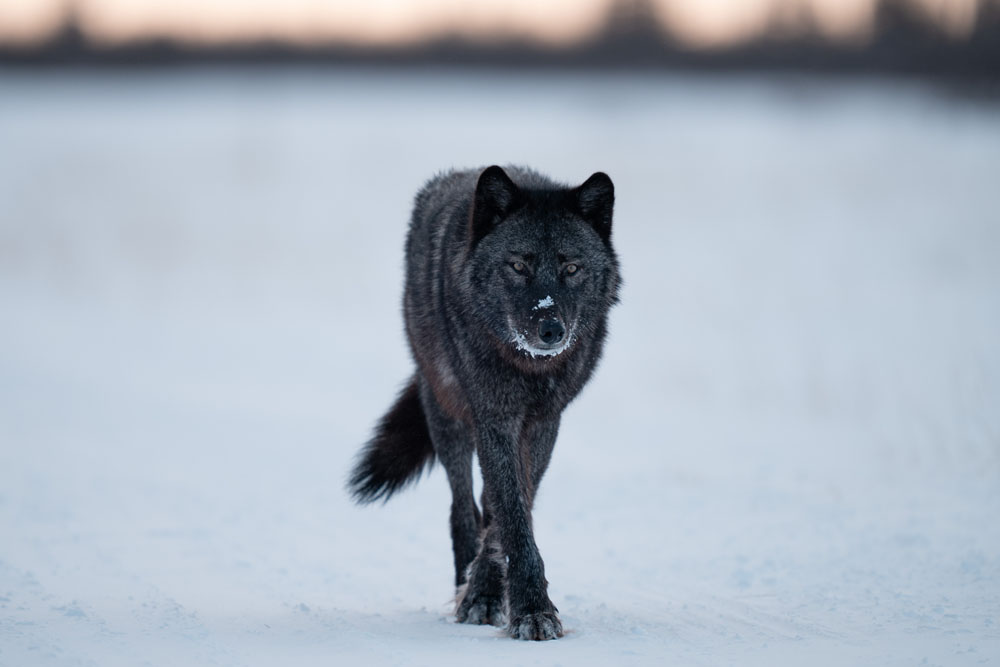
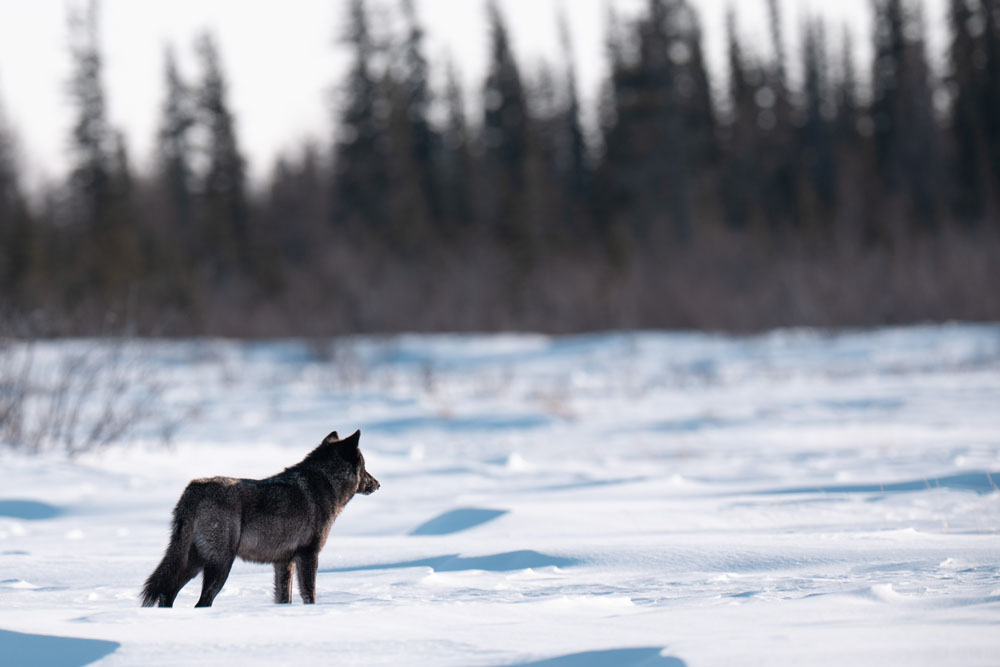
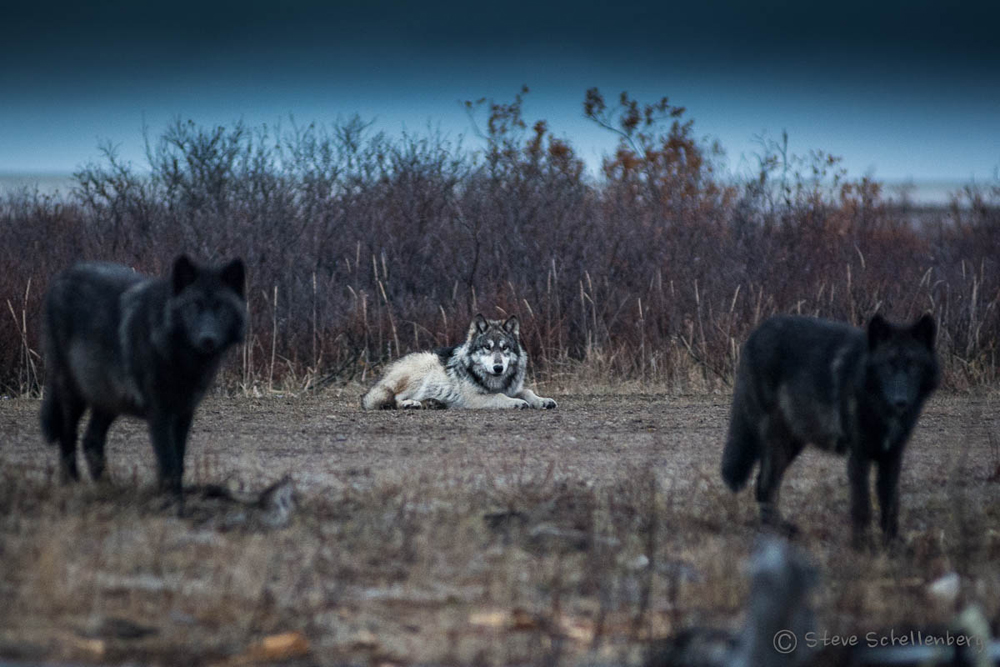
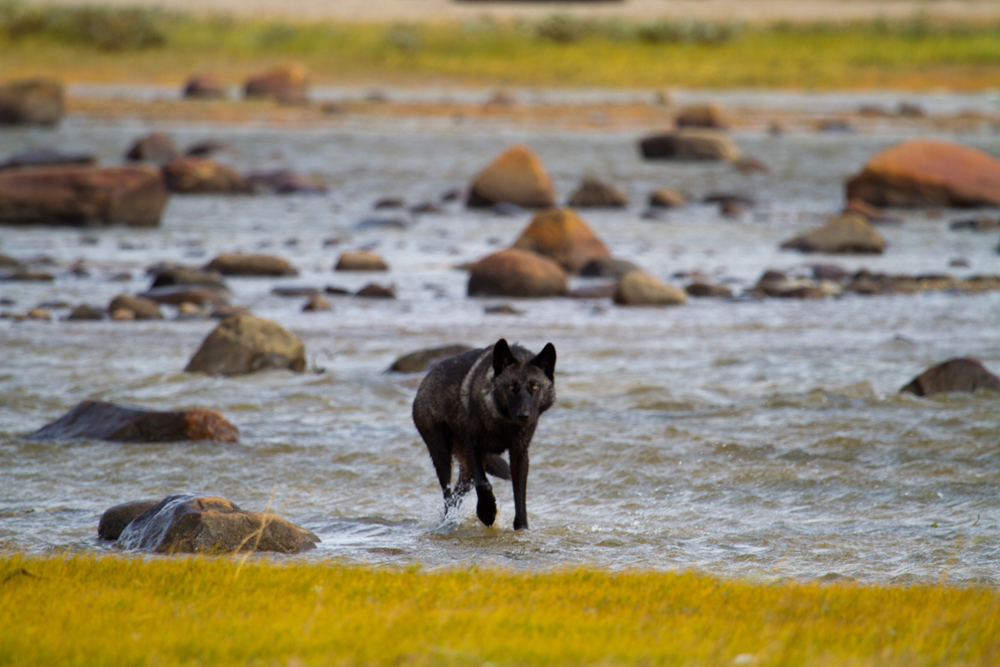
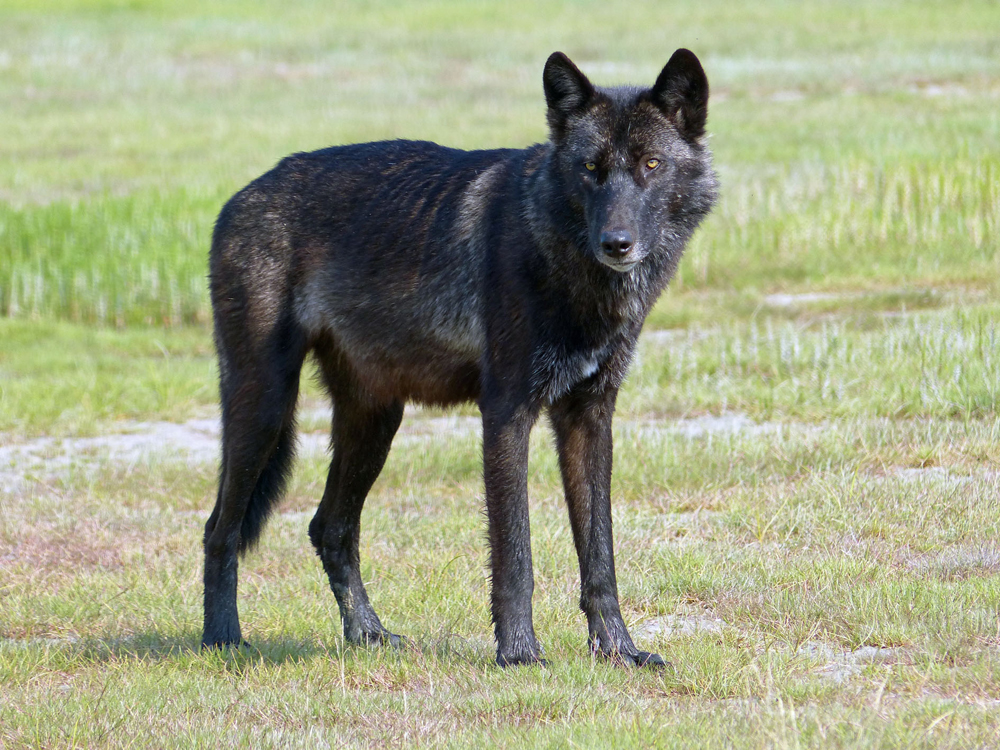
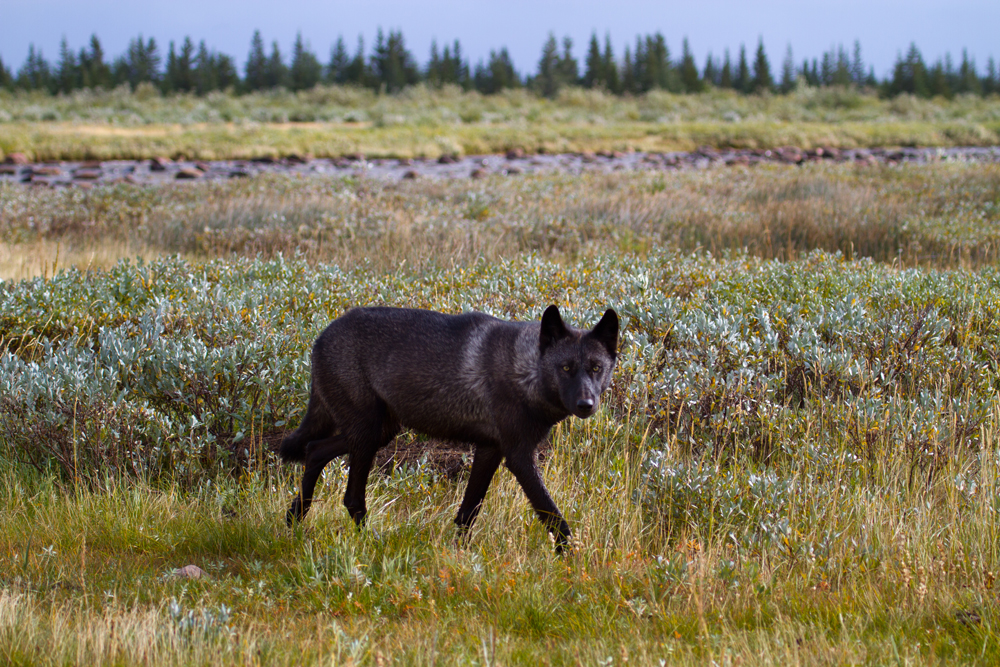
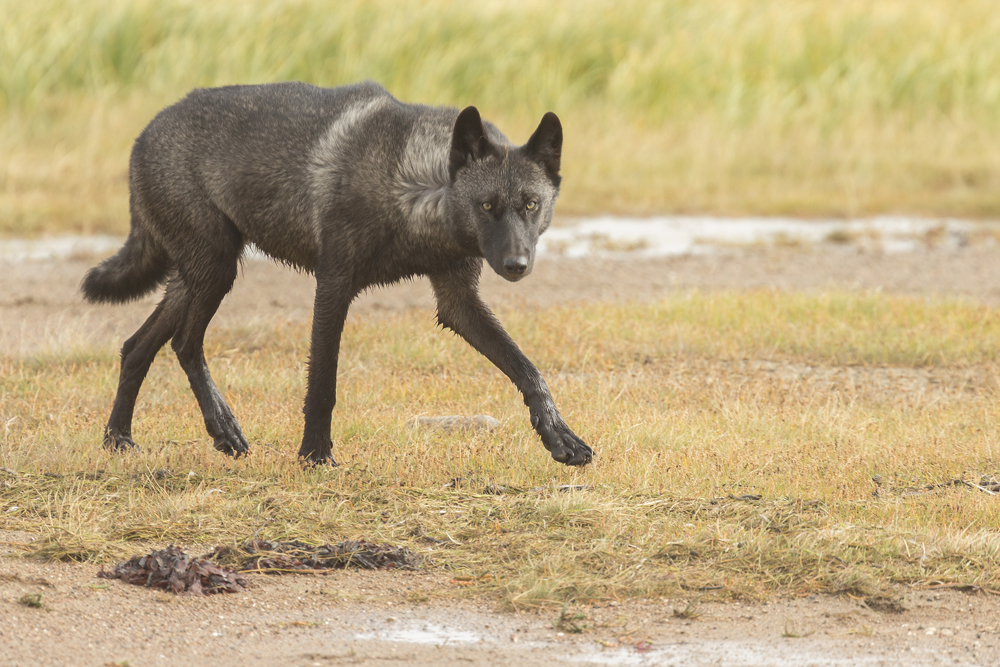
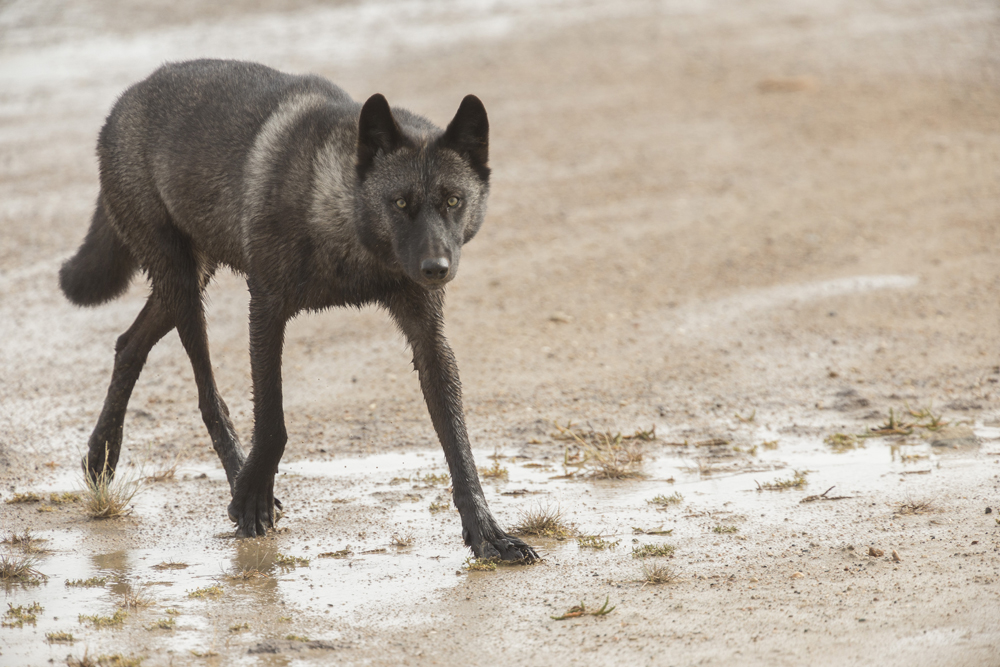
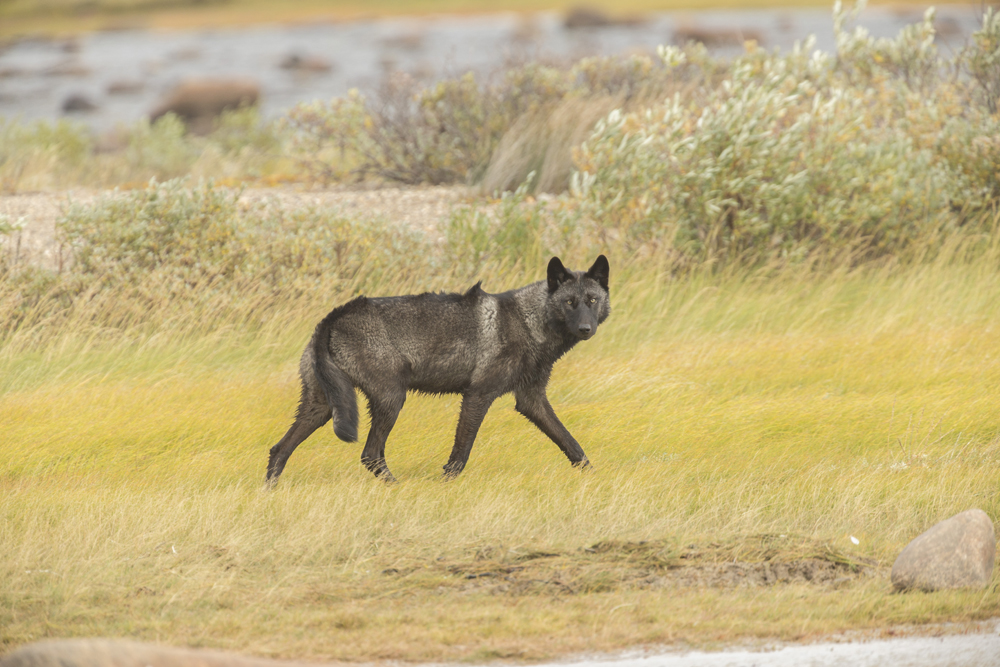
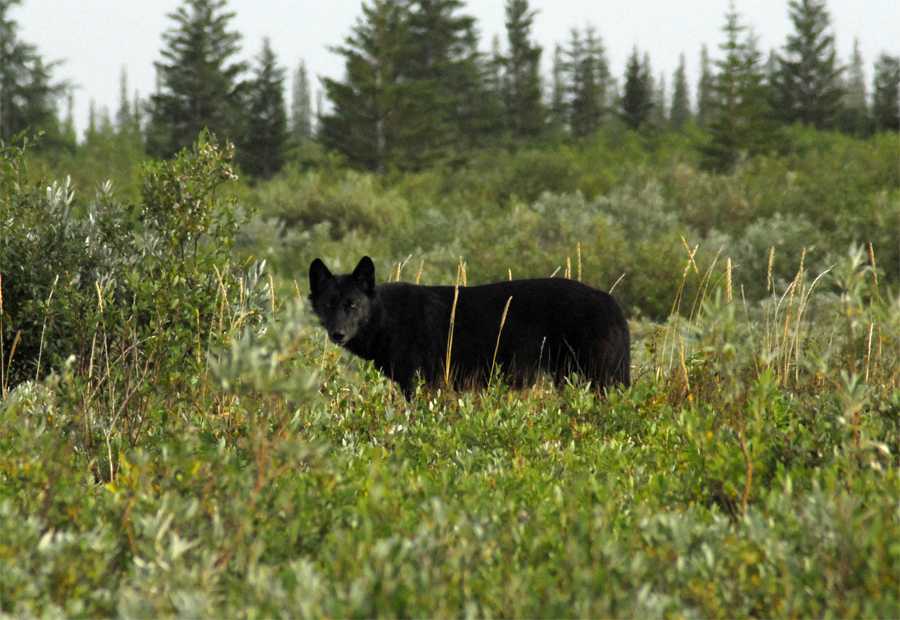
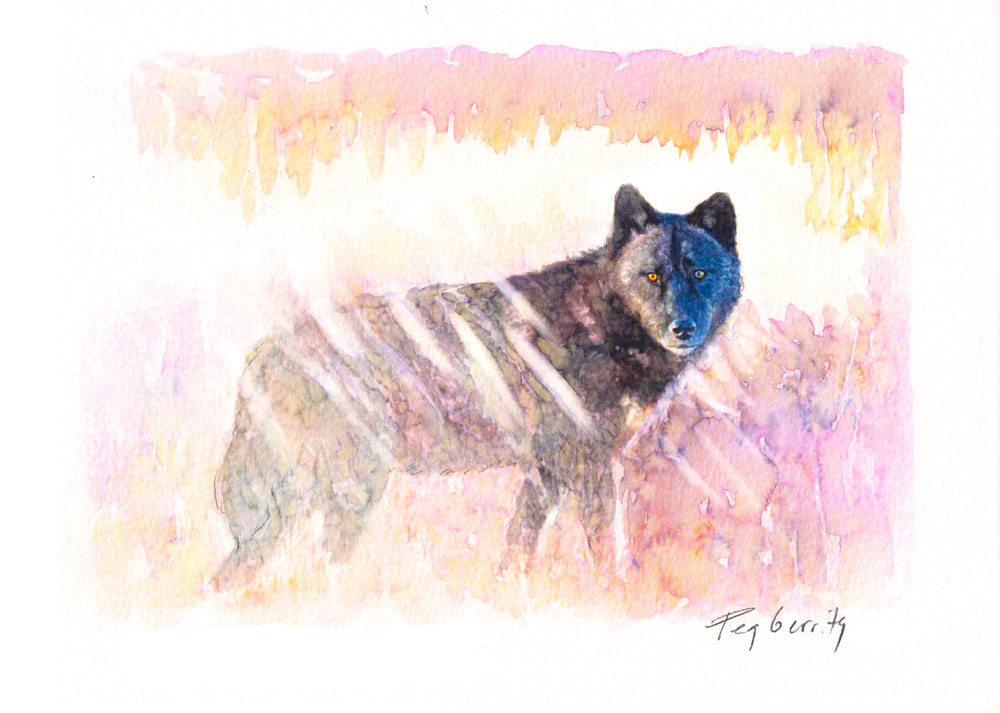
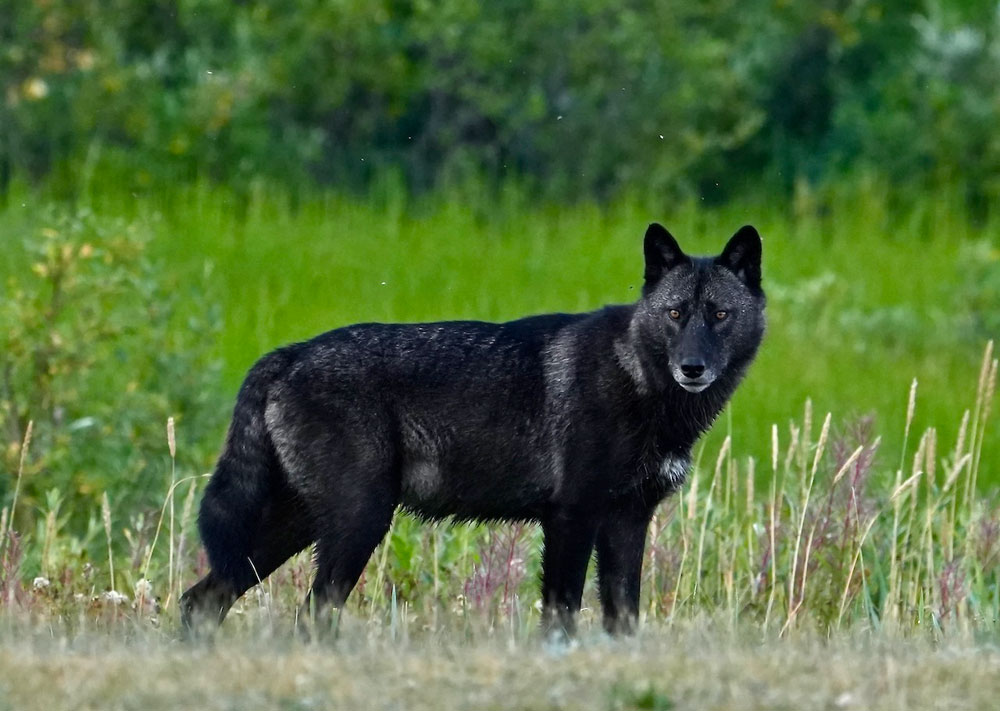
- Kaski (“pitch black”), black wolf, an adult female
- Tipisk (“night”), black wolf, unknown sex
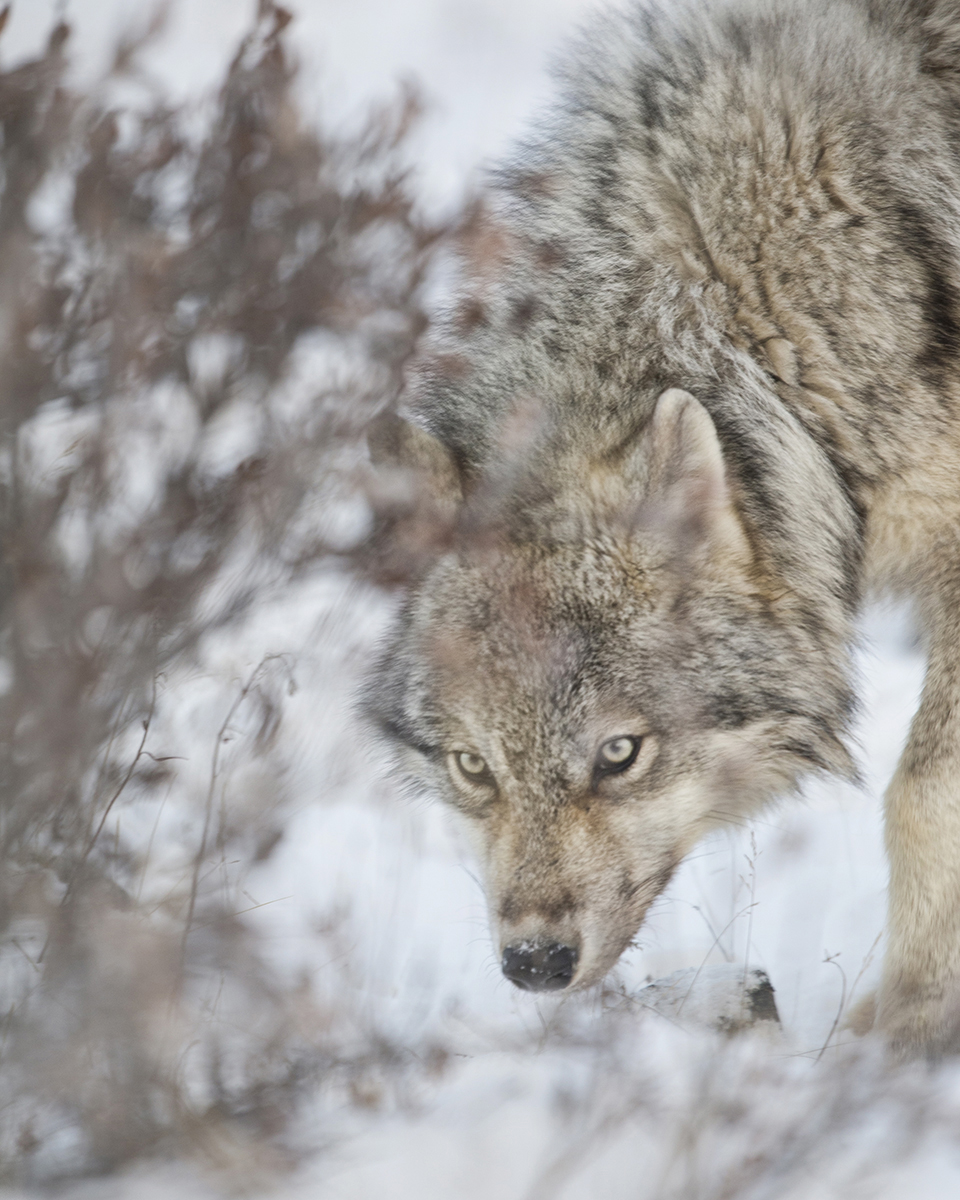
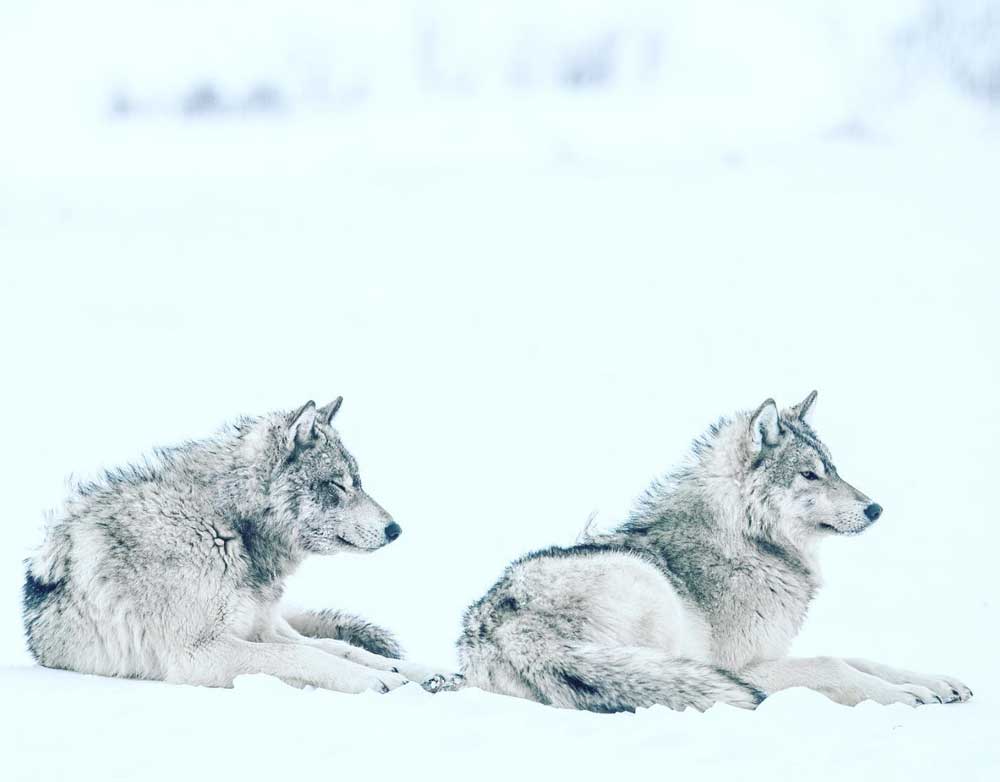
- Tawny wolf 1, unknown sex
- Tawny wolf 2, unknown sex
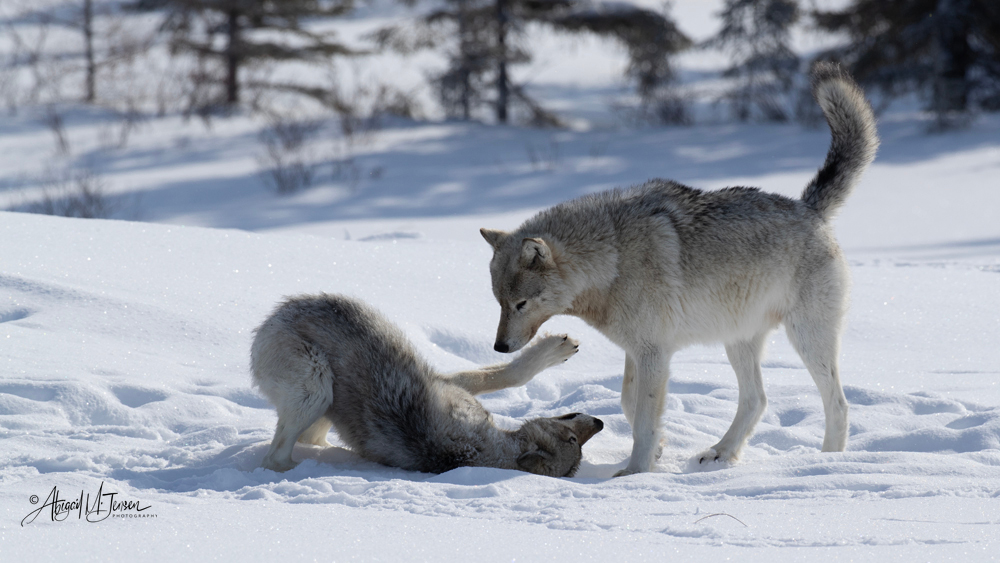
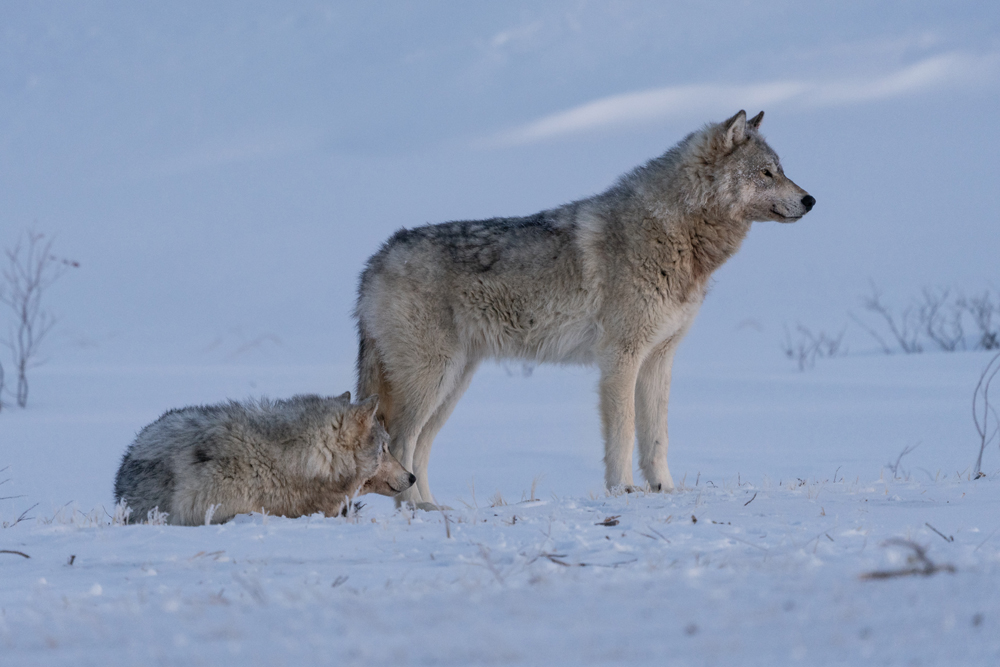
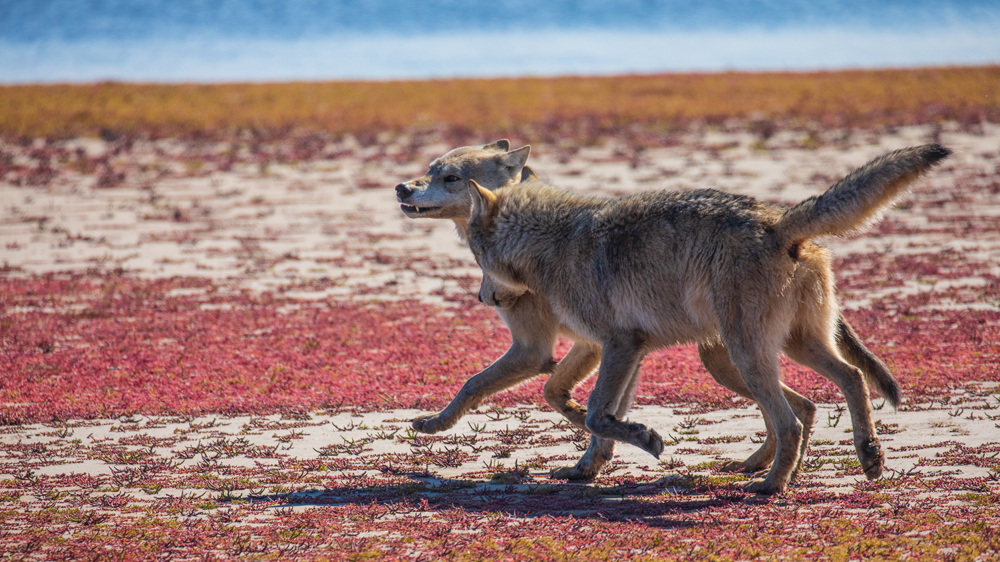
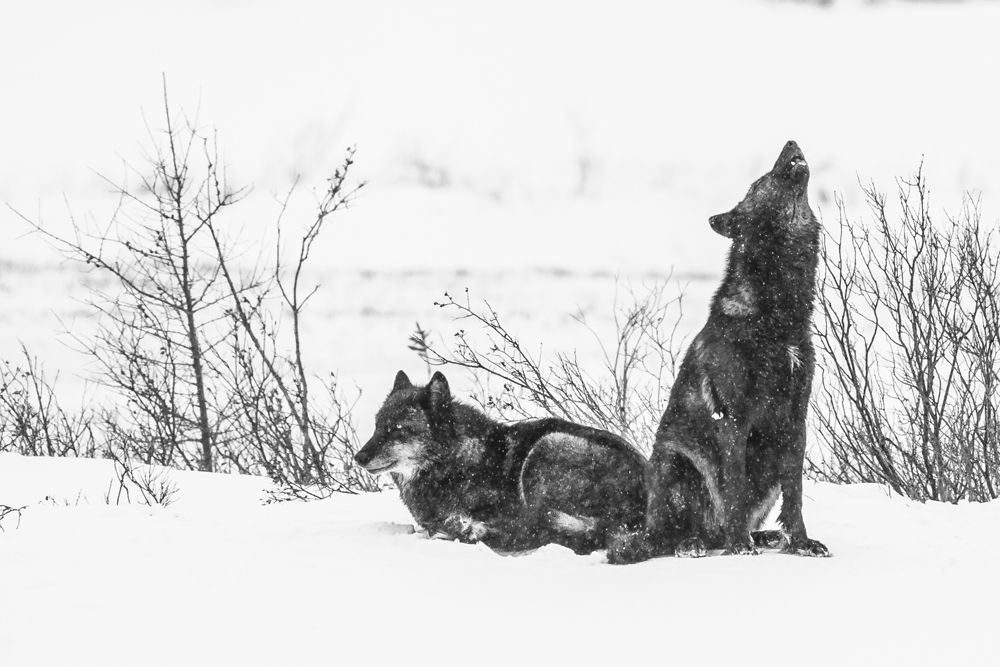
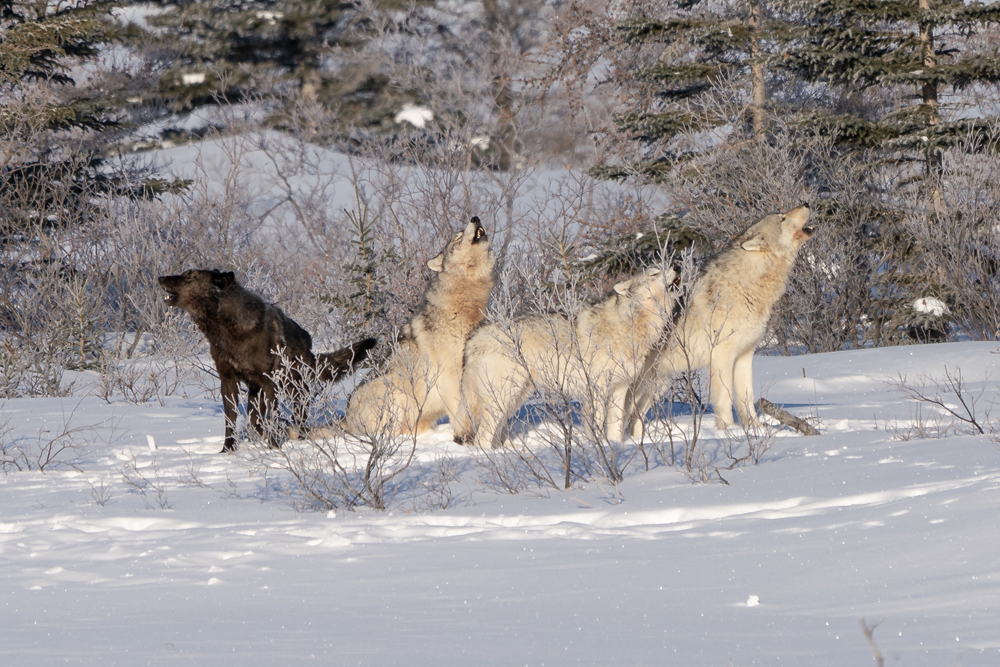
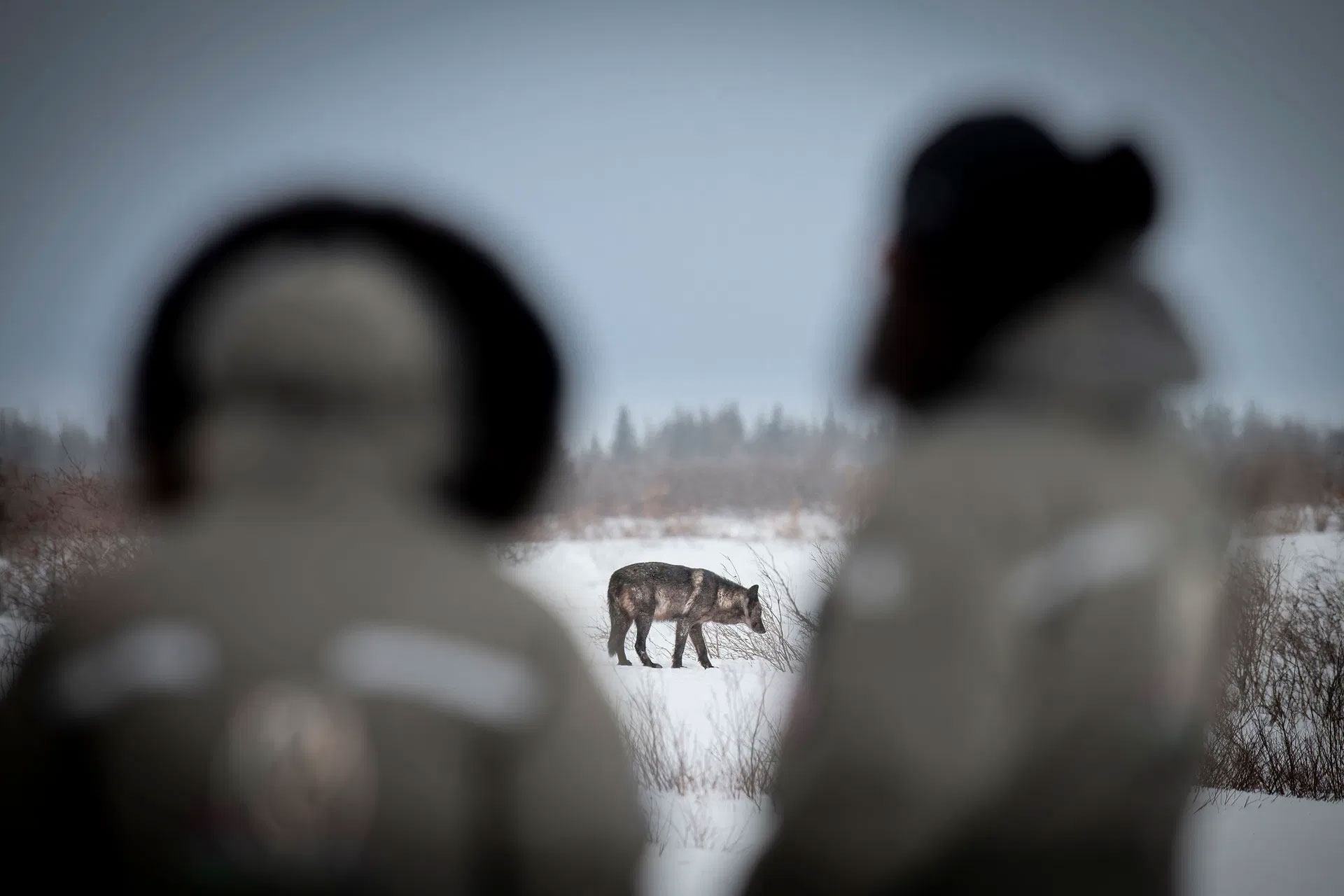
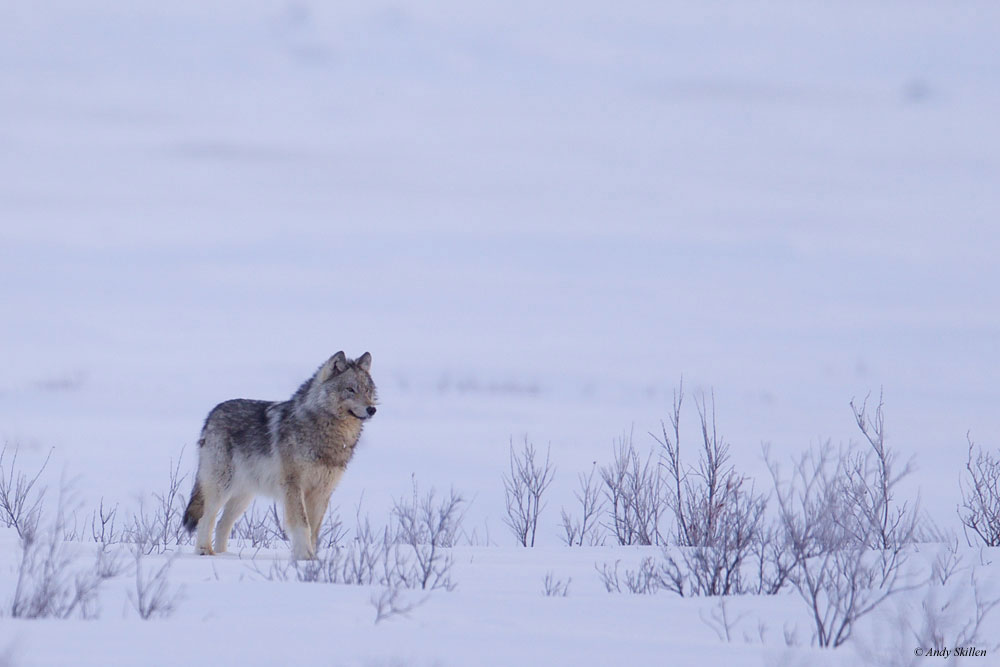
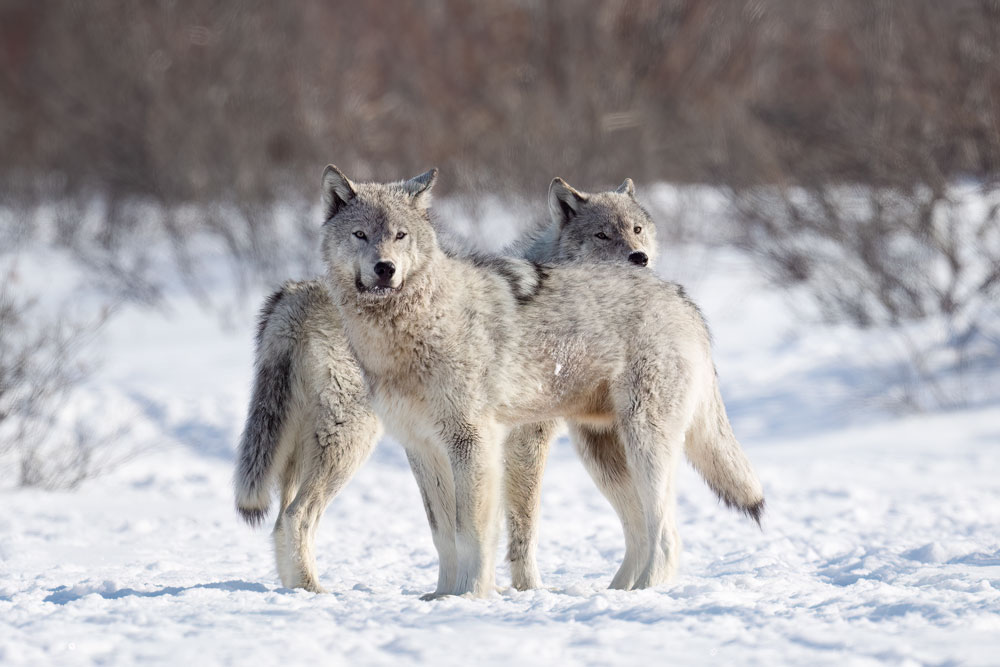
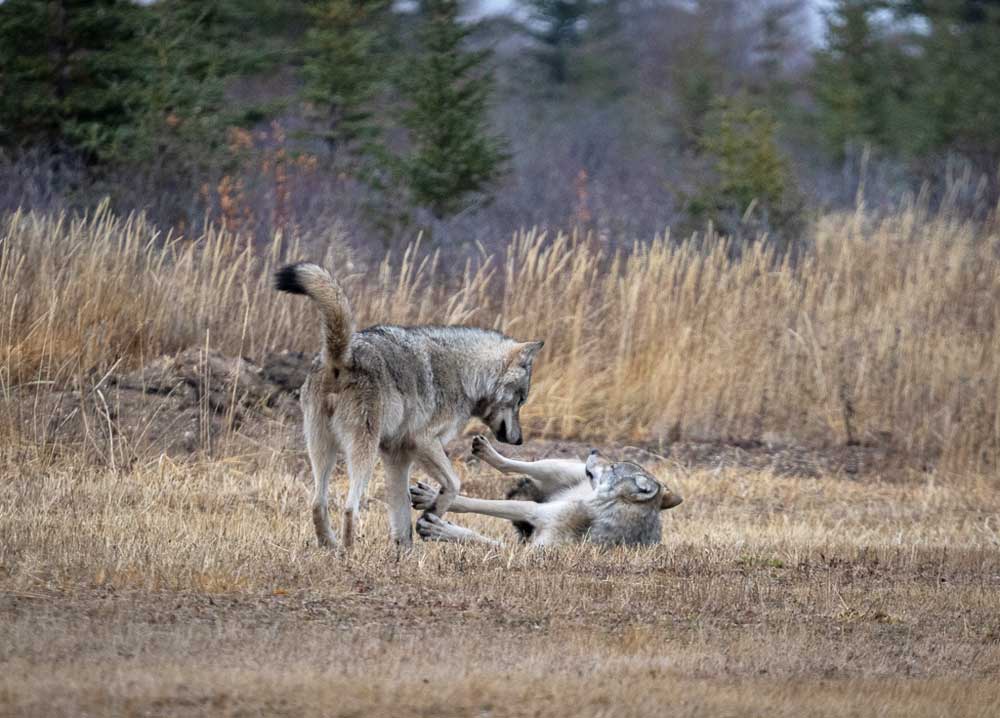
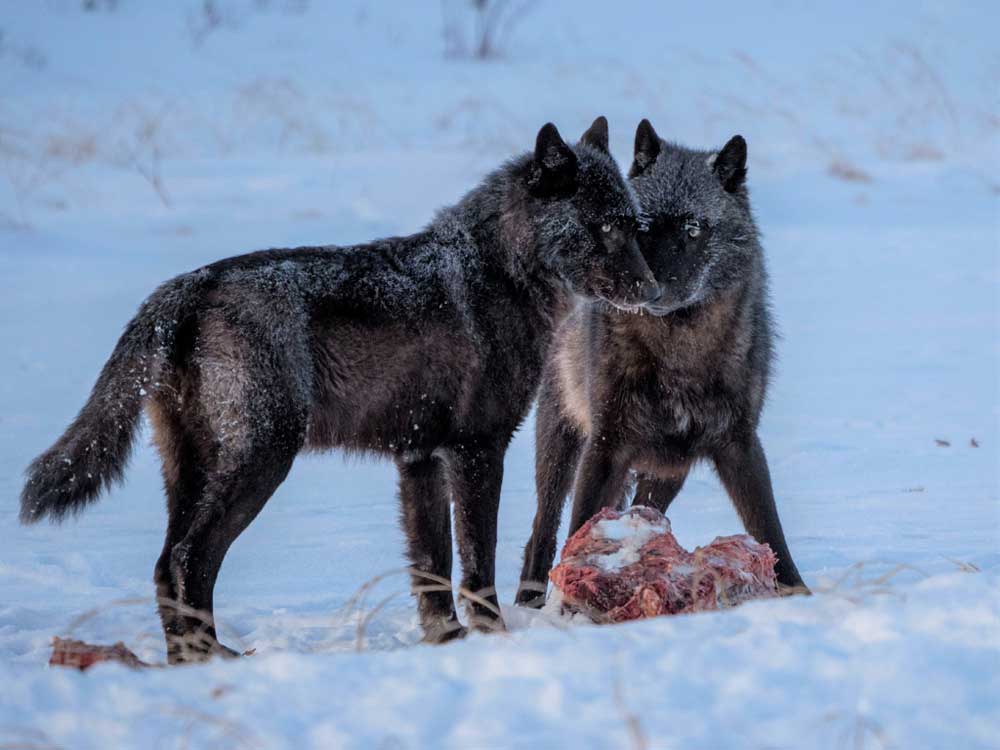
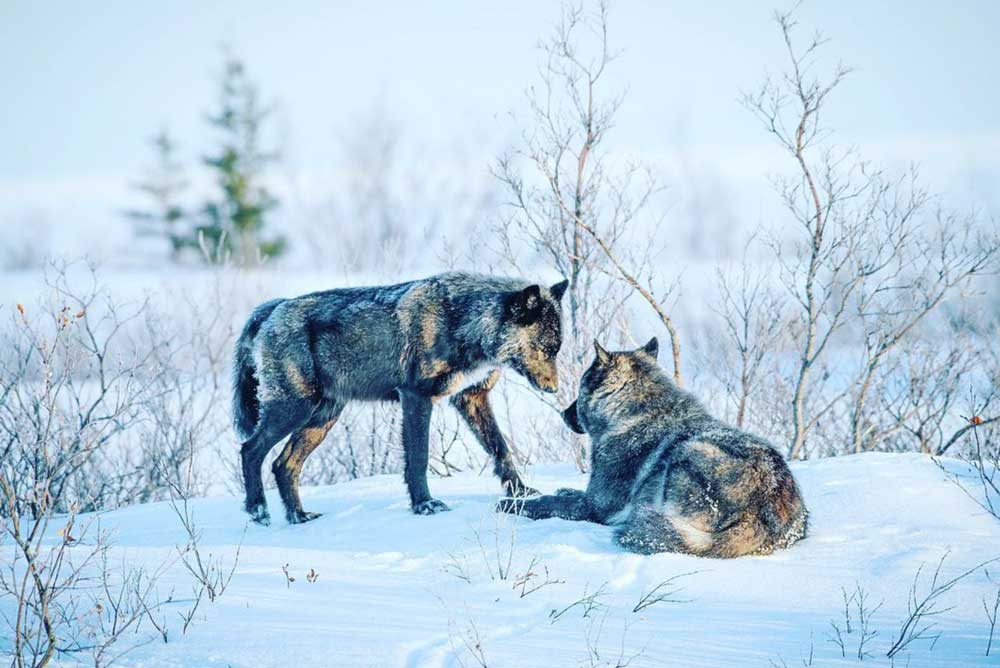
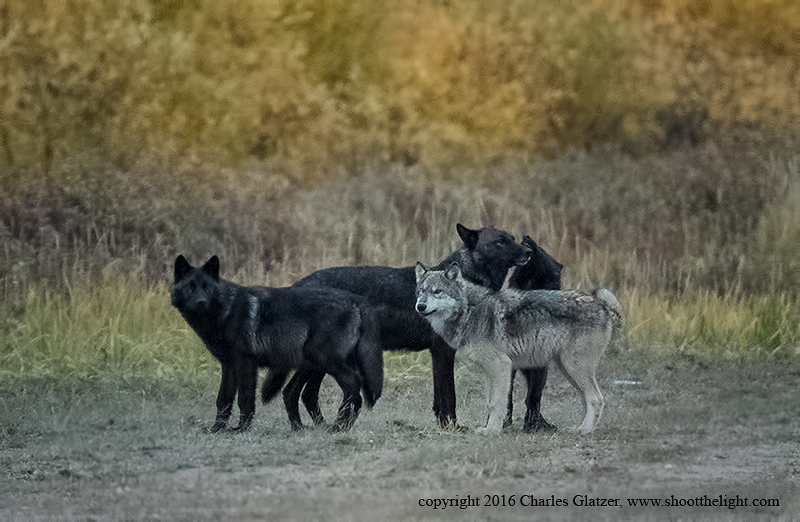
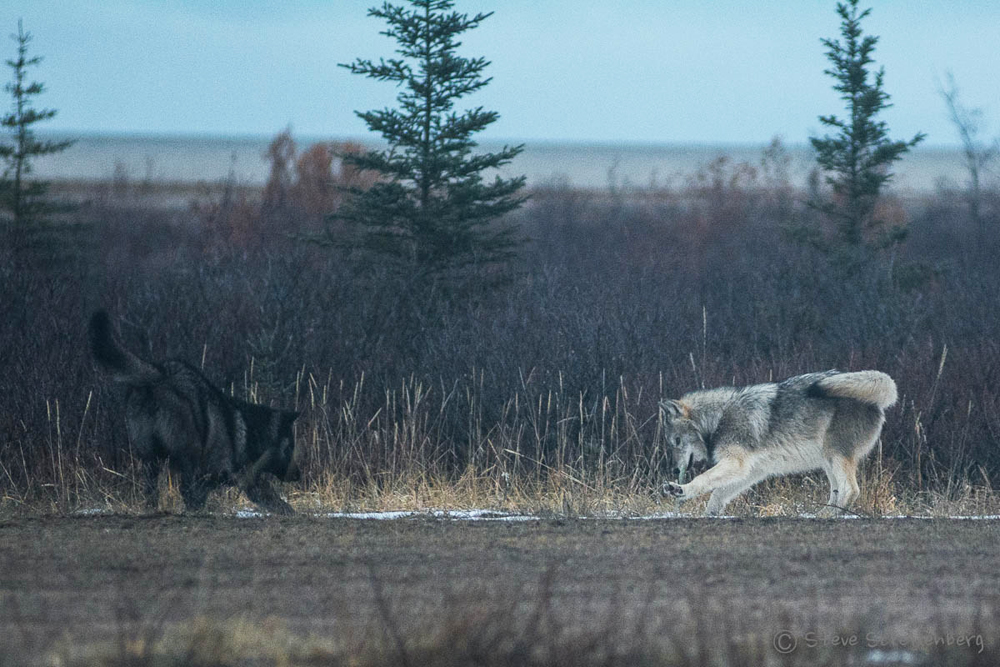
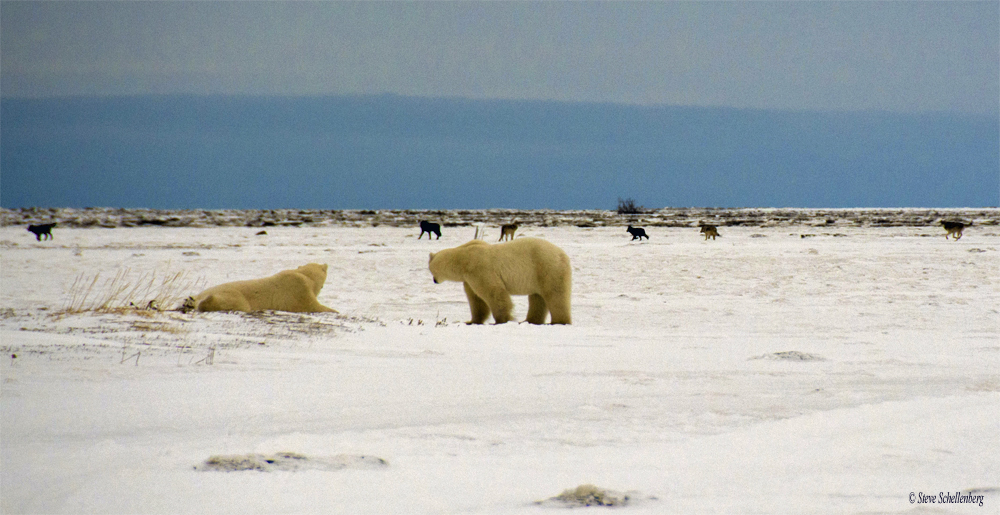
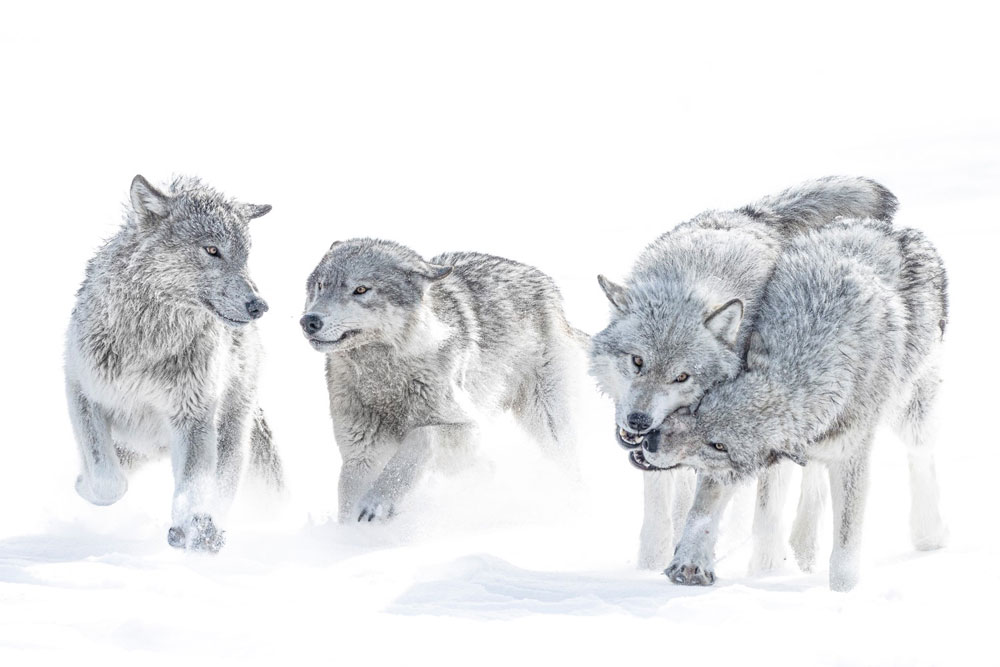
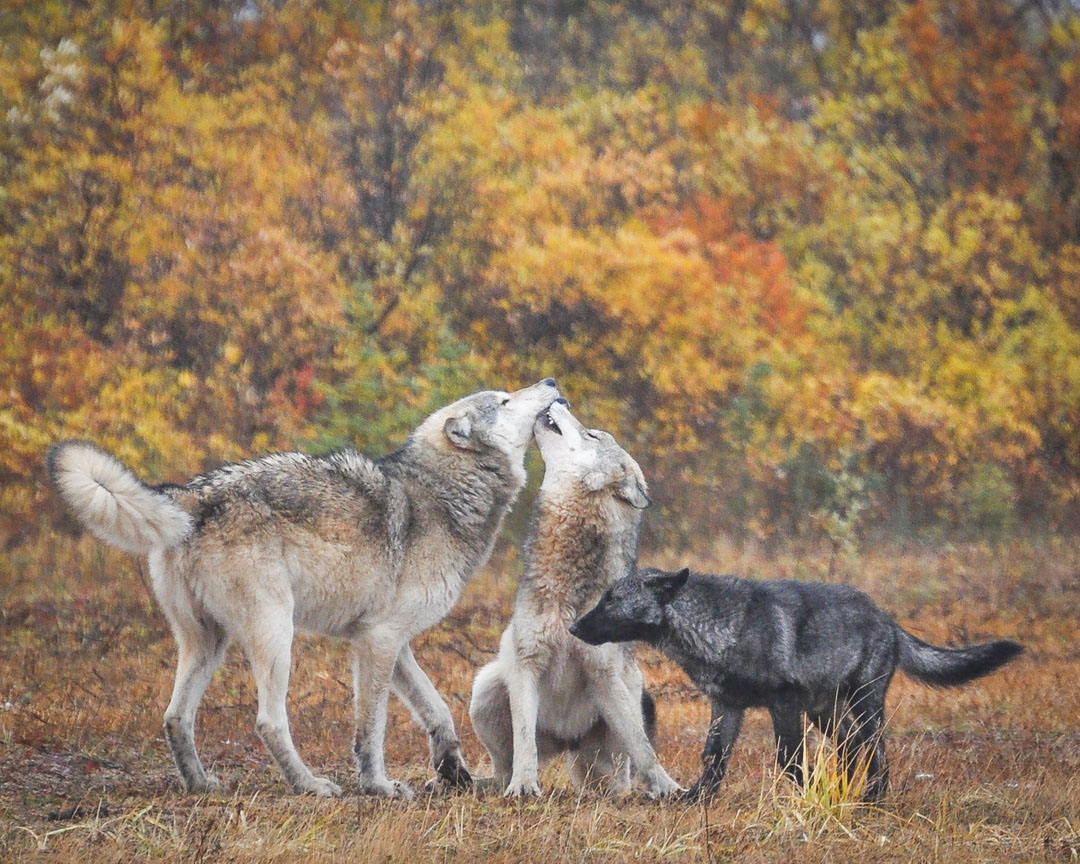
Kaski, the most curious of the wolves, spent time around Nanuk Polar Bear Lodge and ventured far to the east. She had several relaxed, close encounters with guides and guests while traveling on her own. The other black wolf and the two gray wolves, kept their distance but were observed playing together out on the frozen tundra. It’s possible they are litter mates.
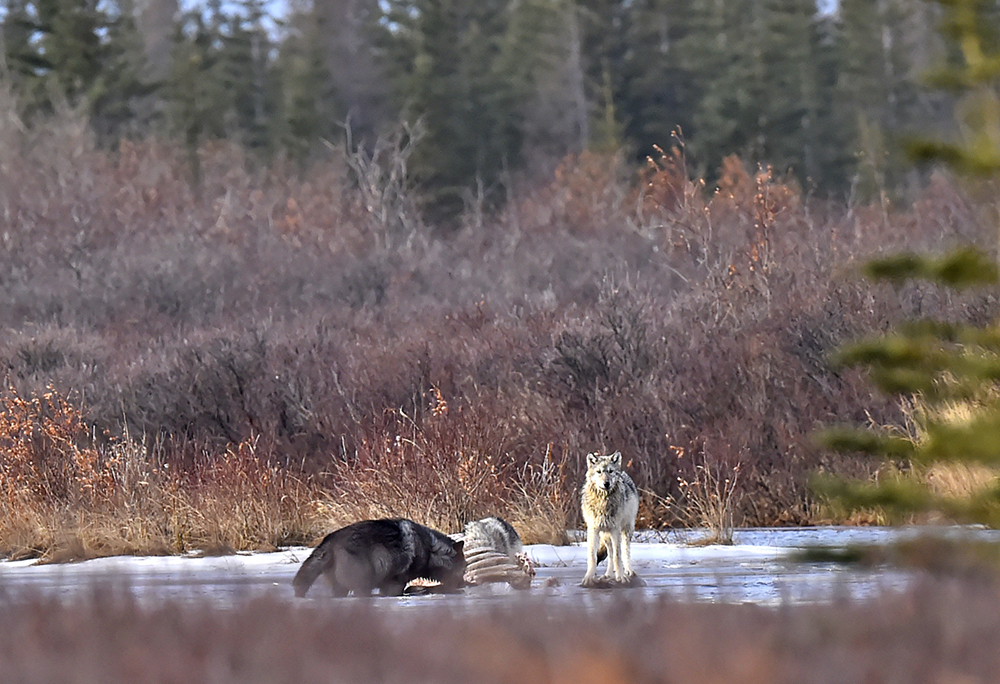
One of the more exciting wildlife viewing opportunities came with the discovery of a kill site. Near the Fourteens, a series of small creeks, the wolves killed a cow moose. After observing the pack on the kill, guides and guests returned to find a young wolverine busy caching bits of the kill.
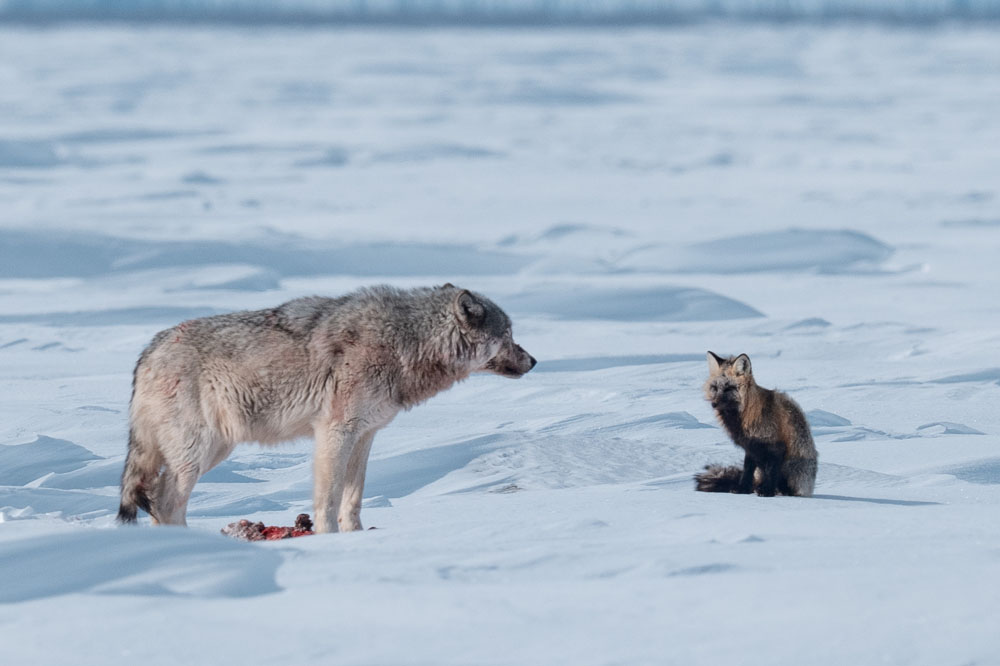
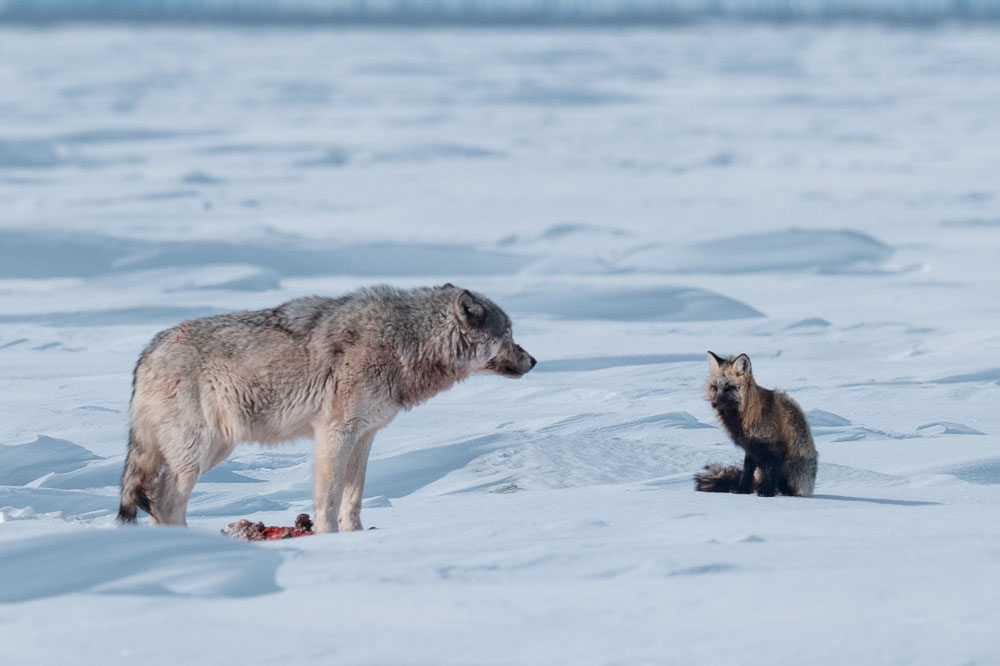
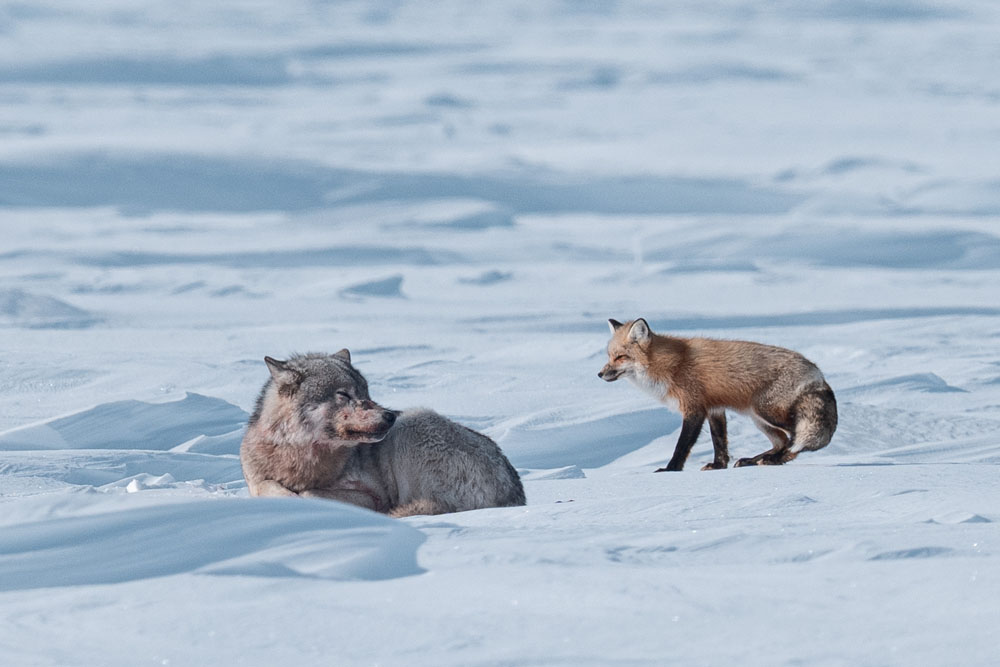
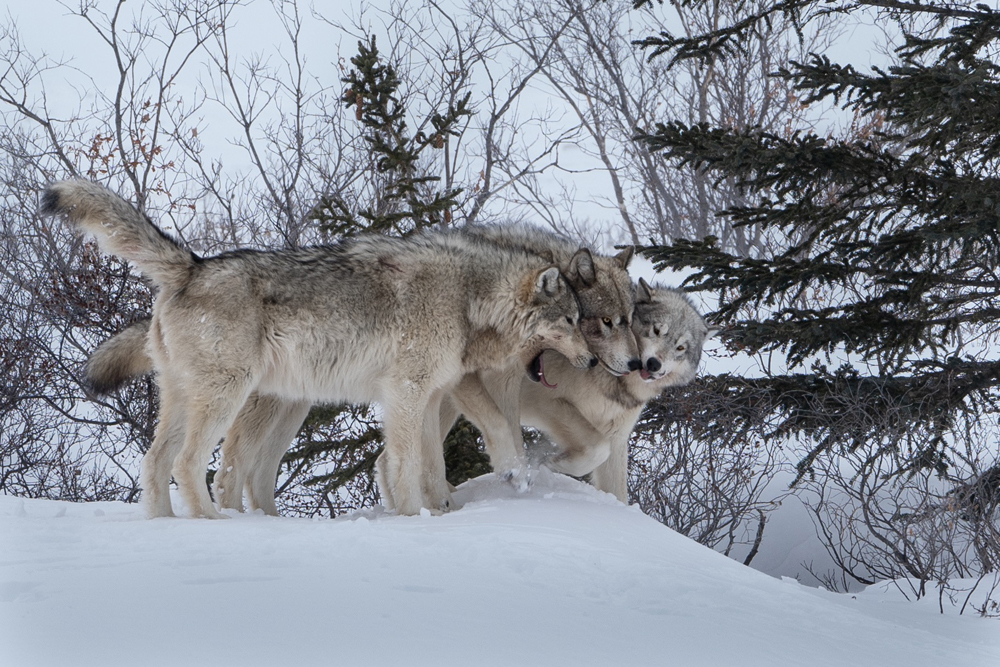
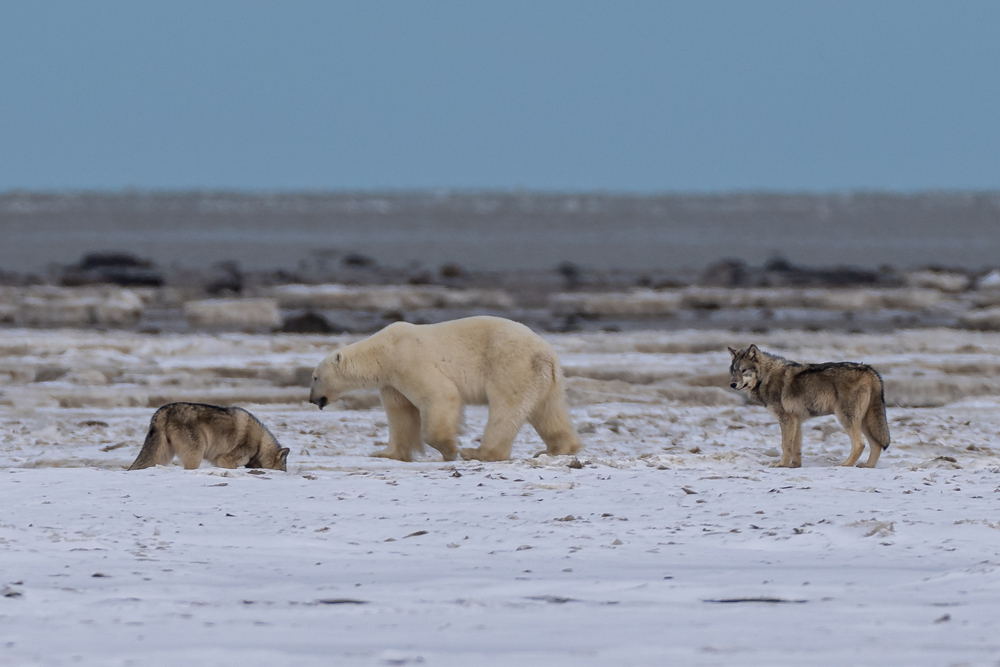
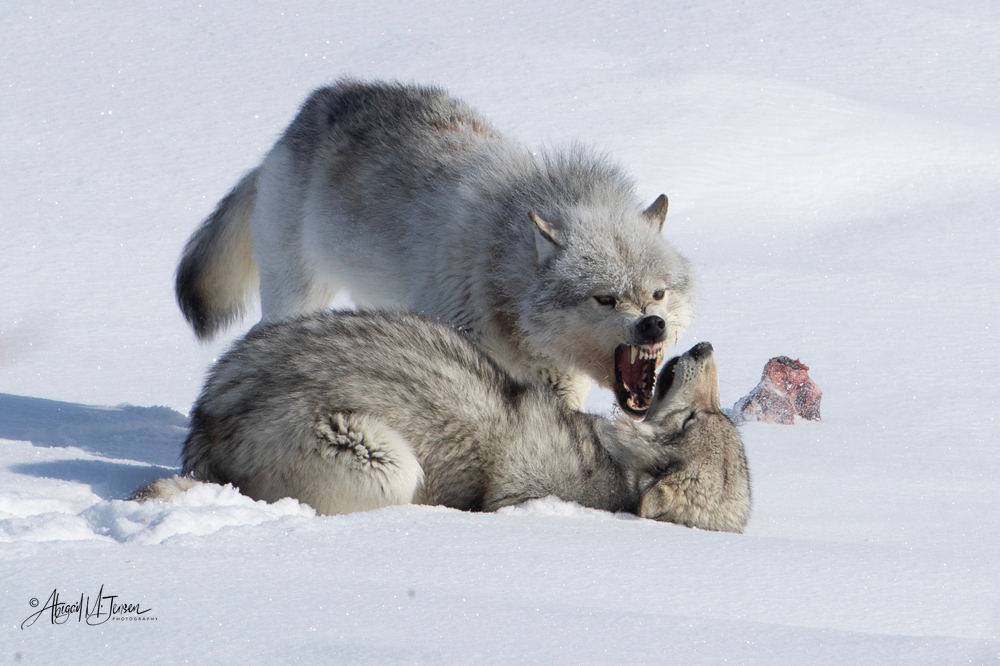
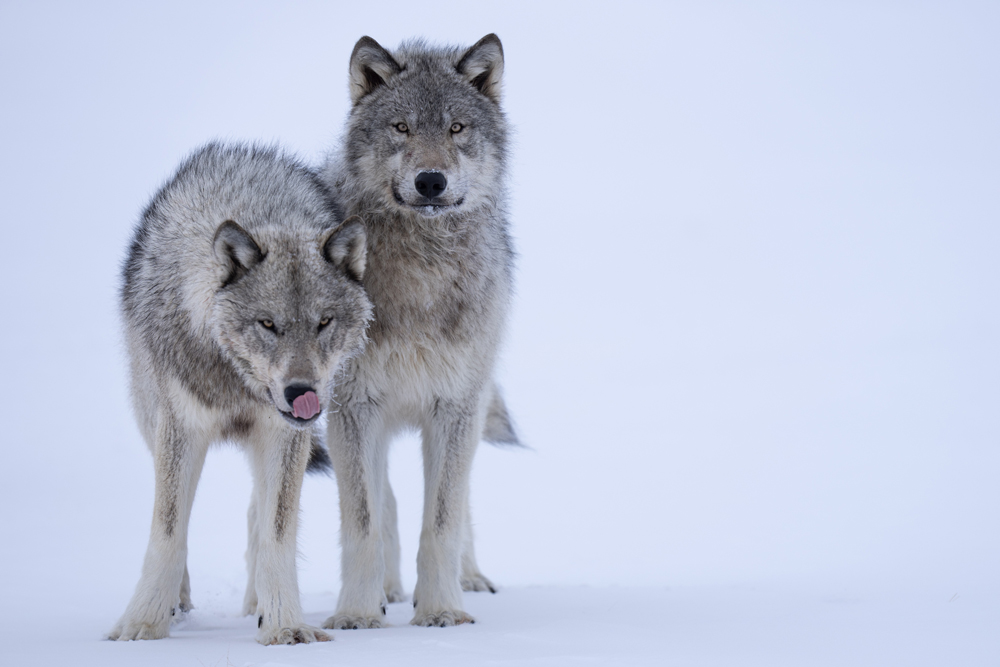
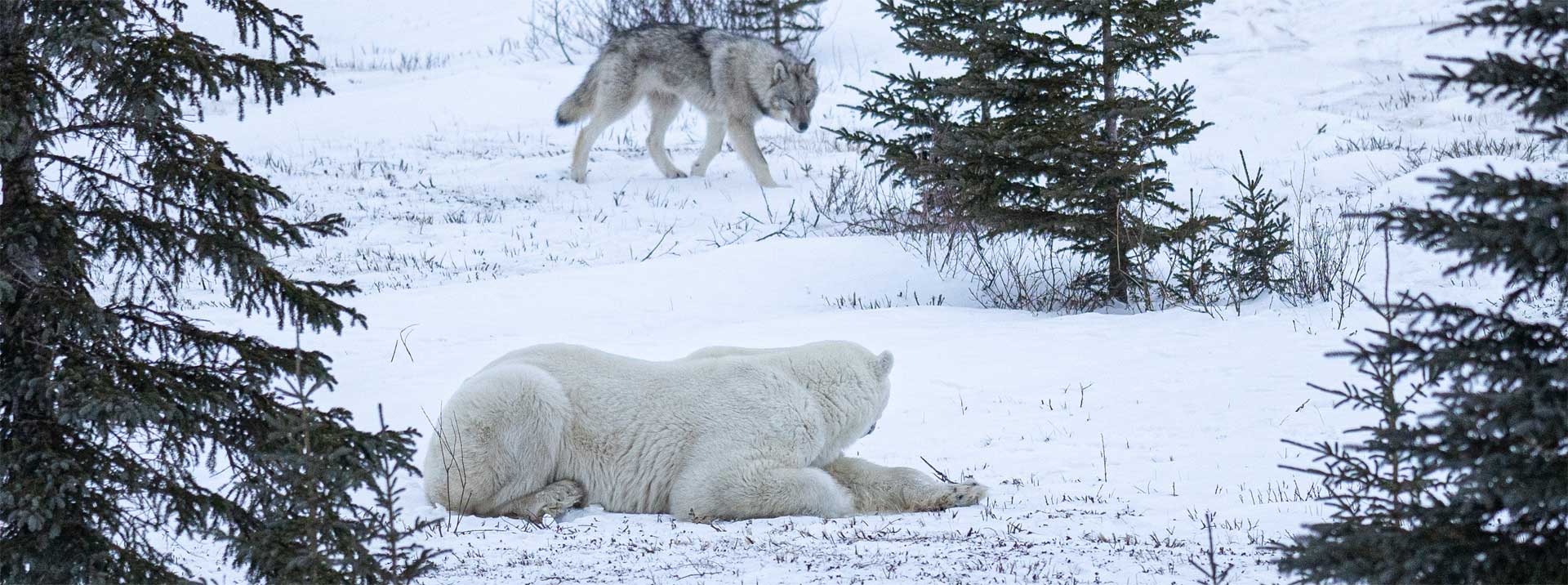
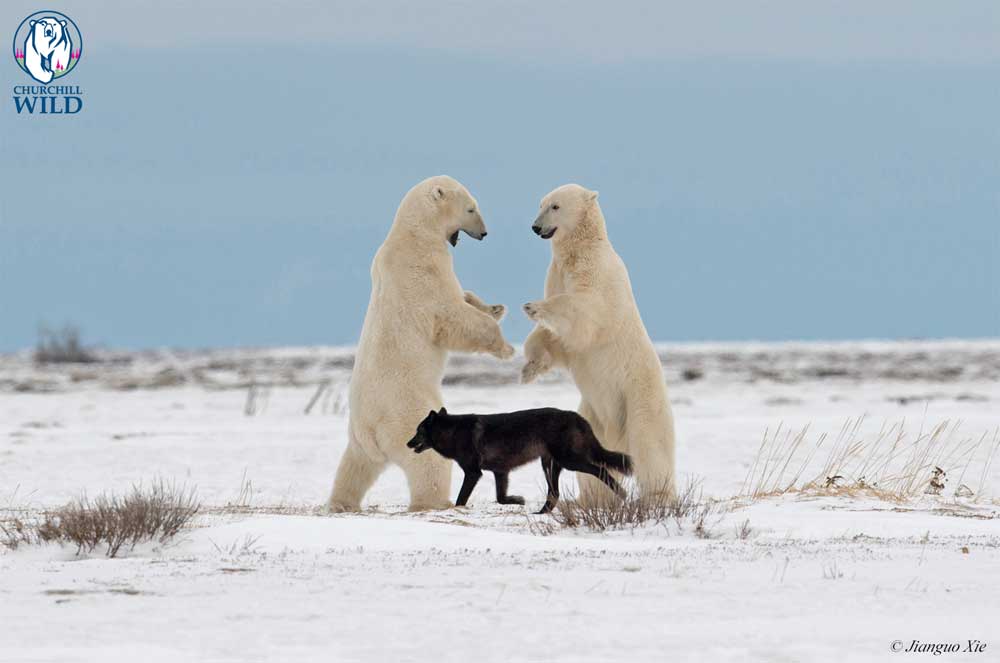
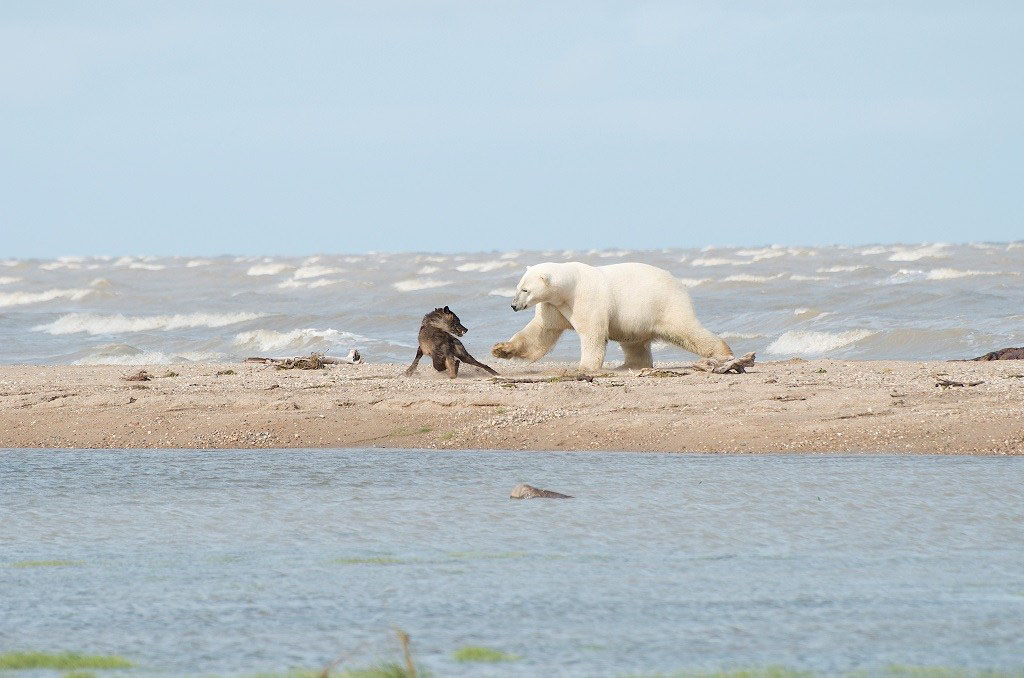
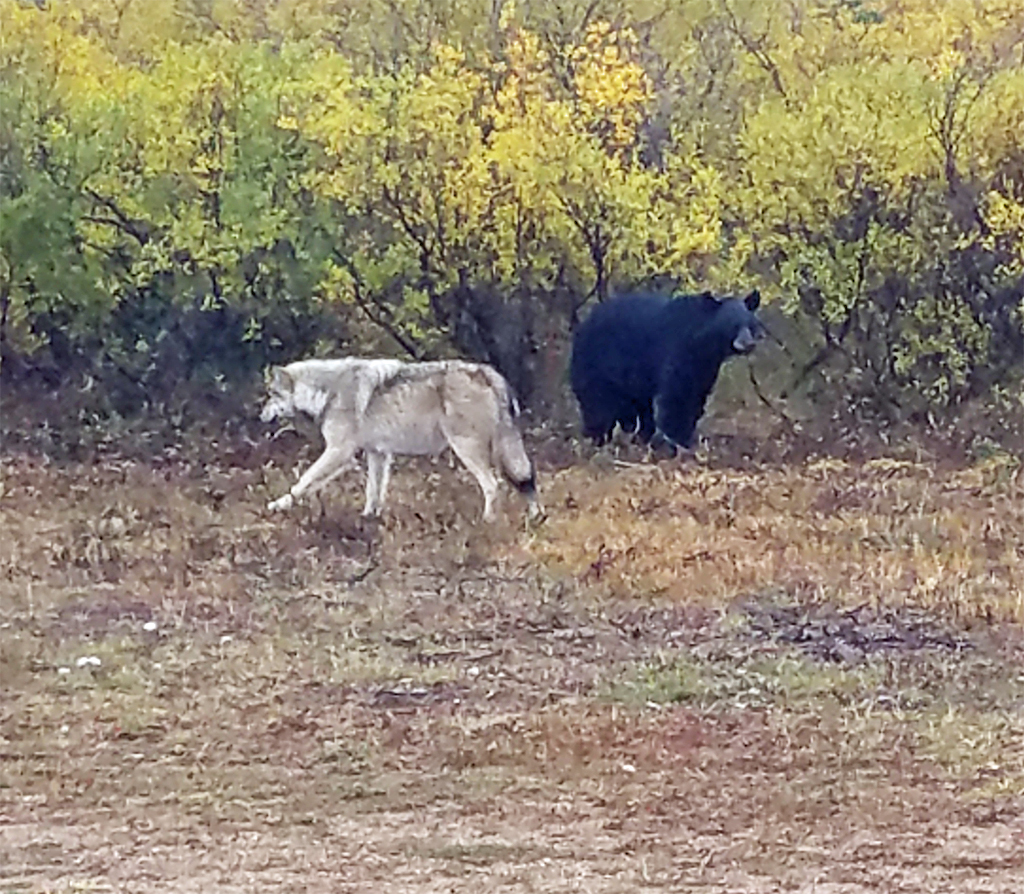
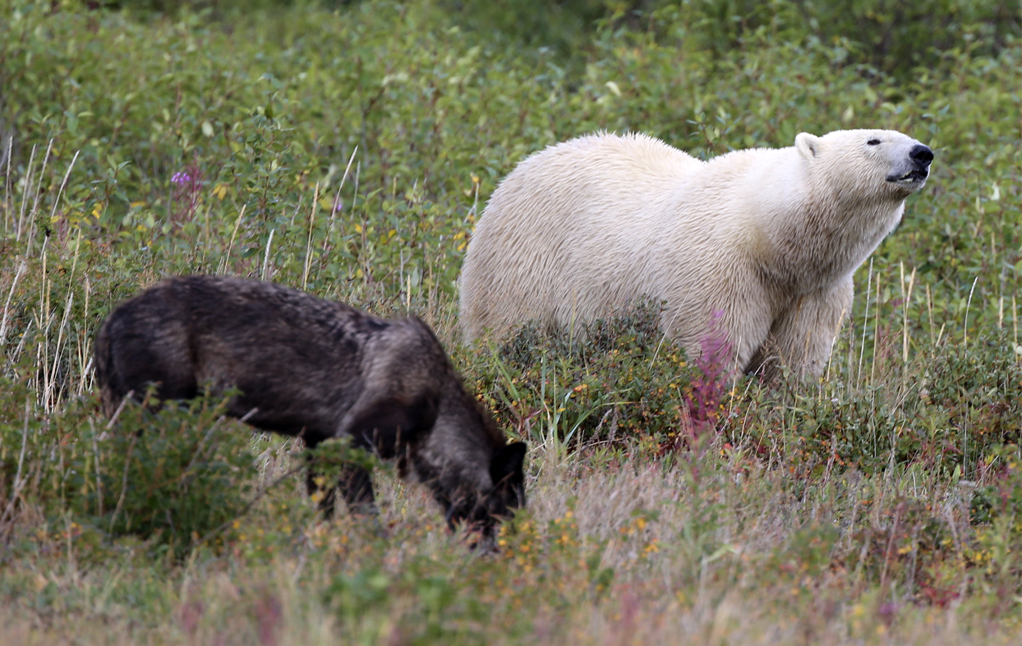
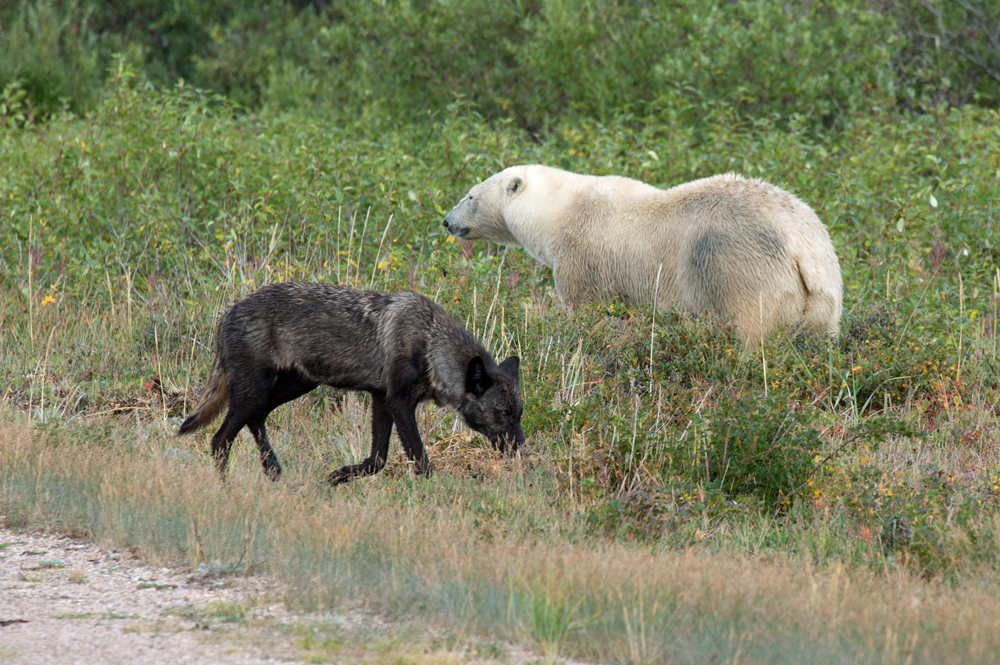
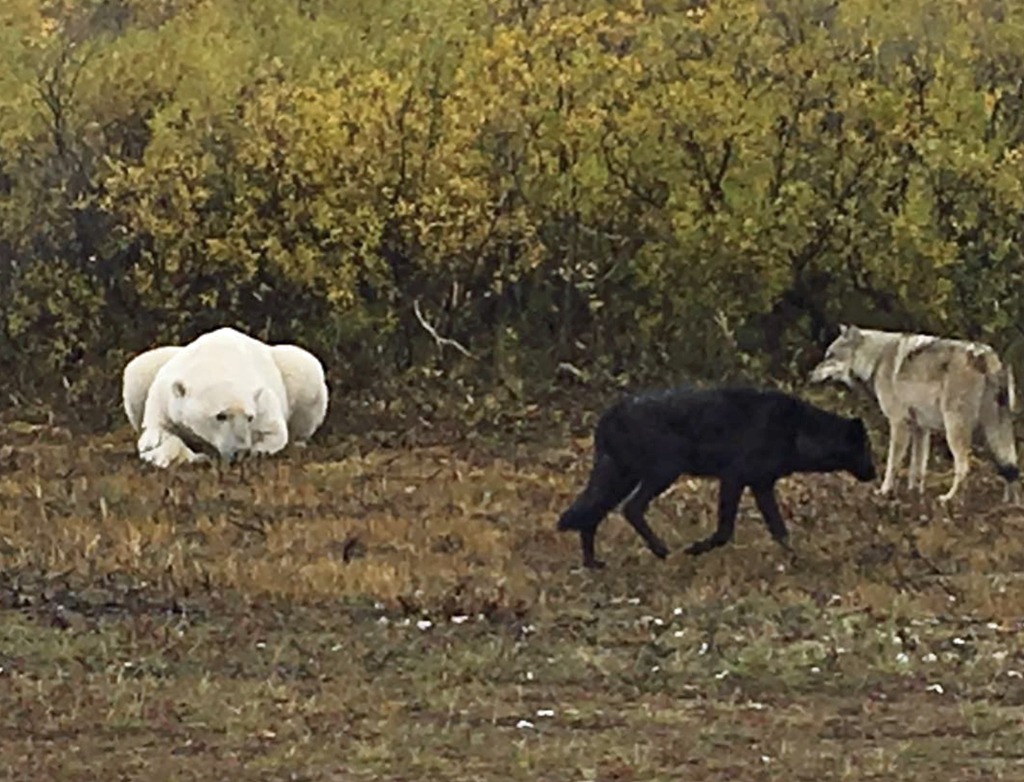
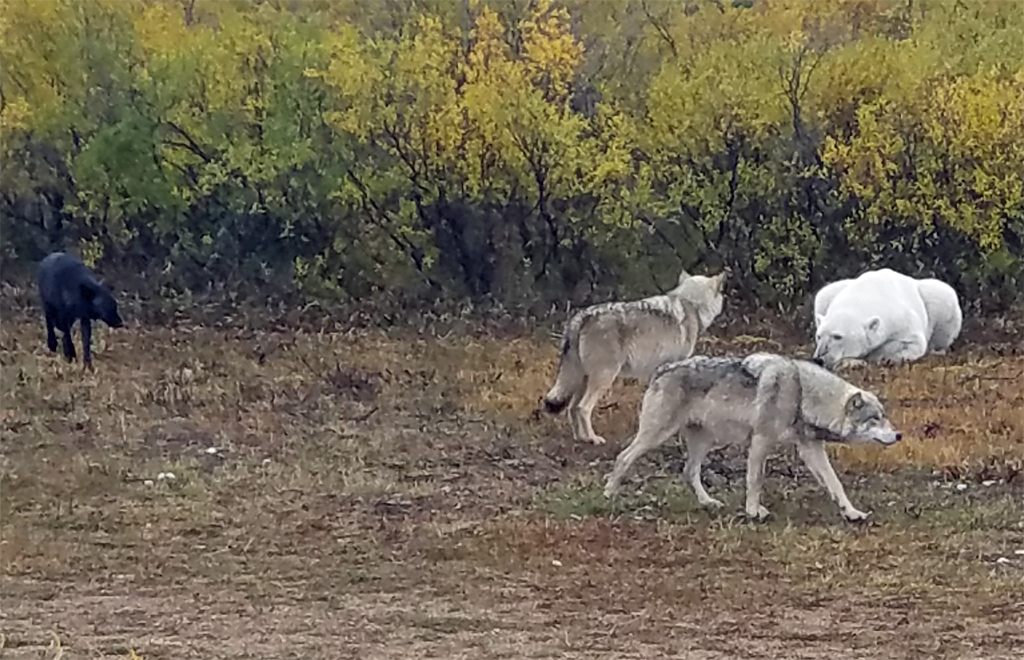
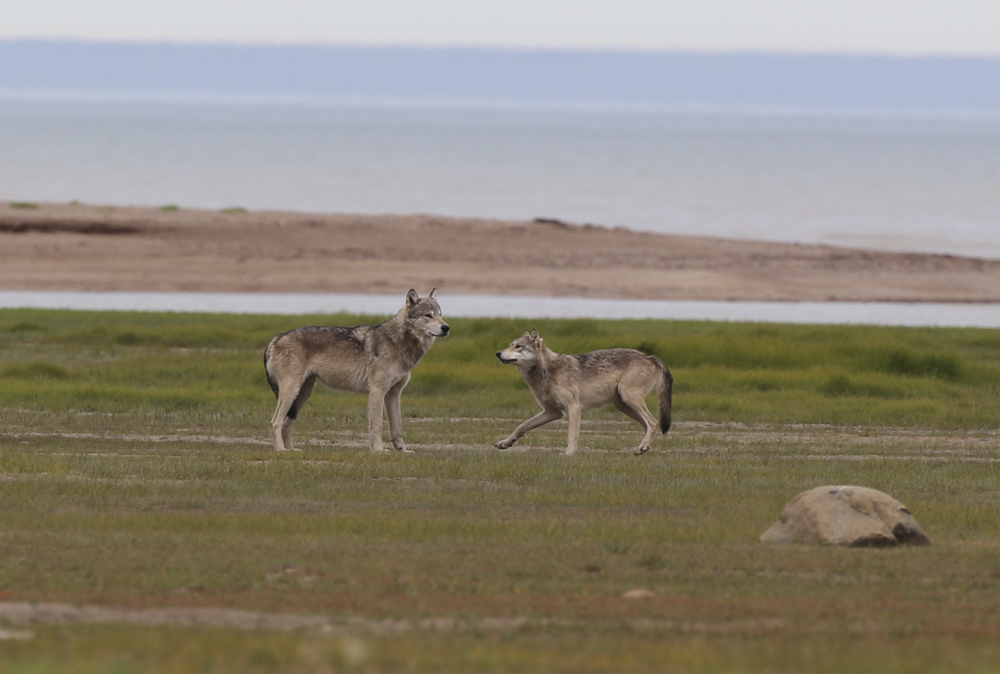
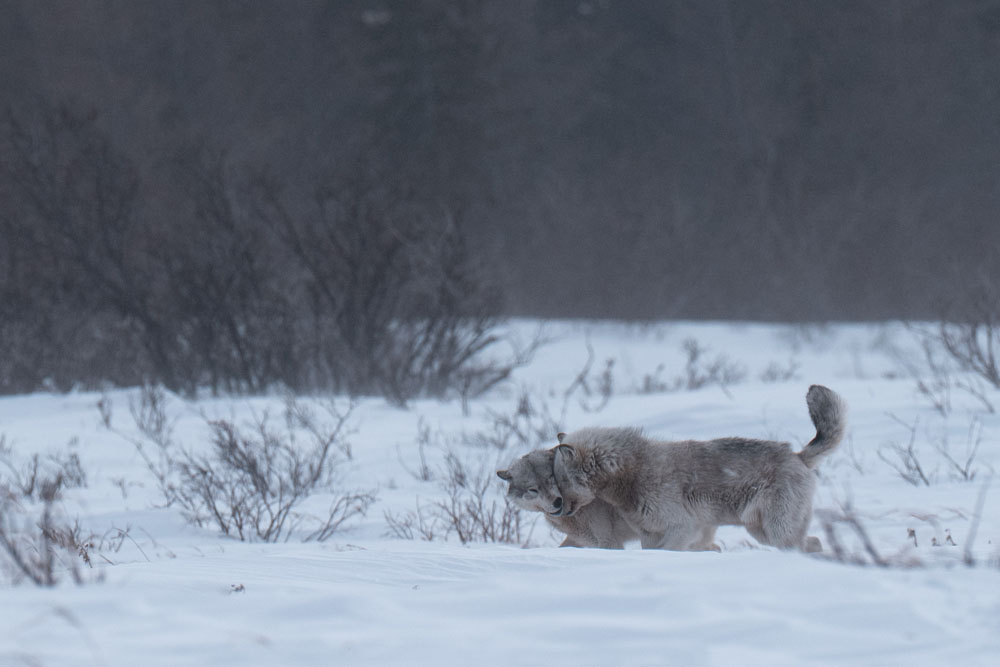
Faceoff at Nanuk Polar Bear Lodge. Fabienne Jansen / ArcticWild.net photo.
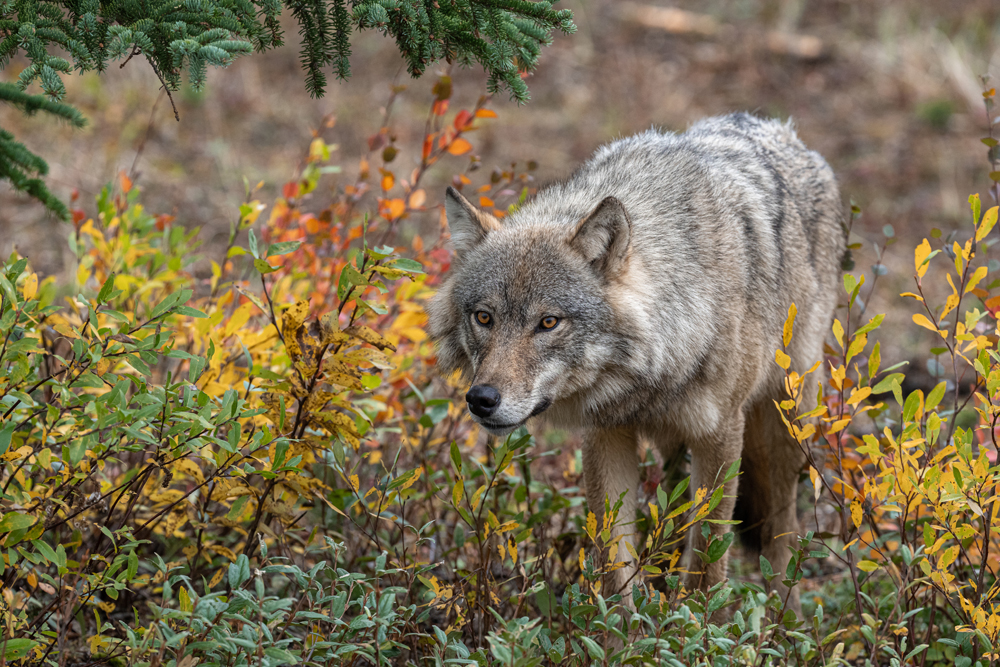
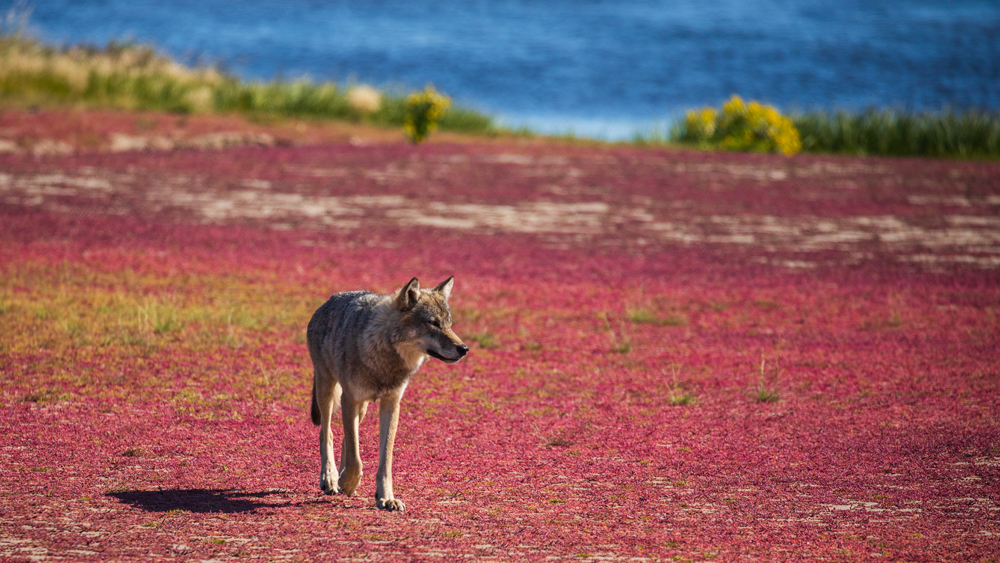
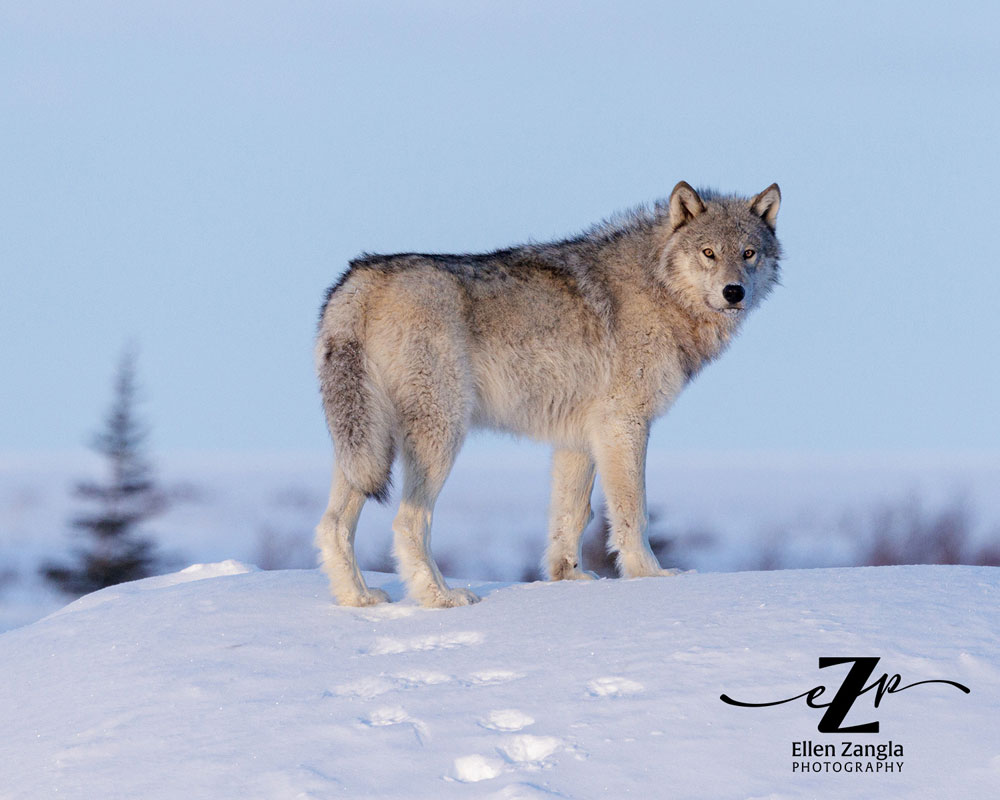
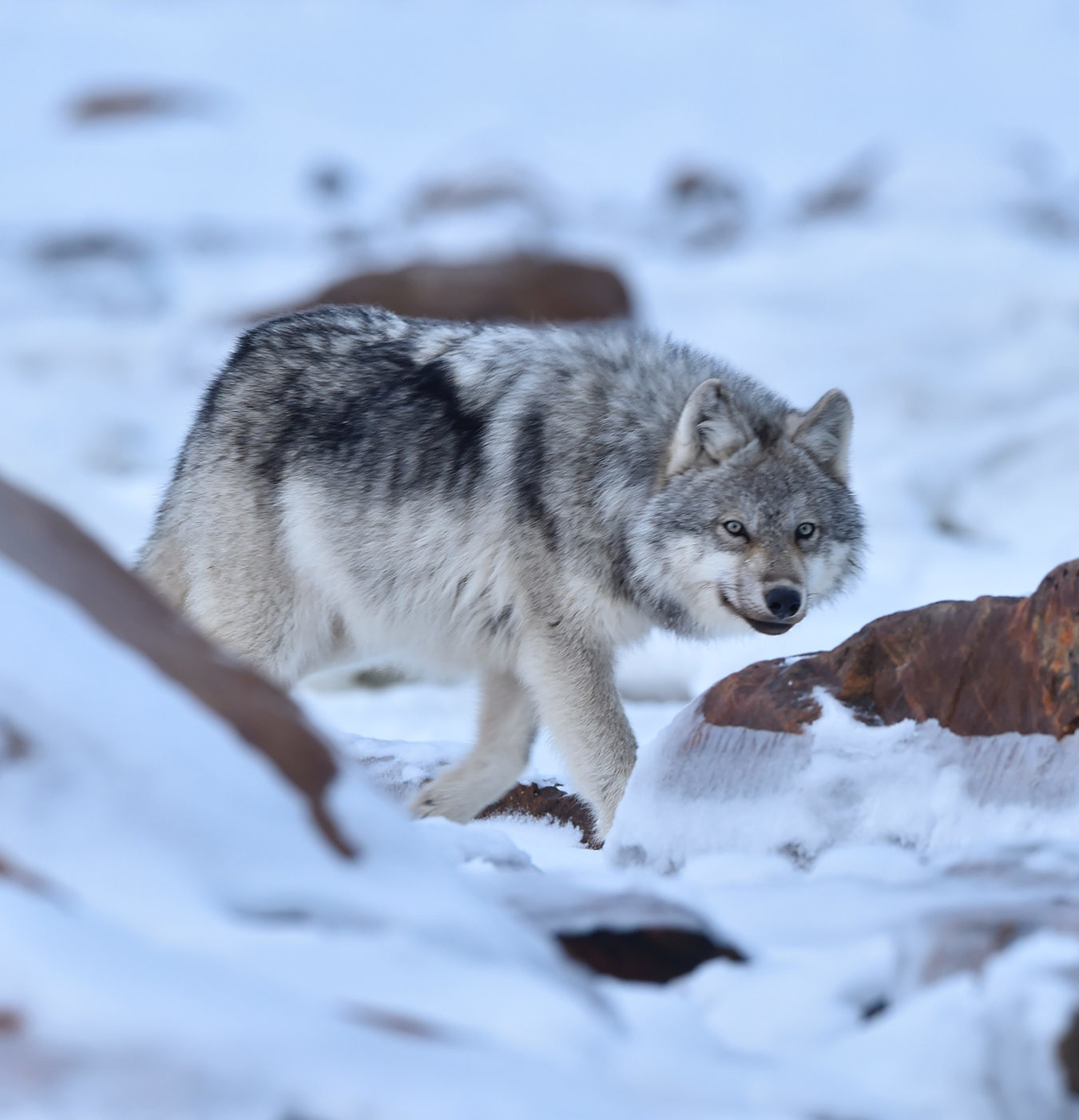
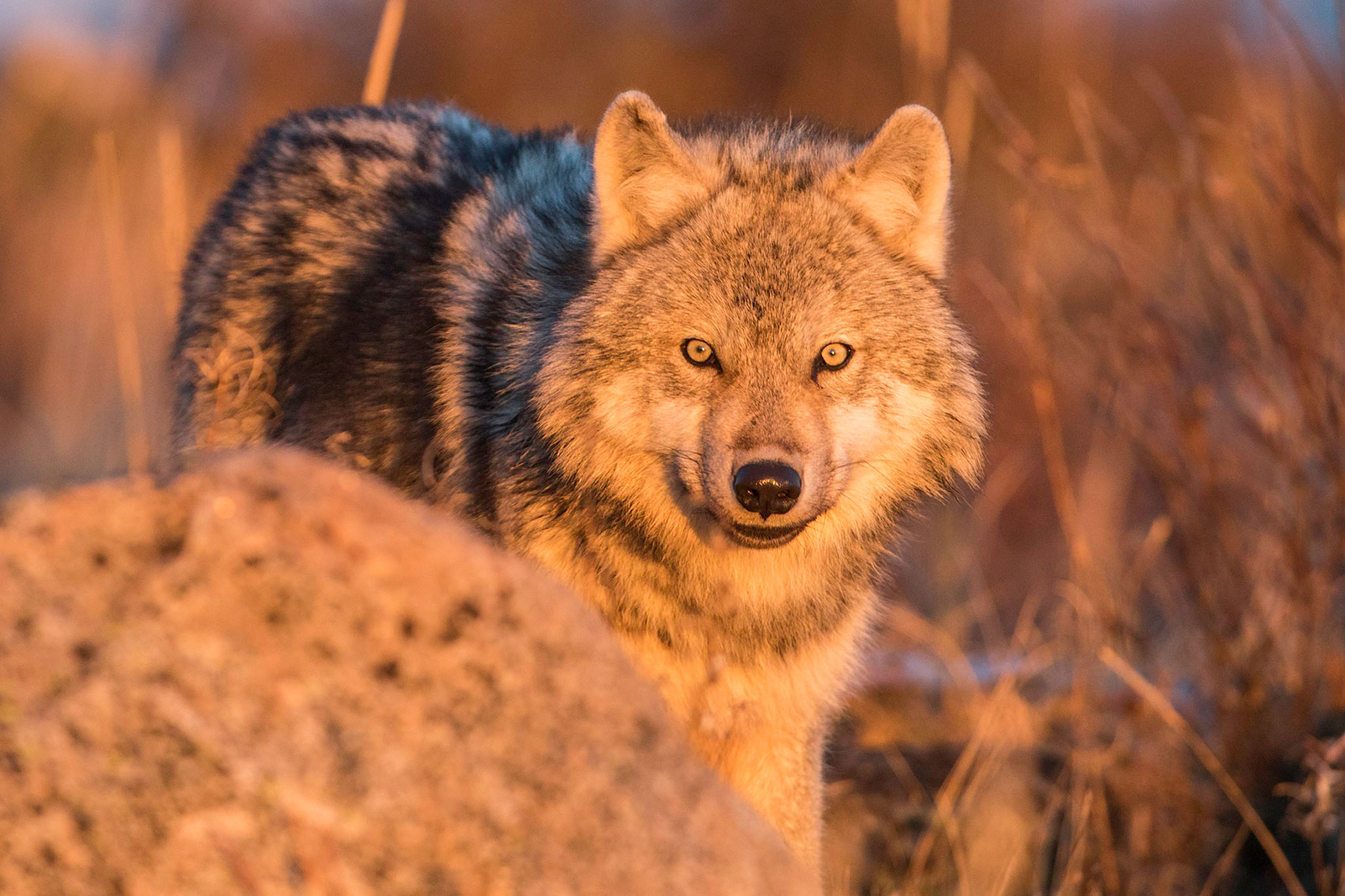
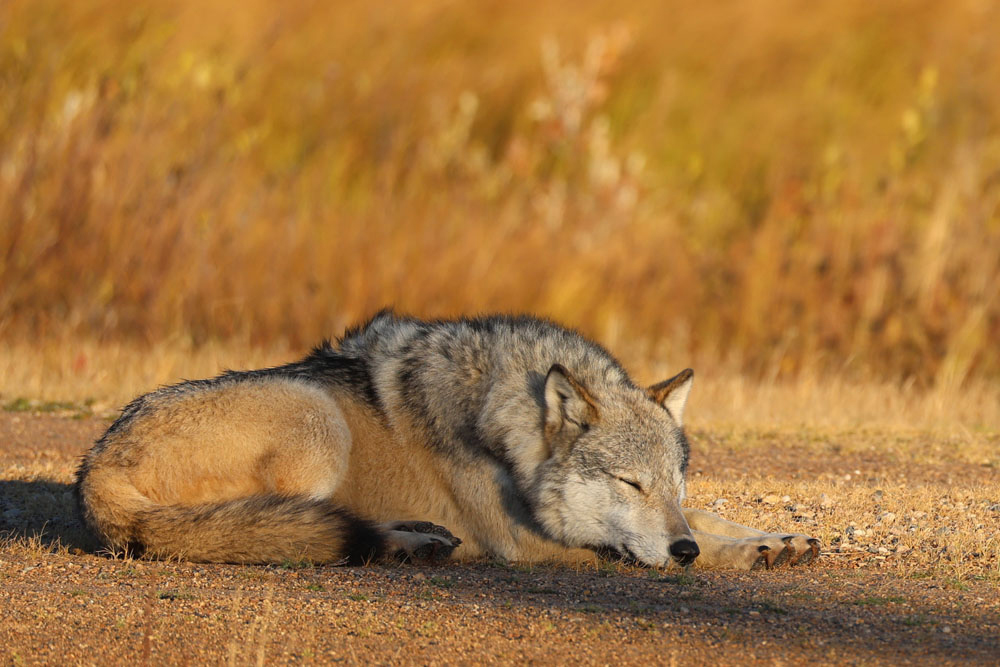
The wolves ranging along the Kaska Coast where Nanuk Polar Bear Lodge is located are gray wolves belonging to the southern gray wolf subspecies (C. l. nubilus). Nubilus is Latin for “cloudy,” a nod at the beautiful shades of the wolves’ coats from coal-black to snow-white and everything in between.
Similar to the wolves of North Knife Lake Lodge, these wolves fall under the “boreal forest wolf” ecotype, tending to range within fixed territories (rather than follow the caribou migrations). The wolves at Seal River Heritage Lodge, Dymond Lake Ecolodge and the Churchill Wild Tundra Camp belong to the “tundra/taiga” wolf ecotype.
The wolves at Nanuk Polar Bear Lodge are larger than those found in places like Yellowstone, and not surprisingly, they prey almost exclusively on big game: moose and caribou.
And during the spring when female polar bears are leading their newborn cubs from the forest dens to the sea ice, wolves will harass and hunt them. This is unusual behavior not noted in other wolf populations.
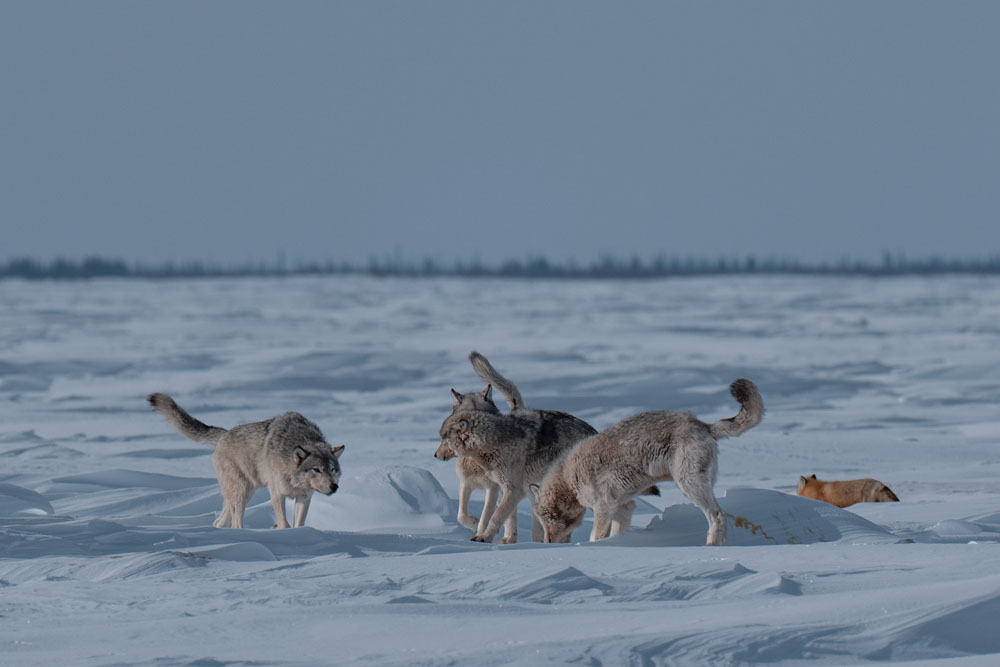
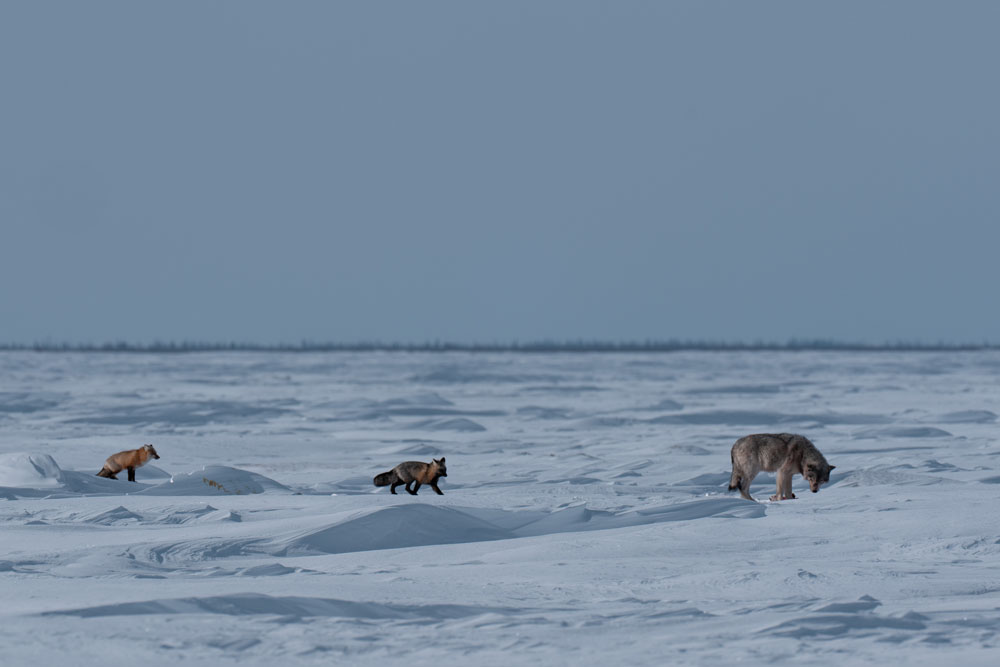
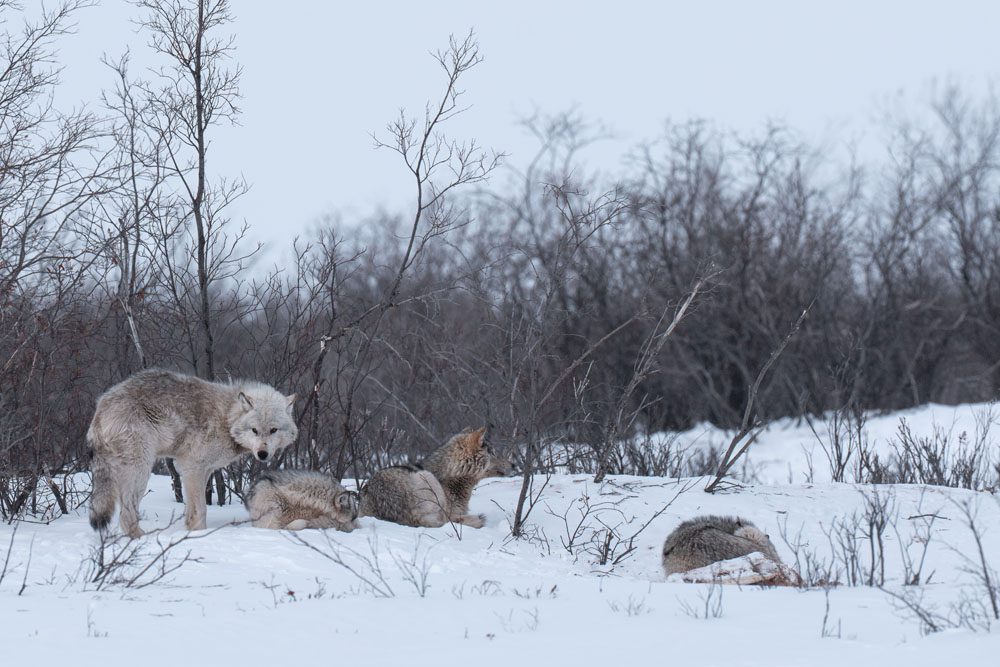
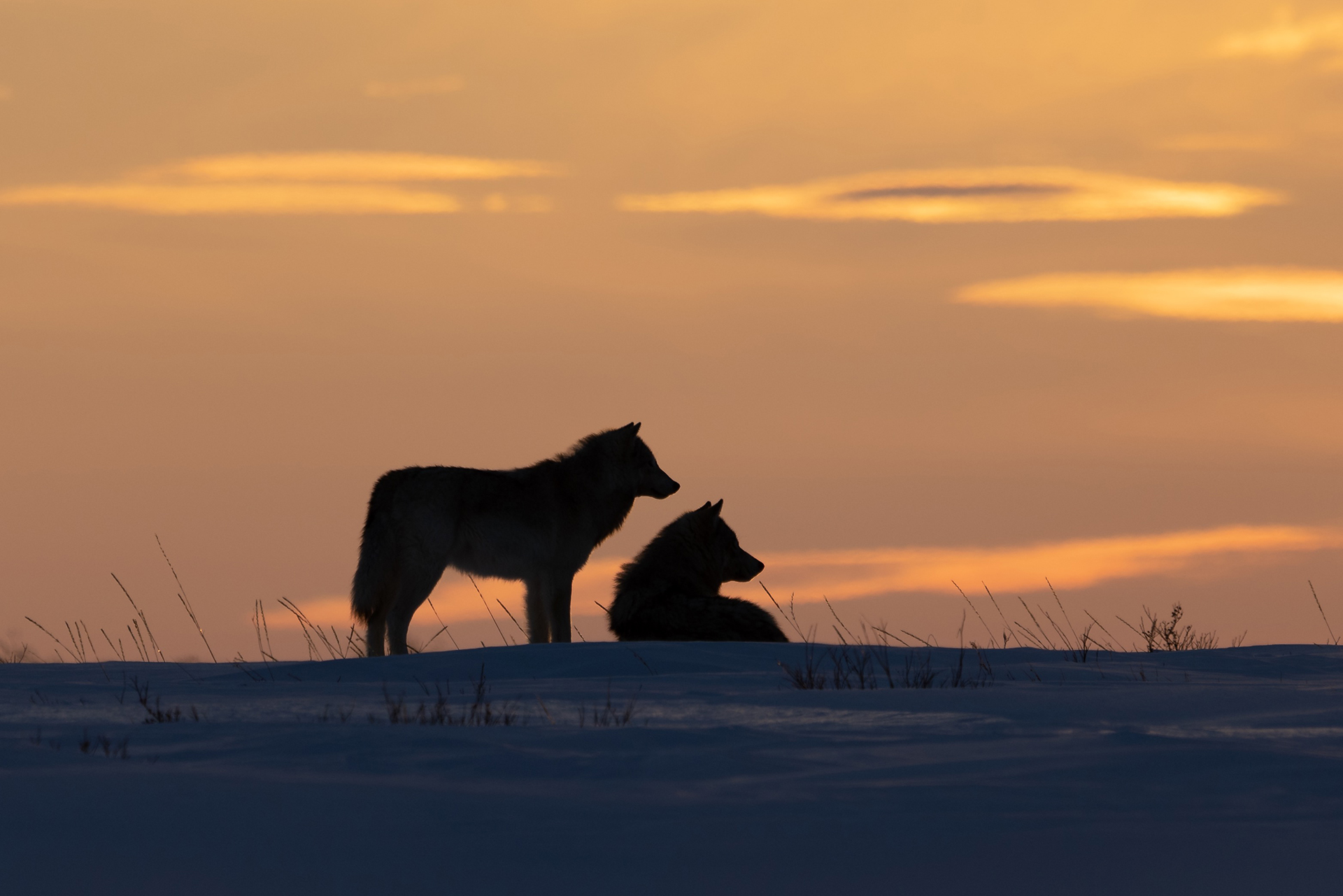
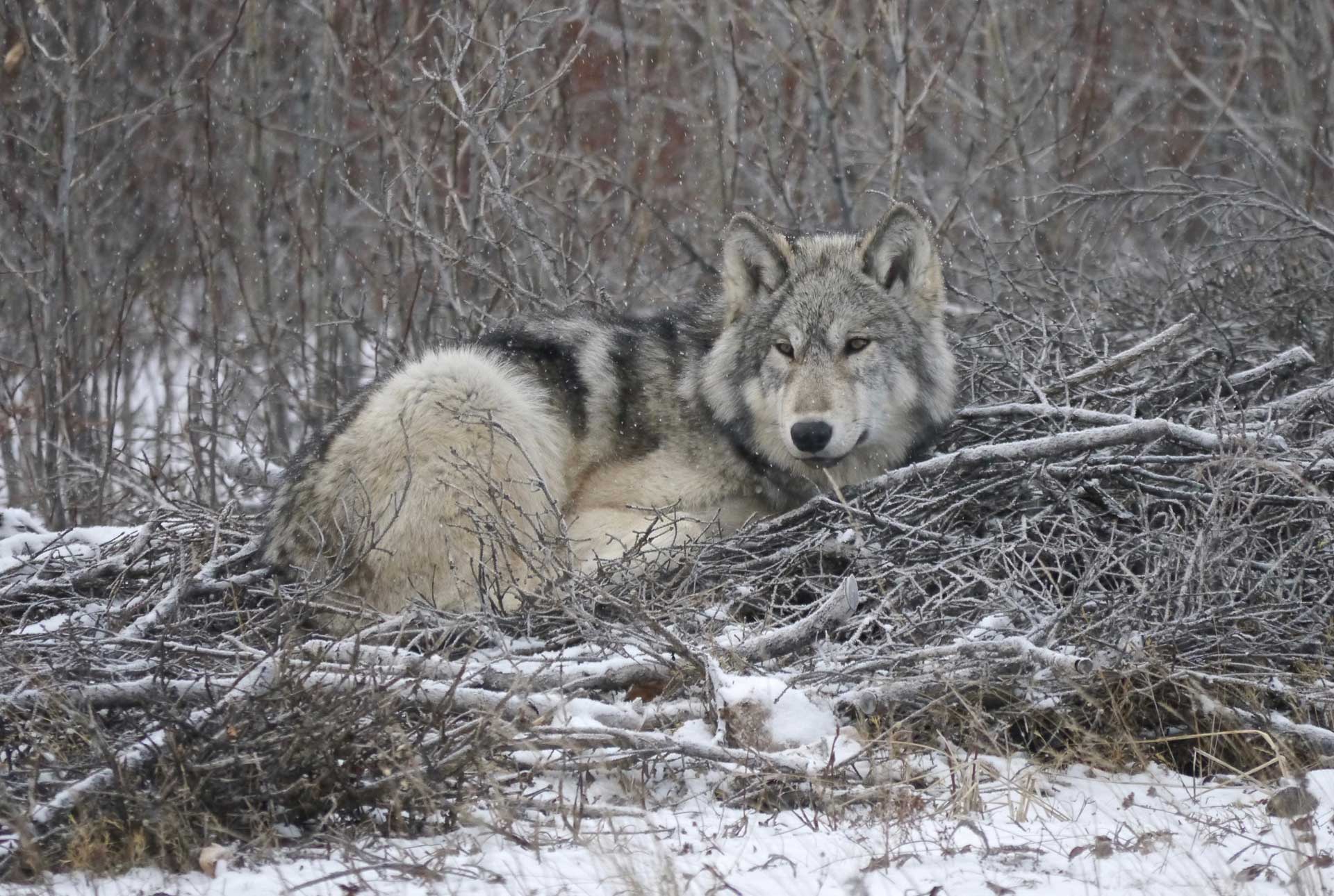
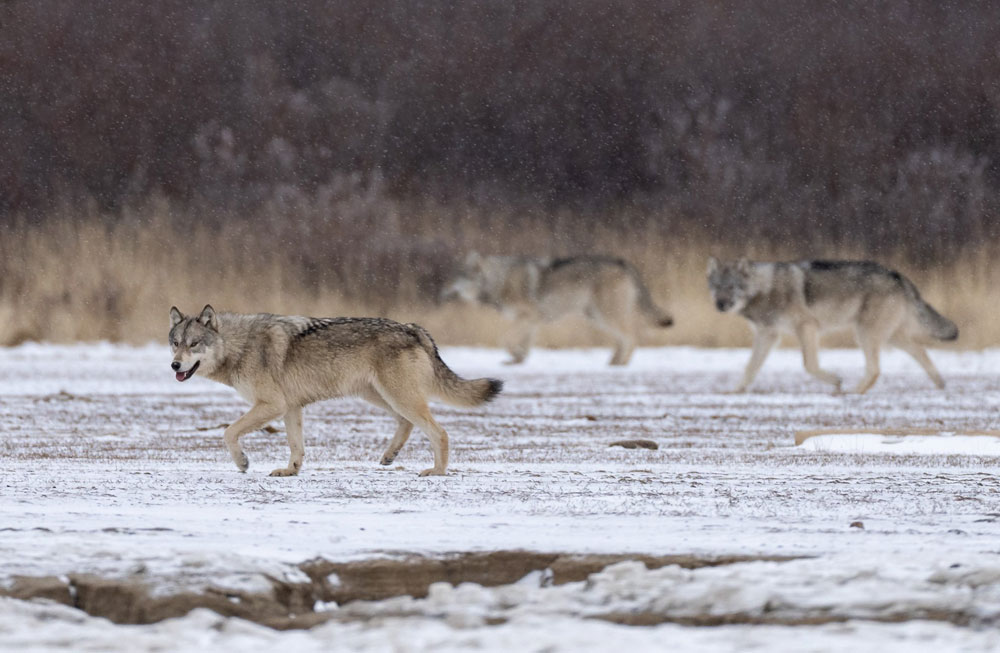
Opoyastin pack at Nanuk Polar Bear Lodge. Christoph Jansen / ArcticWild.net photo.
The best information we have about the natural history, biology and behavior of these wolves comes from the traditional knowledge of York Factory and York Landing Cree. From this knowledge and local observations, it appears there are two wolf packs in the immediate area of Nanuk Polar Bear Lodge. According to guide Albert Saunders, Nanuk Polar Bear Lodge sits at a border between two wolf pack territories, what biologists call a “buffer.”
Because these wolves have exclusive territories which they regularly patrol and mark and defend, they frequently use geographic features like rivers — such as the nearby Mistikokan — as territorial boundaries.
Churchill Wild co-owner and founder Mike Reimer has seen packs with as many as 14 individuals at Nanuk. The wolf packs around Nanuk have both lighter coats with gray and tawny brown fur, and darker, sometimes all-black, coats.
Mike believes there may be as many as 10 packs that have territories along the Kaska Coast and they have a vast uninhabited wilderness to roam through that includes Nanuk Polar Bear Lodge.
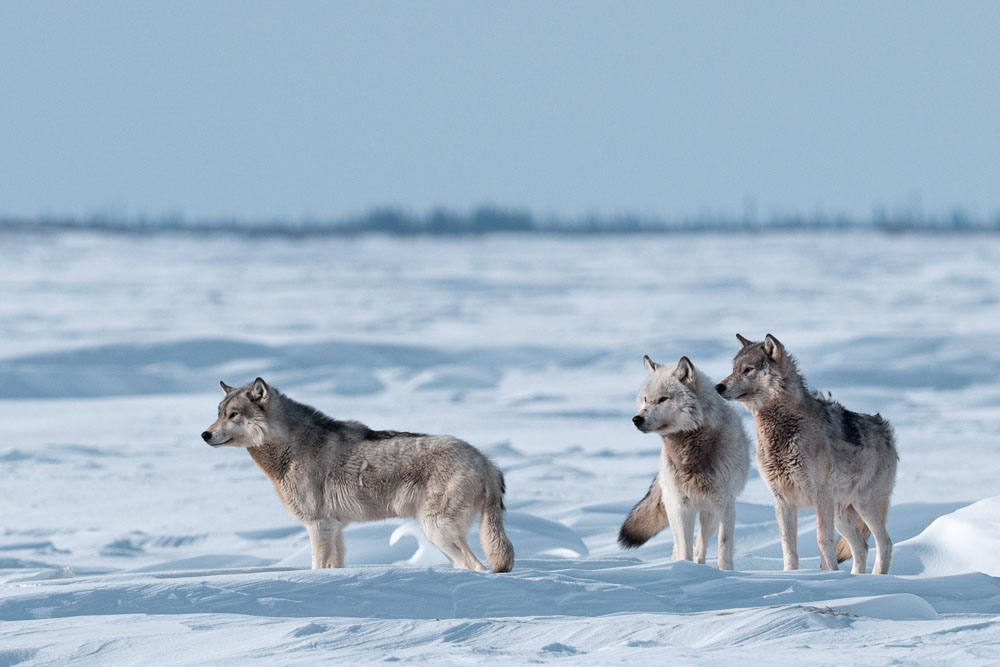
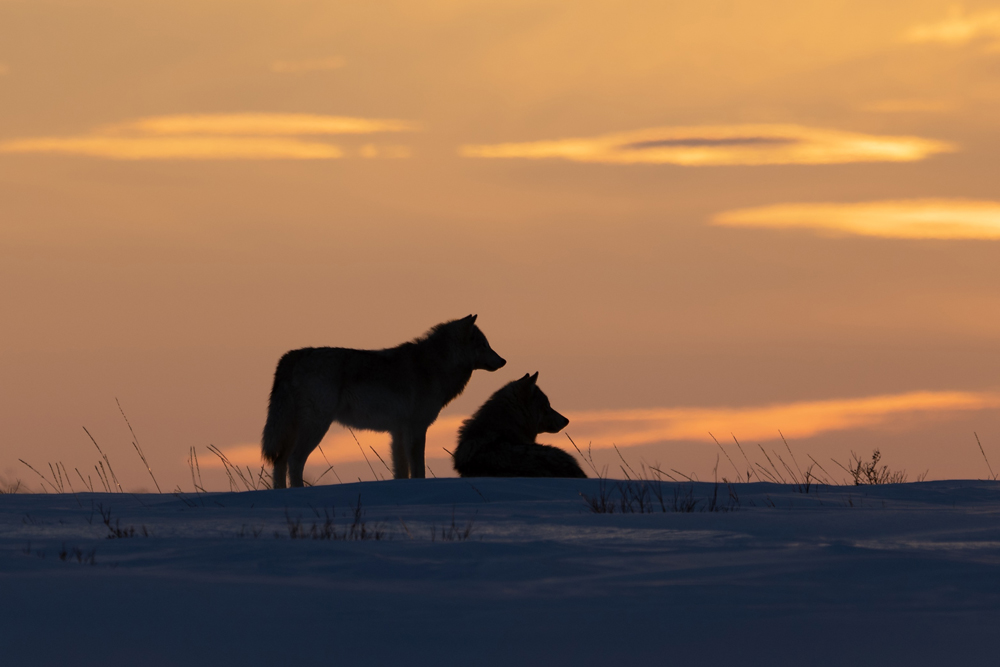
Opoyastin pup guardians at Nanuk this spring. Fabienne Jansen / ArcticWild.net photo.
Located 230 km southeast of Churchill in the heart of the Kaskatamagan Wildlife Management Area between the York Factory National Historic Site at the mouth of the Hayes River to the west, and the Ontario border 200 km to the east, Nanuk Polar Bear Lodge is remote from any permanent settlement. Apart from Churchill, the nearest communities are Fort Severn, 247 km further east in Ontario, and to the southwest, Shamattawa (142 km), and Sundance, (165 km).
The area encompassed within these points is 110,000 km² (even larger if winter sea ice is included), 11 times the size of Yellowstone National Park and nearly twice the size of Switzerland, but two of the packs have decided to make the area around Nanuk their home.
The Kaska Coast is an uninhabited sweep of coastal tundra and sand dunes that mantles the Hudson Bay Lowlands. The coastline is unusual in that it acts as a frontier between the sub-Arctic and Arctic. The lodge itself is tucked among the spruce and willow forests of the sub-Arctic, but walk a couple hundred metres to the north and you’re on the wide-open tundra and the endless sea ice of the Arctic.
In addition to being one of the largest polar bear denning areas in the world, and home to wolves, moose, and black bears, the area is also a critical wetland habitat for migrating birds and important habitat to the Pen Islands Caribou Herd. The caribou are unique, a possible subspecies (Caribou tarandus caribou) between the barren-ground and woodland caribou.
The wolves in this area have little fear of humans, likely because they have had no hunting or trapping pressure since the 1950s when York Factory closed. This lack of fear, combined with years of regular encounters with workers, guides and guests, has reinforced that humans are not a threat.
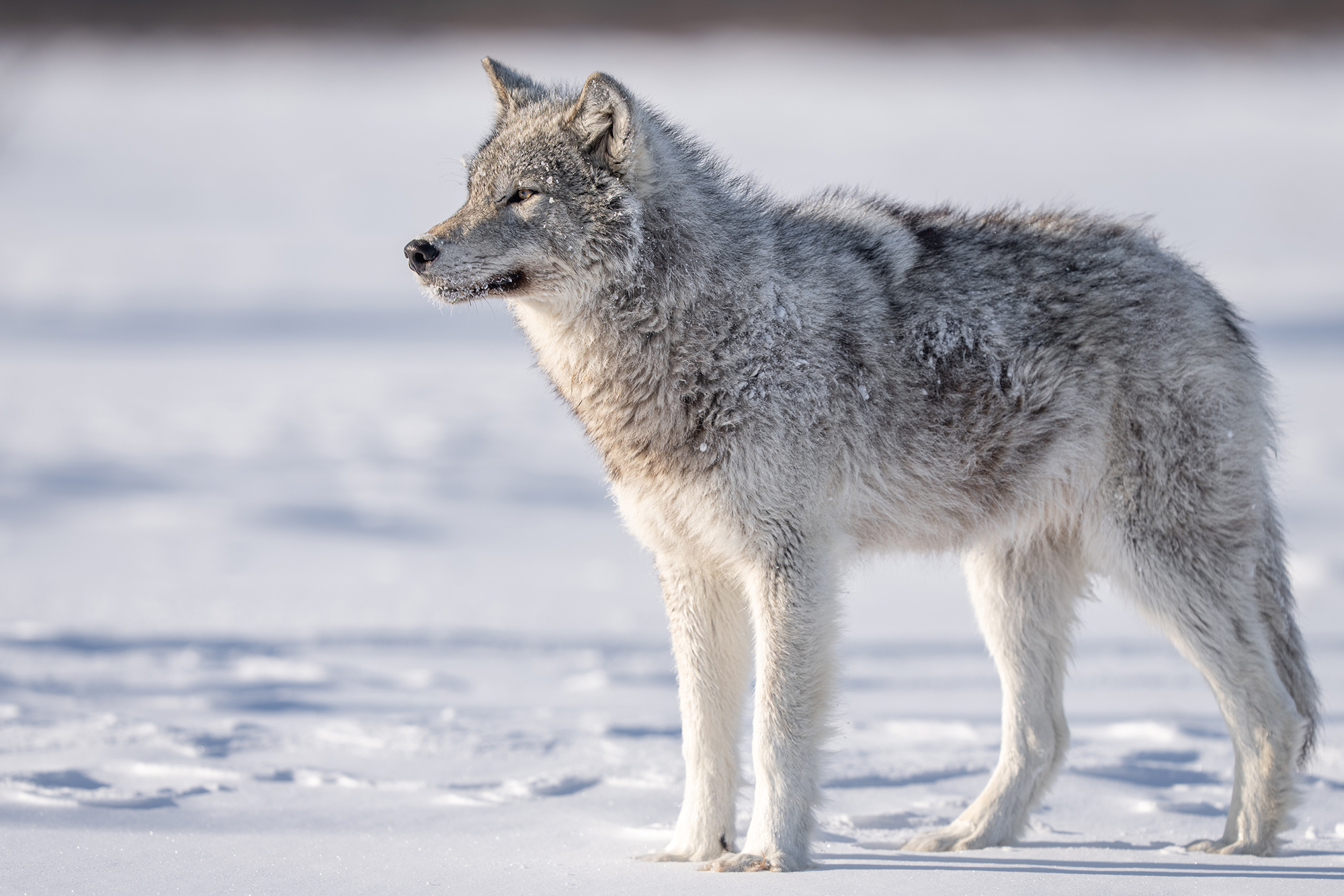
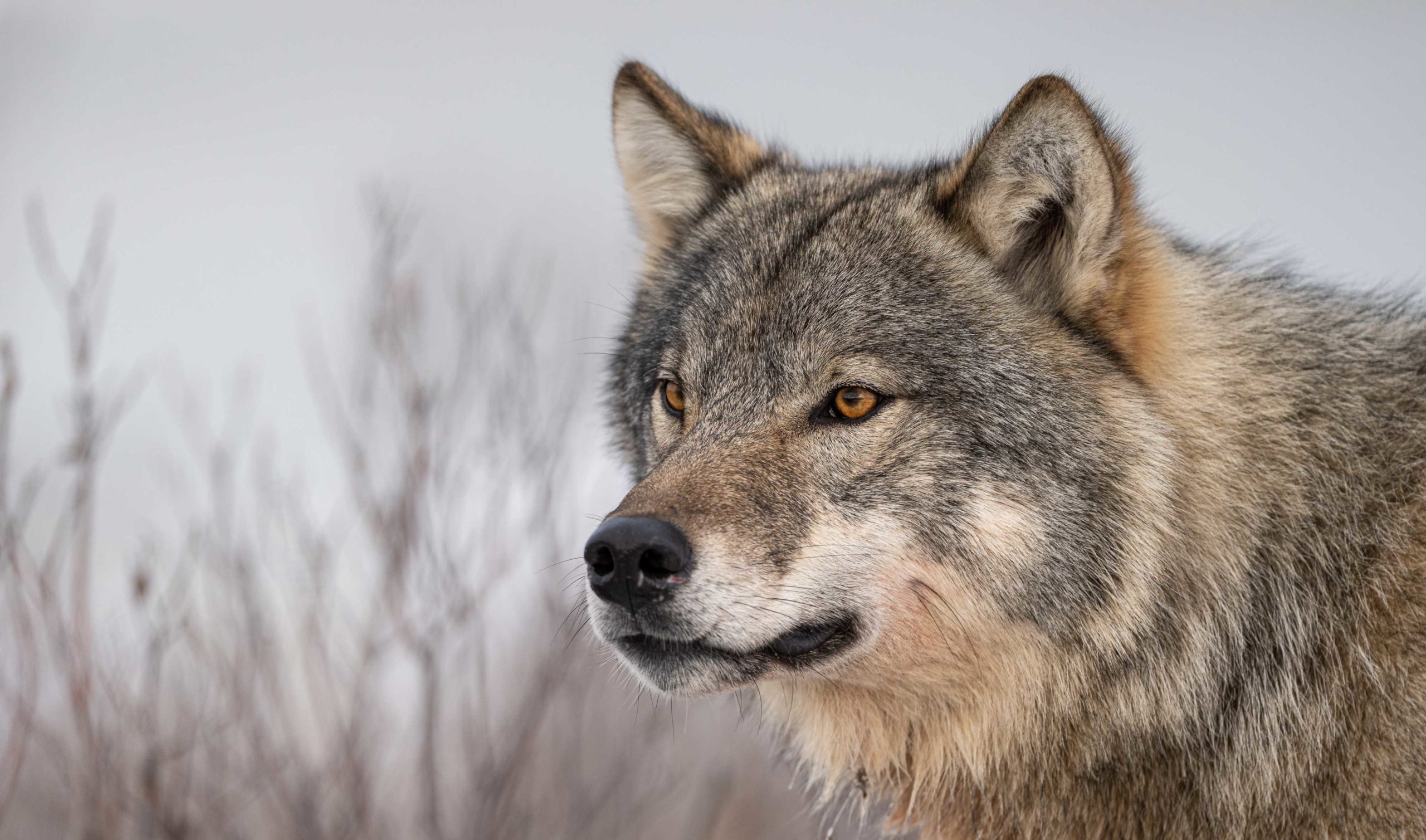
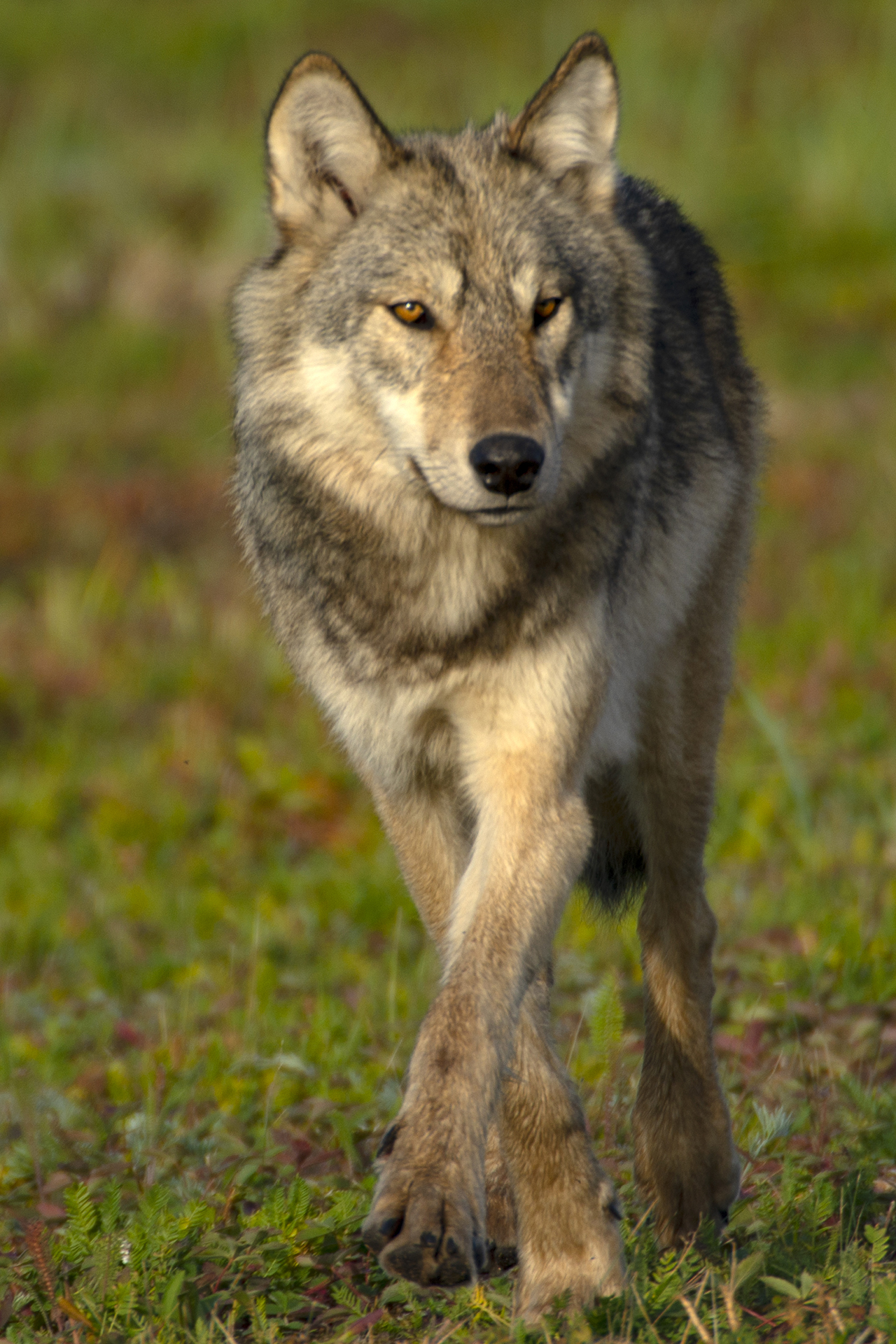
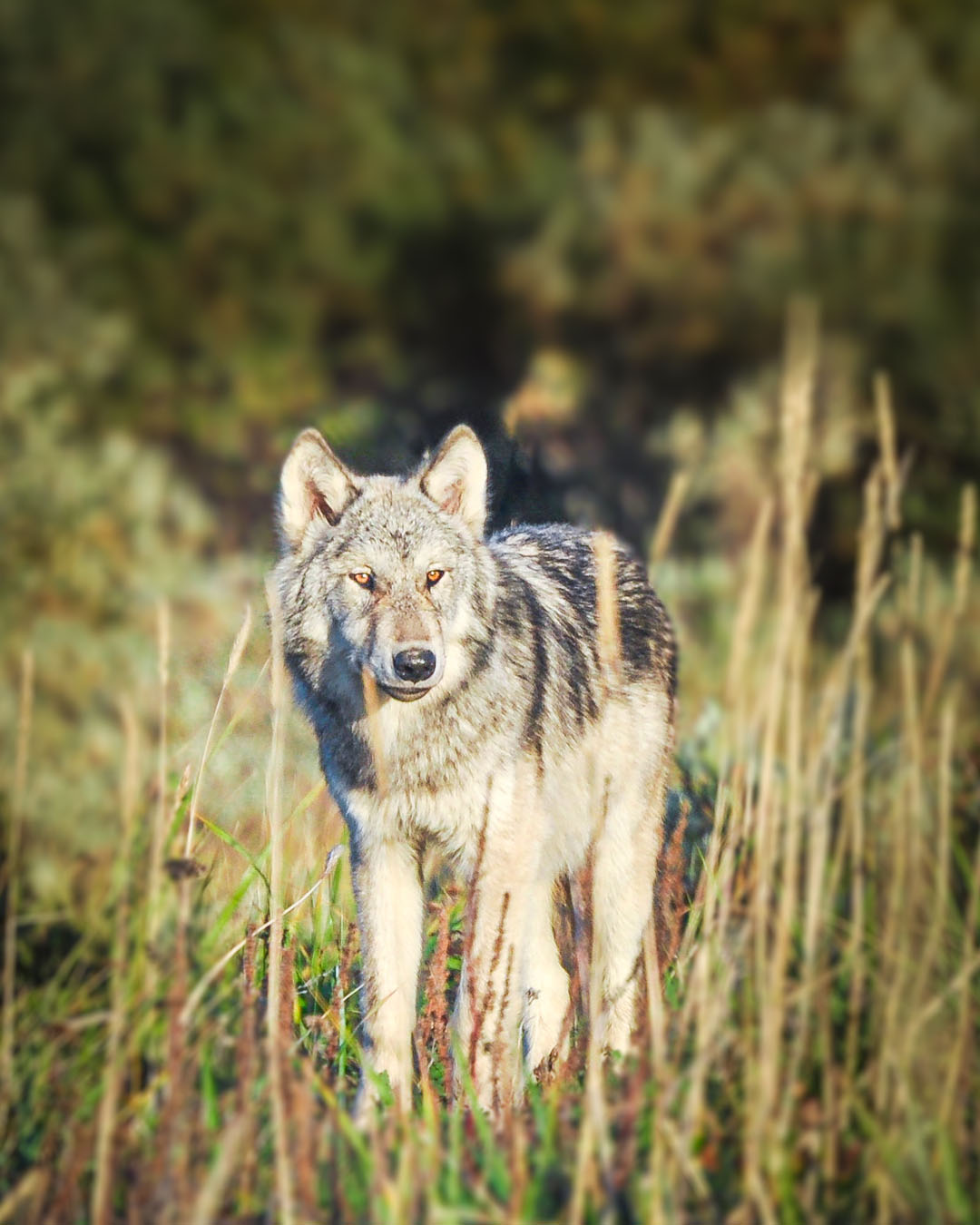
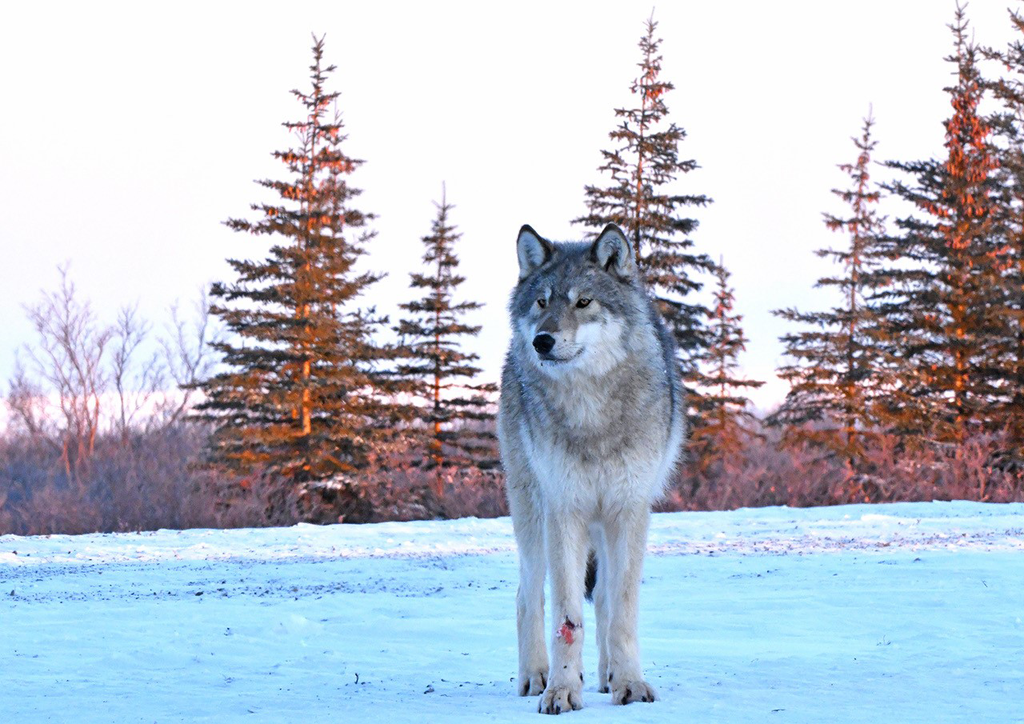
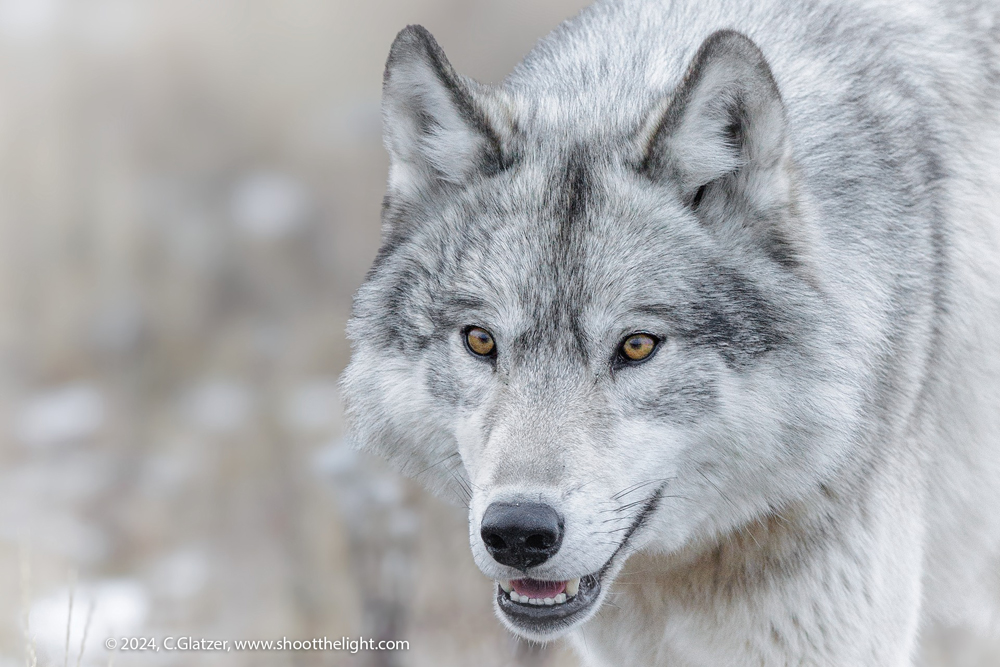
Meet gorgeous. Fabienne Jansen / ArcticWild.net photo.
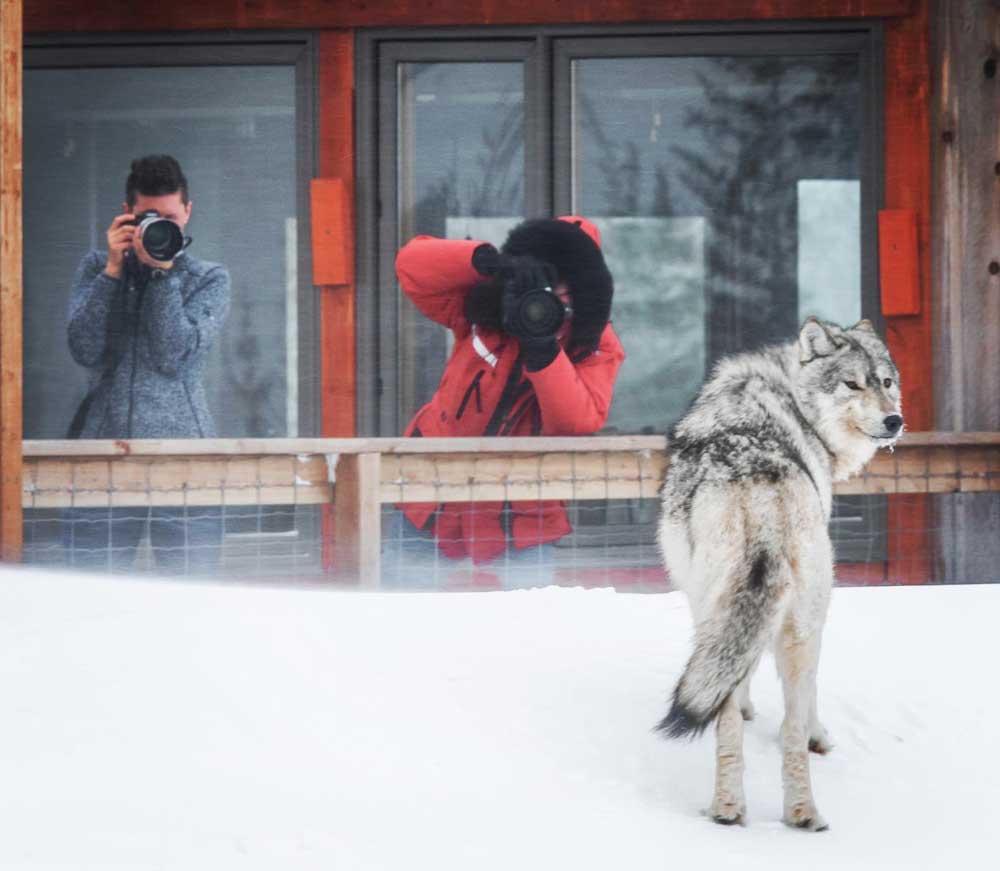
“During all the Nanuk Emergence Quests I’ve been on we have observed, approached and photographed multiple wolves right around the lodge and within a few miles of the lodge,” said National Geographic photojournalist and Churchill Wild Director of Wolf Programs Jad Davenport. “In fact, some of the best wolf photography uses the lodge itself as a comfortable blind with great views of the surrounding ponds and the runway.
“One of my most memorable wolf encounters at Nanuk was when I went alone to the wood pile behind the lodge and waited for the inbound pack as they made their regular investigatory laps around the lodge.
“Surprised to see me on a snowbank, five wolves approached within several feet, exhibiting such intense curiosity that I wasn’t able to photograph them with my 400mm telephoto lens, they were too close. I broke off the encounter when one got to within two metres of me and seemed keenly interested in my fur-lined hood.
“I’ve photographed wolves in Yellowstone, Denali and the Yukon, but the encounters there are distant, and you’re usually shoulder-to-shoulder with dozens and dozens of other people; it doesn’t feel wild.
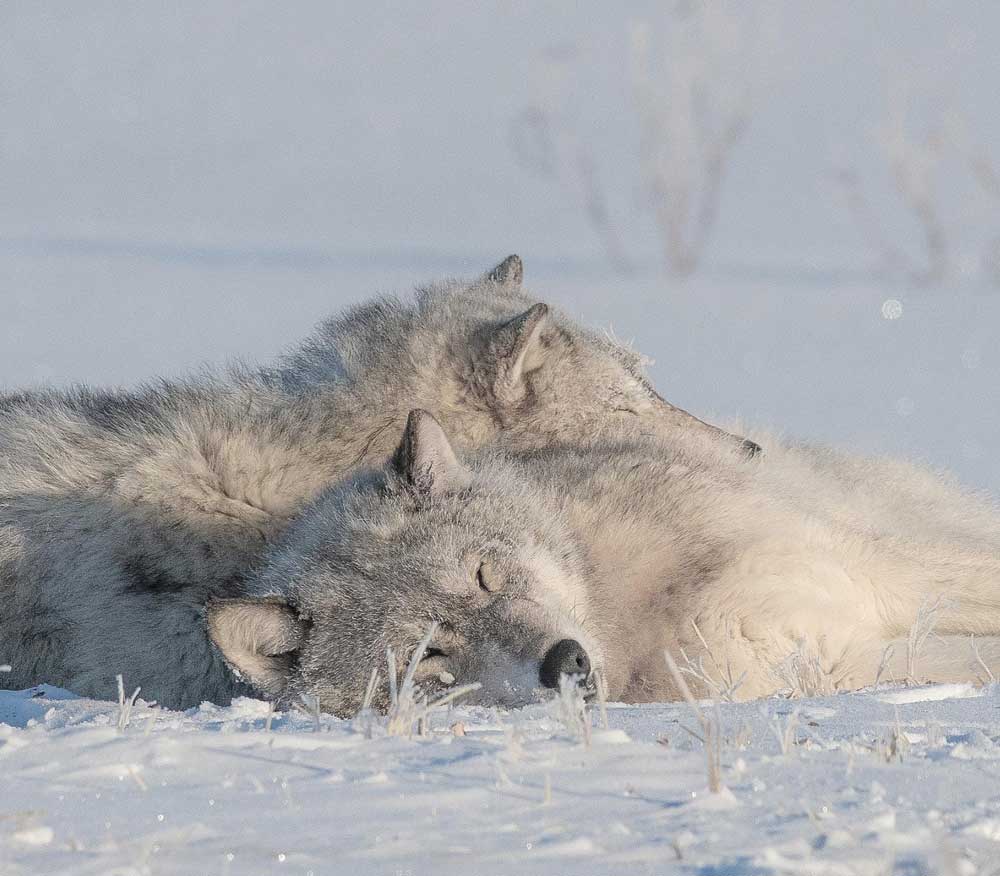
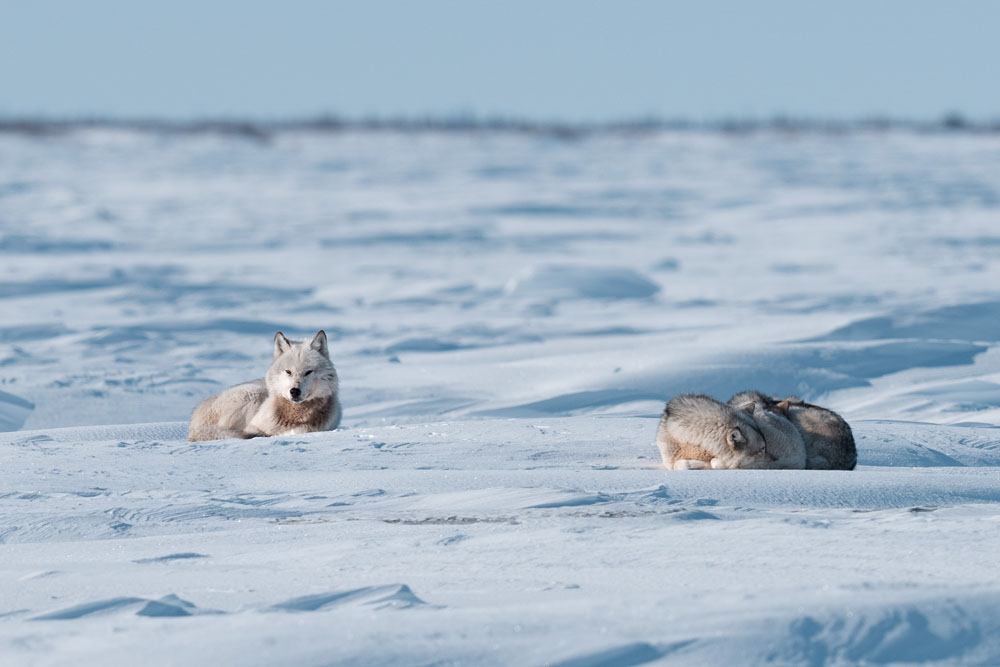
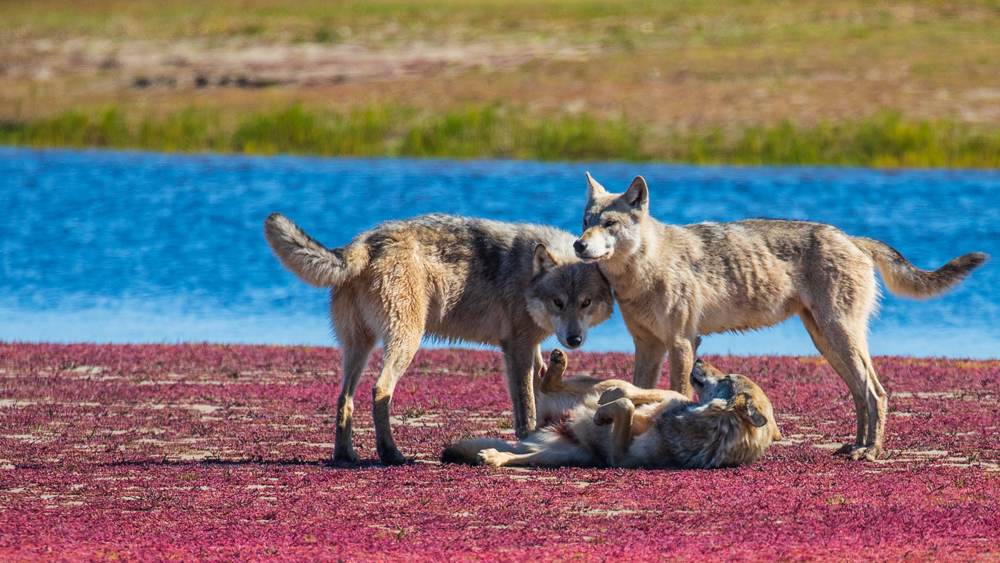
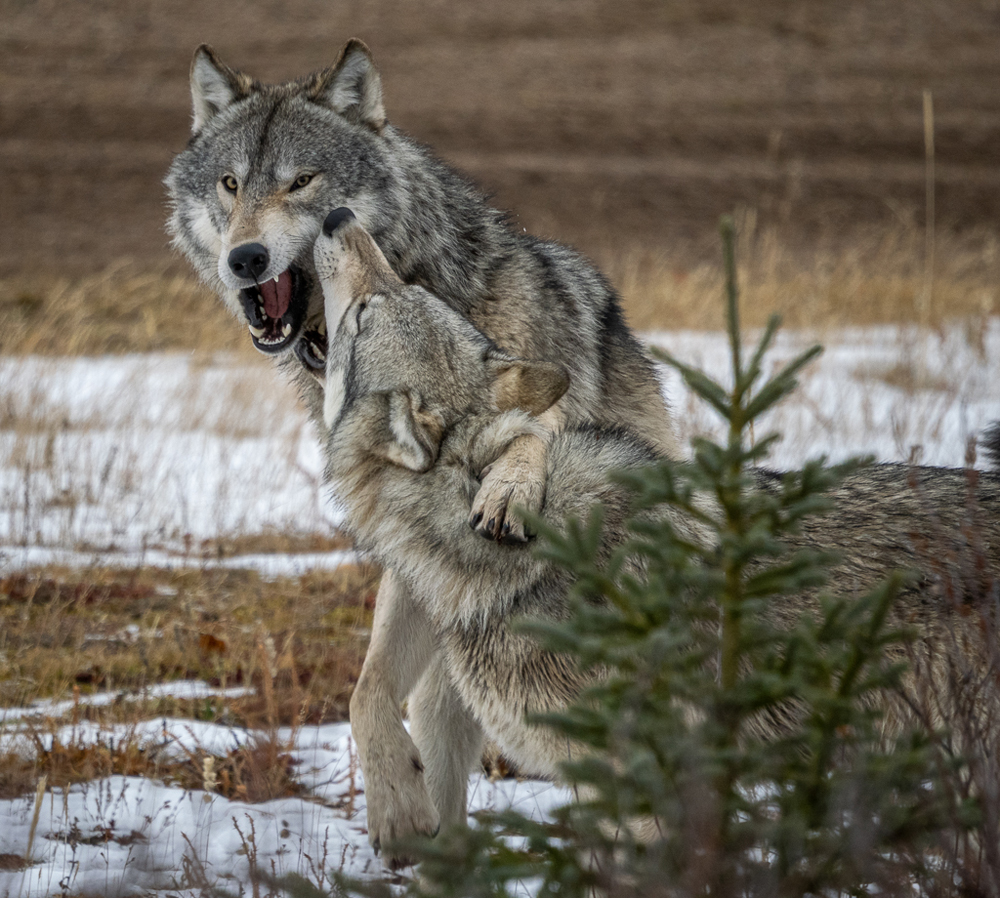
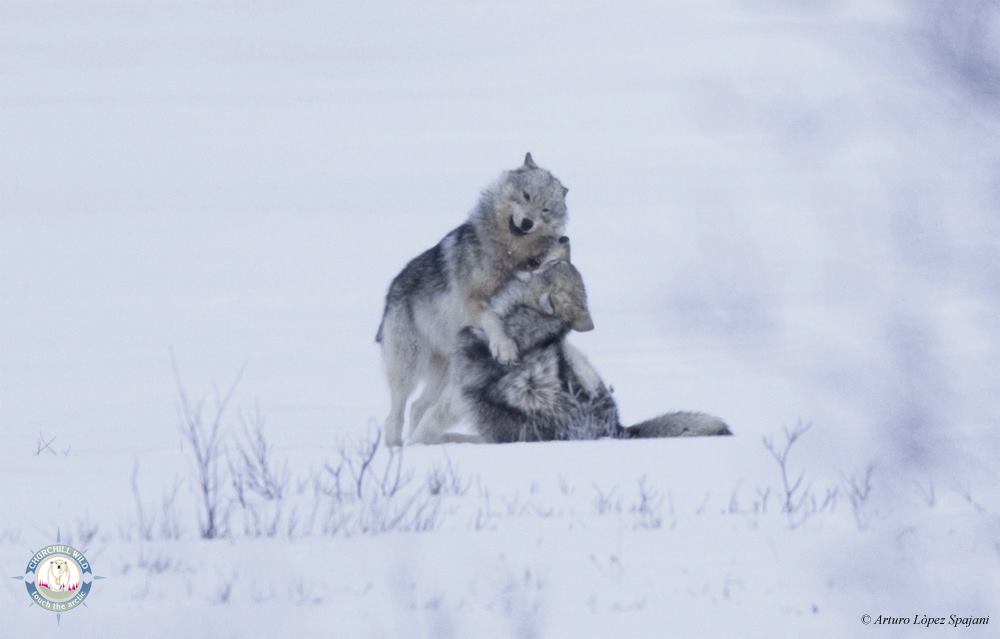
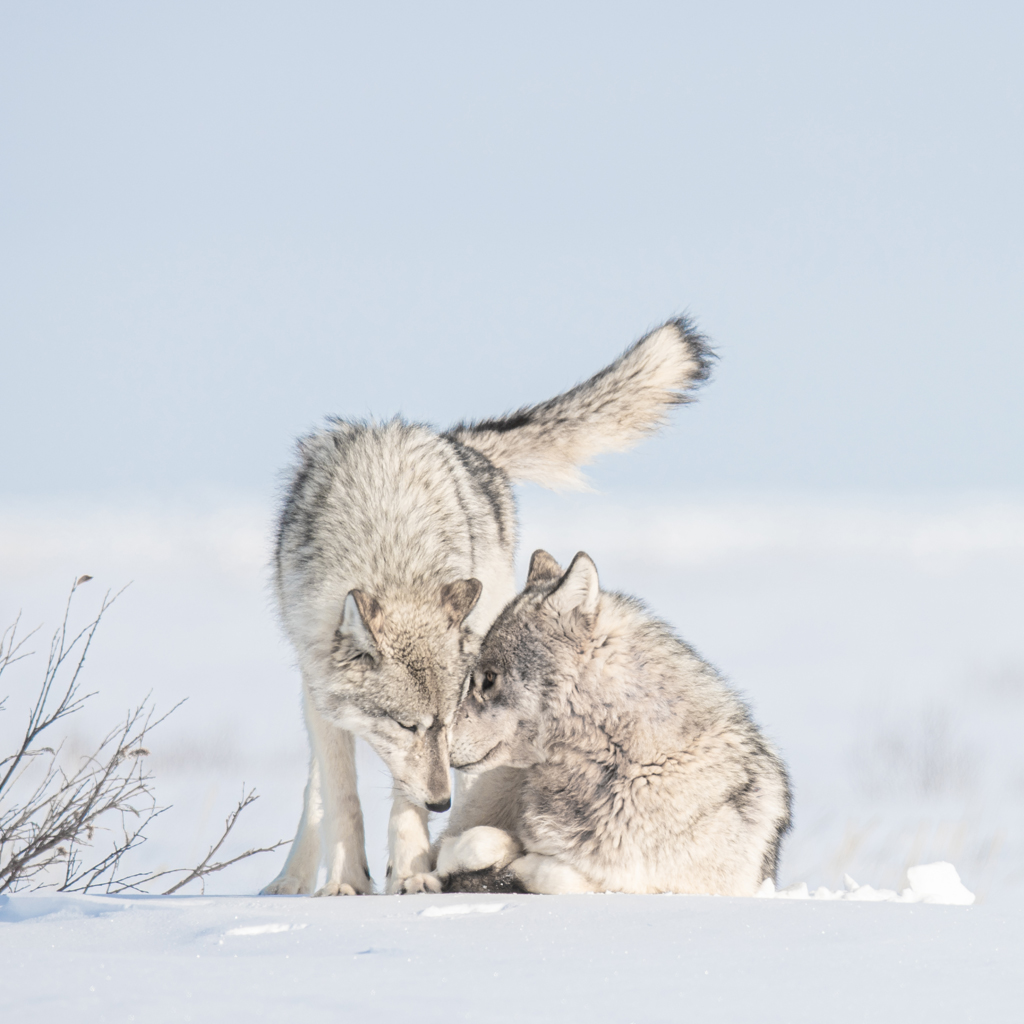
Cloud wolf cuddles. Nanuk Polar Bear Lodge. Jad Davenport photo.
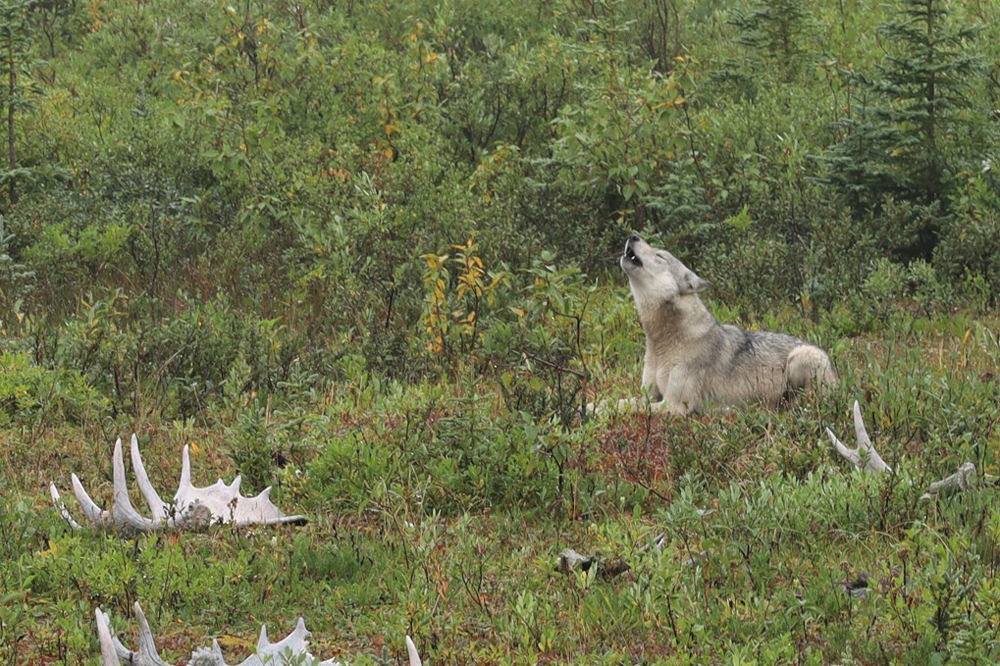
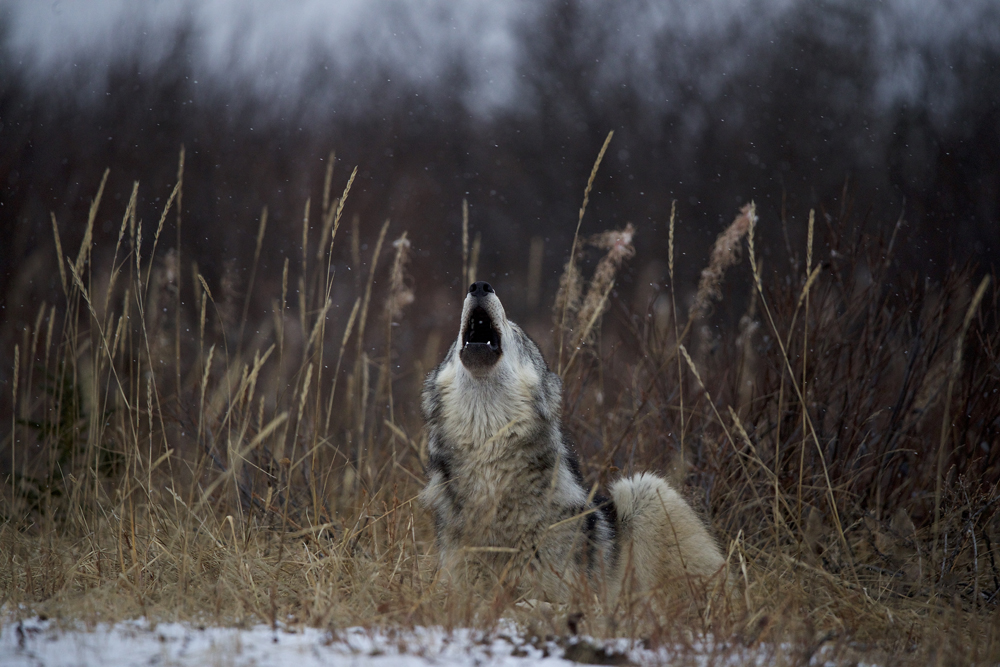
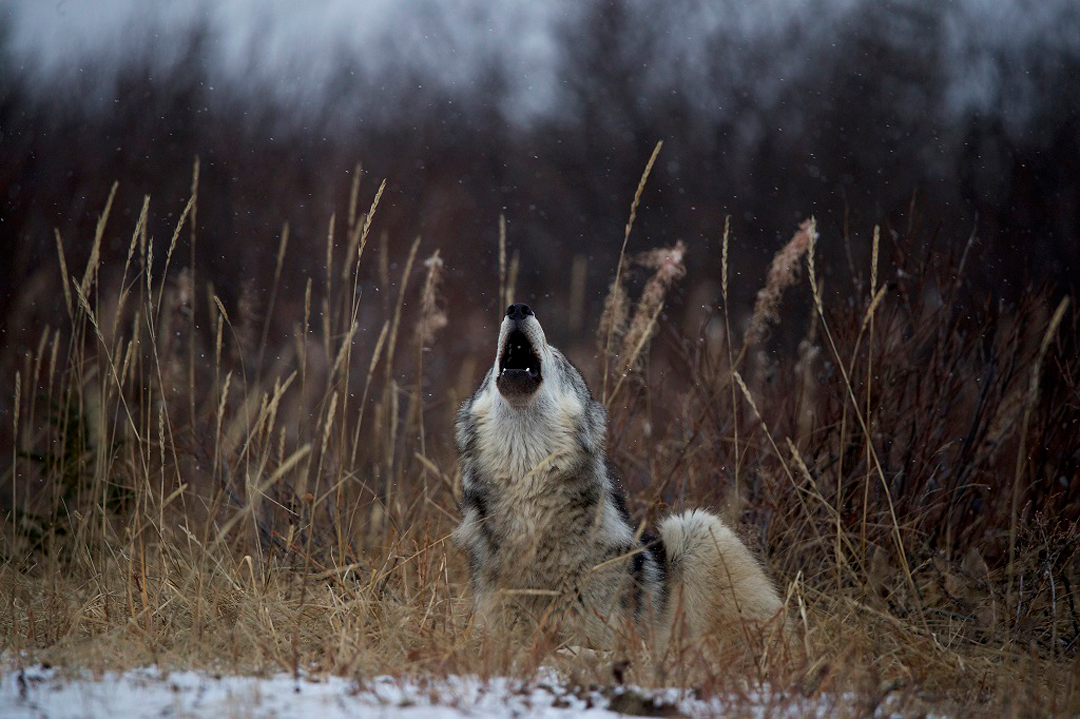
“At Nanuk it’s just you and your fellow guests watching as the wolves hunt, play, court and, of course, howl, often right in front of the lodge. It’s the only place I’ve ever had wolves approach me when I was on foot and get to within a few metres; I had to shoot photos with a wide-angle lens. That never happens anywhere else.
“And of course there’s the lodge itself. There’s nothing like coming back from a hike to a roaring fire in the great room, dinner of cranberry-glazed turkey and a bottle of merlot, and enjoying a hot shower back in your room. There’s no place like Nanuk in all the Arctic.”
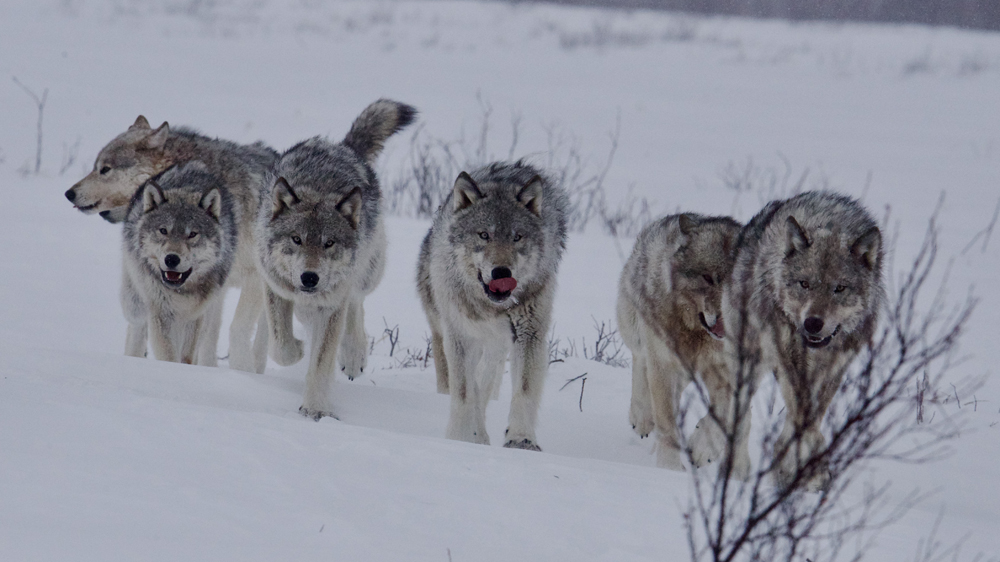
Christoph and Fabienne Jansen of ArcticWild.net, who have been over 35 departures with Churchill Wild now, reported there were two packs in the area this fall, the Opoyastin pack to the west and the Kaskattama pack to the east. They had spotted seven members of the Kaskattama pack in the distance at the time of this writing and were hoping the Opoyastin pack would make an appearance on the final Cloud Wolves of the Kaska Coast safari of the season. If not…
We’ll see them in the spring!
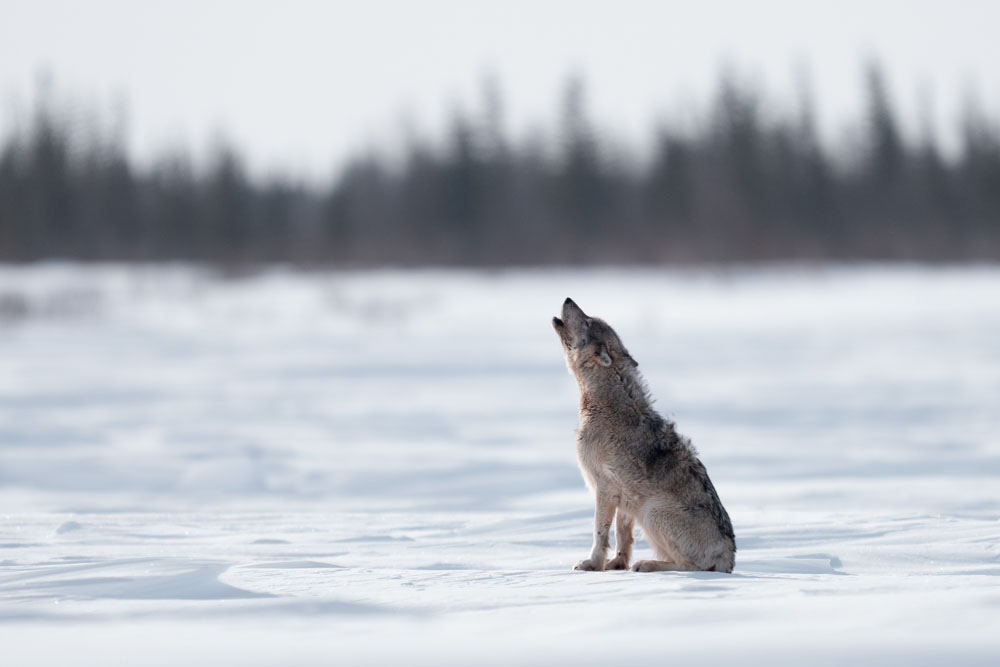
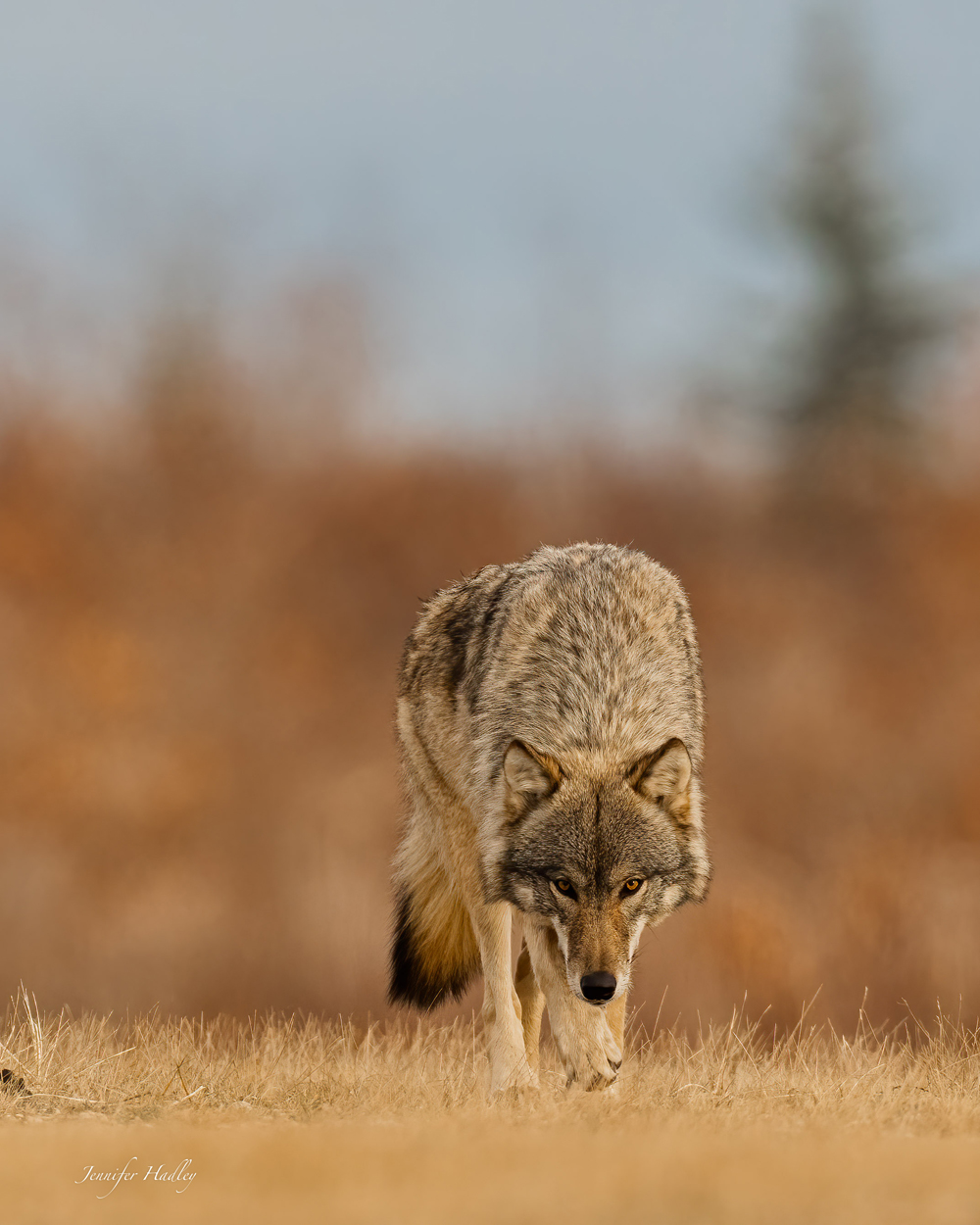
See you in the spring! Christoph Jansen / ArcticWild.net photo.