
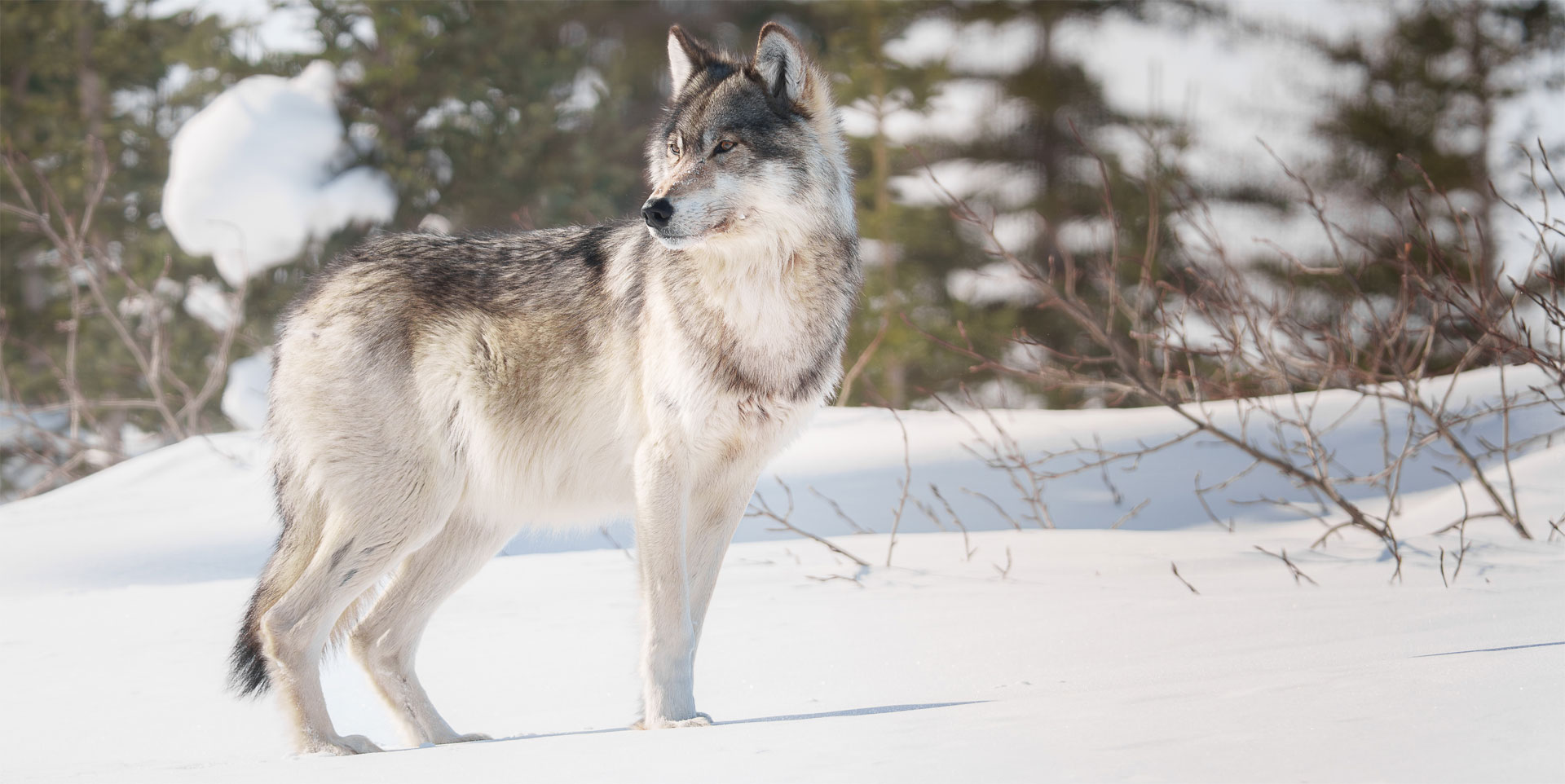
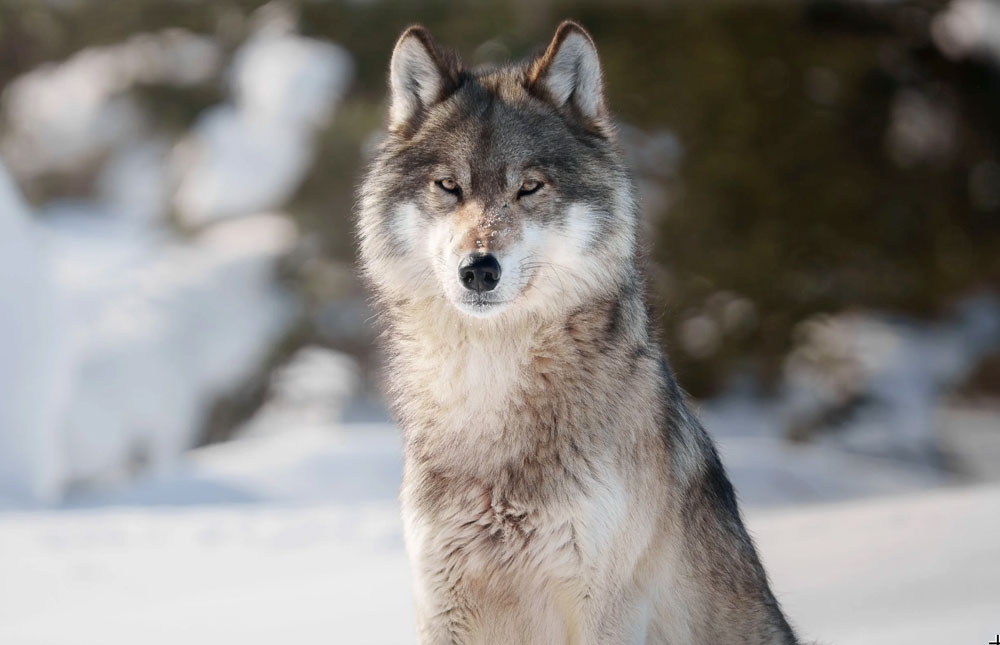
Portrait of a Cloud Wolf. Nanuk Polar Bear Lodge. Hannah Rheaume photo. Click image for Fine Art Print from HannahsCamera.com.
Hannah Rheaume made her second trip to Nanuk Polar Bear Lodge this spring.
This time, she found her wolf.
“We landed, and the first day we went out for a drive, saw some tracks,” said Hannah. “We came back to the lodge and the sun was setting. The sky was just orange and pink and some of the brightest colours I’ve ever seen. And all of a sudden, a wolf literally appears the first night.”
They stopped and shot from the viewing deck. Later that same evening the northern lights came on.
“I’m going in between the buildings and I stop on one of the decks and I just hear a wolf howl,” said Hannah. “The aurora is going, it’s vibrating in the sky. The wolf howled and I was like… I can go to bed now.”
A few mornings later, there was a knock on her door.
“It said, ‘Wolves outside howling,'” said Hannah. “I get ready, go out there and sure enough there are five or six wolves howling, yipping, kind of gurgling. They were just beyond the willows along the landing strip in the flats area. You could see them moving around.”
The lone wolf the group had been seeing all week drifted back toward the lodge. The pack took off east. The group had breakfast and headed out.
“We found where they bedded down and we kept following their tracks until they headed west into the forest,” said Hannah. “We couldn’t follow them anymore and we lost them.”
It didn’t matter. The lone wolf had been giving the group something all week. She came and went on her own terms, roaming around the lodge, unbothered by the cold or the cameras or the people watching from the deck.
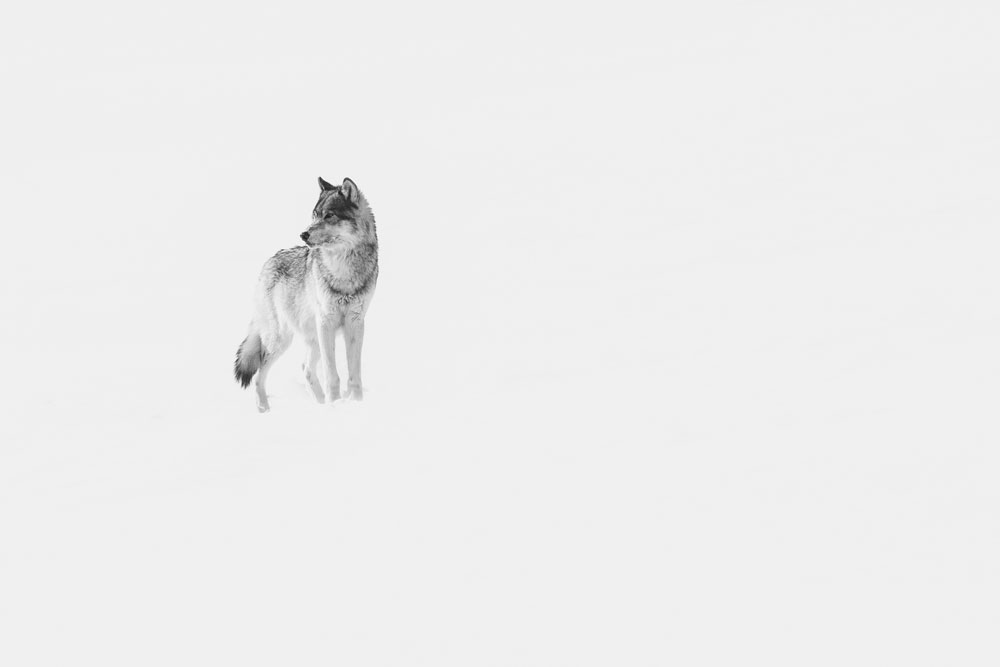
“It was just her and me for about 30 minutes.” ~ Hannah Rheaume photo.
“It was just her and me for about 30 minutes,” said Hannah. “She roamed, nose to the ground, and I watched from the deck, shivering. It is always so blatantly obvious how well adapted wolves are to their environments. But when the temperature is as low as minus 30, I’m curious as to how they perceive the cold. Do they even feel it? She seemed unbothered, as if it was just another day. And to her, it probably was.”
Later, after the group had done a full loop behind the lodge looking for the wolf and come back empty, someone came into the bedroom wing with news. The wolf was out front.
“She had to have been watching us the whole time,” said Hannah.
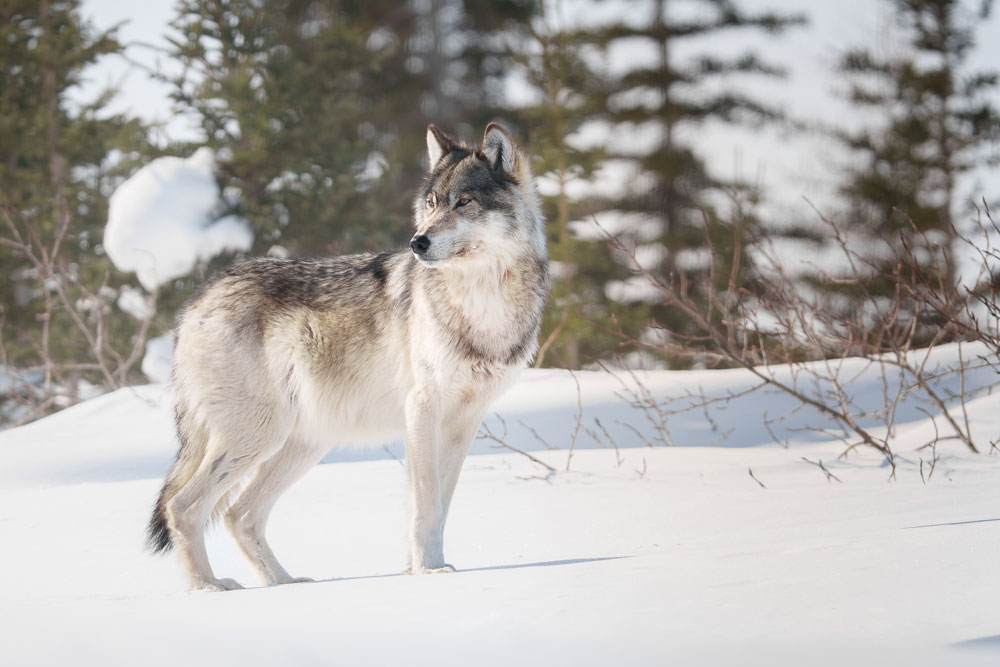
“She had to have been watching us the whole time.” ~ Hannah Rheaume
Coffee With Polar Bears
Hannah first came to Nanuk in the fall of 2025 on the Cloud Wolves of the Kaska Coast expedition. The wolves didn’t cooperate. The guides flew the drone, checked the trail cams, tracked the coast. Wolf prints showed up. The animals didn’t.
What she got instead was polar bears.
“I did not expect to have such an affinity for polar bears,” said Hannah. “I’ve photographed black bears, I’ve experienced grizzly bears. But there is something wildly different about the ice bear.
“I don’t think there was a single day on that trip that at least one bear didn’t come to the lodge. Whether that was in the morning or at lunch when we would come back for a reset or in the evening for dinner.”
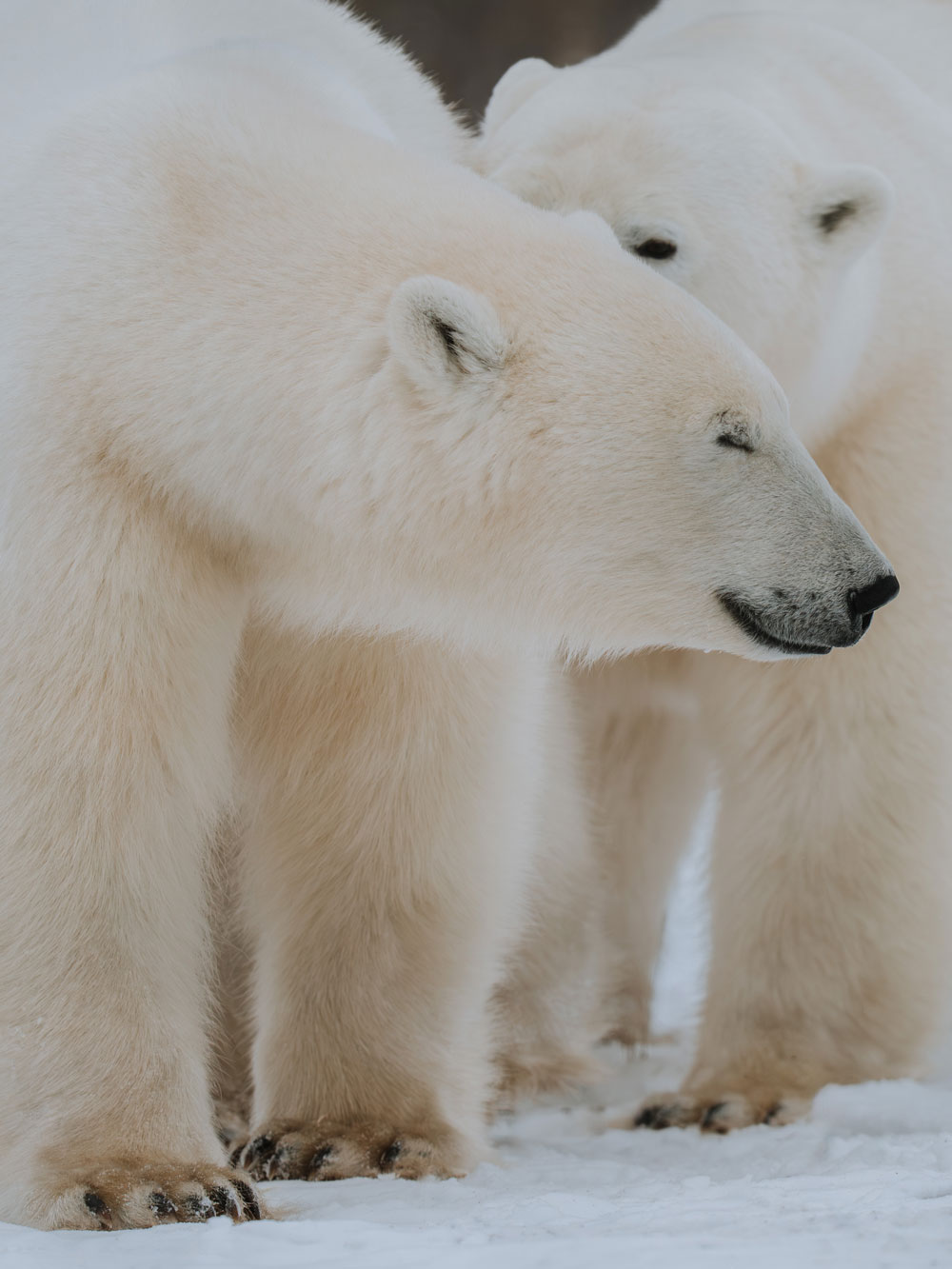
Polar bear friends at Nanuk. Hannah Rheaume photo.
Mornings meant coffee with polar bears before the day had even started. One evening Hannah was in the guest wing editing photos when she looked up and a bear was walking past the window.
“I swear that will never get old,” said Hannah. “Even folks that work up there, our guides, the hospitality team, every time a bear came by the lodge, everyone got excited. I don’t know where else you can safely have your coffee with a wild polar bear.”
Among her encounters was a mother with two cubs. That photograph caught the attention of Sony, which named Hannah its Creator of the Week on International Polar Bear Day. The image, a mother and her two cubs framed against a snow-covered boreal backdrop, was shared to Sony’s global Instagram audience.
View this post on Instagram
There was also a young female bear, estimated to be three or four years old, possibly facing her first winter away from her mother. She kept coming back.
“She was curious and had the sweetest little face,” said Hannah. “I did get a few photos of her that I really love. One in particular of her walking away, and her paw is just lifted up, and you really get to see the size of her paw. Pretty wild to try and capture that scale in their environment of snow and ice.”
On what was supposed to be the last night of the trip, the sky put on one final show. After a vivid crimson sunset, the northern lights came out in greens and purples that Hannah described as looking like a painter had taken a brush to the sky.
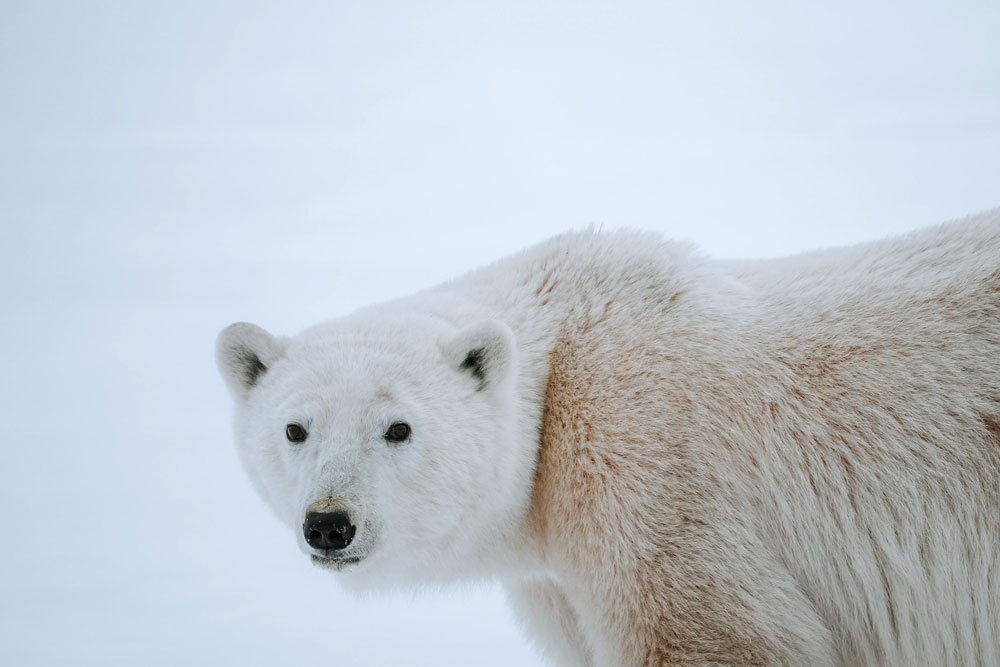
Polar bear stare. Nanuk Polar Bear Lodge. Hannah Rheaume photo.
An Expedition, Not a Safari
Hannah is 33. She grew up in Maine, studied communications, spent two years in public relations and decided that wasn’t the life she wanted. Photography started as a hobby and became a career. She lives in Washington State, shoots on a Sony A7R V, and works with brands, destinations and nonprofits.
Wolves are the thread running through everything she does.
She has logged serious time in Yellowstone, learned the territories and movement patterns of its packs, and photographed them in conditions that send most people back to their cars. She has plans to go to India for Indian wolves and to North Carolina for red wolves. Fewer than 23 remain in the wild.
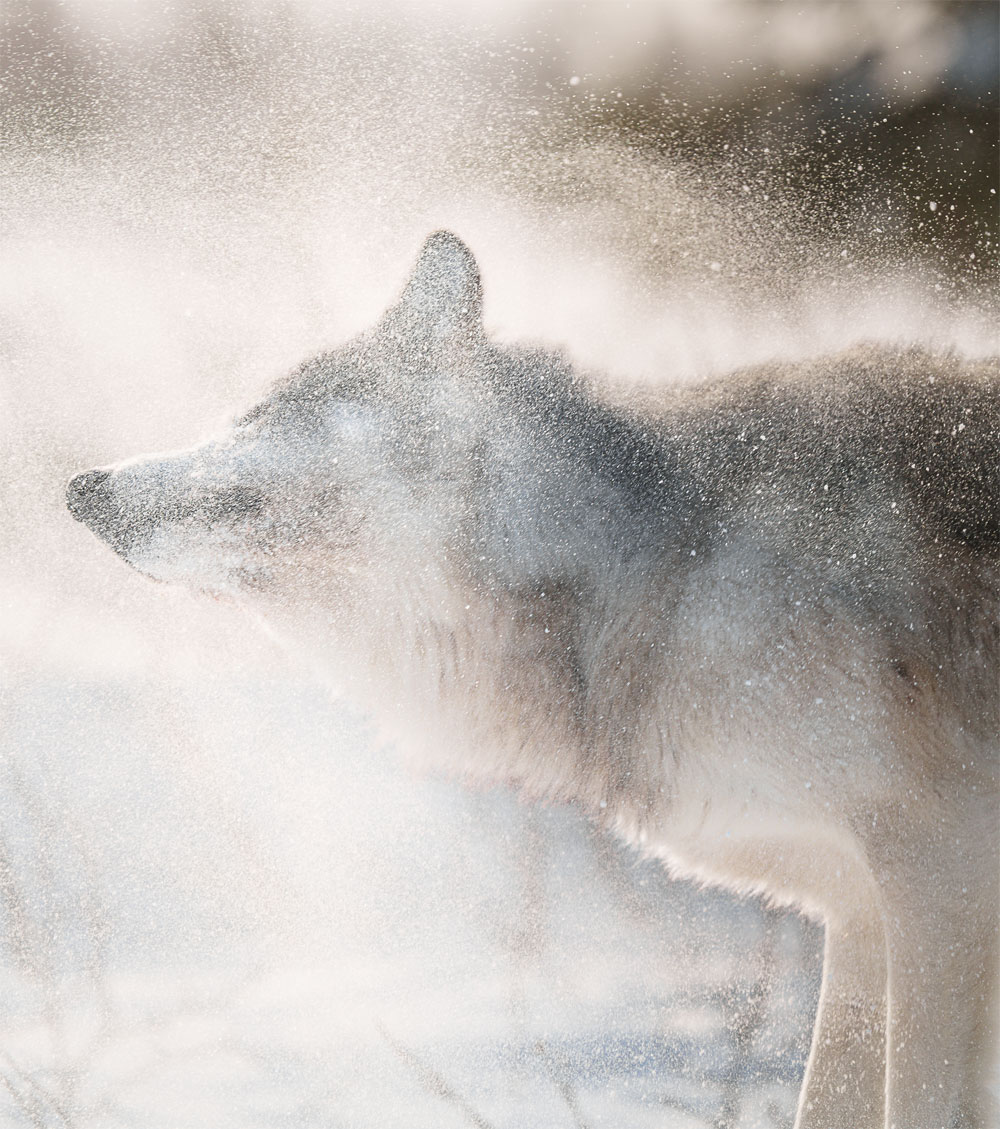
Wolf shake. Nanuk Polar Bear Lodge. Hannah Rheaume photo.
“When I set out to look for wolves, the ratio in which I see them compared to the ratio in which I don’t is lower,” said Hannah. “You set out looking for the animal and maybe nine times out of ten you come up empty handed. That’s just wildlife. Especially predators that are often pretty wary of us.”
She knew the odds going in, both times. The 2026 trip was not easy, and Hannah was direct about that.
“It’s harder in many ways,” said Hannah. “It’s colder. It’s harder on your mind, and it’s harder on your will to want to keep going and doing it and sitting in the back of the komatik.”
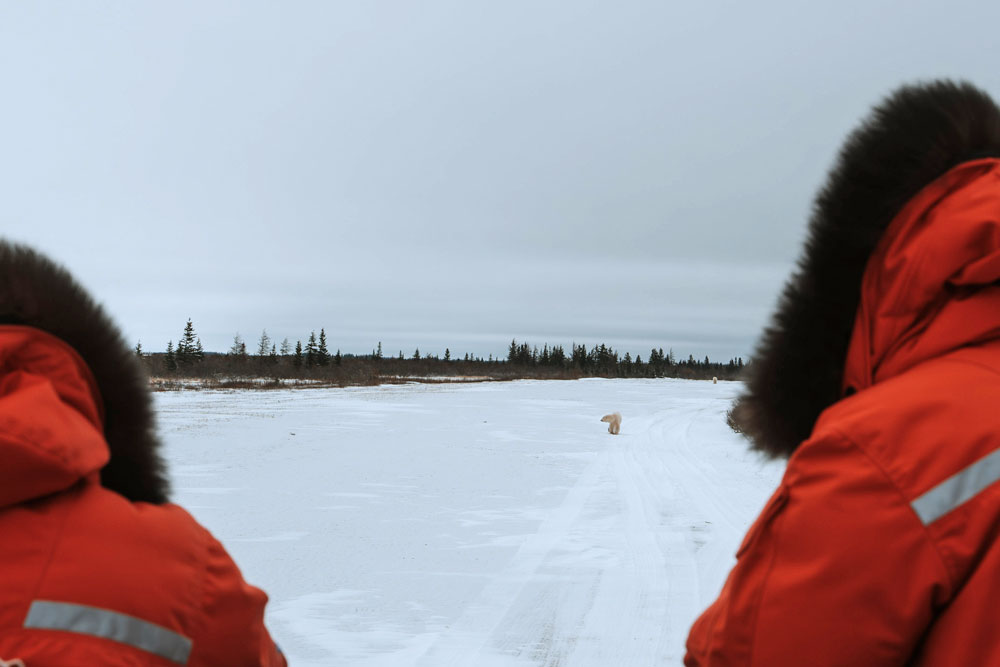
Here she comes… and who’s that following her? Hannah Rheaume photo.
Guides Drew Pauls and Rich Jones kept the group’s morale up, even in the ice-cold temperatures, through stops for fires, snacks, hot cocoa, and coffee. There were sightings of red fox, silver fox, ptarmigan, and wolverine. A pack of five or six wolves was spotted out on the ice, too far to reach before they moved on.
Through it all, the lone wolf kept coming back.
“I stood outside with that wolf, drinking my coffee, just listening to the wind and literally nothing else,” said Hannah. “Aside from the lodge, there is nothing man-made. Nothing about it is gentrified in any way.”
View this post on Instagram
The wolf portrait she posted to Instagram (seen at the top of this post), close and composed with the animal staring straight into the lens, stopped people cold. Her caption described bouncing in the komatik with eyes on the ground, scanning the forest, standing on the edge of Hudson Bay at minus 24, looking for wolves alongside Churchill Wild Safaris and National Geographic photographer Jad Davenport.
“When you finally lock eyes with a wolf after all that work and tracking and time in the field, it just really adds to that experience being so much more special,” said Hannah.
Her advice to anyone considering the trip is honest.
“It’s an Arctic expedition more than anything else,” said Hannah. “Be prepared for cold temps, hot beverages, and animals. You just can’t guarantee which animals they’ll be.”
They Truly Care
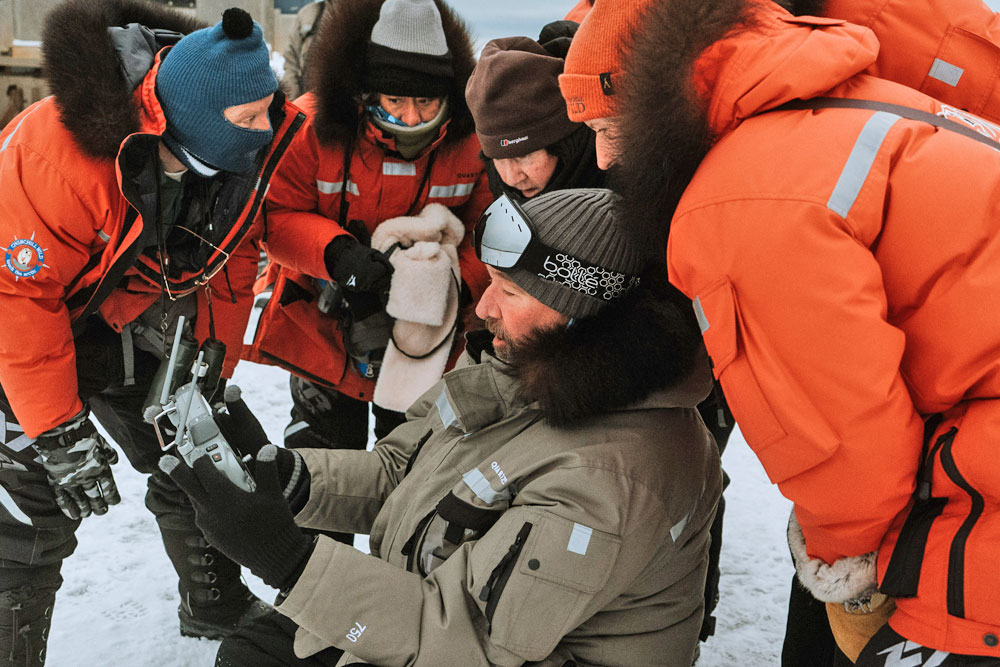
“Churchill Wild truly cares about this experience they’re creating,” ~ Hannah Rheaume.
Both times Hannah came to Nanuk she had nothing but good things to say about the operation.
“The food was incredible,” said Hannah. “I do have dietary restrictions and they were so thoughtful about all of it. I was blown away, to be honest. They would answer my questions before I even asked them.”
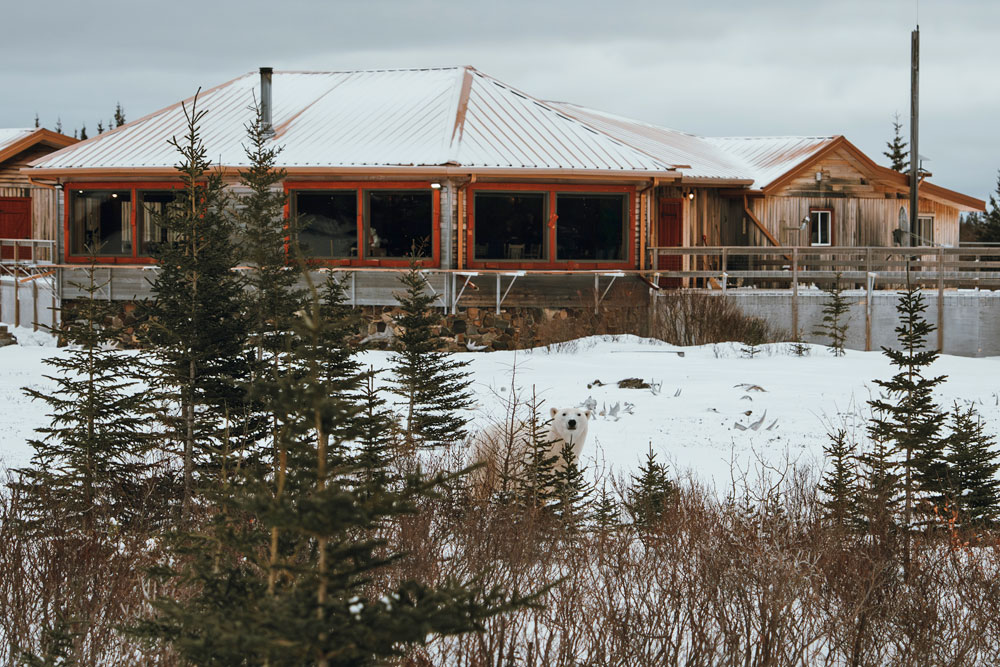
Watching the watchers. Hannah Rheaume photo.
The guides were sharp and genuinely interested in the animals. Jad Davenport ran evening presentations on wolf biology and visual storytelling. Guide Rich delivered a session on snowy owls, a bird Hannah saw every day on the 2025 trip, casually, in numbers that left her photographer friends back home disbelieving.
The lodge itself made an impression.
“The room was wonderful,” said Hannah. “All those big windows, you’re never going to miss a moment of an animal walking by or a bird flying by.”
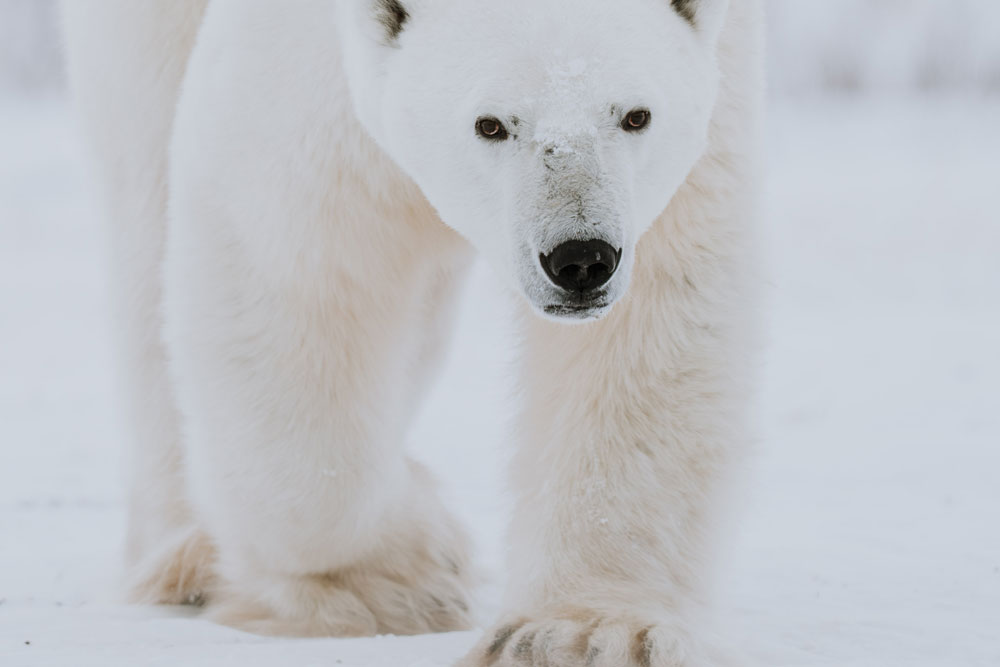
The young polar bear that just kept coming back to the lodge. Hannah Rheaume photo.
What stayed with her most was harder to put into words.
“Churchill Wild truly cares about the experience they’re creating,” said Hannah. “That just up-levels the entire experience. You felt right at home. They very clearly care, and that’s what makes it so special.
“I feel like I’ve been reset, honestly. It is so quiet. You get to truly see what an untouched wilderness looks like. You start to pick up on the rhythms and the movements of animals and the weather patterns. You get to read the land in a different way that you don’t really get to do anywhere else.”
Good Wolf
View this post on Instagram
When Hannah is not in the field, she is working for wolves in other ways.
She runs Good Wolf, an upcycled clothing brand she started to address two things at once: fashion waste and wolf persecution. She goes thrifting, combines garments, cuts wolf-themed designs from one piece and sews them onto another, and donates a portion of each drop to wolf conservation. Her most recent launch supported The Cry Wolf Project, connected to the Yellowstone Wolf Project. Her drops sell out in under ten minutes.
“Wolves are complicated, misunderstood and even feared,” said Hannah. “They’re perhaps the most polarizing animal on the planet. Good Wolf aims to be a step in the right direction, a positive affirmation for wolves.”
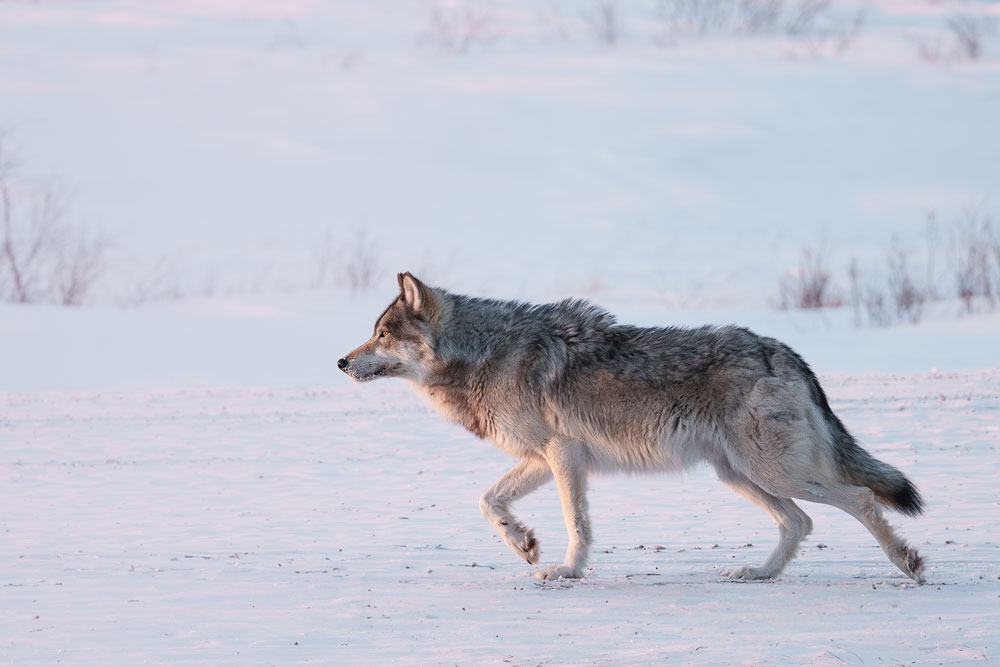
Cloud wolf on the move in front of Nanuk Polar Bear Lodge. Hannah Rheaume photo.
Her photography work runs on the same idea. At HannahsCamera.com she describes her storytelling as connecting the dots between humans and the natural world, showing people the intricacies of a place so they feel more responsible for how they move through it.
“Go up there,” said Hannah, when asked what she would tell someone thinking about making the trip to Nanuk Polar Bear Lodge. “Even if you’ve seen my photos or anyone else’s photos, the chances of you having that exact experience are very slim. But that’s the beauty of going places like that. You get to go and form your own experience, your own memories, and your own photographs.
“Having that unique experience is really rare these days.”
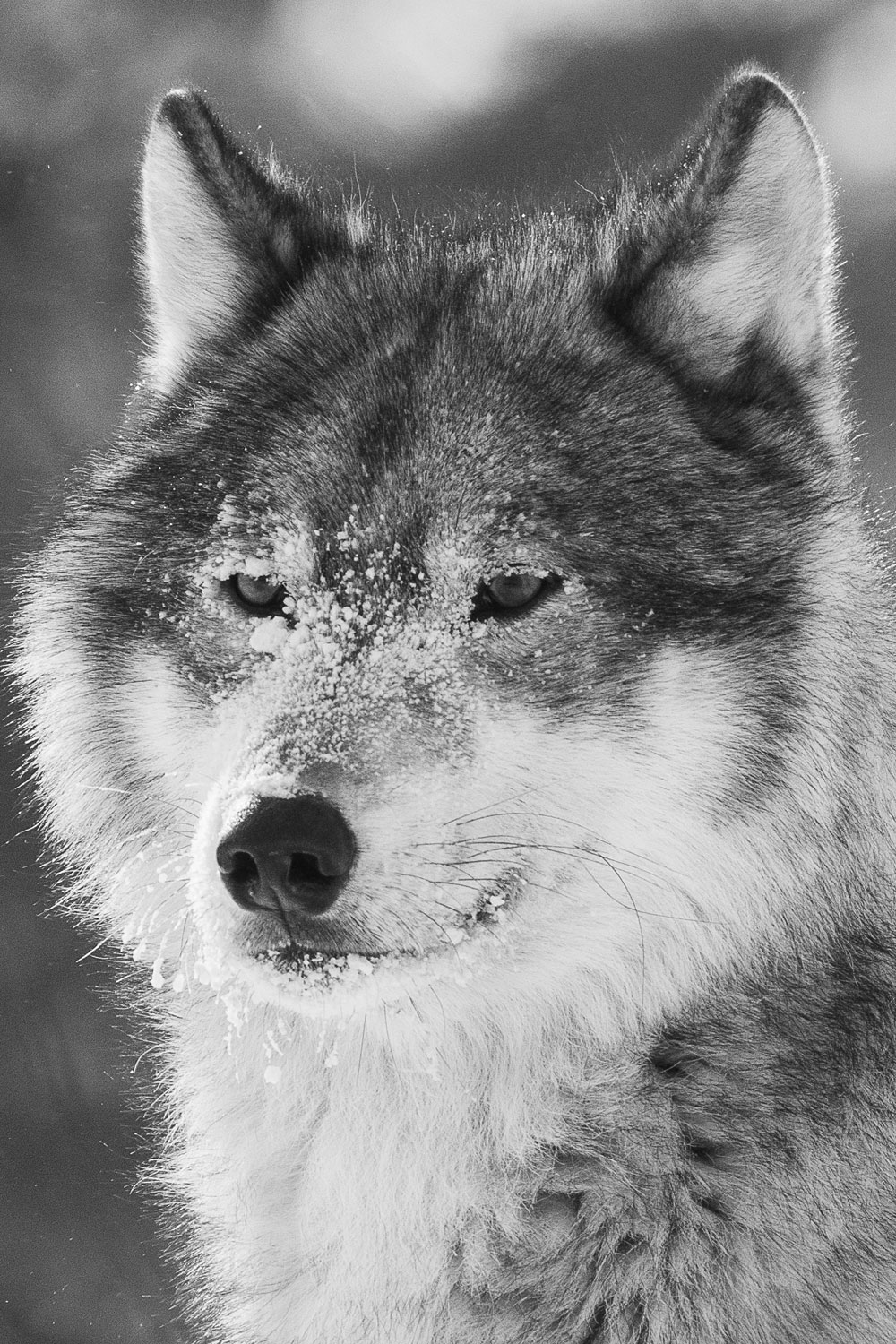
The eyes are the window to the soul. Hannah Rheaume photo.
Follow Hannah at hannahscamera.com and @hannahrheaume on Instagram. Find Good Wolf at ShopGoodWolf.com and @shopgoodwolf.