
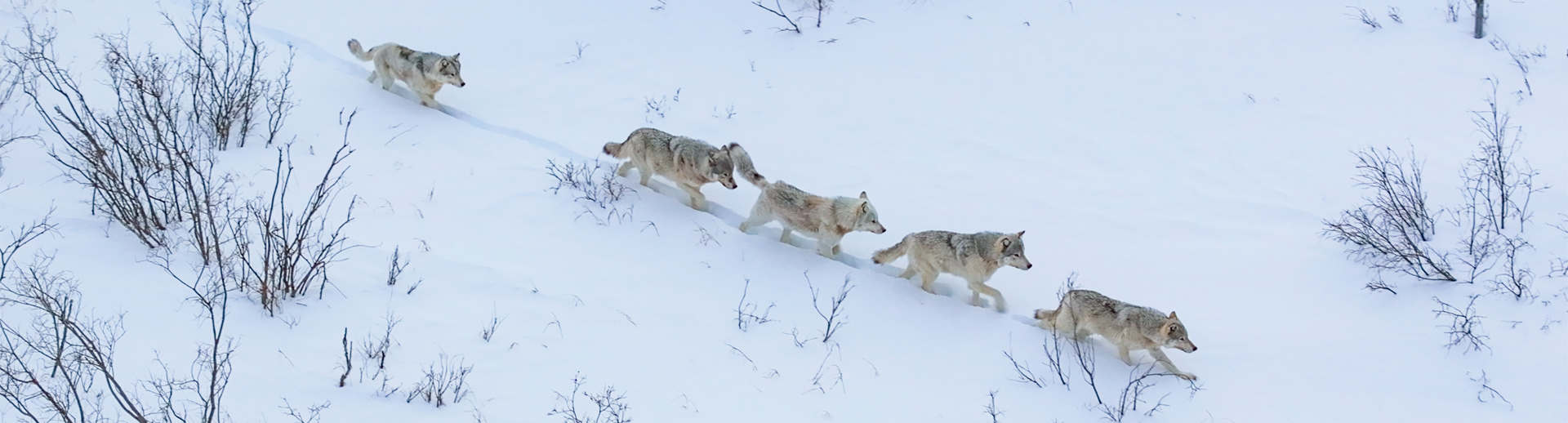
An old white wolf leads his pack against a moose 10 times their size, with a brutal Arctic winter bearing down. WOLVES UP CLOSE WITH BERTIE GREGORY premieres Nov. 6 at 9/8c on National Geographic and streams the same day on Disney+ and Hulu.
Early winter on the Hudson Bay coast. Some days it hits minus 40, and the wind off the bay cuts through every layer you’re wearing. The sun hangs low, stunted willows poke up through the white, and out on the bay the ice still hasn’t set.
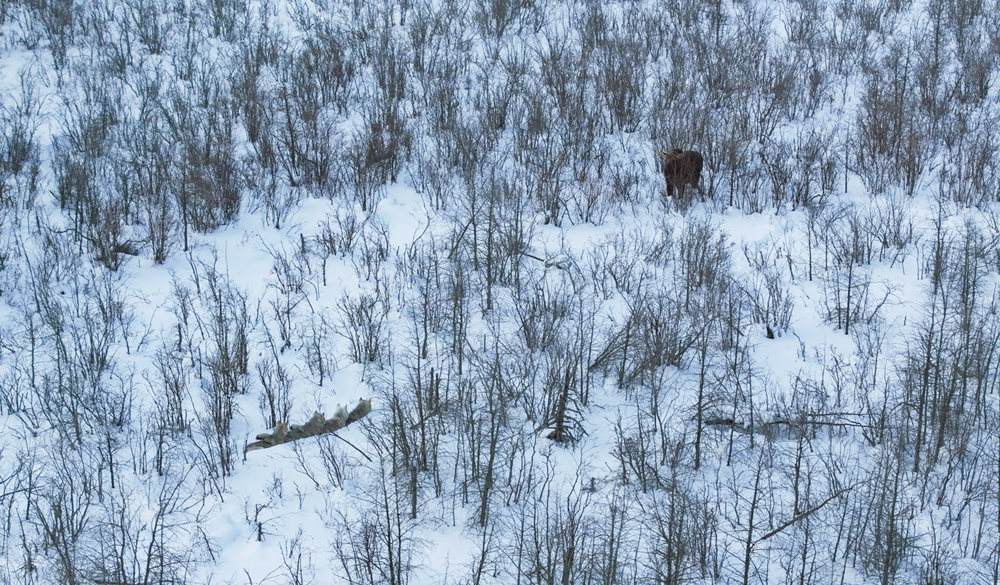
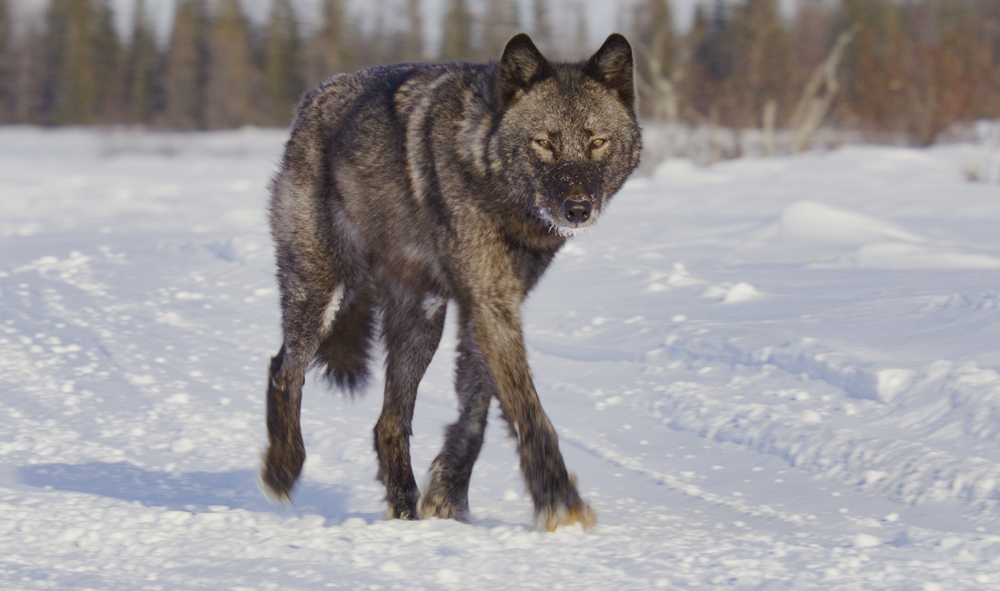
A moose glides through snowdrifts that swallow the wolves chasing it up to their necks, its long legs carrying it clear while the pack fights for every stride. From the back of the line, an old white wolf named Kona charges to the front, first in line for flying hooves that can kill a wolf with a single kick.
Most days, the young wolves break trail through the snow, sure they’re running the show. Kona lets them think so. National Geographic Explorer Bertie Gregory has been watching him for seven years. He’s seen this before.
“When the pack is travelling and the situation’s pretty benign, he always leads from the back,” said Gregory, “letting the young bucks think that they’re in charge and calling the shots.”
But when trouble comes, Kona makes his move.
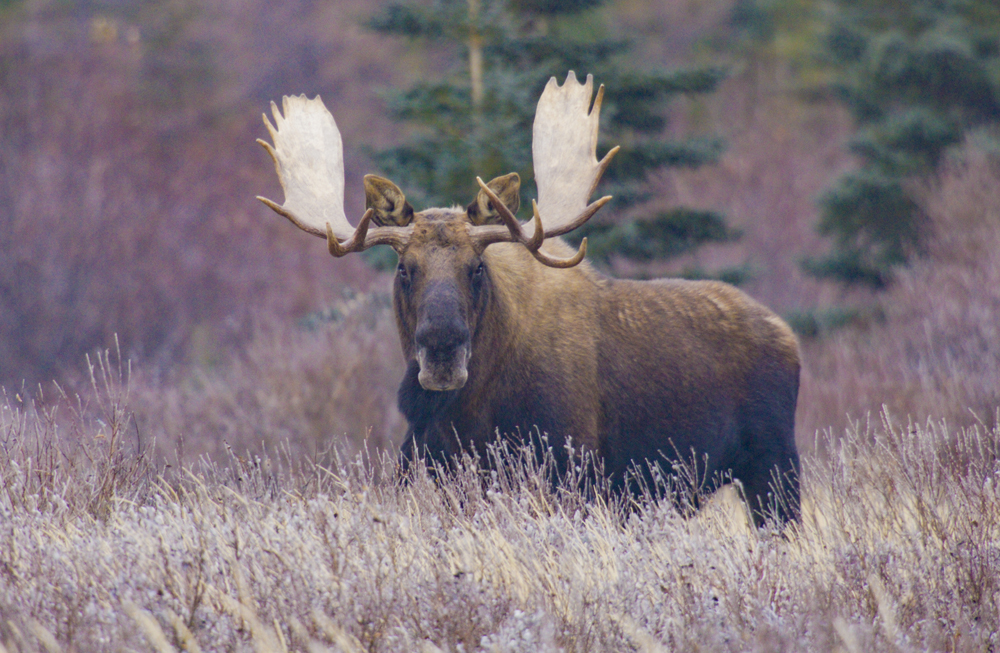
“The moment there’s a life-threatening situation, whether that be defending their home or taking on a huge moose 10 times their size, he’s the first one to step into the front and put his body on the line and put himself in harm’s way,” said Gregory.
Kona and the family he protects are at the centre of WOLVES UP CLOSE WITH BERTIE GREGORY, premiering Nov. 6 at 9/8c on National Geographic and streaming the same day on Disney+ and Hulu. Gregory returns to film one of the Arctic’s most dangerous and rarely captured hunts, wolves taking on a moose, as winter sets in. Food is running short, a rival wolf is closing in and Kona isn’t getting any younger.
For Gregory, it’s personal, and the wolves share the screen with a wolverine and a river otter hunting beneath the ice. Winter is also slow to arrive. A late freeze-up keeps hungry polar bears on shore longer, so while tracking wolves on foot, the crew also has to keep watch for the world’s largest land predator.
Why He Keeps Coming Back
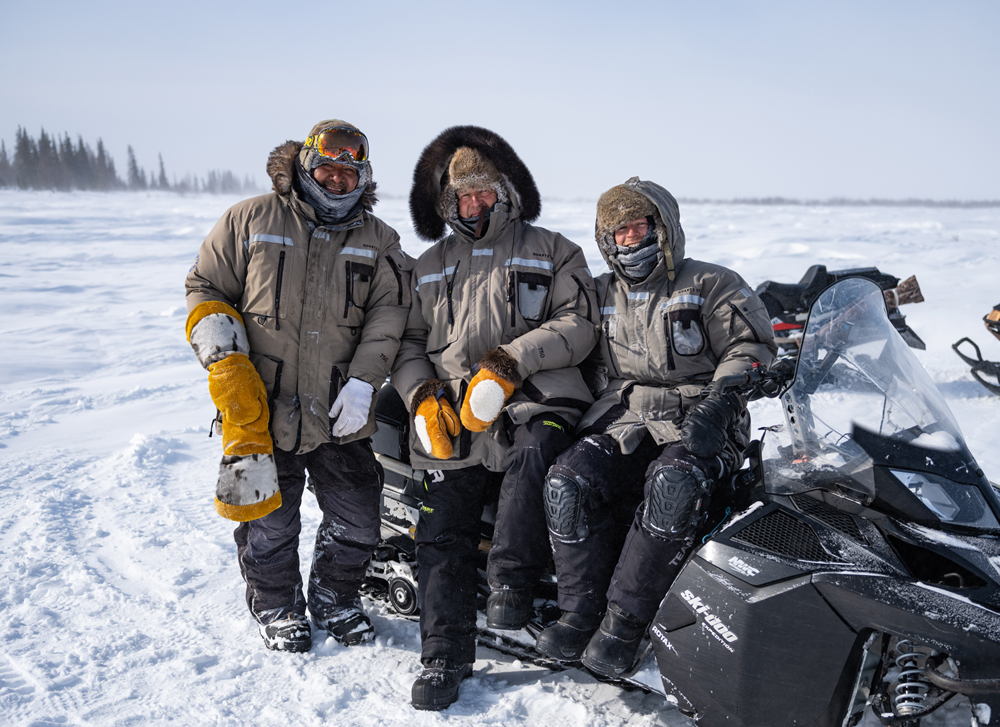
Gregory first worked with Churchill Wild in 2016, filming polar bears hunting belugas at Seal River Heritage Lodge, with owner Mike Reimer and guide Quent Plett, for the BBC series Seven Worlds, One Planet.
In 2019 he returned to the Hudson Bay coast, again with Churchill Wild, for National Geographic’s Wild_Life: The Big Freeze, and in the episode Wolf Pack Takes on a Polar Bear recorded what Nat Geo called the first-ever video of the two predators facing off. That’s where he first met Kona and his pack.
“I’m pretty sure I’ve been on more shoots to the west coast of Hudson Bay than I have done any other place I’ve filmed,” said Gregory.
Speaking to Churchill Wild for this story, he said the coast hooked him on that first trip.
“I just fell in love with the place, the wildlife, and also you guys,” said Gregory.
Ten years on, he still rates the Churchill Wild team among the best he’s worked with anywhere.
“We work with outfitters, guides, logistics all over the world, and you guys are up there with the best,” said Gregory.
When the film crews go home, Churchill Wild’s guides walk guests across this coast, reading the same tracks and scanning the same willows for a flash of white.
Tracking Kona’s Pack
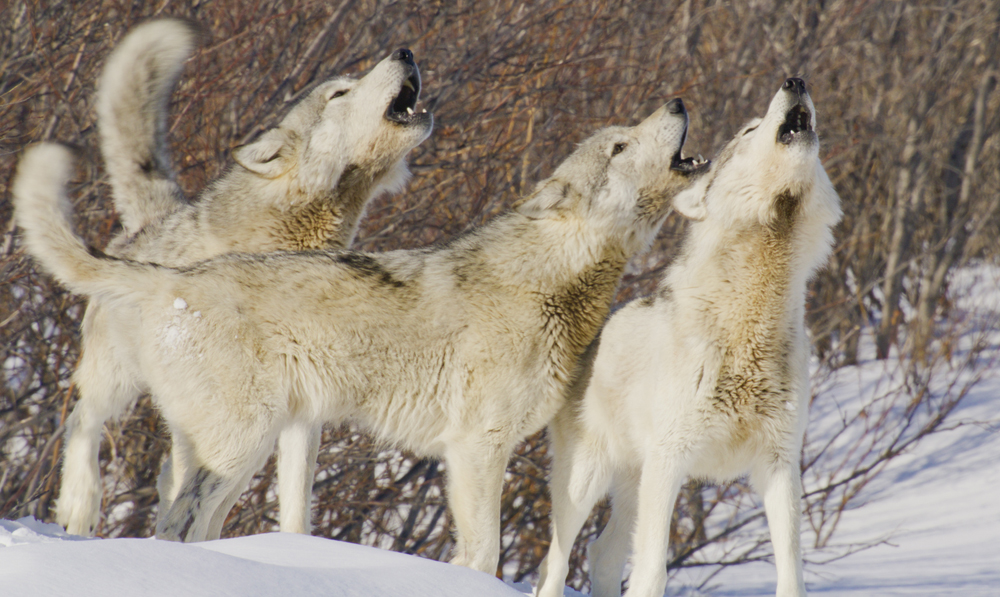
Finding Kona meant finding the pack, and the pack never sits still. Its territory covers hundreds of square miles.
“You’ve got to find the wolves, which is like a needle in a haystack, but the needle’s moving,” said Gregory.
Over two four-week shoots, the crew found the pack about two days a week. The rest of the time was spent searching. The winter started warm, the rivers were slow to freeze and the crew kept breaking through the ice.
That’s where the Churchill Wild team came in: Reimer, Swampy Cree First Nations elder Albert “Butch” Saunders, and guides Jordan Charles, Quent Plett and Drew Pauls.
“Mike and Butch are key to covering that ground and then reading the landscape, trying to find tracks and figure out where the wolves are going,” said Gregory.
Saunders brought traditional knowledge, Gregory brought the cameras, and the film needed both.
“This film is really a culmination between old school traditional knowledge with new school tactics and technology,” said Gregory. “It’s this amazing blend of new and old.”
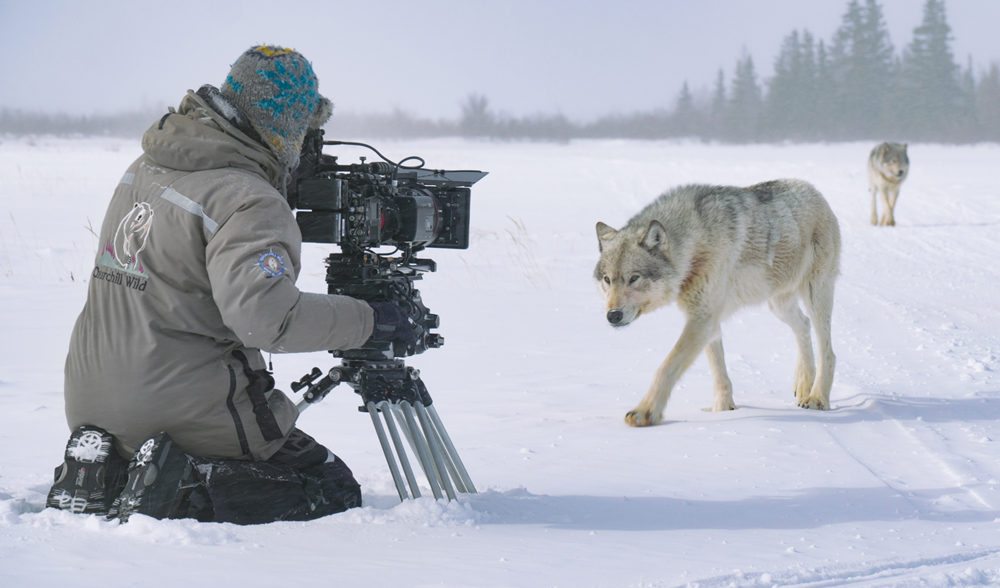
To Gregory, the way Kona hangs back and then steps up is exactly how a good leader works.
“I think that’s what great human leaders do,” said Gregory, who jokes that Reimer leads a lot like Kona.
“It’s kind of like me and Mike,” said Gregory. “Mike lets me think that I’m calling the shots as to where we go and how we work.”
When they did find the pack, one wolf always stood out: Kona.
“His coat colour being distinctive from the others just makes him so easy to identify from a distance,” said Gregory.
Even now, Gregory spots him instantly.
“It’s super easy, he’s bright white,” said Gregory.
When the wolves slept, the crew waited.
“They’re smart, so they always go to sleep downwind of a nice willow thicket,” said Gregory. “But that means in order to see them and to keep tabs on them, we’ve got to be facing the wind while we’re waiting. So being sat there for hours and hours and hours while they’re tucked up nice and warm in their little snow dens with their big fluffy tails over their faces. We got real cold in the process of waiting.”
When the wolves came close, they came very close. Some of the film’s best moments were shot on foot, with curious wolves just feet from the camera.
“The thing that we wanted to show with the wolves is that they might be bold and curious, but they are so far from aggressive,” said Gregory.
The Bears are Watching
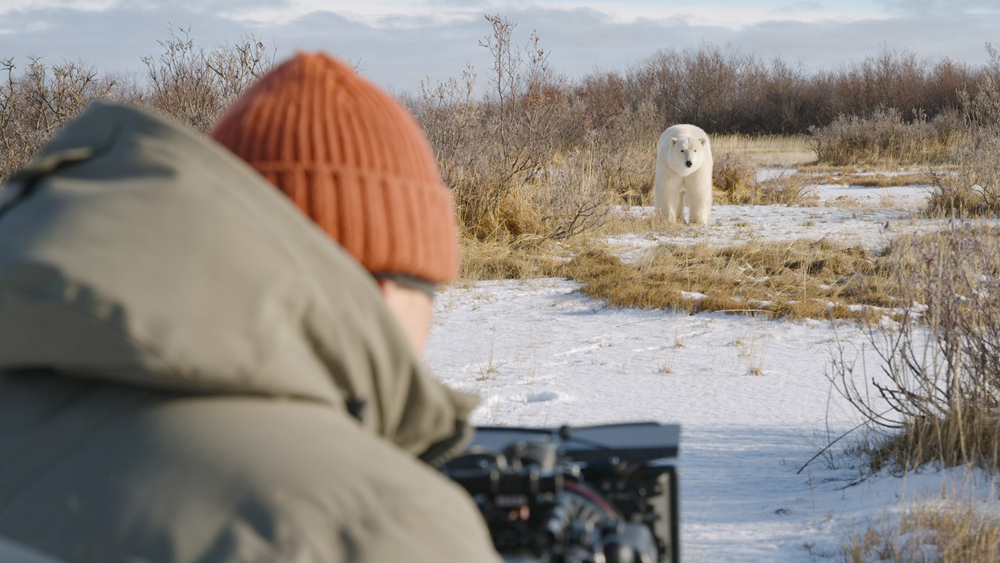
The polar bears were waiting too, hungry and restless along the coast until the bay froze and they could get back out to the seals. They tested the crew.
“With the polar bears, they’re always trying to figure out a way to catch you out,” said Gregory. “They’ll often approach, and then when you raise your voice and ask them to not come any closer, often they’ll just lie down and pretend to be asleep. And they’re totally pretending.”
The giveaway is in the eyes.
“Just peering out of one eye, checking if you’re paying attention,” said Gregory.
Not every bear settles for pretending. In one scene, a bear approaches as Gregory lines up a shot, and the way it carries itself is a subtle warning. Reimer steps out and bangs two poles together. It’s a calm, practised call, the kind Churchill Wild guides make season after season.
“Being able to interpret that body language is really important to keeping us safe and keeping the bears safe as well,” said Gregory.
The animals come first. Gregory finds it sad that still needs saying.
“I think anytime anyone is putting a shot before the well-being of the animal, it’s just so unacceptable,” said Gregory. “My job is to film wild behaviour. And if we’re influencing what the animals do and get up to, then we’re not doing our job properly.”
“I now feel even more of a responsibility to make sure that the animals and the places that I’m lucky enough to go and film are better off as a result of me having been there,” said Gregory.
“I hope that this film goes to show that these wolves are incredibly intelligent, important, talismans, flagships for wild places,” he added. “And we humans need healthy wild places.”
The Heart of the Pack
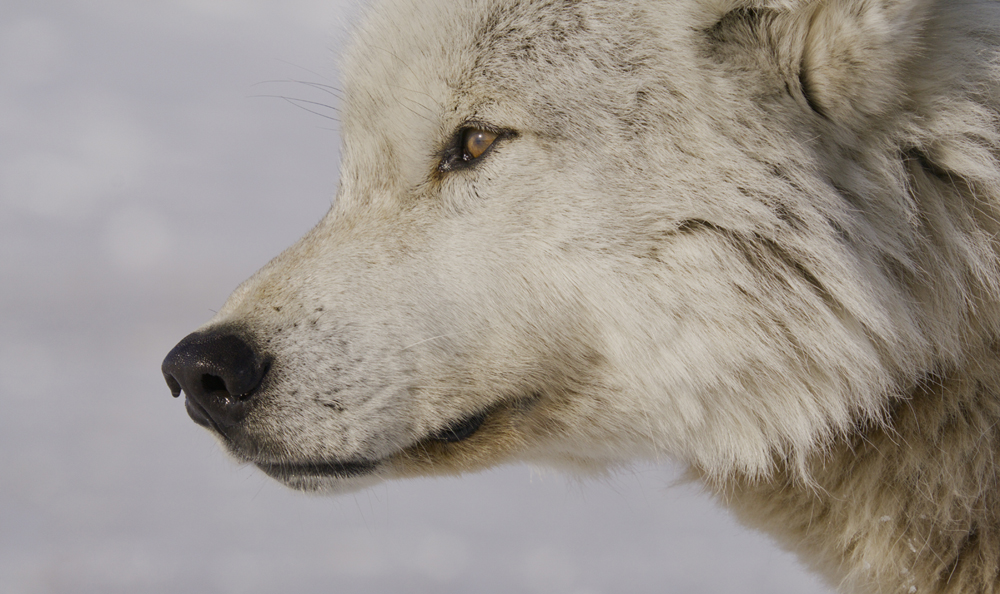
The moose hunt gets the headlines, but this film is really about family.
A wolf pack is a family: a breeding pair, their pups and older siblings who help raise them. They hunt together, defend their home together and look after one another. On the chase, they take turns breaking trail through neck-deep snow, the tired lead wolf dropping to the back so fresh legs can take over.
Anyone who has run through deep snow knows how fast it empties your legs.
“After 20, 30 metres, you’re pooped, right?” said Gregory. “Whereas they ran for miles and miles after those moose.”
One of Gregory’s favourite moments came after a lone wolf pushed into the pack’s territory.
The pack drove it out together. Then, with the danger gone, they came back to each other, licking, howling and wagging their tails, a family celebrating that they had held their ground.
“It was a celebration that they’d collectively defended their home,” said Gregory. “I think that was one of the most special moments because you just saw how much they love each other, how tight-knit the pack is and the power of the pack versus these lone wolves.”
Watch that, and the big bad wolf is hard to find. What you see looks a lot more like the family dog.
“We’re trying to show that they’re in many ways not that different from the animals that we love and let in our homes,” said Gregory.
Asked if Kona is his favourite wolf, Gregory doesn’t hesitate.
“It’s got to be,” said Gregory. “It’s got to be.”
Why Kona?
“I think he’s just an old dude and he’s hard as nails,” said Gregory.
That’s the wolf Gregory wants people to see.
“I hope they come away wanting to look after wolves and maybe rethink their opinion of what wolves are like,” said Gregory. “They’re not these kind of mindless human hunters that I think Hollywood and our childhood stories paint them out to be.”
Wolves pay for those stories.
“I think that’s the reason that in North America wolves are treated so badly,” said Gregory. “Because it’s very easy to persecute and trap and kill something that society is fearful of or scared of.”
He’d like to see that change.
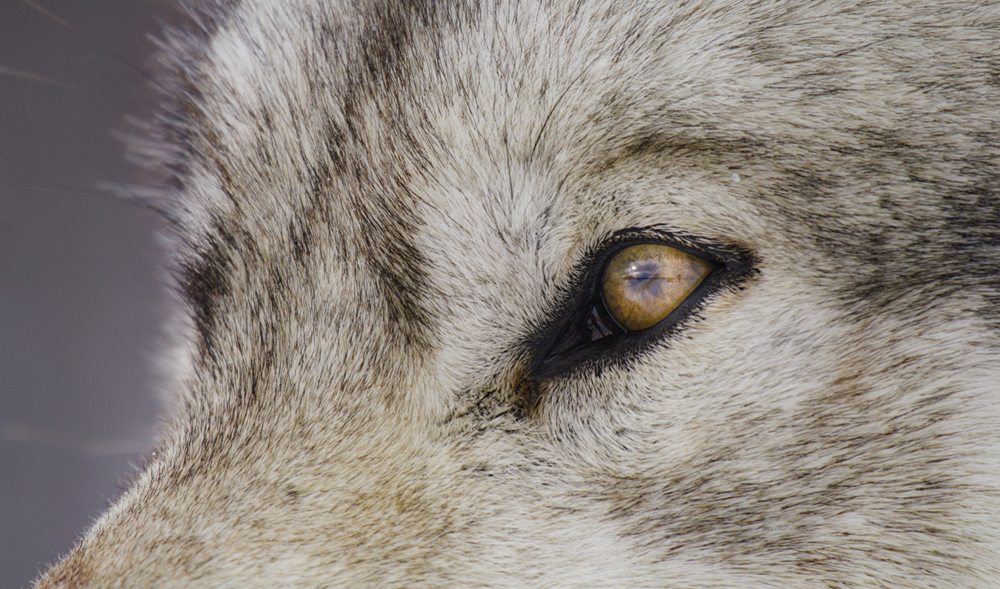
“I feel like we’ve got to change our relationship with wolves and make it one of coexistence and not of fear and myth and conflict,” said Gregory.
Seven years on, Kona still walks at the back of the line, letting the young ones lead. This winter, with food scarce, a rival on the prowl and age catching up with him, the pack needs him out front more than ever.
This film will keep you watching. And it might just bring a tear to your eye.
WOLVES UP CLOSE WITH BERTIE GREGORY premieres Nov. 6 at 9/8c on National Geographic and streams the same day on Disney+ and Hulu.
Learn More About Bertie Gregory
Bertie Gregory: Rolex National Geographic Explorer of the Year 2025
Follow: @BertieGregory (Instagram/Tiktok/Twitter)
Web: BertieGregory.com
Join the crew: Bert’s Eye View
Impact: Act 4 Wildlife
Stream now on Disney+: